Do we have real photos of Venus?
The planet Venus, Earth’s so-called sister world, remains stubbornly hidden from direct, crisp visual inspection. Shrouded beneath a perpetual, suffocating blanket of clouds composed largely of sulfuric acid, seeing its surface with visible light has historically been a tremendous engineering challenge. Yet, to say we have no real photos is inaccurate. We possess a handful of images—artifacts of Cold War space competition—that serve as our only direct windows onto that hellish landscape. These photographs are not high-definition panoramas taken by a rover; they are hard-won snapshots, each representing a monumental achievement in surviving conditions that make terrestrial electronics melt.[1][5]
# Soviet Landings
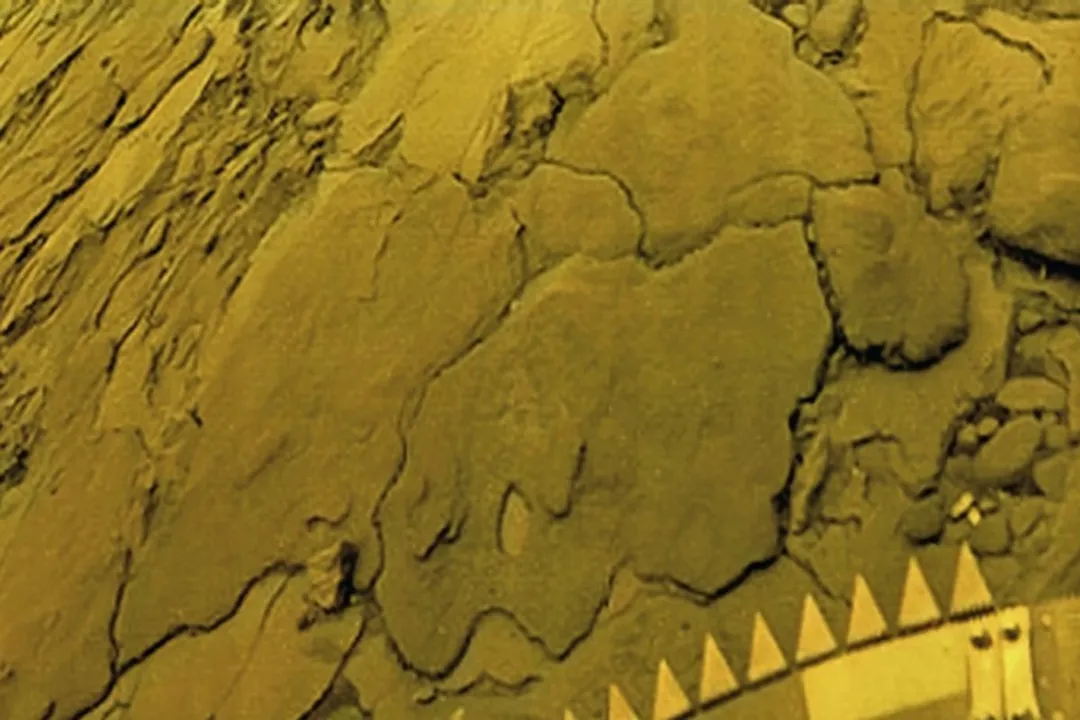
The absolute pinnacle of direct surface photography comes from the Soviet Union’s Venera program. Beginning in the early 1970s, the Venera missions were the only spacecraft to successfully soft-land on Venus and transmit images back to Earth. [1][5] Out of numerous attempts, only four missions—Venera 9, 10, 13, and 14—managed to send back genuine photographs taken from the ground. [1]
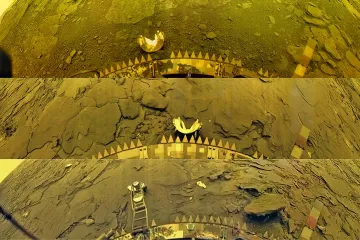
The most detailed and widely circulated images originate from the Venera 13 and 14 landers, which touched down in March 1982. [1][5] These two landers operated in tandem, sending back panoramic sweeps of the rocky, desolate surface. [5] The cameras aboard these probes had to be incredibly specialized, shielded against temperatures soaring near () and pressures equivalent to being nearly a kilometer deep in Earth’s ocean. [1]
When we look at the data lifespan of these missions, the contrast is stark. Venera 13 transmitted images for approximately 127 minutes before succumbing to the heat and pressure. [1] Consider that in the time it takes for a modern person to watch a feature-length film, an entire history of surface imagery was captured, transmitted, and lost forever. It’s a testament to the sheer determination of the engineers that even a single frame survived that crushing environment. [1]
# Image Quality
It is essential to manage expectations regarding the quality of these early images. They are often monochrome or presented in processed, false color to better reveal terrain contrast. [1][5] Because the thick atmosphere filters sunlight so severely, the light that does reach the surface is dim and perpetually orange-ish or reddish. The original camera systems did not capture the visual fidelity we expect today from even basic consumer electronics. [1] When you view a modern, vibrant recreation, you are seeing a highly processed interpretation of the raw data beamed across space decades ago.
# Crushing Conditions
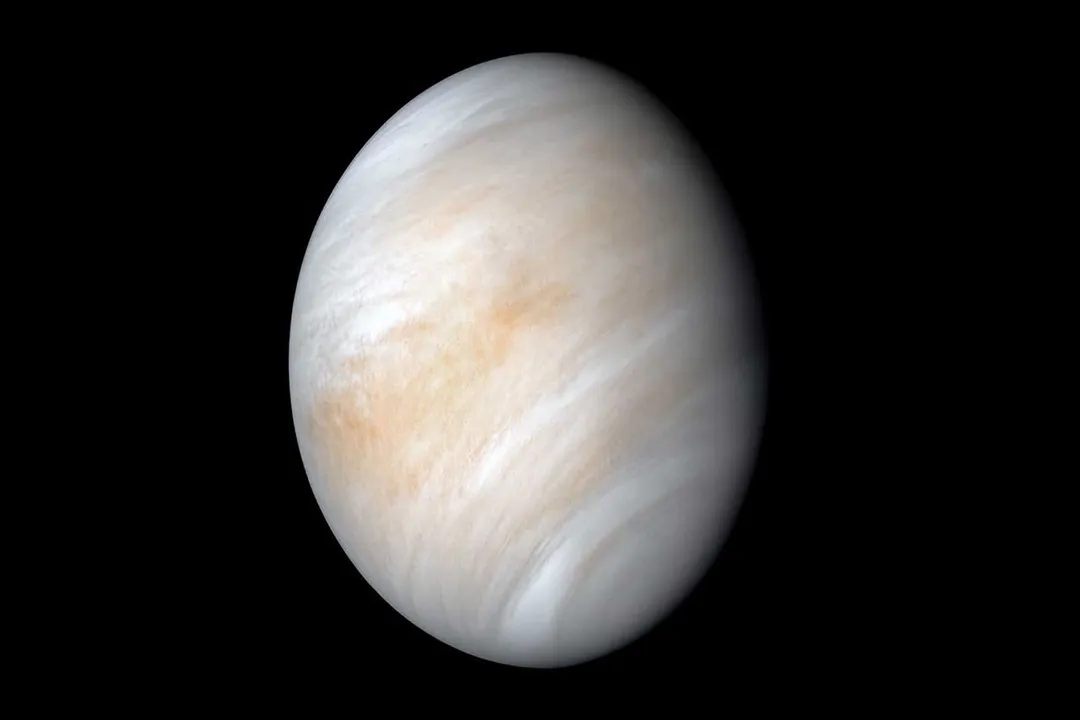
The reason for the scarcity and the low initial quality of these photos lies entirely in the physical environment of Venus. The surface temperature is high enough to melt lead, and the atmospheric pressure is over 90 times that of Earth at sea level. [1][5] Any probe must survive this before it can even attempt to take a picture.
This extreme environment dictates the technology used. The Venera probes used small, specialized television cameras, but they only functioned for a short period. [1] To capture a panorama, the camera had to physically rotate or step through its positions, exposing the image sensor to the elements momentarily during each step. This process was slow and risky, contrasting sharply with modern cameras that capture millions of pixels instantly in far milder conditions. [1][5]
# Orbital Mapping
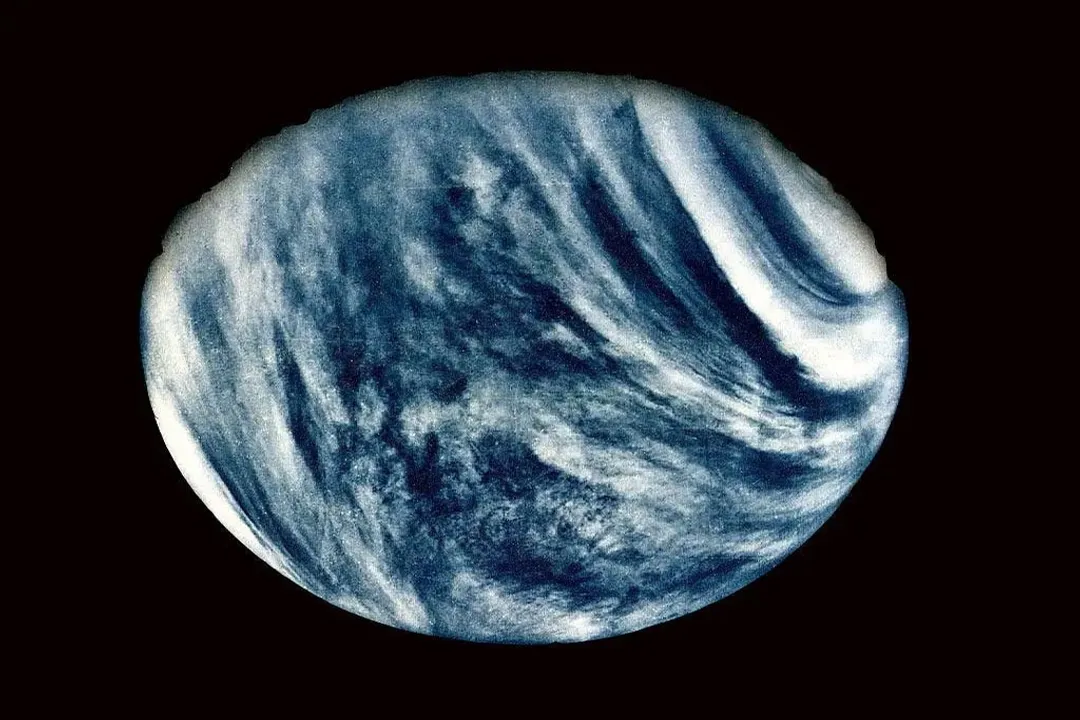
Before and after the Venera landings, humanity relied on remote sensing from orbit, which provides a completely different kind of photographic evidence. Missions like NASA’s Magellan spacecraft, which mapped Venus in the early 1990s, used radar to peer through the opaque clouds. [5]
Radar imaging creates topographical maps, essentially showing us the shape and height of the surface, much like sonar maps the seafloor. These results are scientifically invaluable for understanding geology, but they do not produce what a general audience thinks of as a "real photo" because they rely on bouncing radio waves, not capturing reflected visible light. [5] This is a crucial distinction: radar tells us where the mountains are, but the Venera images show us what the ground looks like underfoot. [5]
# Visible Light Return
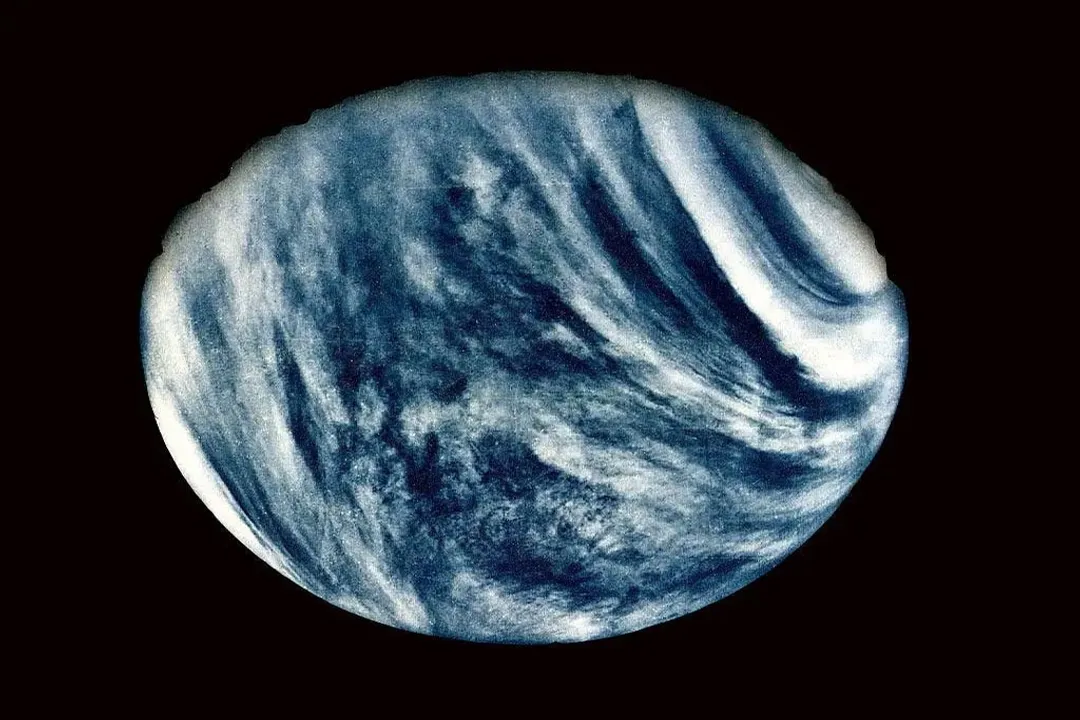
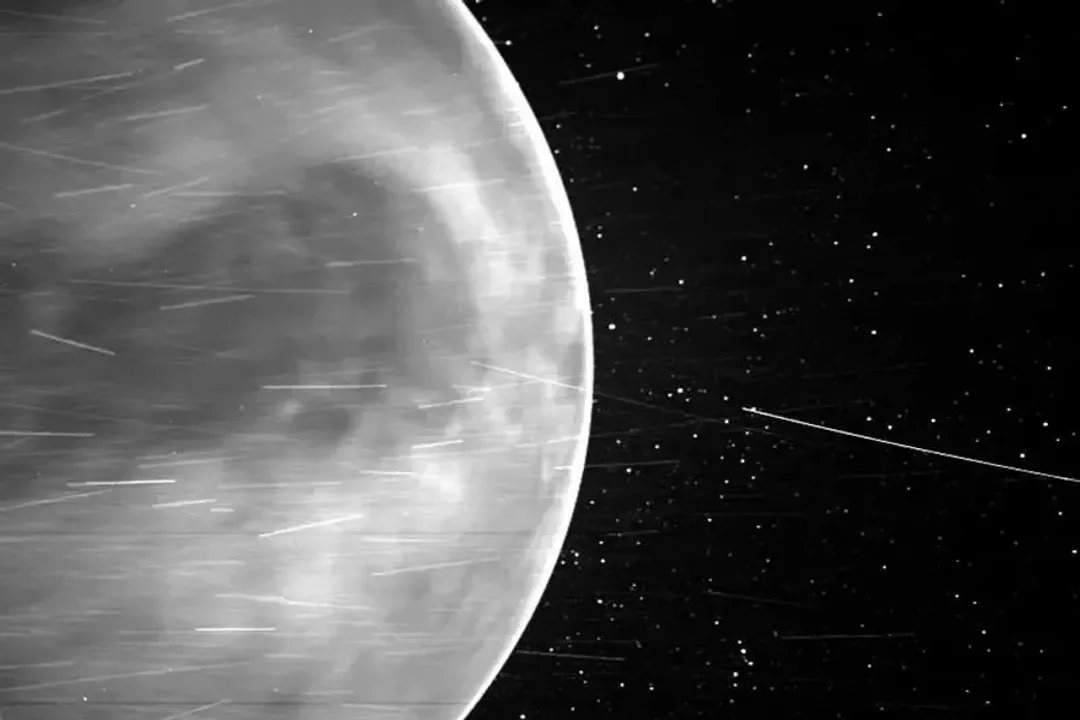
For decades after the Venera missions, nearly all orbital views of Venus were restricted to the infrared spectrum, which provided temperature maps or compositional data, but not surface visuals in the common sense. This changed relatively recently, thanks to NASA’s Parker Solar Probe (PSP). [8]
While PSP’s primary mission is observing the Sun, its close flybys of Venus presented an unexpected opportunity. In 2021, the probe captured the first images of Venus’s surface using a visible-light camera from orbit since the 1970s. [8] This was confirmed as a major scientific milestone. These PSP images were captured when the probe was positioned such that the Sun illuminated the surface features through breaks in the upper cloud deck. [8] The result was a picture showing surface details, confirming that enough visible light penetrates the atmosphere near the surface to be captured from a distance—a feat previously thought impossible with standard visible light cameras from orbit. [8]
This new evidence from PSP doesn't replace the ground-level shots from Venera; rather, it adds a third dimension to our visual understanding. We now have: (1) Ground-level, direct snapshots (Venera), (2) Global topographic maps (Magellan radar), and (3) Orbital visible-light views showing illumination patterns (PSP). [5][8]
# Processing Artistry
When these images are shared today, particularly online through sources like Reddit forums or specialized space history pages, they often undergo modern digital enhancement. [3] The original Venera data was sometimes transmitted in a format where color channels were deliberately skewed or assigned to different brightness levels to make the limited detail more apparent to human eyes. [1] For instance, a common image shows reddish-brown ground and grayish-green rocks. This is an interpretation. The original environment is perpetually bathed in dim, orange-tinged light due to the dense atmosphere filtering out shorter, bluer wavelengths before they even reach the surface. [1]
It’s fascinating to consider the scale of technological dedication versus modern accessibility. A team of Soviet engineers had to design a pressurized, heat-shielded lander capable of surviving extreme conditions just to capture one color panorama over two days. [5] Compare that to the ability of a hobbyist with a $1,000$ smartphone today to take thousands of perfectly exposed, color-corrected images in mild weather. The sheer cost in engineering time and resources to get those few minutes of Venera data dwarfs what we consider routine space imaging now. [1]
# Future Views
The difficulty of direct imaging means that future surface photography is likely to rely on far more advanced, perhaps nuclear-powered, stationary landers, or aerial platforms designed to float in the less-hostile upper atmosphere where pressure is similar to Earth’s. [1] However, for now, the existing handful of Venera images remains the only true surface-level photographic evidence we have of the Venusian terrain. [5][9] They serve as haunting proof of what lies beneath the clouds—a baked, alien world fundamentally different from our own, captured by hardware that gave its final transmission decades ago. [1]
#Videos
The First and Only Photos From Venus - What Did We See? (4K)
Venera's Venus Images Have Nothing On This! | NASA Magellan
Related Questions
#Citations
Every picture from Venus' surface, ever | The Planetary Society
Images of Venus - NASA Science
Surface of Venus. Clicked by Russian spacecraft Venera 13 on 1st ...
The First and Only Photos From Venus - What Did We See? (4K)
These Are the Only Photos Ever Captured of the Surface of Venus
Do we have a good quality real photo of planet Venus? - Quora
Parker Solar Probe Captures its First Images of Venus' Surface in ...
These Are The Only Photos Ever Taken Of The Surface Of Venus
These are the only photos of the surface of Venus we have, so we ...