Are supernovas brighter than the sun?
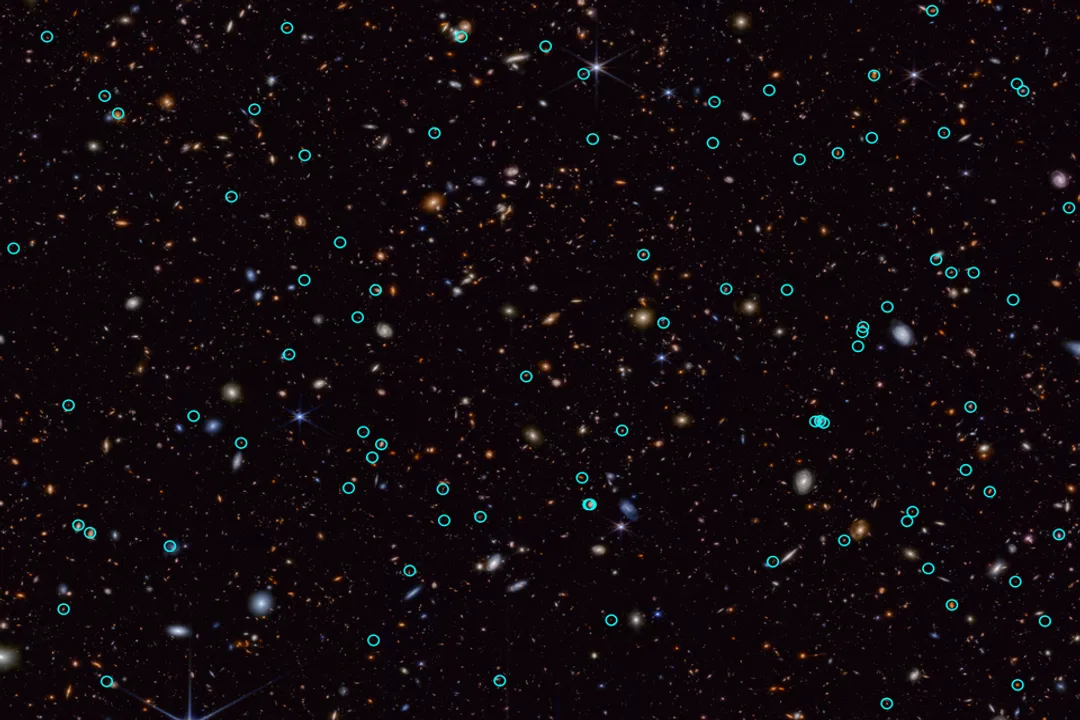
The brief, direct answer to whether a supernova is brighter than the Sun is an overwhelming yes; in fact, the comparison is almost meaningless due to the sheer magnitude of the difference in energy released. A standard supernova event can unleash as much energy in a matter of weeks or months as the Sun will emit over its entire estimated ten-billion-year lifespan. This brief, catastrophic stellar death represents one of the most luminous events in the universe, marking a stark contrast to the steady, predictable light output of our home star.
# Explosion Basics
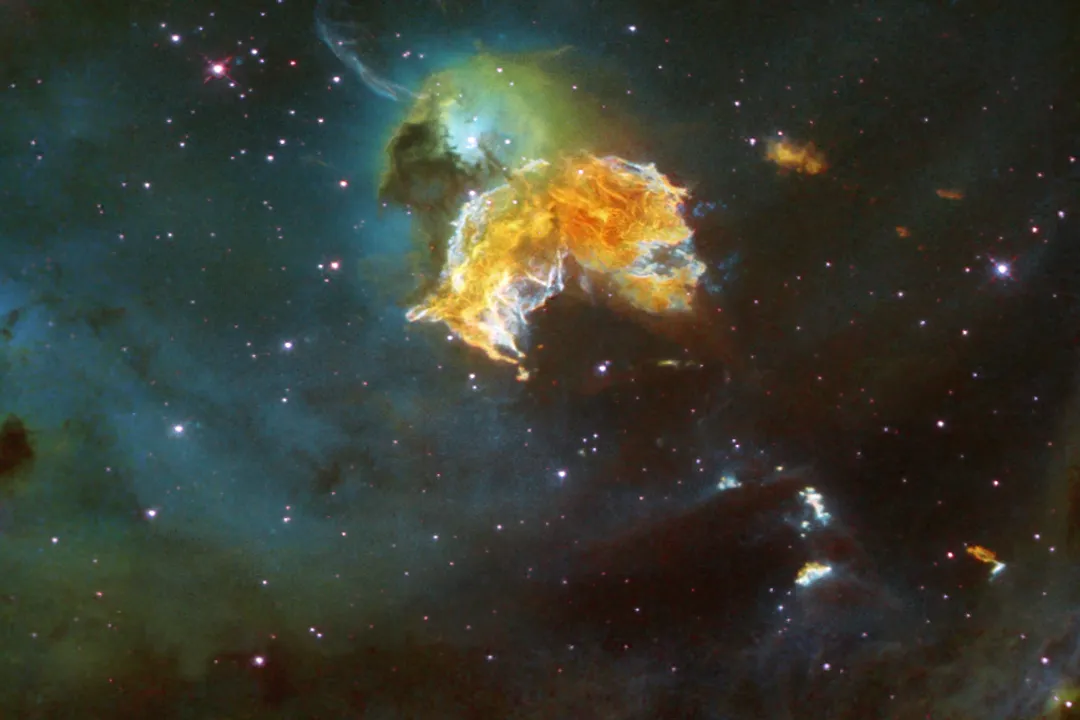
A supernova is the dramatic, powerful explosion marking the end of a star's life, specifically for stars significantly more massive than the Sun or for certain white dwarf stars that accumulate too much material. These events are categorized broadly based on their cause, such as core-collapse for massive stars or thermonuclear runaway for white dwarfs. Regardless of the mechanism, the resulting explosion violently ejects a significant portion of the star's material into space at incredible speeds, creating a transient astronomical object that can be seen across vast cosmic distances. The energy released during this brief period is staggering, often overwhelming the light output of the entire galaxy that hosts the explosion.
# Sun Comparison
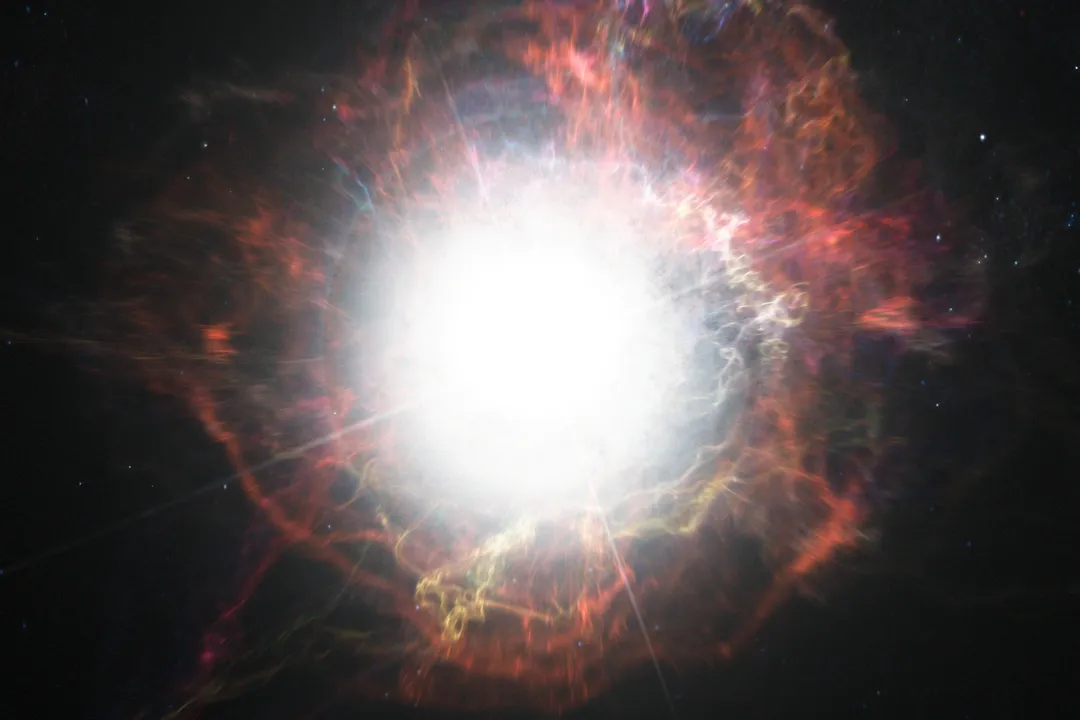
To properly frame the luminosity difference, we must look at the Sun's current state versus a typical stellar explosion. The Sun is a relatively stable, average star producing a consistent output of energy. When a star undergoes a core-collapse supernova, the resulting burst of light can temporarily shine billions of times brighter than the Sun. This enormous increase in brightness is observed across various types of supernovae, although the exact peak magnitude depends on the progenitor star and the explosion mechanism. While the Sun maintains a constant visible magnitude, a supernova dominates its local region of space before fading back into obscurity over months or years.
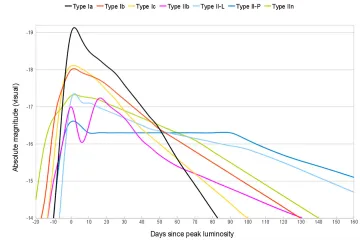
If we attempt to place this difference on a more relatable scale, considering the Sun as a baseline unit of stellar output, the comparison becomes quite stark. While the energy output of a supernova is measured in terms of the total light emitted over its peak duration, the instantaneous brightness is the key factor here. For instance, a relatively standard Type Ia supernova, often used as a "standard candle" in cosmology because of its relatively uniform peak luminosity, can easily reach an absolute magnitude that puts it far beyond the visibility of our own star from our perspective.
# Galaxy Outshining
The sheer wattage of a supernova is not just billions of times greater than the Sun; it can even exceed the combined light of the thousands of stars making up the host galaxy in which it occurs. This phenomenon means that a supernova, even one occurring millions of light-years away, can suddenly become one of the brightest objects visible in the night sky for a brief period. The appearance of such an event against the background of its galaxy is an awe-inspiring display of cosmic power. Imagine looking at a distant city skyline at night—the light of the entire metropolis—and then suddenly seeing a single, intensely bright floodlight momentarily outshine every single streetlamp and building light combined.
This ability to outshine an entire galaxy is a defining characteristic that separates typical stellar death from the most energetic explosions known. When astronomers observe a transient object that briefly outshines its host galaxy, they know they are witnessing something far beyond a standard stellar event, likely a core-collapse explosion or an exceptionally energetic variant.
# Record Luminosity
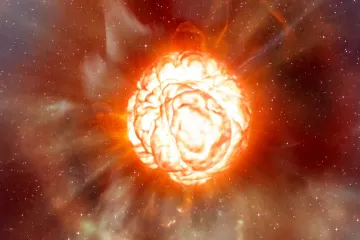
While most supernovae are impressively bright, there is a special class that pushes the boundaries of known physics: the Superluminous Supernovae (SLSNe). These are the undisputed heavyweights of stellar explosions. The record for the brightest supernova ever observed by modern instruments goes to ASASSN-15lh, which was discovered in 2015.
ASASSN-15lh was not merely brighter than our Sun; it was estimated to be about 50 times brighter than the entire Milky Way galaxy at its peak luminosity. This extraordinary brightness baffled initial scientific assessments, as it significantly exceeded the theoretical maximum output expected from standard supernova models, prompting astronomers to investigate new energy sources or mechanisms. To put the sheer energy into perspective, if ASASSN-15lh had occurred at the distance of the Moon, its light would have easily overwhelmed the light from the full Moon. The light output of such an event requires physics beyond the normal expectations of radioactive decay powering the explosion.
# Superluminous Power
The extreme energy output seen in events like ASASSN-15lh defines the category of Superluminous Supernovae. These events release energies that are perhaps ten to one hundred times greater than a typical Type Ia or core-collapse supernova. Astronomers attribute this incredible output to several potential causes, often involving massive progenitor stars or complex interactions within the explosion mechanism. One proposed mechanism involves an unusually dense or massive remnant, or perhaps interaction between the ejected stellar material and a powerful magnetic field. Whatever the exact cause, these SLSNe represent the upper limit of visible stellar explosions and demonstrate that nature can generate luminosity far exceeding what typical stellar evolution models predict.
# Brightness Context
To solidify the difference between our Sun and these cosmic fireworks, consider mapping their apparent brightness against a simple, relative scale, assuming they were observed from an equal, arbitrary distance for comparison purposes:
| Object | Relative Brightness Factor (vs. Sun = 1) | Notes |
|---|---|---|
| The Sun | $1$ | Stable, average main-sequence star. |
| Typical Type Ia Supernova | Used as a cosmological standard candle. | |
| ASASSN-15lh (Peak) | Estimated 50x brighter than the Milky Way. |
This table illustrates the exponential gap between normal stellar emission and catastrophic release.
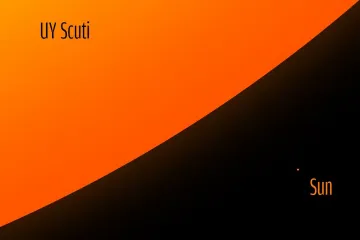
One fascinating implication of this extreme difference in peak brightness is how accessible these events are, despite their rarity. While the Sun is our only star bright enough to dominate our daytime sky, a standard supernova, even at millions of light-years away, briefly becomes visible to the naked eye under dark skies. This means that a celestial event occurring in a galaxy far removed from our own can momentarily become a significant, noticeable feature in our nightly view, something the Sun could never do from any distance beyond its immediate stellar neighborhood due to its comparatively modest output. If the Sun were to suddenly explode as a typical supernova, its peak brightness would momentarily flood the entire solar system with light equivalent to many times the brilliance of the Sun itself, though the scenario of our Sun exploding in this manner is astrophysically unlikely as it lacks the necessary mass for a standard core-collapse event.
# Astrophysical Importance
Studying these incredibly bright explosions is more than just recording cosmic records; it provides critical insights into stellar evolution, nucleosynthesis, and the expansion rate of the universe. Supernovae are the primary mechanisms by which heavy elements, forged in the dying star's core, are scattered across interstellar space, seeding the next generation of stars and planets. By examining the spectrum and light curves of the brightest events, like SLSNe, scientists are testing the limits of their understanding regarding how the largest stars live and die, and what kind of exotic physics might be required to power explosions that challenge even the most powerful known stellar engines. Observing how quickly they fade and what materials they expel helps refine models about the final moments of massive stars.
Related Questions
#Citations
Supernova - Wikipedia
How Bright Can Supernovae Get? - AAS Nova
Supernovae are said to shine brighter than whole galaxies, but how ...
The Brightest Supernova Ever Observed Tests the Limits of Physics
What intensity of light comes from a supernova compared to the sun?
How bright would the full moon be if the sun went supernova? - Quora
Brightest Supernova Ever Seen - W. M. Keck Observatory
The superlative superluminous supernova | IOPSpark
Supernovas | Research Starters - EBSCO