What's brighter than a supernova?
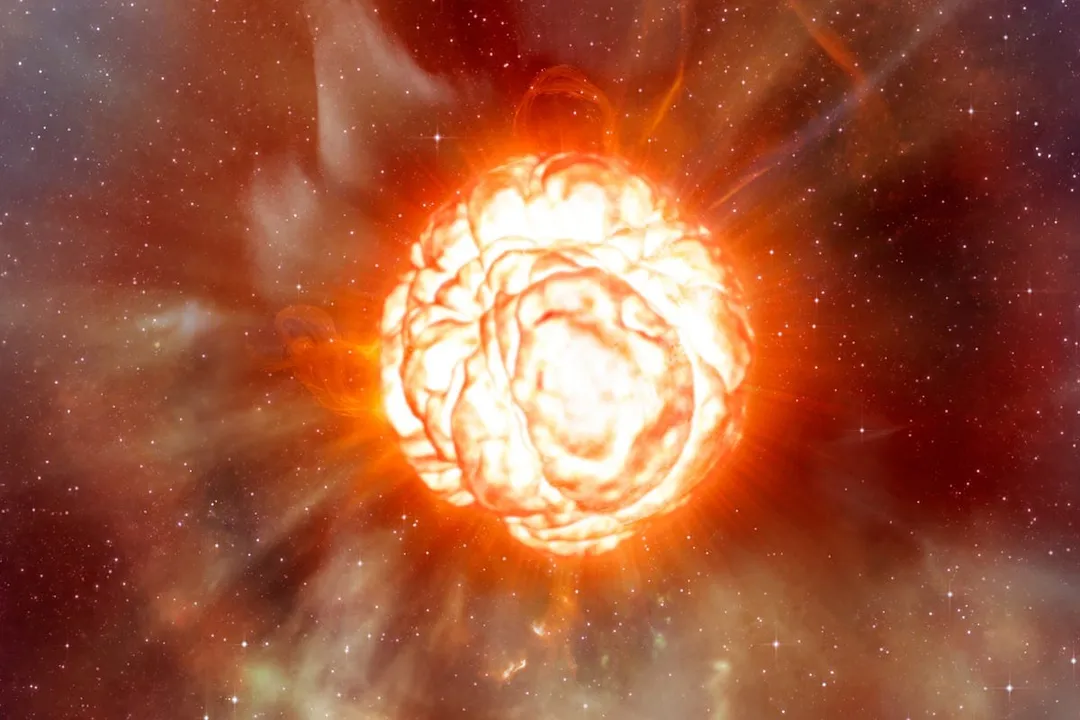
The concept of a dying star flaring into brilliance already stretches our everyday sense of scale, but the cosmos doesn't stop there. The stellar explosion we call a supernova, a fleeting event that can momentarily outshine an entire galaxy, serves as a powerful benchmark. Yet, even this incredible cosmic light show is eclipsed by other phenomena, creating a distinct hierarchy of luminosity in the universe.[1][2][3][5]
# Stellar Fireworks
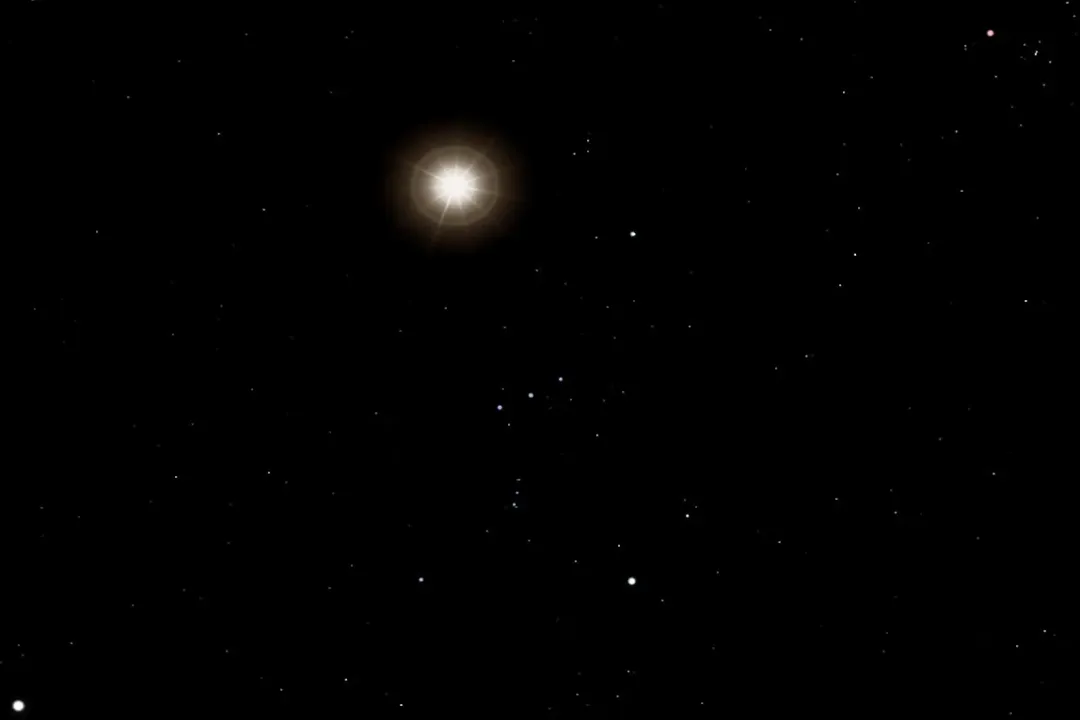
Before assessing what shines brighter, it helps to firmly establish the baseline of a standard stellar death. We often group stellar outbursts under one banner, but the energy released varies by many orders of magnitude. A classical nova, for instance, occurs in a binary system where a white dwarf siphons material from a companion star. [1] When enough hydrogen accumulates on the surface, it triggers a runaway thermonuclear reaction, ejecting mass at speeds over . [1] This event releases energy equivalent to $10,000$ to $100,000$ times what our Sun emits in a full year, but the white dwarf remains intact, ready to repeat the process. [1]
When two incredibly dense objects—like two neutron stars, or a neutron star and a black hole—merge, the result is a kilonova. [1] As the name suggests, these are about $1,000$ times brighter than a classical nova, yet they remain significantly dimmer than a true supernova. [1]
The real explosion that captures the public imagination is the supernova. There are two primary mechanisms for this level of destructive power. A Type Ia supernova involves a white dwarf accumulating too much mass until it detonates entirely in a core-consuming thermonuclear event, leaving no remnant behind. [1] More commonly, when astronomers discuss supernovae, they often refer to the Type II, or core-collapse supernova, which happens when a massive star exhausts its fuel and its core collapses under its own gravity. [1] In this scenario, the core forms either a neutron star or a black hole, and the resulting outward shockwave tears the star apart. [1]
A typical core-collapse supernova reaches a peak power in the neighborhood of Watts, briefly shining with the power output of an entire galaxy of stars. [2]
# Escalating Explosions
If a standard supernova is one star going out with a bang, what happens when a star goes out with an even louder bang? That’s where hypernovae and superluminous supernovae (SL-SNe) enter the picture.
# Hypernova Scale
A hypernova, sometimes called a collapsar, is generally defined as an exceptionally energetic core-collapse supernova. [1] Scientists link these events to the death of truly gigantic stars—those more than $30$ times the mass of our Sun—as they collapse directly into a black hole. [1] The critical difference in energy output comes from the formation of this black hole. As material falls onto the newly forming, rapidly rotating black hole, it can launch relativistic jets—beams of matter moving at speeds near the speed of light. [2] These jets interact with the ejected stellar material, transferring kinetic energy into heat and light, making the explosion $10$ to $100$ times more powerful than a standard supernova. [1][2]
Superluminous supernovae encompass hypernovae but also include other events that reach extreme brightness, such as those caused by pair-instability in super-massive stars or when the shockwave from the explosion slams into a dense surrounding nebula, converting kinetic energy into visible light. [2] In essence, a hypernova is a specific, jet-driven flavor of the broader category of SL-SNe, but the distinction means that the brightest supernovae are indeed brighter than the typical core-collapse event. [2]
# Apparent vs. Intrinsic Glare
When we look at the sheer numbers, the difference between a typical SN ( W) and a hypernova ($10$ to $100$ times greater) is significant, but the comparison is still within the realm of stellar death events. [2][1] However, when comparing the potential peak brightness of these explosions to something like our Sun, the scale becomes truly abstract. For a star like Betelgeuse, expected to end its life as a Type II supernova, its peak intrinsic brightness (absolute magnitude) would make it about $500$ million times fainter than our Sun if they were placed at the same distance. [5]
Yet, due to its relative proximity ( light-years), its apparent brightness—what we actually see from Earth—would be dramatic. [5] Its apparent magnitude would settle around $-10$, comparable to a quarter moon, and bright enough to cast shadows at night, significantly outshining the famous supernova of $1006$. [5] This highlights an interesting discrepancy in cosmic accounting: an object that is intrinsically much fainter than the Sun (when measured equally) can still appear dramatically brighter than everything else in our night sky simply because it is a brief, all-consuming event happening relatively close by. We perceive the difference in brightness over time, not just the absolute output at a fixed distance. [5]
# The Sustained Engine
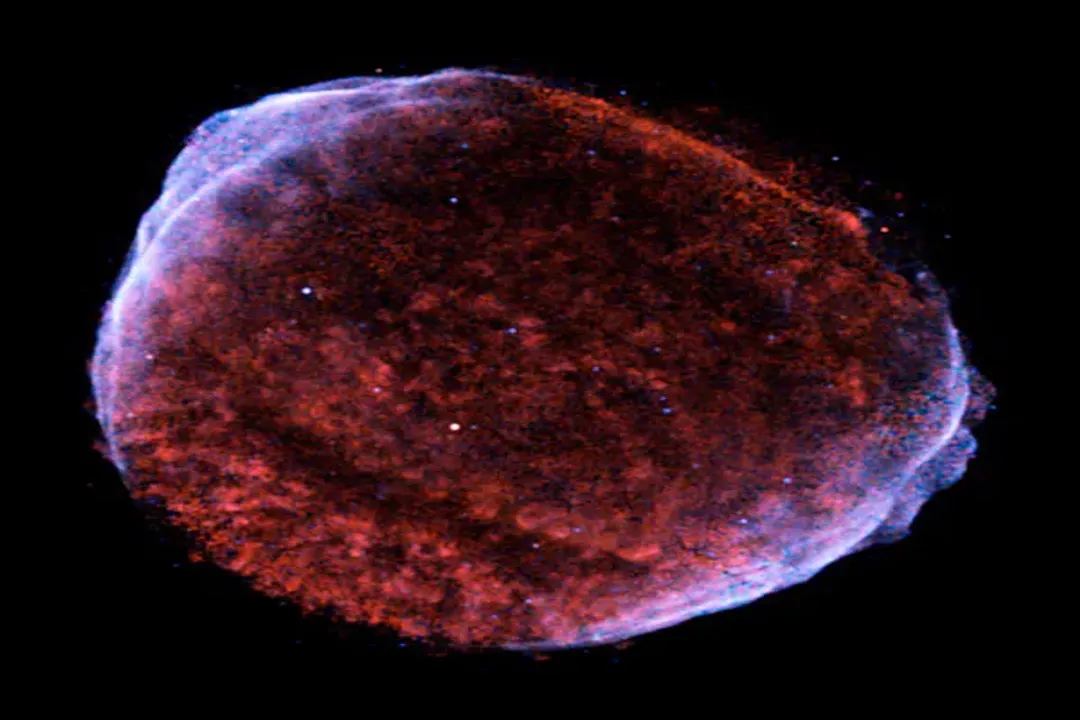
While supernovae and hypernovae are moments of catastrophic energy release, the truly brightest sustained objects in the universe operate on a fundamentally different principle, using accretion rather than pure detonation.
# Quasars Outshine Death
The question of what is brighter than a supernova is definitively answered by quasars (quasi-stellar objects). These are not single-star explosions but the active cores of distant galaxies, powered by matter spiraling into a central supermassive black hole. [2]
Typical quasars generate a luminosity of around Watts. [2] If we compare this to the typical supernova peak of Watts, the quasar is about $1,000$ times more luminous, and it maintains that output continuously, unlike the brief flash of a supernova. [2] The most luminous known quasars can radiate $100$ times that amount, pushing their output toward Watts. [2]
To put this into context, if a typical supernova can rival the light of its entire host galaxy, a bright quasar is effectively a galactic core shining with the combined light of many galaxies. This difference—the sustained furnace versus the final explosion—is why quasars take the prize for sheer, continuous luminosity. [2]
# Unseen Intensity
Even the quasar record might have a contender lurking in the extreme transient phenomena. Some observers suggest that Gamma-Ray Bursts (GRBs) could be even brighter than quasars. [2] These are the most luminous electromagnetic events known to occur in the universe, though their nature and directionality make precise long-term comparison challenging. [2] Short GRBs are thought to be associated with the mergers of neutron stars (kilonovae), while long GRBs are frequently linked to the core collapse of very massive stars (hypernovae). [1]
If a GRB is beamed directly toward an observer, the instantaneous energy release contained within that narrow beam can momentarily dwarf the output of even the most brilliant quasar, even if the quasar's integrated energy release over years is greater. The difficulty in measuring GRBs lies in determining how much of that energy is aimed at us versus being emitted elsewhere in space. [2]
# The Brightness Ranking
To visualize the difference between these cosmic beacons, we can loosely rank them based on the observed power described by astronomers. This ranking separates brief, catastrophic events from continuous sources:
| Phenomenon | Primary Power Source | Relative Brightness Comparison |
|---|---|---|
| Classical Nova | Surface Hydrogen Fusion (White Dwarf) | $10^4$ to $10^5$ times [1] |
| Kilonova | Neutron Star Merger | Brighter than Nova, dimmer than SN [1] |
| Supernova (Typical) | Core Collapse/Thermonuclear Detonation | Watts peak power, [2] outshines host galaxy [3][5] |
| Hypernova/SL-SN | Collapsar/Relativistic Jets | $10$ to $100$ times brighter than a typical SN [1][2] |
| Quasar (Brightest) | Accretion onto Supermassive Black Hole | Up to Watts continuous output [2] |
| Gamma-Ray Burst (GRB) | Extreme Stellar Collapse/Merger | Potentially brighter than even the brightest quasars in a narrow beam [2] |
Considering the data, the answer to what shines brighter than a supernova depends entirely on context. A hypernova is definitively a brighter explosion than a standard supernova. [1] However, the most consistently powerful and sustained light sources are the quasars. [2] If we focus on the absolute briefest flash, the focused beam of a Gamma-Ray Burst likely wins the instantaneous brightness contest over any supernova. [2]
It is fascinating to observe that the two extremes of stellar death—the core-collapse hypernova and the Type Ia thermonuclear blast—are both dwarfed by the steady glow of a distant, active galactic nucleus. The black hole at the heart of a quasar, continuously feeding, proves to be a far more effective light generator than the total obliteration of even the most massive single star. [2] This observation suggests a fundamental limit on the energy that can be effectively released from a single star's gravitational collapse, a limit that is surpassed only when a black hole feeds consistently on an entire galactic reservoir of fuel. [2]
#Videos
Hypernova: The Bigger, Badder Supernova. - YouTube
Related Questions
#Citations
How bright is the brightest thing in the universe compared to ... - Reddit
Ask Astro: What are the differences between supernovae, kilonovae ...
Are Superluminous supernova and Hypernova the same thing?
Hypernova: The Bigger, Badder Supernova. - YouTube
Astroquizzical: What happens when Betelgeuse explodes? - Medium