Why is the Crab Nebula so famous?
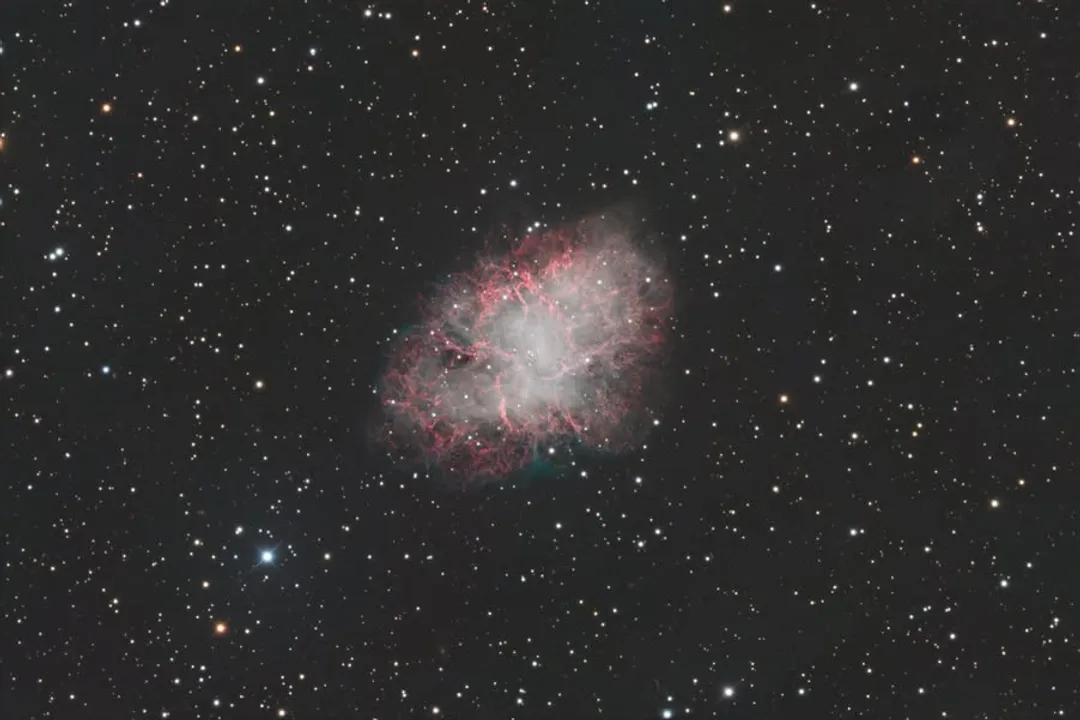
The Crab Nebula holds a distinct position in astronomy, serving as the first entry in Charles Messier’s famous catalog, designated as Messier 1. [1] Located approximately 6,500 light-years away in the constellation Taurus, this object is the remnant of a massive star that underwent a violent supernova explosion. [1][7] While many nebulae dot the sky, this specific structure remains a focal point for astronomers because it provides a rare, direct link between a historical event witnessed by human civilization and the physical processes that shape our galaxy. [7]
# Historical Records
The story of the Crab Nebula begins in July 1054, when observers in China and Japan documented the sudden appearance of a "guest star" in the night sky. [7] This star was so bright that it remained visible during daylight hours for nearly three weeks, and it could be seen at night for roughly two years. [7] While records from Asia are well-preserved, evidence of this event in Europe remains surprisingly sparse or nonexistent, leading historians to debate cultural or meteorological reasons for this discrepancy. [2]
For centuries, the nature of this "guest star" remained unknown. It was not until the early 20th century that astronomers linked the expansion of the nebula to the 1054 event. [7] This connection proved monumental, as it allowed scientists to calculate the expansion rate of the gas cloud and confirm the timescale of the stellar collapse. [9] By tracing the movement of the filaments backward, researchers confirmed that the explosion occurred right when the ancient astronomers documented it, validating the historical records using modern astrophysical models. [7]
# Scientific Composition
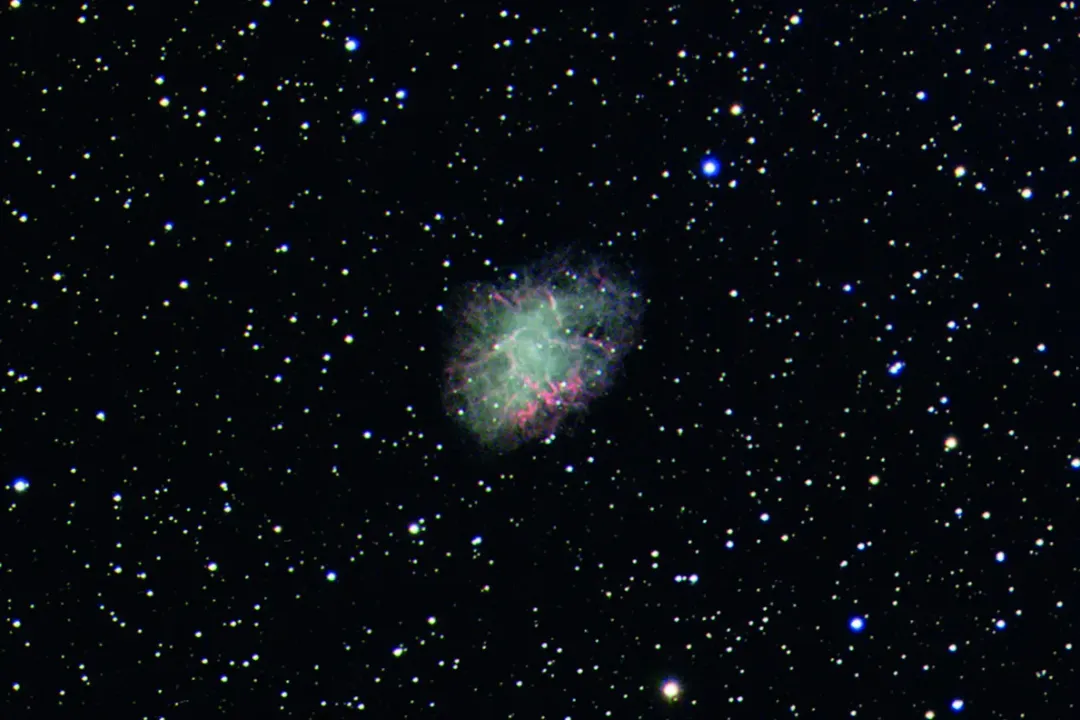
At its heart, the Crab Nebula is a supernova remnant, composed of a dense, rapidly spinning object known as a pulsar. [1] This pulsar, identified as the Crab Pulsar, is a neutron star roughly 28 kilometers in diameter. [7] It rotates 30 times per second, emitting beams of radiation that sweep across the sky like a lighthouse. [1] This consistent emission makes it an incredibly important tool for studying high-energy physics.
The nebula itself consists of a complex network of filaments and a glowing gas cloud. [6] These filaments are the outer layers of the star that were expelled during the explosion. [6] The interaction between the pulsar's wind and the surrounding gas creates a distinct, energetic environment. This environment emits radiation across the entire electromagnetic spectrum, from radio waves to gamma rays. [9]
| Feature | Characteristics |
|---|---|
| Object Type | Supernova Remnant |
| Distance | ~6,500 light-years |
| Central Engine | Neutron Star (Pulsar) |
| Pulsar Rotation | 30 times per second |
| Visible Magnitude | ~8.4 |
# Modern Observation
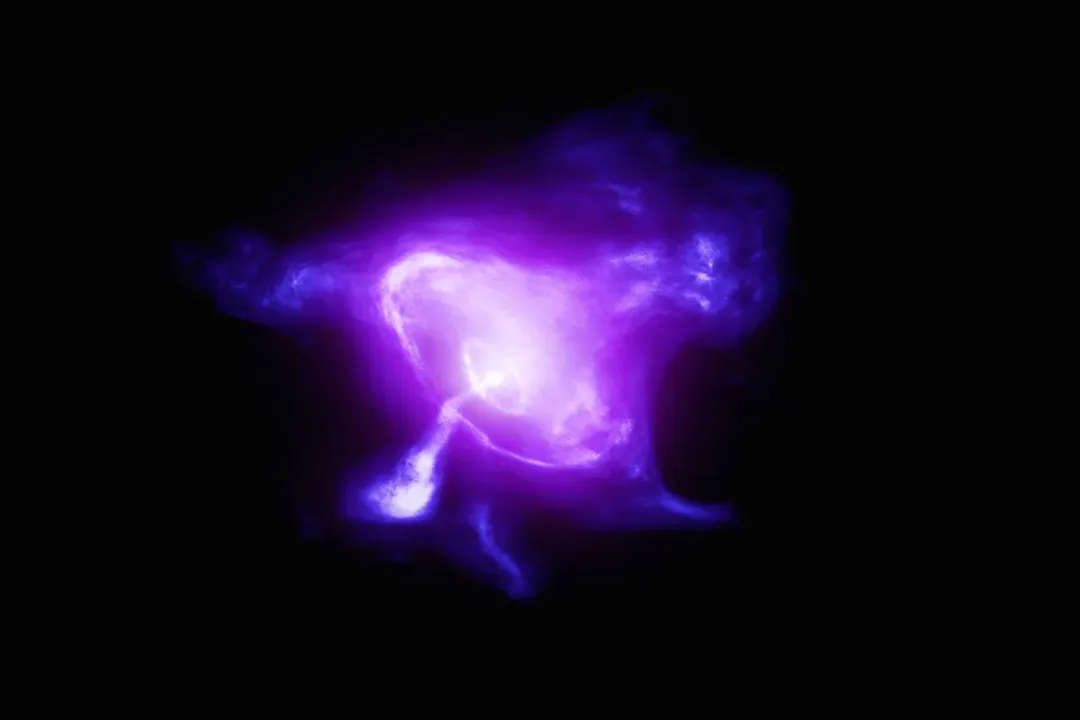
In recent years, observatories like the Hubble Space Telescope and the James Webb Space Telescope have provided new clarity on the nebula's structure. [1][6] Hubble’s visible-light observations highlight the intricate, glowing tendrils of ionized gas. [1] In contrast, Webb’s infrared capabilities allow researchers to see through the dust, revealing the internal structure and the distribution of heavier elements ejected during the explosion. [6]
These combined perspectives allow astronomers to map the chemical composition of the ejecta. By analyzing the infrared light, scientists can detect the presence of elements like iron, nickel, and silicon, which provides insight into the nuclear processes that occurred inside the progenitor star before its final collapse. [6] This data is essential for understanding how stars recycle material into the interstellar medium, enriching the galaxy with elements necessary for future star and planet formation. [9]
# Amateur Tips
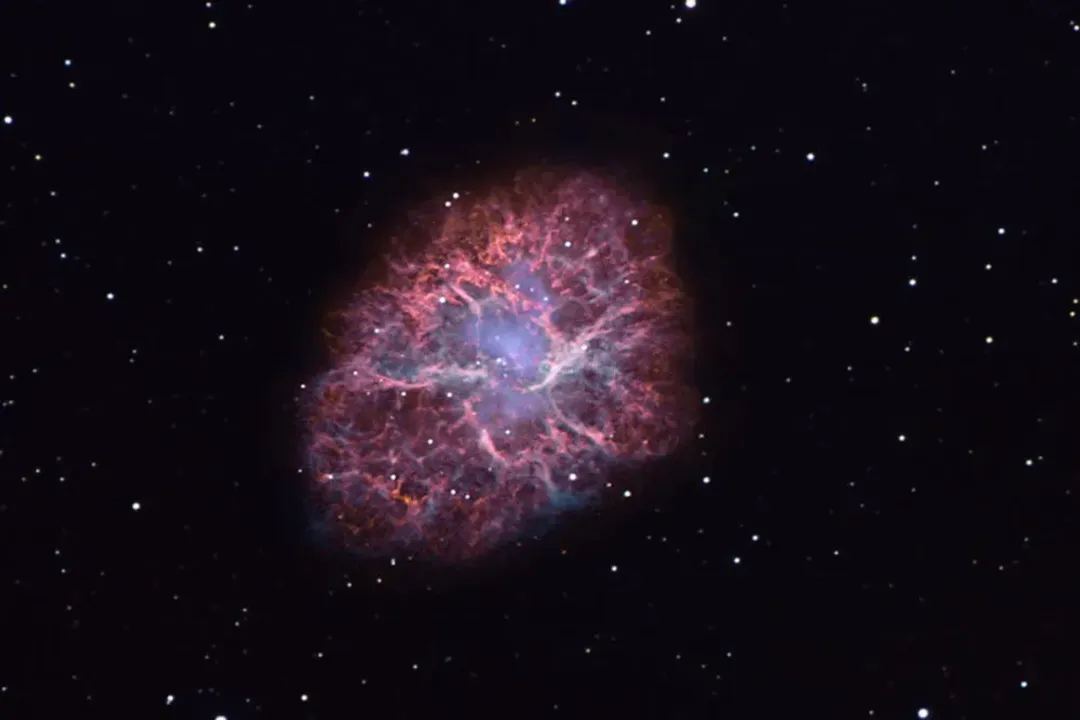
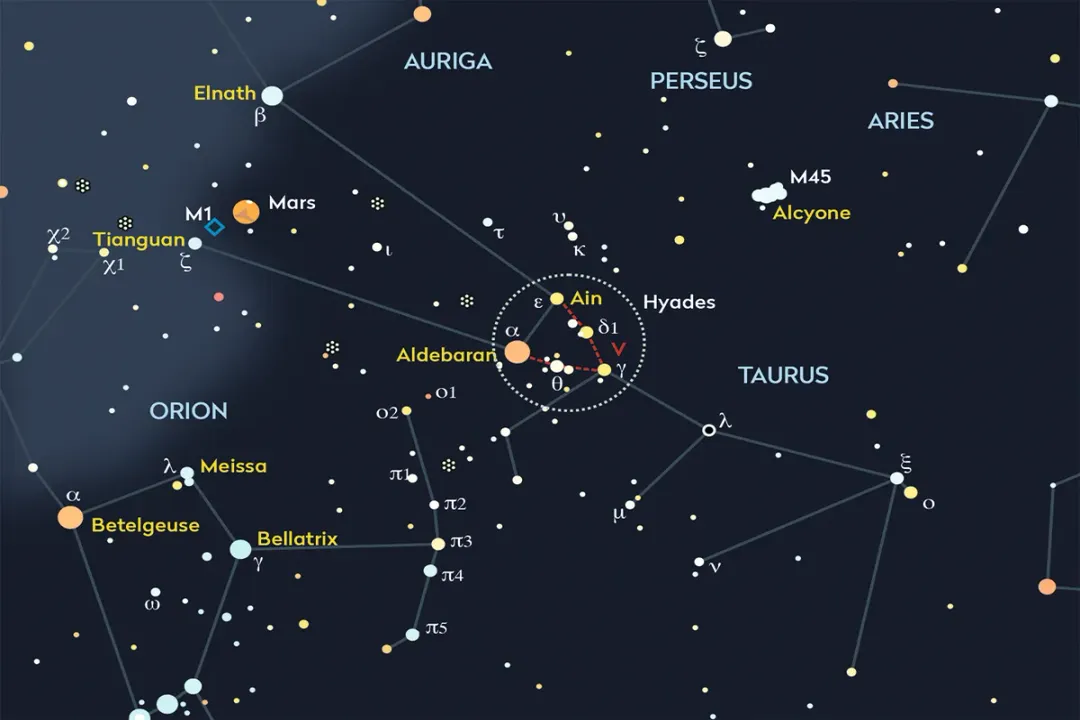
For amateur astronomers, the Crab Nebula is a challenging but rewarding target. [3] It is located near the tip of the southern horn of Taurus. Under dark, clear skies, it can be spotted using binoculars or small telescopes, though it will appear as a faint, fuzzy patch rather than the detailed structure seen in long-exposure photographs. [8]
To successfully view it, observers should look for the star Zeta Tauri, which serves as a navigational guide. [8] From there, nudging the telescope slightly toward the northwest often brings the nebula into the field of view. [8] Because the object has a low surface brightness, using averted vision—looking slightly to the side of the object—can help the eye detect the faint photons hitting the retina. [8]
# Calibration Value
One of the less frequently discussed reasons for the nebula's fame is its utility as a "standard candle" for calibrating astronomical equipment. [9] Because the pulsar emits energy with remarkable consistency across a wide range of wavelengths, astronomers use the Crab Nebula to verify that their telescopes and detectors are operating correctly. [6] If a new instrument is pointed at the Crab, the expected data output is well-known, allowing scientists to adjust their equipment to account for any sensitivity variances. This makes the nebula a silent partner in the success of many space missions, serving as a reliable reference point in the vast, often unpredictable nature of deep-space observations.
# Visual Scale
To understand the sheer magnitude of the 1054 event, it is helpful to contrast it with celestial objects familiar to modern observers. The supernova was bright enough that it would have cast shadows on the ground at night if it had occurred during the present day. [2] While the moon typically measures roughly half a degree across in the sky, the supernova likely appeared as a point-source of light that surpassed the brightness of the planet Venus. [7] This level of luminosity is rarely achieved by stellar events, making it a once-in-a-millennium phenomenon that would fundamentally alter the night sky for anyone witnessing it.
# The Pulsar Wind
The pulsar at the center acts as an engine, driving the nebula's expansion and luminosity. It releases a wind of charged particles, largely electrons and positrons, into the surrounding material. [1] This creates a shockwave where the wind collides with the slower-moving gas of the nebula, heating it up and causing it to glow across the electromagnetic spectrum. [9] This interaction is dynamic; while the nebula is thousands of years old, it is not a static object. Images taken decades apart show that the internal structures are constantly changing, churning, and evolving as the pulsar wind pushes against the remnants of the explosion. [1]
# Future Evolution
The Crab Nebula will not remain in its current form indefinitely. As the pulsar loses energy, its rotation will slow, and the rate of particle injection into the nebula will decrease. [7] Over the next several thousand years, the gas filaments will continue to expand and dissipate into the interstellar medium, eventually becoming too diffuse to be easily detected. The pulsar itself will continue to cool, eventually fading from view as it transitions into a cold, dark neutron star.
This transformation highlights why current observations are so critical. The nebula is in a specific, relatively short-lived phase of its lifecycle—a fleeting moment in the tens of millions of years a star might exist. By studying it now, astronomers are capturing a detailed look at the aftermath of a star's death, gaining knowledge that informs our understanding of stellar evolution, the origin of heavy elements, and the energetic processes that define the active universe.
The fame of the Crab Nebula is well-earned. It serves as a bridge between the historical records of the past and the advanced instrumentation of the present, providing a constant, reliable laboratory for scientists while remaining a compelling target for those who look up at the night sky.
Related Questions
#Citations
Messier 1 (The Crab Nebula) - NASA Science
What did people believe the Crab Nebula in 1054CE was ... - Reddit
Crab Nebula complete guide | BBC Sky at Night Magazine
What is a nebula? The Crab Nebula is a star's explosive ... - YouTube
What is the crab nebula and its significance? - Facebook
A History of the Crab Nebula
Messier 1 – the famous Crab Nebula - Astroshop.eu
Crab nebula | Astronomy and Astrophysics | Research Starters