Why can't we fly to the Moon now?
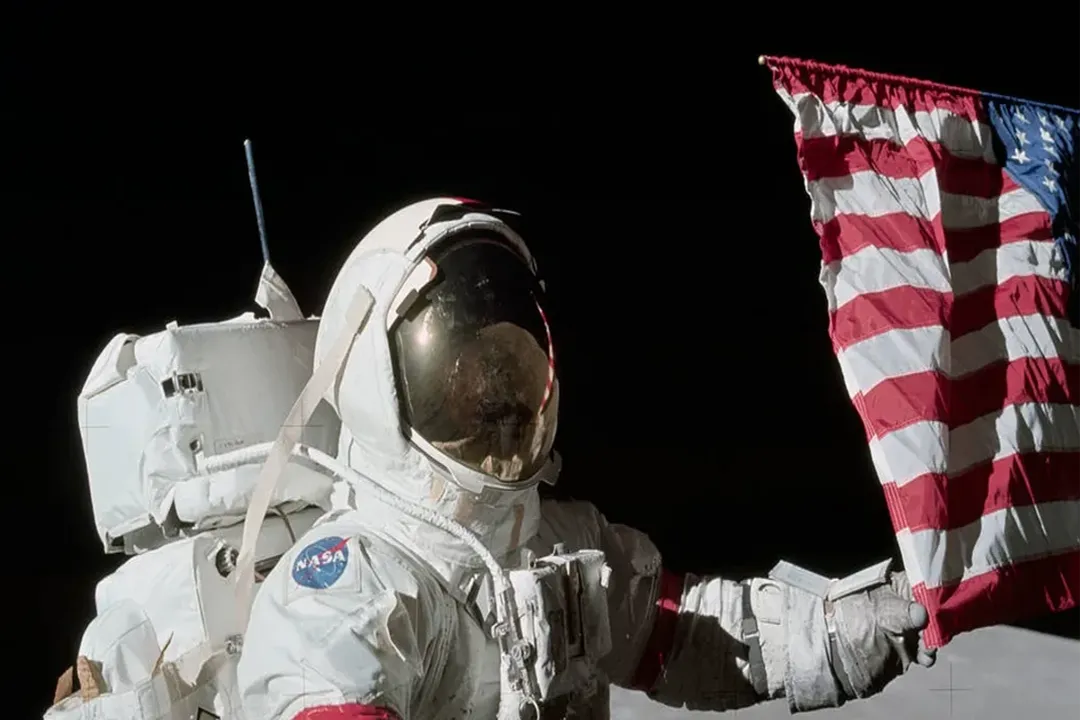
It seems counterintuitive that in the mere half-century since humanity first set foot on the Moon, the capability to repeat that feat seems to have vanished, or at least become staggeringly more difficult. We can stream 4K video across the globe, carry supercomputers in our pockets, and send sophisticated robotic probes to the outer solar system, yet sending humans back to our nearest celestial neighbor requires restarting programs that take decades and billions of dollars. The gap between the Apollo era's triumphant return in 1972 and today’s aspirations is not simply about the passage of time; it’s rooted in fundamental shifts in political motivation, industrial capacity, and safety culture. [3]
# Political Goalposts
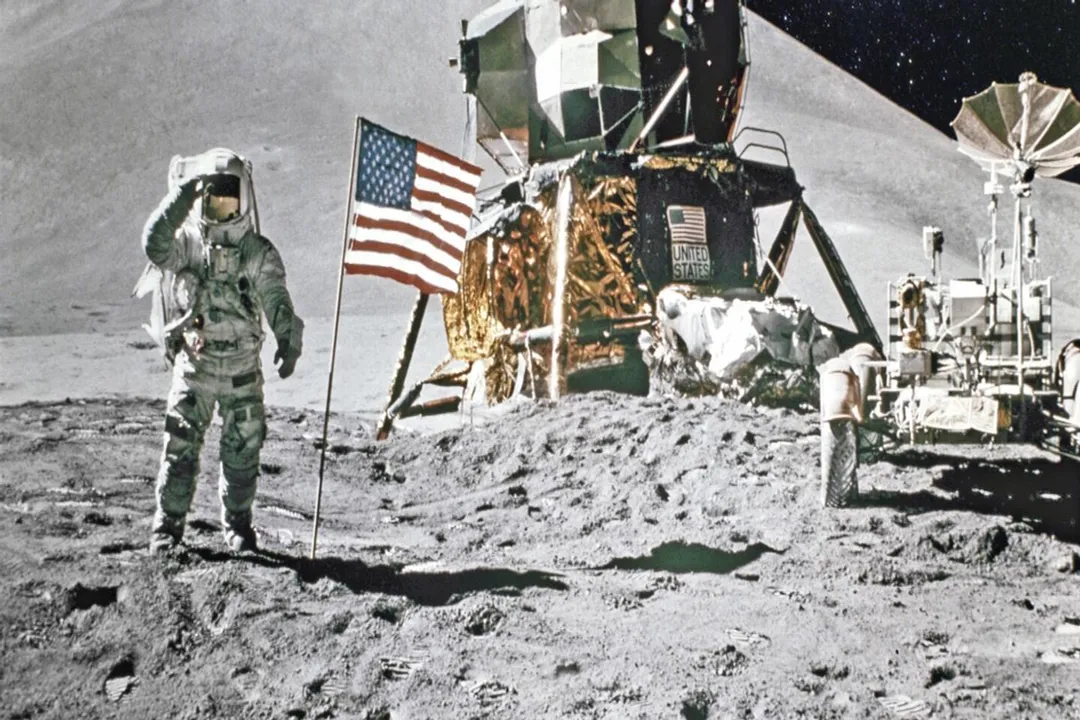
The initial impetus for the Apollo missions was less about pure scientific discovery and more about a high-stakes geopolitical competition: the Cold War Space Race. [5] President John F. Kennedy’s 1962 commitment to land a man on the Moon before the decade was out was a directive aimed squarely at demonstrating American technological and ideological superiority over the Soviet Union. [5] Once that objective was demonstrably achieved with Apollo 11 in 1969, and subsequently confirmed by five more successful landings, the primary political driver evaporated. [5]
The cost of the program was astronomical, ultimately totaling about $20 billion, which, at its peak, consumed roughly 4% of the entire U.S. federal budget. [5] As the political urgency cooled and the Strategic Arms Limitation Talks (SALT) began to slow down missile production, the massive funding required for lunar exploration became politically untenable amidst growing domestic social unrest. [5] Future missions were canceled, and resources were redirected toward other goals, such as the Space Shuttle program and the construction of the International Space Station (ISS). [3][5] When the goal is achieved and the political need disappears, the necessary sustained financial and organizational commitment simply isn't there. [2][5]
# Institutional Knowledge
One of the most frequently cited hurdles today is the loss of institutional memory. [2][4] The Apollo program was an unparalleled mobilization effort, employing around 400,000 people across the United States to achieve a specific, time-bound goal. [3] When the program ended, that entire infrastructure was largely dismantled, and the specialized workforce dispersed. [3] Engineers retired, specialized manufacturing lines were scrapped, and detailed documentation for legacy systems was not always preserved with the expectation that the hardware would never be built again. [2]
It is often remarked that while we have been to the Moon, the methods used to get there—the specific engineering solutions, the manufacturing nuances, and the operational experience—are not readily available anymore. [2] Modern attempts, like the Artemis program, necessitate building entirely new systems, like the Space Launch System (SLS) rocket and the Orion capsule, forcing engineers to develop and qualify new hardware virtually from scratch, even if the destination is the same. [3] This lack of direct inheritance means today’s engineers are not just repeating Apollo; they are solving many of the original challenges anew, albeit with modern tools.
Consider the hardware itself. The Saturn V rocket was an engineering marvel, yet it was purpose-built for a very specific mission profile. [3] The concept of bespoke, one-off massive systems, while effective for the initial race, is antithetical to modern acquisition strategies that favor reusability and lower operational costs. [5] The shift in focus to developing systems like the Space Shuttle and ISS meant that the specific expertise needed for deep-space crewed landers simply withered on the vine. [5]
# Modern Safety Culture
Where the Apollo era operated with a significantly higher tolerance for risk—a necessity born from the competitive nature of the Space Race—today’s environment demands much higher standards for human spaceflight. [3] The three astronauts lost in the Apollo 1 fire during a launch rehearsal underscored the inherent danger, but the program pressed on with calculated risks, exemplified by the near-disaster of Apollo 13. [3]
Today, regulatory scrutiny and public expectation mean that engineers must adhere to much stricter safety margins before a crewed flight can even attempt a lunar trajectory. This requires exponentially more testing, validation, and documentation for every component, adding years and immense cost to development schedules. [4] For instance, qualifying a lunar lander is considered significantly harder than validating many other types of space systems because simulating the lunar descent—which relies entirely on precise engine throttling, as there is no atmosphere for parachuting—is nearly impossible to replicate accurately on Earth.
This cultural difference in risk acceptance presents an interesting dichotomy. While the technology available today is vastly superior in terms of computing power and materials science, the process of integrating that technology into a human-rated system is inherently slower and more deliberate due to safety protocols. [4] If the Apollo program had been bound by the same risk-aversion mandates, it might never have met Kennedy’s deadline, regardless of the initial funding.
# The Commercial Factor and New Hurdles
The current return to the Moon is being executed with a fundamentally different economic model than the Apollo era, relying heavily on commercial partnerships under programs like NASA’s Commercial Lunar Payload Services (CLPS). Instead of owning and operating the hardware entirely, NASA contracts private entities like SpaceX and Intuitive Machines to provide services, such as delivering scientific instruments.
This approach has its own set of difficulties. Private companies, while agile, often work with smaller budgets compared to the massive government war chest NASA commanded in the 1960s. Furthermore, the new commercial players are often attempting novel engineering feats—like utilizing a variant of Starship for landing—and thus are creating hardware that hasn't been proven in deep space before. [2] They must learn from the ground up, and failures are expected as part of this iterative, commercial learning curve. The recent string of uncrewed lander failures—crashes due to software glitches, engine issues, or propellant leaks—highlights this necessary but painful path of development when the established infrastructure is gone.
One practical technical challenge that wasn't as central to the short Apollo hops is the goal for the Artemis program: sustained presence. [5] Apollo crews stayed for only a few days; the new plan aims for establishing bases or infrastructure, potentially focusing on the South Pole, where water ice may exist. Water ice, if accessible, could be processed into drinking water or, more importantly for long-term goals, rocket propellant (hydrogen and oxygen). However, landing near the South Pole is inherently more difficult than landing near the relatively flat equatorial landing sites used by Apollo, requiring entirely new navigation and hazard avoidance planning. The gravity field near the Moon is also "lumpy" due to uneven mass distribution, which can perturb an orbiting vehicle's path, requiring constant, precise navigation correction that was less critical for shorter missions.
Thinking about the sheer scale of the effort required today versus 1969 offers a comparative insight. While the Apollo program spent $20 billion, the political climate allowed that sum to represent a much larger percentage of the national wealth and focus than today’s budgets represent relative to the overall federal spending. [5] This means that even with more advanced technology, the concentration of national will and expenditure on a single, near-term goal is missing. It speaks volumes that today's return is structured as a marathon (sustained presence) built upon commercial sprints, rather than the single, high-speed sprint (beat the Soviets) that characterized the first attempt. [5]

# The Necessity of Purpose
Beyond budgets and expertise, a secondary, yet powerful, explanation lies in relevance. [2] The scientific value gained from the initial Apollo landings was immense, laying foundations for life support and space travel technology generally. [2] However, for many scientific tasks, sophisticated robotic missions—like the rovers on Mars—are often more cost-effective and efficient, as they avoid the life support complexity and radiation risks associated with humans. [2]
For human presence to be justified again, the objective must transition from a geopolitical statement to a sustainable scientific or economic endeavor. [2] The current Artemis program argues for this sustainability, seeing the Moon as a proving ground for longer-duration space travel necessary before attempting Mars. If the goal were purely scientific return for a short visit, sophisticated robotics might suffice, but if the aim is to learn how to live off-Earth, human boots on the ground—even in small numbers—can accelerate the learning curve significantly compared to remote operation. [2]
The current dynamic is characterized by a search for a commercially viable reason to stay, which was absent in the 1970s. [2] That viability may be found in lunar resources, permanent habitation, or simply using the Moon as a staging post, which requires different, newer infrastructure than the simple "flags and footprints" missions of the past.
# Building Back Better
The difficulty isn't that we cannot physically travel to the Moon; we have the fundamental physics and propulsion knowledge. The difficulty lies in rebuilding the specialized infrastructure and integrating decades of advanced, yet disparate, technologies (like advanced computing, new materials, and entirely new launch systems like SLS and Starship) while operating under a dramatically different risk calculus and political mandate. [3]
The path back involves developing systems that are not just capable of reaching the Moon, but capable of staying and supporting a continuous presence, which is a far grander and more complex engineering challenge than the initial, relatively brief visits. [5] This transition from short-term national achievement to long-term sustainable presence explains why the 51-year wait feels longer than the eight years between Kennedy's speech and the first landing; the goalposts have been moved from a point of arrival to a point of sustained residency.
#Videos
Why Haven't We Been Back To The Moon In 52 Years? - YouTube
Why is it so hard to return to the moon? - YouTube
Related Questions
#Citations
50 years ago, we flew to the moon. Here's why we can't do that today
Why don't we go to the moon again? : r/nasa - Reddit
Why Haven't We Been Back To The Moon In 52 Years? - YouTube
Why did we stop going to the Moon? | Royal Museums Greenwich
Why the U.S. Took 51 Years to Return to the Moon - GovTech
Why landing on the moon is proving more difficult today than 50 ...