Who observed the supernova?
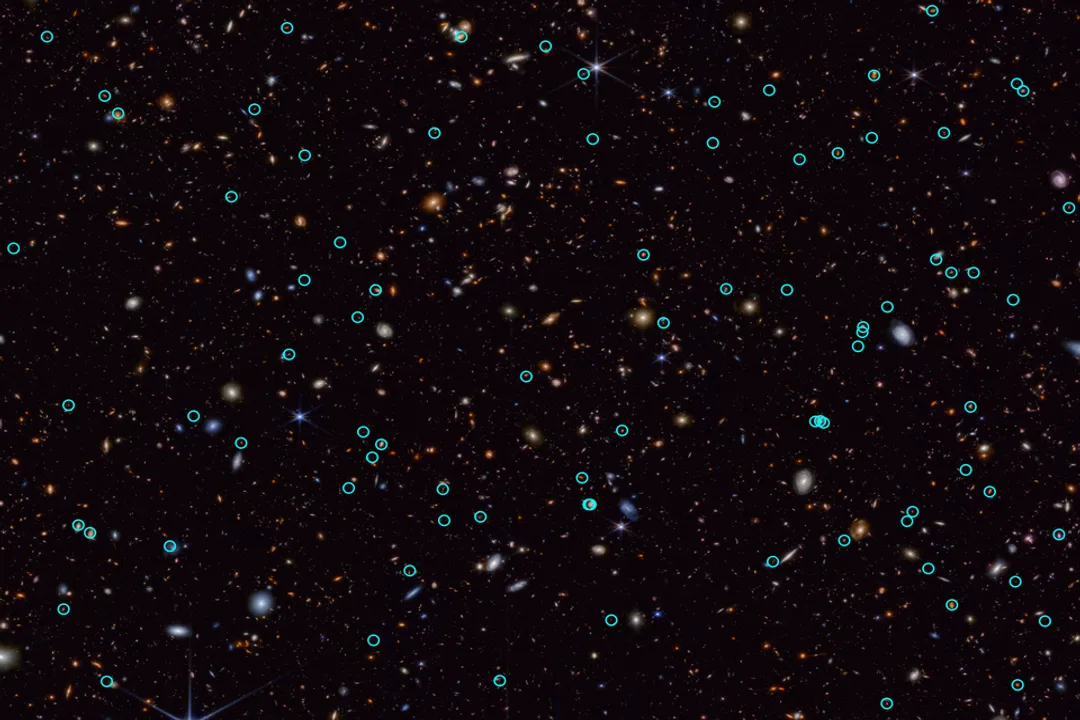
The celestial sphere, for centuries, was believed by many to be perfect and unchanging, a doctrine deeply rooted in ancient philosophy. This view held that the heavens were made of an incorruptible substance, distinct from the mutable, decaying Earth below. Introducing a startling, brilliant light into this supposedly static realm was an act that shook the foundations of established cosmology, and the individuals who first accurately recorded these events are rightfully celebrated in astronomical history. While many have likely seen a supernova throughout deep time, the rigorous observations by specific astronomers marked the true beginning of our scientific understanding of these stellar explosions.
# The Unchanging Heavens

Before the late 16th century, the consensus among Western scholars, heavily influenced by Aristotle, was that the stars were fixed in their eternal, crystalline spheres. Anything appearing suddenly in the sky—a comet or a "new star"—was generally relegated to the sublunary realm, the region below the moon, where change and corruption were the norm. Therefore, an object that shone with the brilliance of a star, yet appeared where nothing had been before, presented a severe problem for the accepted model of the universe. A definitive observation, coupled with rigorous measurement, was necessary to prove the phenomenon belonged to the celestial realm itself, forever altering the perception of what the heavens contained.
# Tycho's New Star
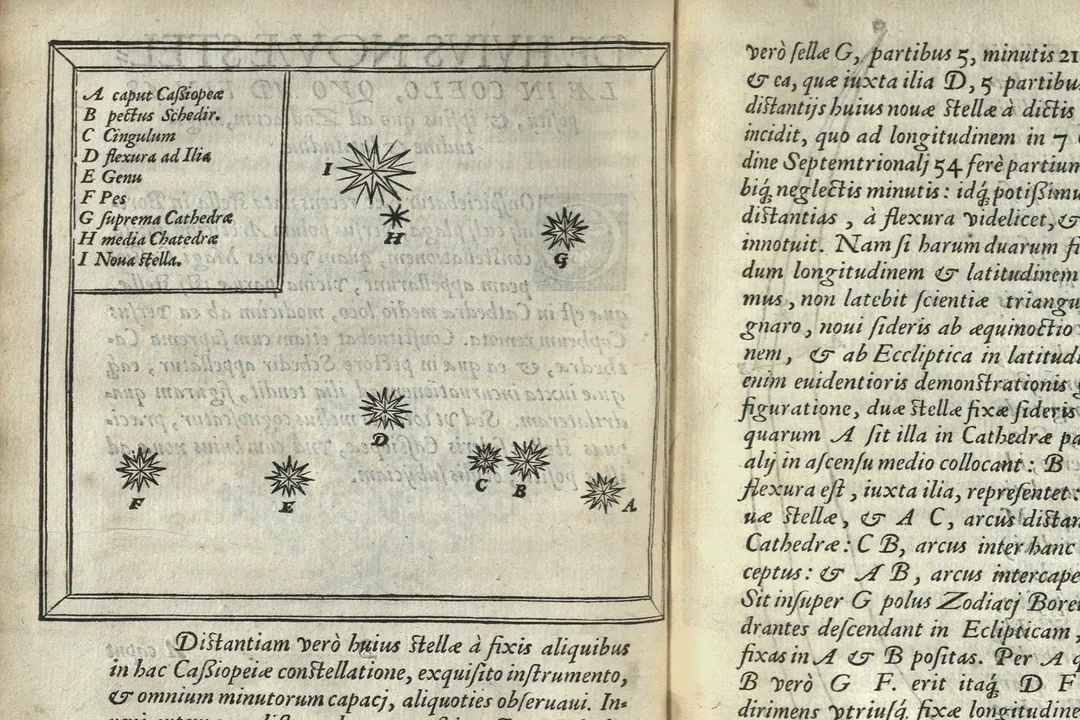
The astronomer most famously associated with fundamentally challenging the notion of unchanging heavens is the Danish nobleman Tycho Brahe. On the night of November 11, 1572, Brahe observed a "new star" in the constellation Cassiopeia. This star shone with incredible intensity; it was visible during the day, brighter than even Venus at its brightest, and it remained visible to the naked eye for about sixteen months before fading from view.
Tycho quickly recognized the significance of his find, which he documented meticulously in his work De Nova Stella (On the New Star). His primary goal was to determine its location relative to the Earth and other celestial bodies. He employed sophisticated instruments to measure its parallax—the apparent shift in position of an object due to the observer’s change in viewpoint as the Earth moved in its orbit.
The results of his measurements were conclusive: Tycho found no measurable parallax. This crucial piece of data meant the object could not be within the sphere of the Moon, nor the Sun, nor within the planetary orbits; it had to be in the supposedly immutable region of the fixed stars, far beyond the Moon. This evidence directly contradicted the ancient cosmological model which held that the celestial realm was perfect and immutable. While others, including astronomers in China and the Middle East, had recorded similar phenomena centuries earlier, Tycho's systematic, measured approach provided the definitive evidence required to shift European scientific thought. For instance, one popular account notes that on November 6, 1572, the phenomenon was noted, a date that lines up closely with Tycho's official first observation.
It is fascinating to consider the observational environment. Tycho was not using a telescope—that revolutionary instrument would not arrive for decades—but rather highly accurate naked-eye instruments like the great quadrant. The sheer brightness of the event allowed for this level of precision, enabling him to fix the star's position relative to background stars with remarkable accuracy for the era.
# Kepler's Follow-up
The story of challenging the heavens did not end with Tycho Brahe. Roughly three decades later, in 1604, another such event occurred, providing further confirmation that the stars could indeed change. This time, the key observer was Johannes Kepler, who had inherited Tycho Brahe’s meticulously gathered observational data after Tycho's death.
Kepler observed his own "new star," later classified as a Type Ia supernova, in the constellation Ophiuchus in October 1604. While this supernova was also bright, it was significantly fainter than Tycho's event of 1572, appearing at about the magnitude of Jupiter. Kepler, working in the early 17th century, had the advantage of working near the time of the invention of the telescope, though his initial observation was still naked-eye. He also confirmed its celestial nature by observing it over several months and determining it had no discernible parallax, just as Tycho had done. This second, well-documented stellar explosion provided powerful reinforcement for the idea that the celestial realm was not static, further dismantling the old cosmology. The fact that two such events were observed within a single generation—one by Tycho and one by his successor, Kepler—cemented the scientific community's rejection of the Aristotelian view of the cosmos.
# Comparing the Stellar Events
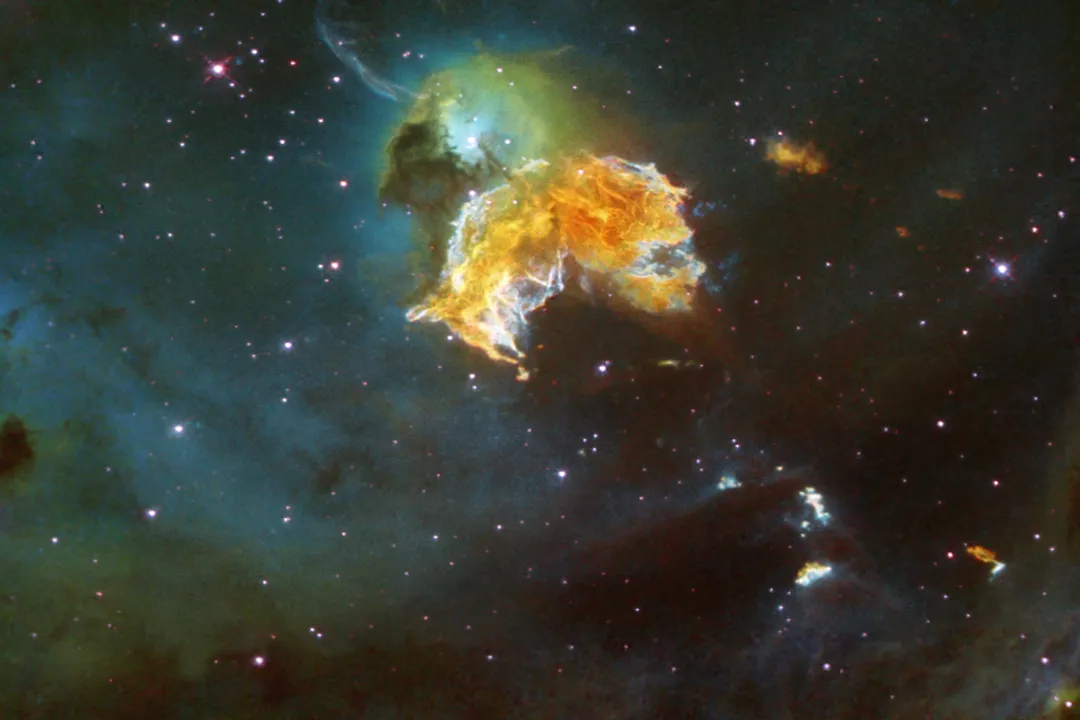
The two most famous naked-eye supernovae observed in the post-classical era offer a compelling study in astronomical progression and documentation standards:
| Feature | Tycho's Supernova (SN 1572) | Kepler's Supernova (SN 1604) |
|---|---|---|
| Date Observed | November 1572 | October 1604 |
| Constellation | Cassiopeia | Ophiuchus |
| Relative Brightness | Brighter than Venus; visible in daylight | About as bright as Jupiter |
| Key Observer | Tycho Brahe | Johannes Kepler |
| Instrument Context | Primarily pre-telescopic, high-precision naked-eye instruments | Near the advent of the telescope |
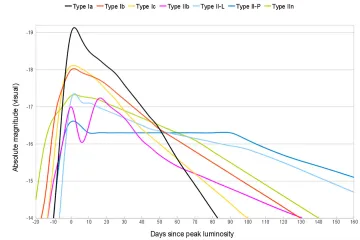
The difference in initial brightness is noteworthy. Tycho's 1572 event was dramatically more luminous than Kepler's 1604 event. If we consider the magnitude scale, Tycho's object reached perhaps magnitude -4, whereas Kepler's likely peaked around magnitude +0.75. This difference in visibility would have made Tycho's discovery immediately undeniable to the public and the educated class, whereas Kepler’s, while significant, required a more dedicated observer like himself to confirm its nature against background stars.
# Observations and Cosmology
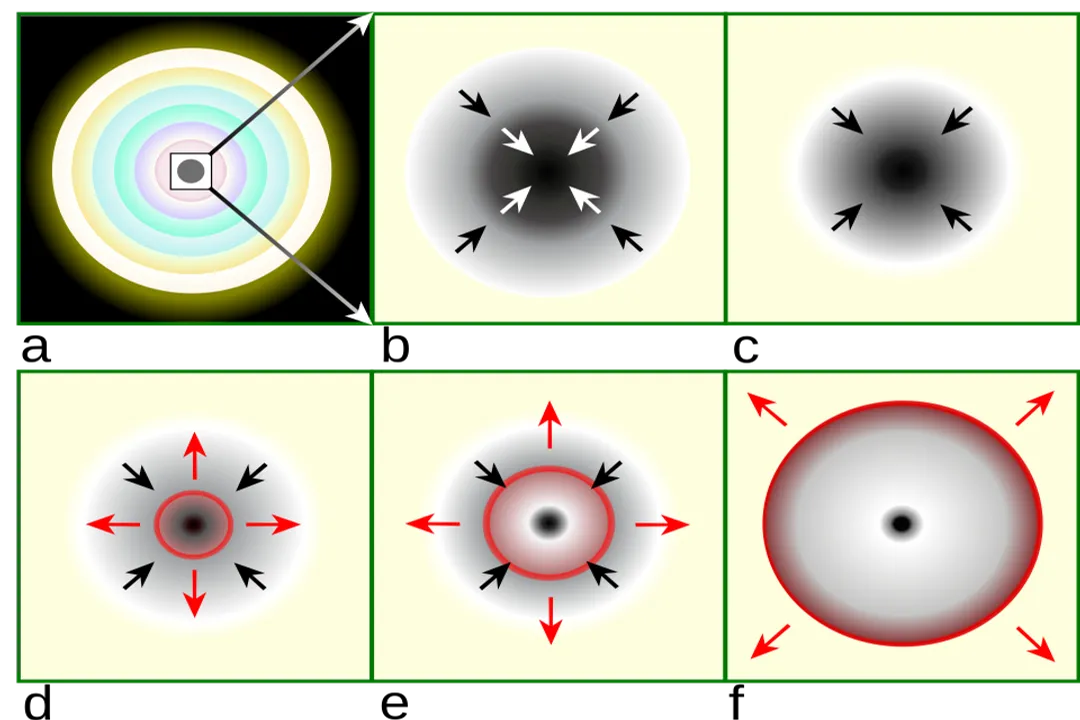
The challenge presented by these observers was twofold: proving the location and understanding the nature of the objects. Tycho’s meticulous work on parallax confirmed the location—they were stellar, not atmospheric. But what were they? The term "supernova" itself implies a new star, but these were not born; they were dying stars undergoing a catastrophic explosion.
The fact that Tycho Brahe, a wealthy nobleman, financed and constructed advanced observatories and instruments speaks to a shift in how serious astronomical inquiry was conducted. His dedication established a new standard for precise data collection, which was experienced directly by his assistant, Kepler. This legacy of detailed measurement, even if misinterpreted at the time as evidence against a changing cosmos, paradoxically provided the essential raw material for the true revolution—the later work of Kepler himself using planetary motions, and that of Galileo using the telescope.
It is worth reflecting on how the observers’ societal roles colored their findings. Tycho, a man of high social standing, was able to command the resources and attention necessary to validate his findings against the established Church and academic doctrine. His scientific authority, built on meticulous observation, forced the intellectual world to confront the evidence, even if the full explanation (a star exploding) would take decades to solidify. This established a critical precedent: empirical data, collected systematically, must supersede inherited philosophical assumptions.
# Later Light
While Tycho and Kepler feature prominently for the naked-eye observations that directly overturned old philosophical systems, the history of supernova observation continues through the modern era. Today, astronomers use highly sensitive telescopes to detect these events across vast cosmic distances, realizing they are the violent deaths of massive stars or the runaway nuclear fusion of white dwarfs in binary systems.
The legacy of Brahe and Kepler is not just in seeing something new, but in proving it was celestial through careful measurement. Their bright flashes in the night sky, separated by over thirty years, acted as cosmic exclamation points, forcing astronomy out of the realm of pure philosophy and into the age of observational science, paving the way for figures like Galileo and Newton.
#Videos
OTD in Space - Nov. 6: Tycho Supernova Discovered - YouTube
Related Questions
#Citations
Supernova - Wikipedia
420 Years Ago: Astronomer Johannes Kepler Observes a Supernova
November 11, 1572: Tycho Brahe Spots a Supernova
Tycho Brahe Observes a Supernova | Research Starters - EBSCO
OTD in Space - Nov. 6: Tycho Supernova Discovered - Facebook
Tycho Brahe's New Star | Harvard Library
Which supernova did Tycho observe in 1572? - Astronomy Magazine
OTD in Space - Nov. 6: Tycho Supernova Discovered - YouTube