Who has a telescope named after him?
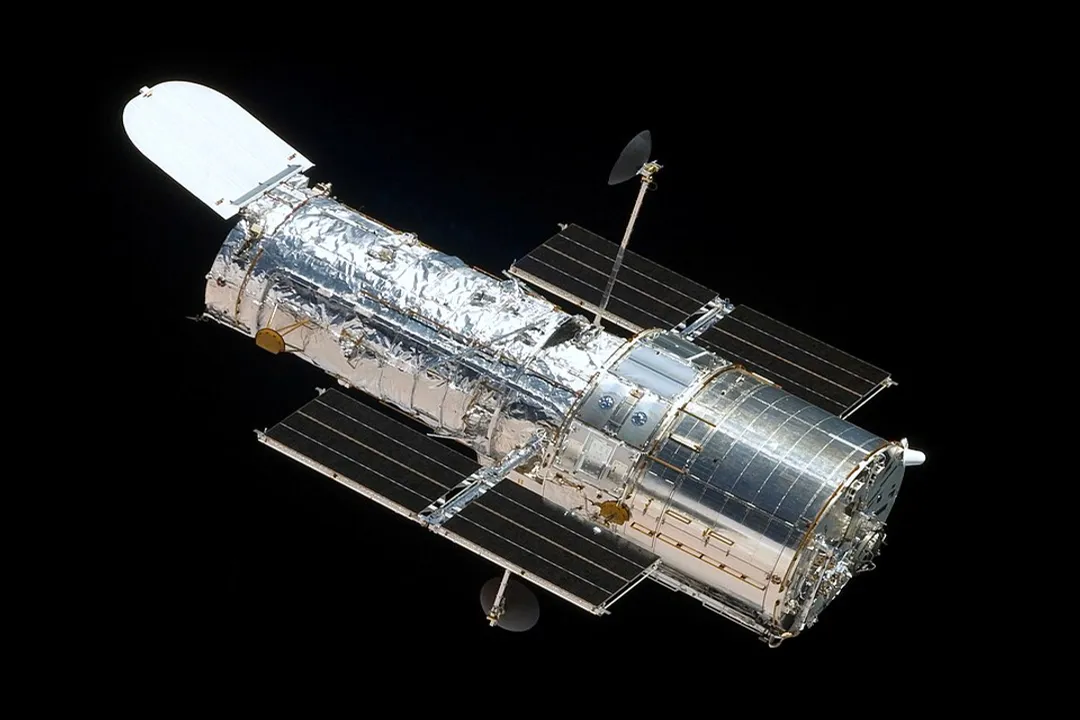
The astronomer whose name graces one of the most famous scientific instruments ever launched into space is Edwin Powell Hubble. The decision to name the iconic orbiting observatory after him recognized his monumental contributions to cosmology, fundamentally altering humanity's understanding of the scale and nature of the universe. Hubble's work provided the critical foundation upon which the modern concept of an expanding cosmos rests. His life, spanning from his birth in November 1889 until his death in 1953, marked a period of profound transition in astronomical thought.
# Early Life

Edwin Hubble was born in Marshfield, Missouri, on November 20, 1889. His academic path showed early promise across multiple disciplines. He was a distinguished student, achieving a degree in mathematics from the University of Kentucky in 1910. His educational background was remarkably well-rounded, encompassing studies in law after earning a Rhodes Scholarship to Oxford University. While he initially pursued law, his true calling remained firmly in the celestial sphere. Upon returning to the United States, he taught high school mathematics and coached basketball before deciding to dedicate himself fully to astronomy. He went on to earn his Ph.D. from the University of Virginia in 1917.
# Observational Prowess
Hubble’s scientific career flourished primarily at the Mount Wilson Observatory in California, where he began working after service in the U.S. Army during World War I. This observatory housed the impressive 100-inch Hooker Telescope, one of the largest and most powerful instruments of its time. It was this telescope that allowed him to make his most significant breakthroughs in understanding objects that had previously been relegated to a vague category known as "spiral nebulae".
One of Hubble’s earliest and most impactful findings addressed the debate over whether these spiral structures were small gas clouds within our own Milky Way galaxy or independent island universes far beyond it. By observing Cepheid variable stars within the Andromeda Nebula, he was able to calculate its immense distance. The presence of these specific types of stars, whose period-luminosity relationship was known, acted as a crucial cosmic yardstick. His findings conclusively proved that the Andromeda Nebula was, in fact, a separate galaxy, vastly distant from the Milky Way. This single realization instantly expanded the known size of the universe by an order of magnitude, shifting the entire cosmological paradigm.
# Cataloging Galaxies
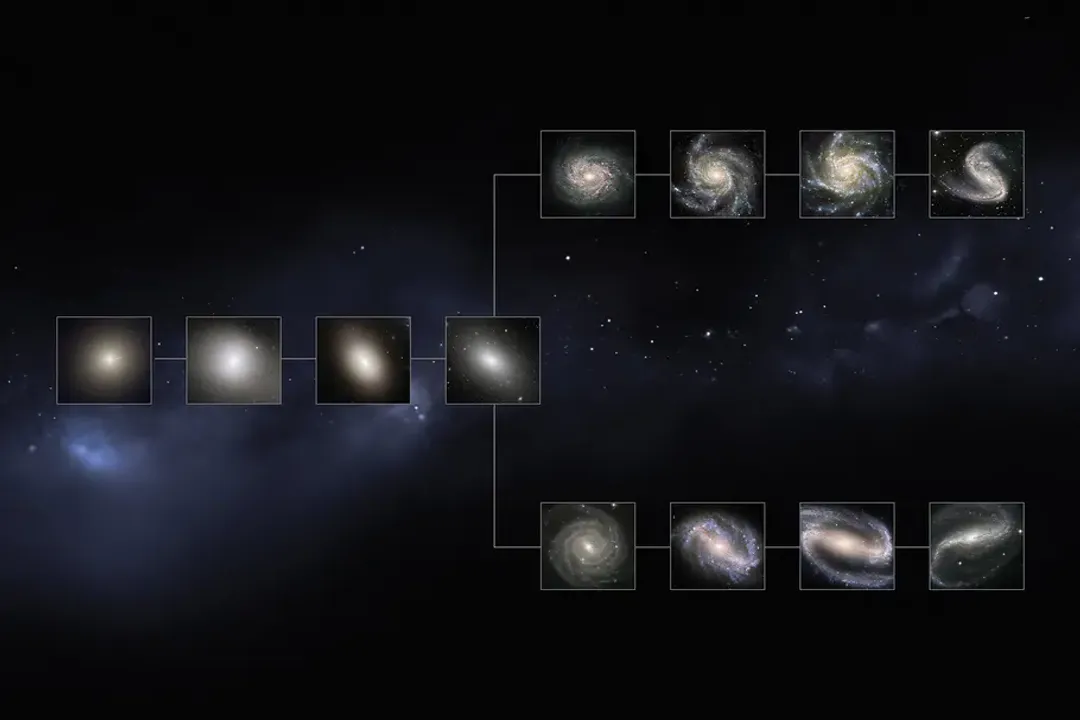
Hubble did not stop at proving the extragalactic nature of these structures; he proceeded to systematically classify them. He, along with Milton Humason, developed a scheme for organizing galaxies based on their visual appearance. This classification system, often referred to as the Hubble Sequence or the Hubble Tuning Fork Diagram, remains a foundational concept in extragalactic astronomy, even as our understanding of galaxy evolution has deepened. The system categorized galaxies into ellipticals (E), which ranged from nearly spherical to highly flattened; spirals (S), which included barred spirals (SB); and irregulars (Irr).
It is interesting to reflect on how a purely visual classification scheme, executed with the technology available in the early 20th century, established a structure so robust that it still forms the basis of introductory astronomy texts today. This longevity speaks not only to Hubble's observational skill but also to the underlying physical reality reflected in the morphology of these distant stellar systems.

# Expansion Confirmed
Perhaps Hubble’s most revolutionary contribution involved the realization that the universe itself is not static. Working with his assistant Milton Humason, Hubble analyzed the light spectra from these distant galaxies. They observed a phenomenon known as redshift, where the spectral lines of light from these objects were shifted toward the red end of the spectrum. This redshift indicated that the galaxies were moving away from Earth.
The crucial correlation was made: the farther away a galaxy was, the faster it appeared to be receding. This observation led directly to the formulation of Hubble's Law (sometimes called the Hubble–Lemaître Law). This law mathematically described the expansion of the universe, a concept that profoundly challenged the then-prevalent static cosmological models. His findings provided direct observational evidence supporting the then-nascent Big Bang theory.
# The Naming Honor
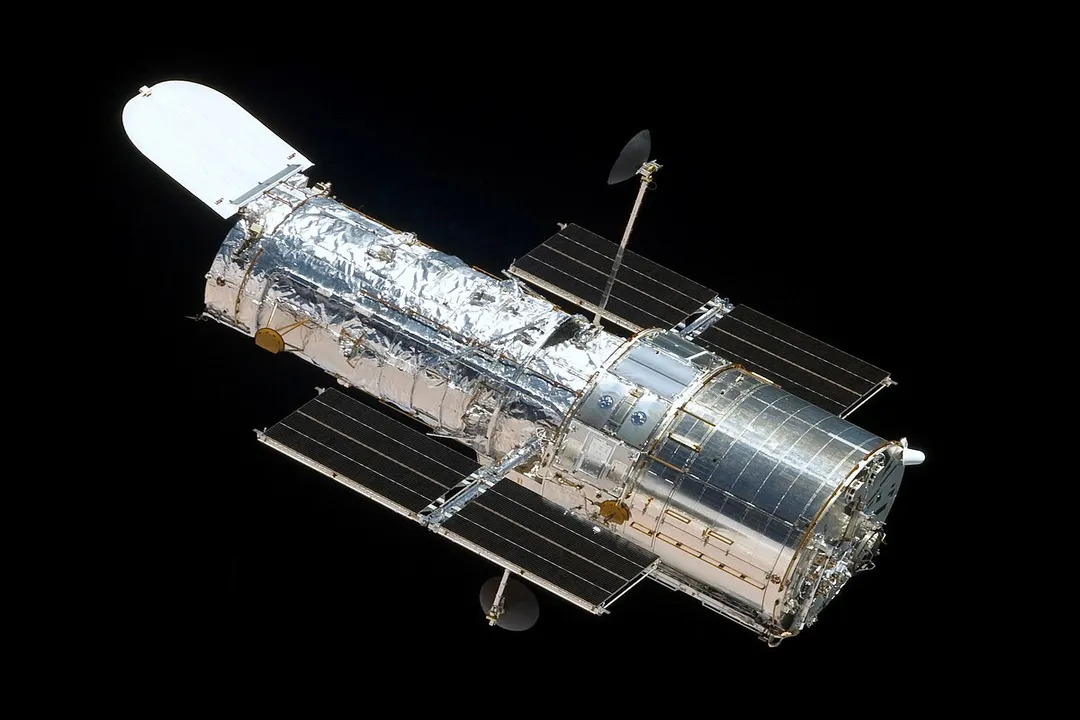
The naming of the Hubble Space Telescope (HST) was a tribute to the man who redefined the cosmos. While the concept for an orbiting telescope predates Hubble’s death, the final choice of his name was a deliberate nod to his seminal role in showing that the universe extends far beyond our own galaxy and is, in fact, dynamically expanding. The official launch of the HST occurred in April 1990.
The selection process and the naming itself often reflect a cultural need to anchor immense technological achievements to historical intellectual giants. In this case, the telescope, designed to see farther and clearer than any instrument before it, was fittingly bestowed upon the astronomer who first proved how truly vast that "farther" actually was. The telescope was built to confirm and expand upon the universe Hubble first glimpsed through the 100-inch glass.
The idea for an orbital observatory had been championed by astronomer Lyman Spitzer Jr. decades earlier. By the time the project neared fruition, Hubble’s status as the father of modern extragalactic astronomy made him the obvious namesake. The organization behind the telescope, including NASA and the European Space Agency (ESA), recognized that naming it after him provided an immediate, tangible link between the past scientific revolution and the present technological marvel.
# Telescope Legacy
The Hubble Space Telescope represented a generational leap in observational astronomy. Placed into low Earth orbit in 1990, it avoids the blurring effects of Earth’s atmosphere, allowing it to capture images of unprecedented clarity and depth. This capability allows it to view objects billions of light-years away, peering back to the very early universe.
The scientific output of the HST is staggering, confirming and refining the expansion rate Hubble calculated nearly a century ago, while also discovering new celestial phenomena and providing stunning visual data that captures the public imagination. Its operational lifespan has been extended through multiple servicing missions, demonstrating an extraordinary commitment to maintaining this vital scientific asset.
To truly grasp the significance of the honor, consider the scale of the investment. The HST, with its initial projected costs running into billions, represents a concentrated focus of human and financial resources aimed at observation. Hubble, by contrast, conducted his revolutionary work using the Mount Wilson 100-inch telescope, a massive instrument for its time, but one rooted entirely on Earth. The shift from requiring the world's largest ground-based telescope to placing a sophisticated observatory above the atmosphere encapsulates the exponential progress in technology that Hubble's own discoveries spurred within the astronomical community. The telescope named for him is, in many ways, the ultimate successor to the 100-inch instrument that defined his career.
# Hubble's Classification System
The organizational structure Hubble developed for galaxies helps illustrate the kinds of information astronomers were trying to organize in the pre-digital age. The system is often represented visually as a tuning fork, which provides an intuitive map for navigating galaxy types.
| Galaxy Type | Abbreviation | Key Visual Feature |
|---|---|---|
| Elliptical | E0–E7 | Smooth, featureless oval shape; E0 is nearly spherical, E7 is highly flattened |
| Spiral (Normal) | S | Flattened disk with spiral arms extending from the center |
| Spiral (Barred) | SB | Similar to spiral, but arms emerge from a central bar structure |
| Irregular | Irr | Lacking a distinct regular shape |
This simple visual parsing was essential for mapping the local universe. While modern surveys capture data in many wavelengths beyond visible light, the fundamental morphological categories established by Hubble remain a useful starting point for understanding galaxy structure and evolution. The presence of a bar in a spiral galaxy (SB), for instance, is now understood to be a significant structural element that influences gas flow and star formation rates, insights that built upon the initial visual recognition.
# A Scientist's Birthday
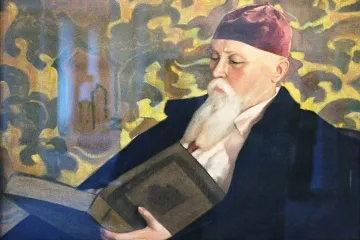
Edwin Hubble’s birthday, celebrated annually on November 20th, serves as a reminder of the human element behind these monumental scientific achievements. His dedication spanned decades, marked by significant scientific advances and personal commitment to his field. The fact that the telescope named in his honor continues to operate and deliver transformative science long after his passing speaks to the enduring quality of his foundational work. It is not merely a monument to a person, but a continuation of the scientific program he initiated: understanding our place in the greater cosmos.
The enduring connection between Edwin Hubble and the telescope is a powerful narrative in the history of science. It pairs the theoretical insight born from painstaking observation—the realization that the universe is enormous and expanding—with the pinnacle of contemporary engineering designed to see even further. Every new stunning image returned by the HST carries the echo of the man who first used a powerful telescope to prove the universe was far grander than anyone had previously dared to imagine.
#Videos
The Man the Hubble Space Telescope was Named After - YouTube
Related Questions
#Citations
Hubble Space Telescope - Wikipedia
Edwin Powell Hubble - The man who discovered the cosmos
Who is the Man That Discovered the Universe?
EarthSky - Facebook
The Man the Hubble Space Telescope was Named After - YouTube
Who Was Edwin Powell Hubble? Astronomer After Whom NASA ...
Edwin Hubble, the man behind HST | Galaxy Zoo
Today marks our namesake Edwin Hubble's birthday ... - Instagram