Which category do the smallest stars belong to?
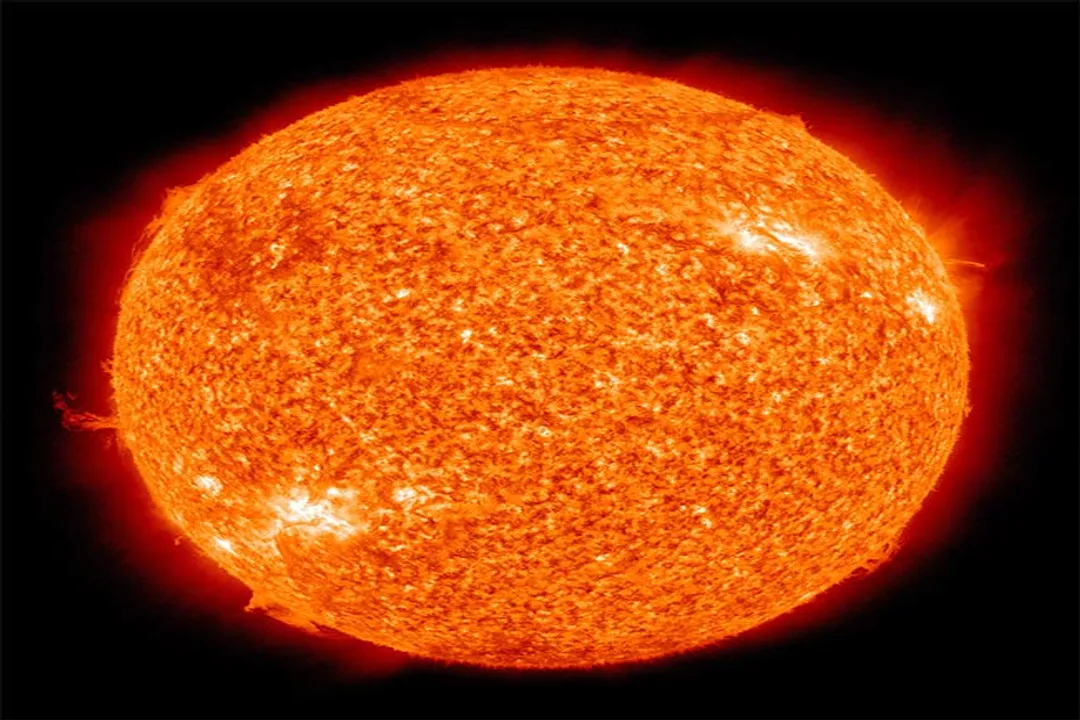
The category housing the smallest stars in the universe is generally referred to as dwarf stars, though this term itself requires careful classification. When we look for the absolute smallest true stars—those undergoing hydrogen fusion in their cores—we are overwhelmingly looking at the class known as red dwarfs. [1][2][3] These stellar entities are the undisputed champions of smallness and longevity in the stellar population of the Milky Way galaxy. [5] They are not merely small variants of larger stars; they represent the lower end of the mass spectrum for objects officially recognized as main-sequence stars. [1][7]
# Stellar Classification
To understand where the smallest stars fit, one must first appreciate the general framework astronomers use to categorize stars. The most fundamental classification is based on luminosity, temperature, and spectral type, often visualized using the Hertzsprung-Russell (H-R) diagram. [3] Most stars, including our own Sun, spend the majority of their existence on the main sequence, fusing hydrogen into helium. [1]
The term "dwarf star" can sometimes cause confusion because it is used in multiple contexts. For instance, it refers to stars like our Sun, which is a yellow dwarf (G-type star) while it is on the main sequence. [1] However, in the context of smallness, the term most accurately applies to the red dwarfs, which are much smaller, cooler, and dimmer than the Sun. [5][6] They occupy the lower right-hand section of the main sequence on an H-R diagram. [1]
For a more precise astronomical definition, the smallest true stars fall into spectral classes M, K, and L dwarfs, although the M-class dominates the lower end of the scale in terms of numbers and size. [1] These are the longest-lived stars, capable of burning their nuclear fuel incredibly slowly over trillions of years. [5]
# Red Dwarf Characteristics
The undisputed members of the smallest star club are the red dwarfs. These stars have masses ranging from about $0.075$ to $0.5$ times the mass of the Sun (). [1][5] The lower limit of is critical because it is the minimum mass required for sustained core hydrogen fusion; anything less massive generally fails to ignite a stable fusion reaction and becomes a brown dwarf. [7]
Red dwarfs are characterized by their cool surface temperatures, typically below $4,000$ Kelvin (), which gives them their characteristic reddish hue. [5][6] Contrast this with the Sun's surface temperature of around . [1] Because they are cool and have low mass, their luminosity is drastically reduced. A red dwarf might shine with only $0.0001$ to $0.1%$ of the Sun's total light output. [5] This extreme dimness is a major reason why, despite being the most common type of star in the galaxy, it is difficult to observe them directly, even the relatively close ones. [5]
Their internal structure is also unique. Unlike the Sun, which has distinct radiative and convective zones, the smallest red dwarfs are fully convective. [5] This means the helium "ash" created by fusion is constantly mixed throughout the star's interior, preventing a buildup of inert helium in the core. This process allows them to consume nearly all of their hydrogen fuel over their estimated lifespans, which can reach up to 10 trillion years. [5]
Consider the scale of that lifespan. Our Sun is only about $4.6$ billion years old, meaning it has not even completed $0.5%$ of its main-sequence existence. [1] The smallest red dwarfs are essentially cosmic infants, destined to shine for an epoch vastly longer than the current age of the universe itself (about $13.8$ billion years). [5] This sheer temporal dominance suggests that when we look up on a clear, dark night, the light we see is overwhelmingly dominated by stars that have already died or are on their way out, while the vast majority of stellar mass in the galaxy is currently locked up in these slow-burning, tiny furnaces. [5]

# Measuring the Smallest
When pinpointing the smallest known stars, we rely on measurements of their radii and masses, often determined through techniques like observing stellar transits or measuring radial velocity shifts caused by orbiting exoplanets. [4]
One of the most notable examples often cited as among the smallest is EBLM J0555-57Ab. [4] This star orbits a larger, brighter star in a binary system. Its radius is reported to be incredibly close to the theoretical minimum for hydrogen fusion, measuring only about $0.84$ times the radius of Jupiter. [4] This is astonishing when you realize that Jupiter is a planet, not a star, yet this star is barely larger than it. The relationship between radius and mass is generally monotonic for main-sequence stars, meaning the smallest radii correspond to the smallest masses, placing these objects right at the hydrogen-burning threshold. [1][7]
To put this in perspective, here is a comparison table illustrating the dramatic difference in scale between the Sun, Jupiter, and some of the smallest known stars, focusing on their radii: [1][4]
| Object | Relative Radius (vs. Sun) | Approximate Radius (km) | Notes |
|---|---|---|---|
| Sun | $1.00$ | Yellow Dwarf (G2V) | |
| EBLM J0555-57Ab | Extremely small, near mass limit | ||
| Jupiter | Largest Planet |
The closeness of EBLM J0555-57Ab's radius to Jupiter's radius ($0.084$ vs. $0.10$ times the Sun's radius, respectively) emphasizes that the line between the largest gas giant and the smallest true star is incredibly fine, separated only by the ability to sustain thermonuclear fusion. [4][7]
# The Edge of Stardom
The search for the smallest star naturally leads to the question: what is the absolute smallest size a star can be? As mentioned, the boundary marker is the point at which a celestial body can ignite and sustain hydrogen fusion in its core. [7]
Objects below this mass limit, roughly , are classified as brown dwarfs. [1][7] Brown dwarfs are sometimes referred to as "failed stars" because while they can briefly fuse deuterium (a heavy isotope of hydrogen), they cannot maintain the core temperatures needed for regular hydrogen fusion, which defines a true star. [7]
The theoretical minimum radius for a true star is often placed close to that of Jupiter or slightly larger, depending on the star's exact temperature and composition. [7] If we consider the most massive brown dwarfs, they can be up to about $13$ times the mass of Jupiter, which is the threshold above which deuterium fusion begins. [7] Therefore, the smallest true stars, the bottom rung of the main sequence, sit just above this planetary/substellar divide. [1][7]
While the exact radius can vary slightly depending on atmospheric modeling and composition, the mass constraint is firm: without the mass to generate the necessary core pressure and temperature (around $10$ million ), you do not have a star in the conventional sense; you have a brown dwarf. [7] This demarcation is one of the most critical boundaries in astrophysics, separating the long-lived, light-producing cosmos from the dimmer, fading substellar objects. [1]
# Implications for Galactic Structure
The dominance of red dwarfs has profound implications for understanding the structure and evolution of galaxies. Because they burn their fuel so slowly, they have not yet had time to evolve significantly off the main sequence since the Big Bang. [5] This means that observing a red dwarf today tells us almost exactly what it was like billions of years ago, making them excellent, stable probes of galactic history. [5]
If we consider the entire stellar census, it has been estimated that red dwarfs may constitute as much as three-quarters of all stars in the Milky Way. [5] This numerical supremacy means that even though they are individually faint, when considering sheer numbers, the overall light profile of a typical galaxy is heavily influenced by these tiny, cool bodies. [5] When amateur astronomers point their telescopes at the night sky, the light they capture from faint, distant points is disproportionately coming from stars that are intrinsically less luminous than the Sun by factors of a thousand or more. This realization subtly shifts one's perspective on the typical inhabitant of our galaxy, moving the prototypical star away from the Sun and toward the M-type dwarf. [1] The vast majority of stellar birthdays celebrated in the galaxy are, in reality, very slow, very quiet affairs.
#Videos
The Smallest Stars in the Universe - Red Dwarfs - YouTube
What Types Of Dwarf Star Are There? - YouTube
Related Questions
#Citations
Dwarf star - Wikipedia
What are the classifications of small stars? | CK-12 Foundation
Types of Stars | Stellar Classification, Lifecycle, and Charts
The Smallest Stars in the Universe - Red Dwarfs - YouTube
Red dwarf star | Definition, Facts, & Temperature | Britannica
What is the smallest star known to humans, and what is the ... - Quora