Where does NASA get its hydrogen?
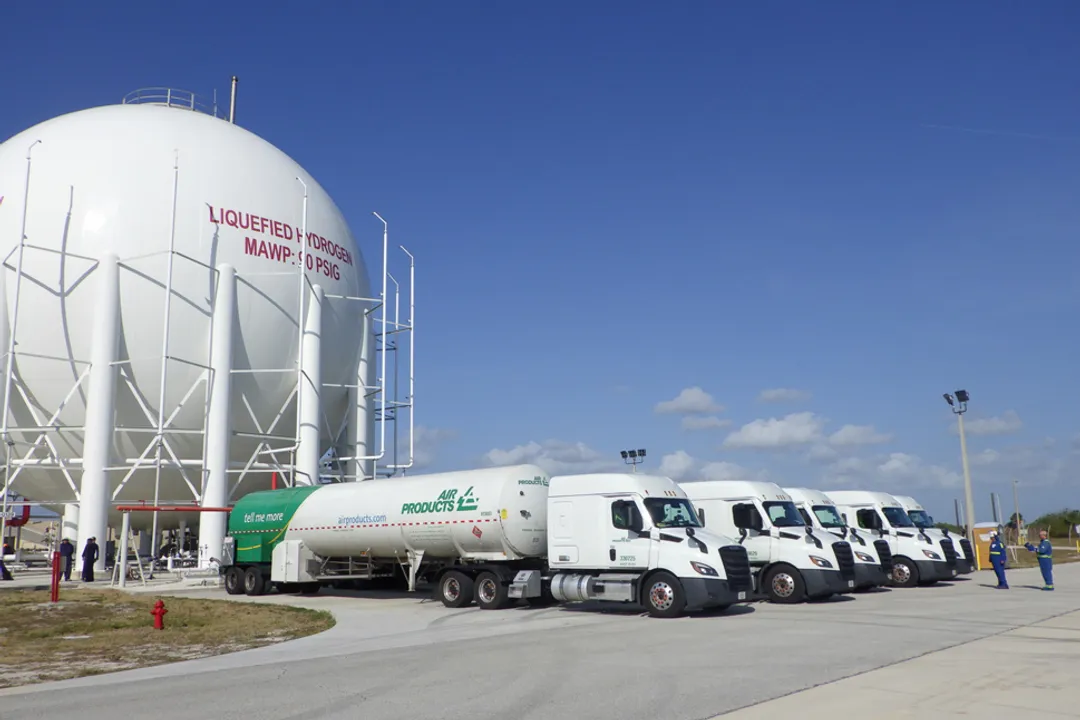
The sheer scale of space exploration demands resources that few other industries can match, and perhaps none is as fundamental to large-scale rocketry as hydrogen. For the National Aeronautics and Space Administration (NASA), securing a reliable, massive supply of liquid hydrogen () is not just a logistical detail; it is the backbone of launch operations, particularly at the Kennedy Space Center (KSC). [1][4] This critical element serves as the primary fuel component for major rocket stages, including the Space Launch System (SLS) that powers the Artemis missions. [1] The question of where this vital propellant originates has recently shifted from internal management to high-stakes commercial partnerships.
# Propellant Requirements
Liquid hydrogen is celebrated for its extremely high specific impulse, making it the propellant of choice for high-performance upper stages and core stages of heavy-lift vehicles. [5] To achieve the necessary cryogenic temperatures for storage and handling, hydrogen must be cooled significantly, becoming a liquid at (or ). [1] The sheer volume needed for just one SLS core stage demands an industrial-scale supply chain capable of producing, transporting, and delivering this super-chilled commodity with exacting purity standards. [1][4] Historically, NASA often managed much of its propellent production and storage in-house, a testament to the agency's engineering expertise developed over decades of spaceflight. [5] However, as operational tempo increases and the focus shifts to deep space objectives, the agency has made definitive moves to secure its supply through commercial vendors.
# New Suppliers Emerge
The landscape for NASA’s propellant supply recently underwent a significant transformation with the awarding of major contracts to two prominent industrial gas companies: Air Products and Plug Power. [4][7] These agreements signal a reliance on established commercial infrastructure to meet the agency's burgeoning demand for liquid hydrogen to support ongoing and future missions based at KSC. [2][7] These are not small, one-off purchases; they represent long-term strategic sourcing designed to guarantee availability for years to come.
# Air Products Deal
Air Products secured a contract to supply NASA with liquid hydrogen, with deliveries commencing around August 2025. [1] This agreement is designed to meet NASA’s requirements for its space exploration programs, likely covering the core needs for the Space Launch System. [1] Air Products, a major global supplier of industrial gases, brings a vast existing infrastructure to this commitment, often utilizing steam methane reforming or electrolysis, depending on the specific production site and required purity level, to generate hydrogen before liquefaction. [1] The capability to reliably deliver cryogenics to KSC is a key aspect of this arrangement. [1]
# Plug Power Contract
Plug Power has also entered the fold, beginning its first contract to supply NASA with liquid hydrogen. [2][6] This move is noted as opening a new market for the company within the growing space industry. [2] Plug Power has been rapidly expanding its capabilities, particularly focusing on green hydrogen production through electrolysis powered by renewable energy. [2] While the specific end-use is NASA's, the establishment of a contractual relationship with a company heavily invested in the hydrogen economy suggests an alignment with future, potentially cleaner, energy pathways for spaceflight operations. [6] The commencement of Plug Power's supply activities marks a tangible step in integrating their expanding production capacity with the needs of a major governmental entity. [2]

# Sourcing Logistics Comparison
The transition to commercial sourcing presents an interesting comparison in industrial capability. Air Products represents a company with deep, established roots in large-scale industrial gas supply, suggesting a reliance on mature, high-volume production methods, which might include traditional steam methane reforming paired with carbon capture, or large-scale electrolysis plants already operating in their network. [1] Their expertise lies in massive, consistent throughput. [4]
Plug Power, conversely, is often associated with a more forward-looking approach, aggressively building out a network of electrolyzer-based production facilities aiming for low-carbon or green hydrogen. [2] For NASA, the critical factor is purity and consistency, regardless of the initial production method, because rocket engines are incredibly sensitive to contaminants. [5] A fascinating aspect to consider is the geographical location of the supply versus the consumption point at KSC. While the sources confirm the contracts are for supply to NASA, the efficiency of the liquid hydrogen transport—requiring specialized, heavily insulated tanker trucks or rail cars operating at cryogenic temperatures—means the chosen production sites for both vendors must be strategically located to minimize boil-off and transit time to Florida. [1] This logistical constraint effectively narrows down the list of viable production hubs for both suppliers, whether they use steam reforming or electrolysis as their primary input process.
# Historical Context and Future Integration
NASA’s relationship with hydrogen is not new; it stretches back to the earliest days of the space program, informing engineering practices that are still relevant today. [5] The agency’s history with hydrogen propulsion has driven much of the fundamental understanding of cryogenic fluid management and hydrogen safety that underpins global industrial handling of the element. [5] This deep historical expertise ensures that while the sourcing is now commercialized, the requirements placed on Air Products and Plug Power are exceptionally stringent, benefiting from decades of operational experience. [5]
This current commercial arrangement can be viewed as NASA formalizing a long-standing practice—relying on industry for commodity supply—but applying it to a resource that is now viewed globally as a key component of the future energy transition. [2][5] By locking in these multi-year contracts, NASA is effectively de-risking its launch schedule against potential future shortages or price volatility in the burgeoning hydrogen market, ensuring mission continuity even as private industry scales up its own hydrogen economies. [4] This move also subtly signals confidence from NASA in the commercial sector's ability to meet aerospace-grade standards, which is a powerful endorsement for the broader hydrogen industry. [2][6]
# Contractual Security Insights
The decision to utilize two primary vendors, Air Products and Plug Power, offers inherent supply chain redundancy, a concept critical for national space assets. If one supplier experiences an unexpected disruption—perhaps a localized production issue or a transport problem—the other can potentially cover a greater portion of the demand, although coordinating such a shift would require significant administrative oversight. [4]
Furthermore, consider the implications for infrastructure investment. When NASA produced its own propellants, the infrastructure investment was entirely absorbed by the agency. Now, with these contracts, the responsibility—and the capital outlay—for expanding liquefaction and distribution capacity shifts to the commercial partners. [1][2] For Air Products and Plug Power, securing these long-term, high-volume NASA requirements provides the necessary baseline demand to justify significant capital expenditure on new hydrogen production facilities, potentially accelerating the overall growth of hydrogen infrastructure in the region surrounding the Space Coast. This creates a symbiotic relationship: NASA secures its supply, and the vendors gain the economic incentive to build out the future hydrogen ecosystem. This kind of guaranteed base load demand is precisely what catalyzes large-scale energy infrastructure projects.
# Cryogenic Handling Demands
The true challenge in this supply chain often lies not in making the hydrogen itself, but in keeping it liquid. Liquid hydrogen requires continuous cooling, and any inefficiency in storage or transport leads to "boil-off"—the loss of propellant as it converts back into gas. [1] For rocket fueling operations, this necessitates highly specialized handling equipment at KSC, which the commercial suppliers must interface with seamlessly. [1] The contracts likely mandate strict quality control checks upon delivery to ensure the meets the precise density and temperature specifications needed for the SLS engines to operate correctly. This level of precision in cryogenic transfer, especially at the high volumes required, separates routine industrial gas supply from aerospace propellant delivery. The partnership suggests a high degree of trust in the commercial entities' ground support and logistics capabilities matching NASA’s own exacting standards for launch preparation. [1][6]
# Market Positioning and Future Supply
The awarding of these contracts positions both Air Products and Plug Power as key players in what is shaping up to be a multi-faceted hydrogen future, linking industrial supply to high-profile space endeavors. [2][7] While the immediate need is for propellants, the visibility gained by supporting a mission-critical operation like Artemis through the supply of provides an invaluable case study for both companies as they market their respective hydrogen solutions to other high-demand sectors. [5] It is a demonstration of expertise under the highest pressure. The contracts themselves are a data point on the growing maturity of the commercial hydrogen economy; the industry has reached a point where it can reliably underwrite the complex, non-negotiable needs of government space launch programs. [4]
In summary, NASA’s hydrogen supply is now secured through carefully selected commercial agreements. The agency is drawing on the production capacity of established giants like Air Products and the rapidly developing clean-energy infrastructure of companies like Plug Power. [1][2] This outsourcing of a fundamental resource allows NASA to focus its internal resources on mission design and vehicle integration, while relying on the commercial sector to manage the complex, large-scale business of producing and delivering vast quantities of cryogenic liquid hydrogen to the launch pads of the future. [7]
#Videos
Plug Power Just Landed NASA — And It Could Change ... - YouTube
Related Questions
#Citations
Air Products Completes Liquid Hydrogen Fill at NASA's Kennedy ...
Plug Begins First NASA Liquid Hydrogen Contract, Opening New ...
Where does NASA get liquid hydrogen? - Quora
NASA awards hydrogen supply contracts to Air Products and Plug ...
NASA Hydrogen History Informs World's Hydrogen Future
Plug Power lands its first NASA hydrogen supply contract
NASA awards liquid hydrogen supply contracts to Air Products and ...
Air Products Completes Fill of World's Largest Hydrogen Sphere for ...
Plug Power Just Landed NASA — And It Could Change ... - YouTube