What will UY Scuti turn into when it dies?
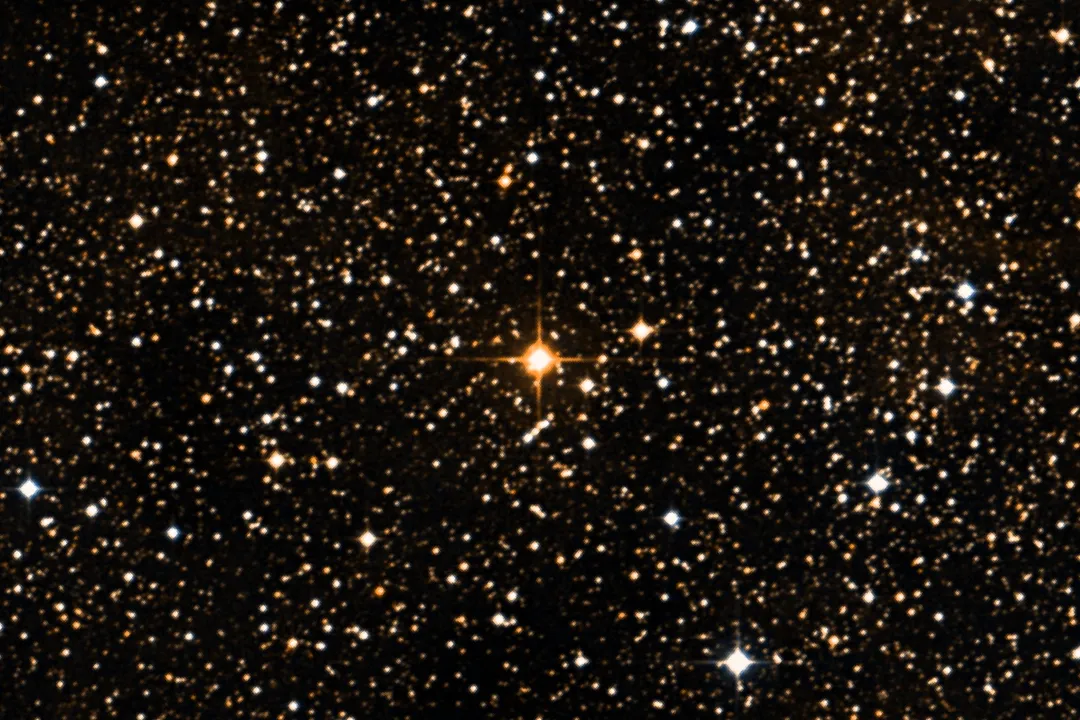
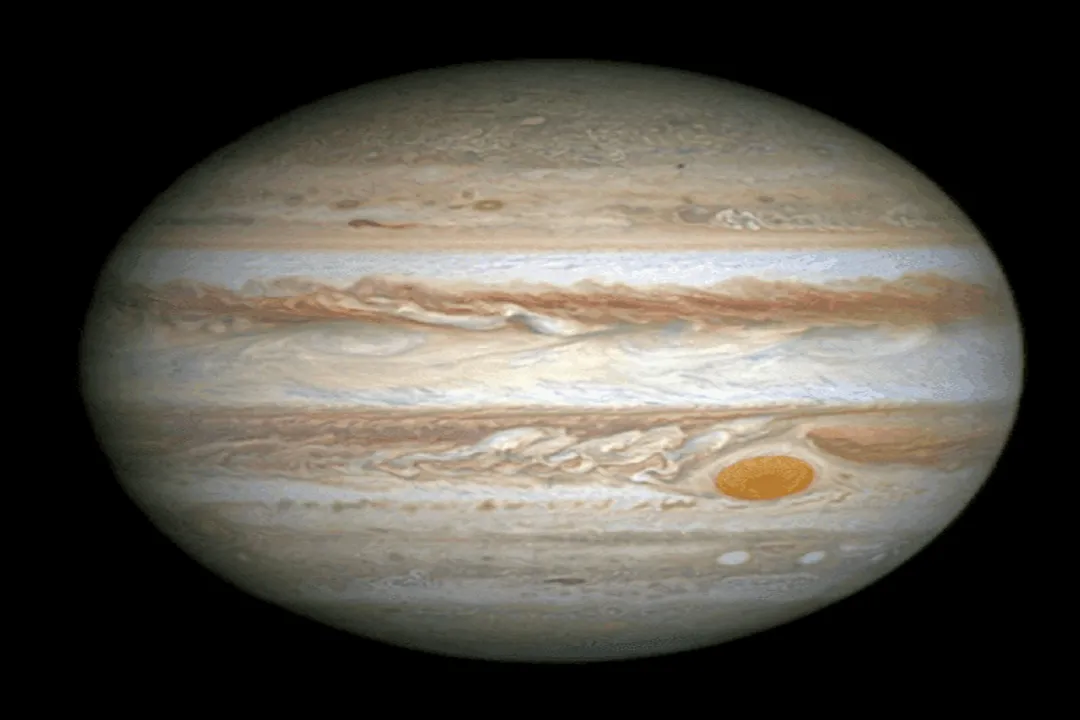
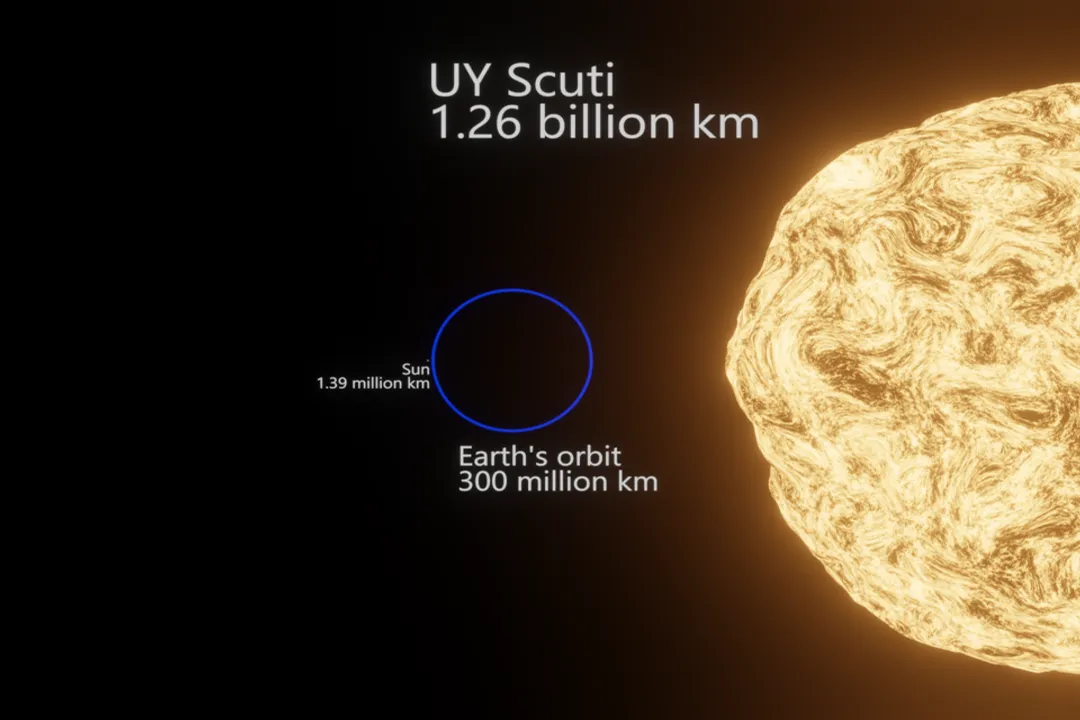
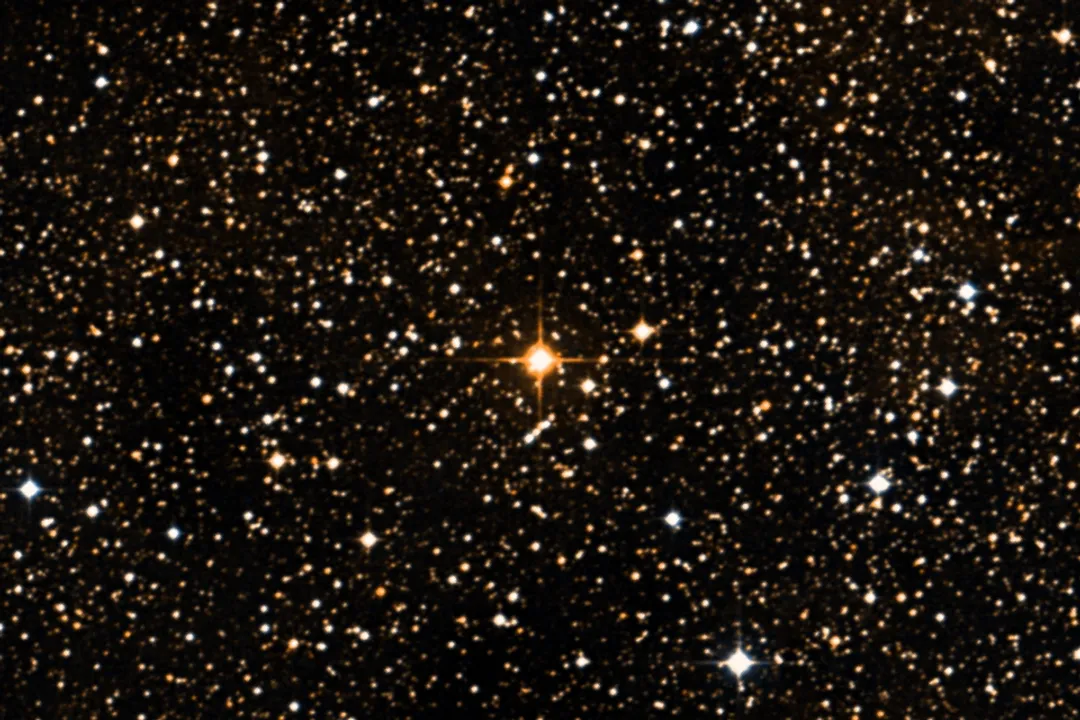
UY Scuti is an astronomical titan, a star so vast that if it replaced our own Sun, its outer layers would likely extend past the orbit of Jupiter, and perhaps even Saturn, depending on its exact current size and pulsation state. [3][4][5] Classified as a variable red supergiant, it resides in the constellation Scutum, and its sheer scale—estimated to be around 1,700 times the radius of the Sun in some measurements—places it among the largest known stars in the galaxy. [4][5] However, being large comes with a swift, dramatic expiration date compared to smaller, long-lived stars like the Sun. The question of its death centers entirely on the immense forces at play within its core and the boundary separating two exotic final states.
# Star's Scale
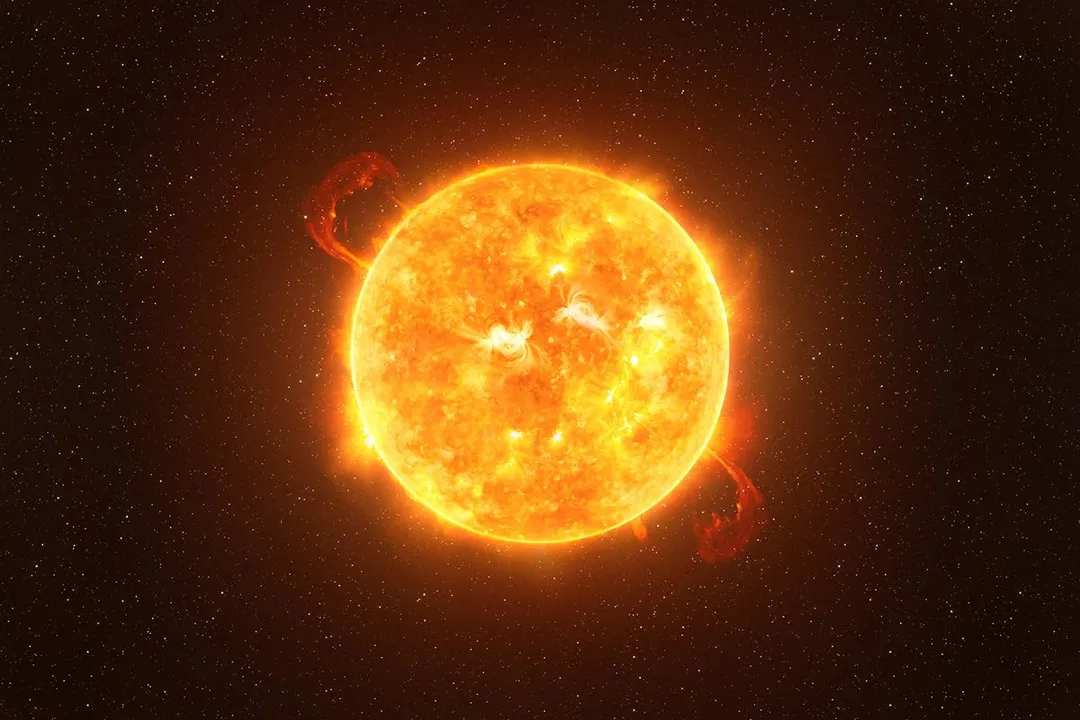
UY Scuti belongs to the family of stars that have exhausted the hydrogen fuel in their cores and swelled dramatically as they began fusing heavier elements, causing their outer layers to cool and expand into the red supergiant phase. [5] This enormous size is what captures immediate attention; it is one of the largest stars ever discovered. [4][6] Despite its immense volume, which can change due to its variability, its mass is far less certain, though it is certainly many times that of our Sun—perhaps in the range of 7 to 10 times the Sun’s mass, or even greater. [1][2] This is a critical distinction because the final fate of a star is not determined by its visible radius but by the mass that remains after it sheds its outer layers.
# Red Supergiant Path
For any star of this class, the end arrives when the core can no longer generate sufficient outward pressure to counteract the crushing inward force of gravity. Once fusion stops producing energy faster than the star is losing it, the star rapidly collapses. [1] For smaller stars, this collapse might result in a white dwarf, but for stars significantly more massive than the Sun, the result is far more energetic. Red supergiants undergo a catastrophic collapse followed by a supernova explosion. [1] UY Scuti is currently in the late stages of this process, living on borrowed time relative to smaller stars in the universe. We see this instability in its classification as a variable star, meaning its brightness and physical size fluctuate over time as it pulsates. [5] Considering the relatively short lifespan of massive stars, the transition from its current bloated state to its final remnants might occur on a stellar timescale that is shockingly brief once the process accelerates, making its future demise a relatively imminent cosmic event, even if that means thousands of years from our perspective.
# Mass Limits
The key to determining whether UY Scuti will become a black hole or a neutron star hinges on whether its progenitor mass exceeded the critical threshold needed to overcome the degeneracy pressure of neutrons. [2] This threshold, often cited in astrophysics, hovers near 20 to 25 times the mass of the Sun for the initial star, though the final mass of the collapsed core dictates the outcome. [1][2]
If the remaining core mass after the supernova explosion is greater than about three solar masses (the Tolman-Oppenheimer-Volkoff limit), gravity will win completely, leading to a black hole. [1] If the core mass falls between roughly 1.4 and 3 solar masses, the collapse is halted by neutron degeneracy pressure, resulting in a neutron star. [2] Stars that start their lives significantly lighter than this—say, below eight solar masses—often end as white dwarfs after shedding material, but UY Scuti is far too massive to take that path. [4]
# Final Objects
The two possible end states—a neutron star or a black hole—represent two of the most extreme objects in the universe.
# Neutron Star Outcome
If the mass of UY Scuti's collapsing core lands below that critical three solar mass boundary, it will likely become a neutron star. [2] This object is incredibly dense; a teaspoon of its material would weigh billions of tons. [1] All the matter of the massive star would be compressed into a sphere only about 10 to 20 kilometers across. [1] This sudden compression would be accompanied by a spectacular Type II supernova explosion, briefly outshining entire galaxies.
# Black Hole Outcome
Conversely, if UY Scuti was born heavy enough—perhaps exceeding 25 solar masses originally, leading to a remnant core over three solar masses—the collapse will continue unabated past the neutron star stage. [1][2] Gravity will crush the core down to an infinitely dense point called a singularity, forming a black hole. [1] This remnant would possess an event horizon, a boundary from which nothing, not even light, can escape. While we know UY Scuti is a supergiant, its exact initial mass is difficult to pin down, which is why the definitive identity of its remnant remains a topic of astronomical investigation. [3]
# Death Event
Regardless of the final product, the death of UY Scuti will be marked by a powerful supernova explosion. [1] For an object this large, it will almost certainly be a core-collapse supernova, meaning the star’s interior implodes before the outer layers rebound outward in a brilliant flash. [5] When this happens, UY Scuti will briefly generate an amount of energy comparable to the total energy output of a billion suns. [6] This event would inject vast amounts of heavy elements, forged during the star’s life and explosion, back into the interstellar medium, enriching the clouds from which future stars and planets will form.
The difference in the visual display is subtle but significant. A supernova leading to a neutron star leaves behind a small, incredibly dense point object. A supernova leading to a black hole leaves behind a region of spacetime warped beyond repair. For an observer millions of light-years away, the initial bright explosion would be the primary observable feature in either case, though the lingering effects—such as the persistence of a supernova remnant nebula—might differ slightly in structure based on the central object's gravitational influence. [1]
# Measurement Hurdles
One reason for the lack of a definitive prediction lies in the nature of measuring such distant, variable giants. Determining the precise mass of a red supergiant like UY Scuti is extraordinarily challenging because its radius is actively fluctuating. [5] The size measurement derived from angular size and distance estimates—which is how we know it is one of the largest stars—is inherently prone to error, especially since the outer atmosphere of a red supergiant is diffuse and ill-defined. [3]
When observing UY Scuti, one must account for the uncertainty in its distance from Earth, which affects the calculation of its absolute brightness and, subsequently, its mass estimation. [6] Imagine trying to measure the size of a cloud while it is constantly puffing in and out; this is akin to the challenge astronomers face. Furthermore, the star’s pulsation cycle means that the specific measurement taken today might represent a contraction phase rather than its maximum expansion. [5] This inherent variability forces scientists to rely on models that try to average out these changes, leading to the wide range of potential mass estimates that result in the binary final outcome of either a neutron star or a black hole. Until we can constrain the initial stellar mass within a tighter range, UY Scuti remains poised on the brink of two distinct cosmic endpoints.
#Videos
What If Earth Orbited UY Scuti? - YouTube
Related Questions
#Citations
In what ways will the death of the red supergiant UY Scuti ... - Reddit
What will happen to UY Scuti at the end of its life? - Quora
UY Scuti - Wikipedia
UY Scuti is the largest star ever discovered, about 1,700 ... - Facebook
UY Scuti, biggest star in the Universe | BBC Sky at Night Magazine
What If Earth Orbited UY Scuti? - YouTube
UY Scuti Star Facts - Universe Guide