What went wrong with SpaceX booster?

SpaceX has established a pattern of rapid, high-stakes development that often sees hardware pushed to the breaking point. When Booster 18, the first of the Version 3 Super Heavy lineup, buckled during a ground test in Texas in November 2025, it served as a stark reminder of this philosophy. [2][6] Rather than a sign of failure in the traditional engineering sense, the incident provided data on the limits of their latest design iteration. [8]
The anomaly occurred during a routine pressure test, a critical phase where engineers verify that the stainless steel structures can withstand the immense loads required for orbital flight. [2][8] Watching a massive piece of machinery buckle is visually jarring, but for the teams at Starbase, it represents a standard milestone in determining where a design needs reinforcement. [5][6]
# The Incident

The event took place at the SpaceX launch site in Boca Chica, Texas. [2] Booster 18 was undergoing initial pressure testing to ensure the integrity of its tanks and gas systems before it could be cleared for flight operations. [8] During this process, the structure experienced a significant failure, causing the lower section of the booster to buckle under the stress. [2][8]
Reports indicate the issue stemmed from a gas system failure. [9] When pressurizing these massive tanks, the balance between internal pressure and external forces must be precise. If the gas delivery or regulation system encounters a snag, the structural stability of the vehicle can be compromised almost instantly. In this case, the system could not maintain the required equilibrium, leading to a catastrophic collapse of the booster's primary structure. [6][9]
# Iterative Testing
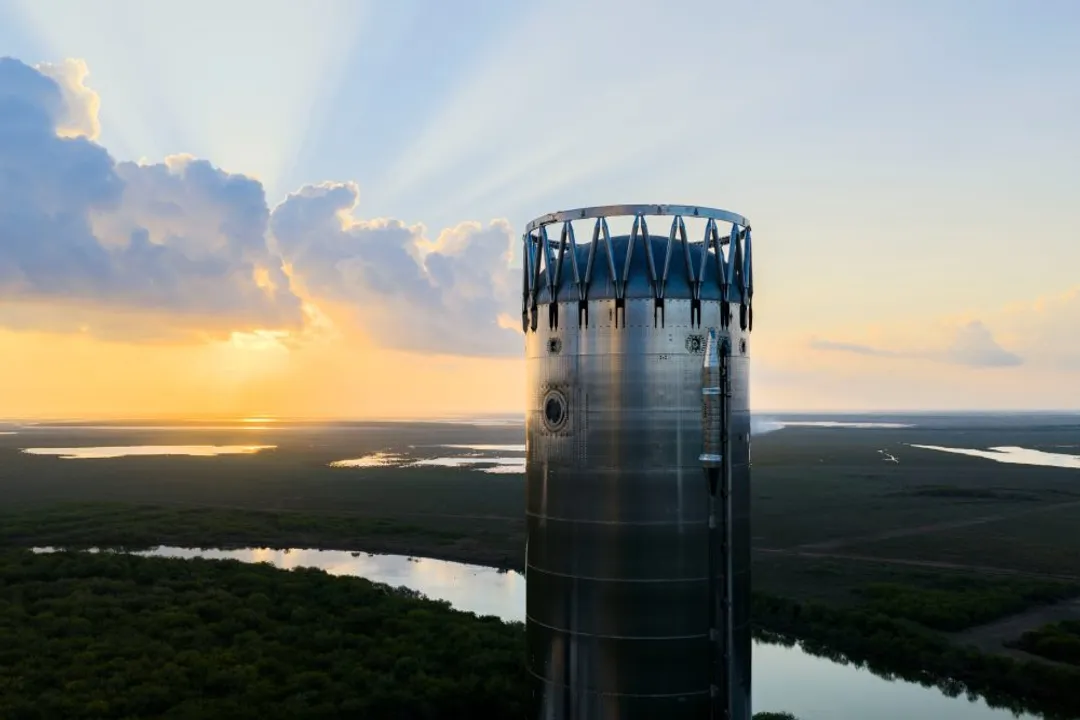
To understand why a major company would subject its hardware to such intense conditions, one must look at the difference between traditional aerospace development and the iterative approach SpaceX uses. Most established aerospace programs prioritize "design-to-success," where the goal is to build a perfect unit the first time through extensive simulation and conservative safety margins.
SpaceX focuses on "test-to-failure." This means they intentionally push hardware to its absolute limit to find the exact point where it breaks. This method provides real-world data that simulations often miss.
| Strategy | Goal | Risk Profile |
|---|---|---|
| Traditional | Minimize hardware loss | High cost, slow speed |
| Iterative | Maximize data acquisition | High hardware loss, fast speed |
By destroying a booster during a ground test, the team avoids having that same failure occur during a launch. They essentially pay for the lesson with the hardware, which is often considered a cheap price for the knowledge gained. [5]
# Gas Systems
The failure of the gas system highlights the complexity of Version 3 Starship upgrades. Moving to V3 involves more than just swapping out engines or changing the steel alloy; it involves upgrading the entire fluid and gas handling architecture. These systems manage the propellant flow, pressurization, and cooling required to keep the rocket functional under extreme heat and pressure.
When a gas system fails during testing, it often means the control valves or the pressurization logic responded incorrectly to the stress load. [9] If the pressure inside the tank drops too fast or spikes unexpectedly, the thin stainless steel walls—designed to be as lightweight as possible—can lose their structural rigidity. This creates a buckling effect, where the metal folds under the sheer weight of the vehicle and the external atmospheric pressure. [8]
# Structural Analysis
One might wonder why the booster didn't hold up, given that previous versions had successfully flown and landed. The transition to Version 3 includes design changes intended to reduce weight and increase payload capacity. These optimizations often shrink the "safety factor"—the margin of error engineers build into the hardware.
If the engineers reduced the thickness of the steel or changed the welding pattern to save weight, they were operating closer to the physical limits of the material. A buckling event like this indicates that the specific design modification, while good on paper for weight reduction, did not account for the dynamic loading conditions the booster experienced during that specific test sequence. [6]
# Future Impact
The immediate consequence of the Booster 18 anomaly is a pause in testing for that specific unit, but it does not necessarily stop the Starship program. The team will dissect the wreckage, analyze the telemetry data from the moments leading up to the failure, and determine if the issue was a one-off manufacturing flaw or a fundamental design error. [5]
If it was a manufacturing flaw—such as a weld that didn't hold as expected—the fix involves stricter quality control. If it was a design error, they will likely adjust the V3 architecture to add reinforcement in the affected areas. This type of correction is common. In the past, SpaceX has encountered similar anomalies, adjusted the plan, and returned to the pad with an upgraded, more resilient version shortly thereafter. [8]
# Lessons Learned
It is easy to view this incident as a step backward, but in the context of spaceflight development, it is a necessary part of the process. Every structural failure provides a calibration point for the team’s modeling software. If they can predict the failure in their simulations after the fact, they improve their ability to design the next unit to be exactly as strong as it needs to be—no more, no less.
For observers tracking the progress of Starship, the focus should remain on the pace of recovery. The true test of the organization is not that they experienced a failure, but how quickly they identify the root cause, implement a solution, and move on to the next test. [5] The fact that they have already moved past earlier iterations suggests that the data from this anomaly will be integrated into the next booster, likely making it the most capable vehicle yet.
The reliance on these tests confirms that space remains an unforgiving environment. Even minor oversights in gas system management or structural rigidity can lead to major visible failures. However, by embracing the reality of hardware loss, SpaceX maintains a rhythm that keeps their launch cadence high. This approach turns a "failure" into a routine step on the path to orbital reliability.
#Videos
What Went Wrong With SpaceX's Starship Booster 18? Is ... - YouTube
Starship Booster 18's Violent Failure Explained - YouTube
Starship's Brutal Booster Failure Exposed New Secrets! - YouTube
Related Questions
#Citations
What Went Wrong With SpaceX's Starship Booster 18? Is ... - YouTube
First SpaceX booster for upgraded Starship fails during test in Texas
SpaceX booster b18 suffers catastrophic failure - Facebook
SpaceX issues statement on Starship V3 Booster 18 anomaly
SpaceX loses debut V3 Super Heavy in ground test mishap
SpaceX's 1st 'Version 3' Super Heavy Starship booster buckles ...
The booster for SpaceX's Starship V3 suffered a gas system failure ...