What was the flaw in the telescope?
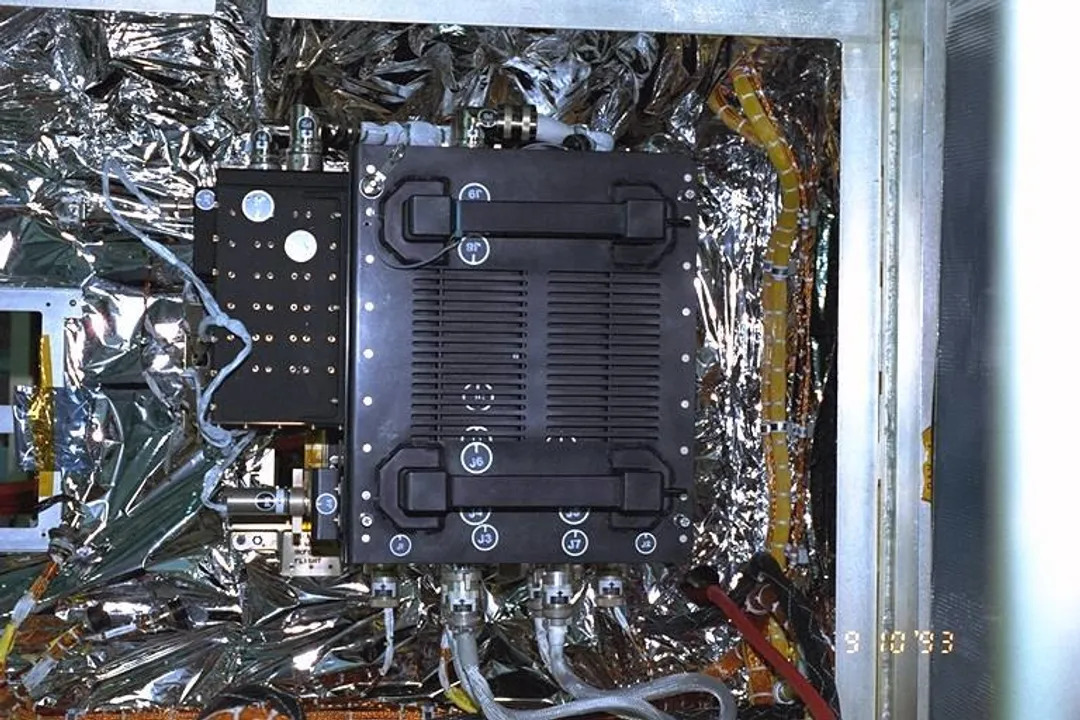
The Hubble Space Telescope, a marvel of engineering and ambition, was finally deployed from the Space Shuttle Discovery in April 1990, marking the start of a new era in astronomy. Expectations were astronomical; here was a telescope positioned above the distorting effects of Earth’s atmosphere, poised to deliver images of unprecedented clarity. Yet, shortly after activation, the scientific community realized something was terribly wrong. The crisp, perfect images astronomers anticipated were not materializing. Instead, the data returned showed a significant flaw: the telescope was effectively nearsighted, producing images that were fuzzy and blurred.
# Spherical Fault
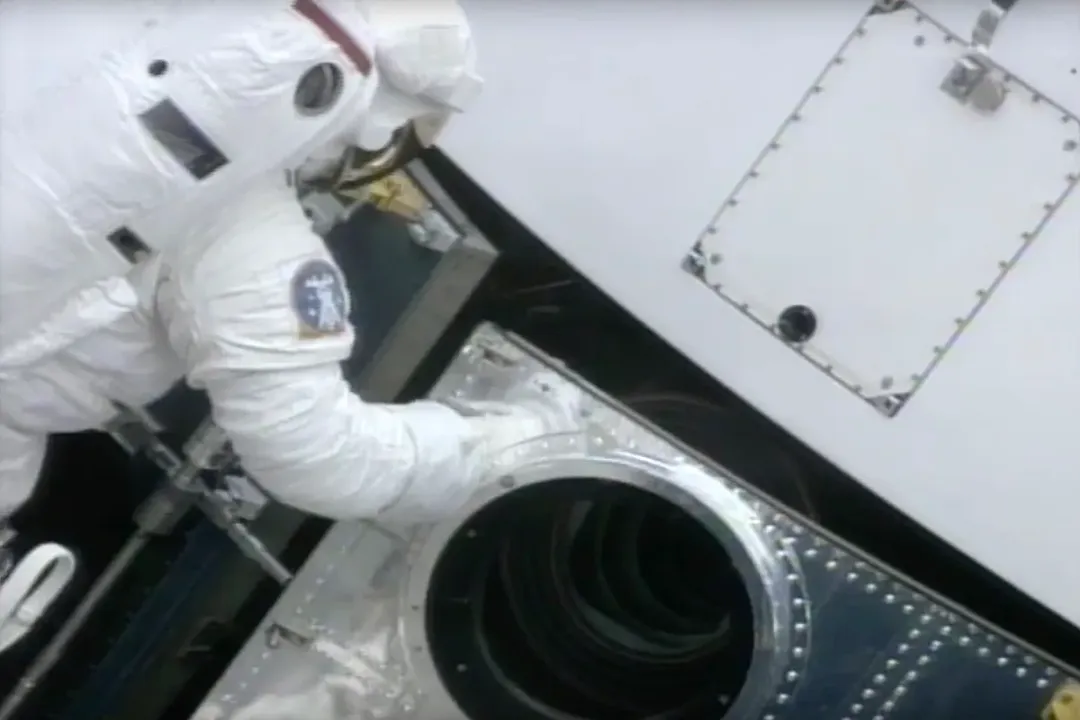
The core issue was a defect in the telescope’s primary mirror, a massive piece of glass measuring 2.4 meters (7.9 feet) in diameter. The specific problem plaguing Hubble was known in optics as spherical aberration. In simple terms, this means that light rays hitting different parts of the mirror did not converge at the same focal point. Rays striking the edges focused slightly in front of where rays hitting the center focused, leading to an unfocused, smeared image rather than a sharp point of light.
To put this in perspective, a mirror intended to be paraboloidal—a shape designed to bring all parallel light rays to a single focus—was manufactured as a spherical one, or at least one that deviated from the required shape. The required precision for the mirror was incredibly tight; its shape needed to be accurate to within about 1/20th the width of a human hair. When the light rays failed to meet precisely, the effect was devastating for high-resolution imaging.
The degree of the error, though small in absolute terms, was critical. Sources indicate that the edges of the mirror were polished 2.2 micrometers (about 1/50th the thickness of a human hair) too flat compared to the required contour. This seemingly minute manufacturing deviation translated directly into the blurry vision that plagued the telescope for years. It is worth noting that while the primary mirror was the culprit, the secondary mirror was also ground to the wrong shape, though this secondary error was precisely the opposite of the primary error, meaning the combination resulted in the final, noticeable spherical aberration. The initial measurements showed that the focal length difference between the center and the edge was roughly 2.1 or 2.2 microns.
# Manufacturing Error
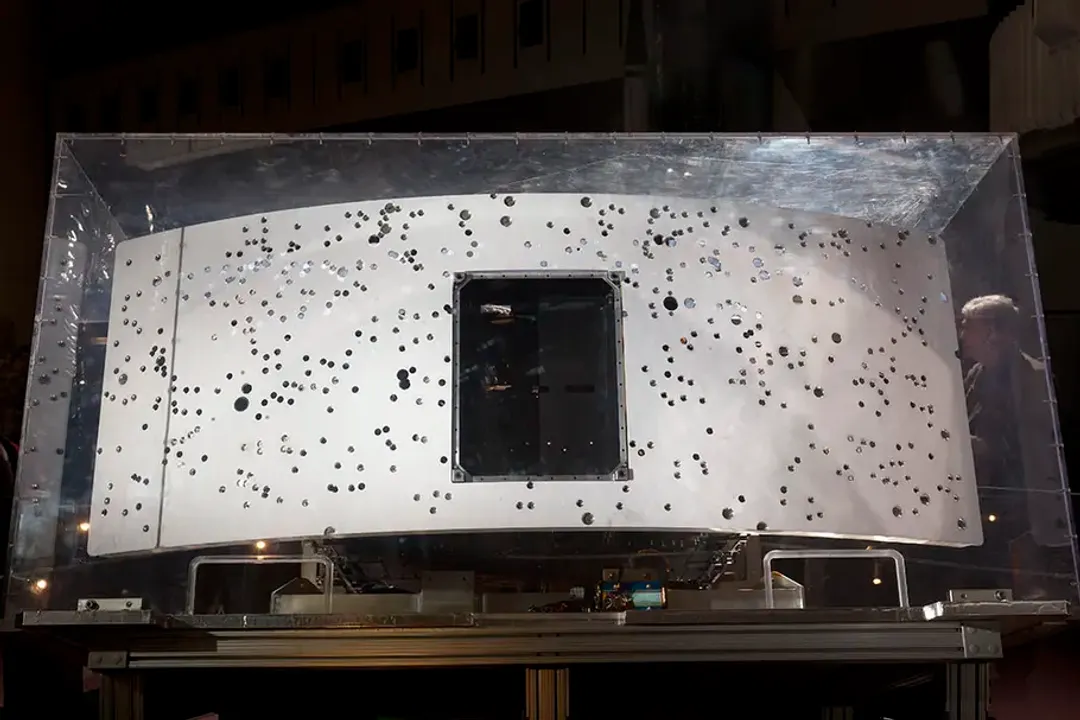
Tracing the flaw back to its origin reveals a failure in the ground-based testing equipment rather than the optical lab itself. The primary mirror was ground and polished by Perkin-Elmer, and then tested by Kodak. The critical mistake lay in the setup used to verify the mirror’s shape during fabrication.
The crucial instrument for this verification was a device called a null corrector. This device was intended to compensate for the curvature of the mirror during testing, ensuring that the surface was measured against the ideal shape. However, the null corrector used in the testing apparatus was installed incorrectly.
Specifically, the instrument was mounted too close to the mirror surface. Its position was wrong by about 1.3 millimeters. This error meant that the computer software and the technicians measuring the mirror believed the mirror was perfectly formed, when in reality, the test setup was reading a slightly distorted profile of the flawed surface. Imagine trying to measure a perfect bowling ball with a ruler that is bent—the measurement will appear correct, but the object being measured is still flawed. In this case, the measuring tool itself was subtly misaligned, leading to the incorrect specification being locked in for the final polishing stages. This failure to properly calibrate or assemble the testing equipment stands as a stark lesson in metrology; the instrument used to verify perfection was, itself, imperfectly positioned.
For those in precision engineering fields, understanding this failure scenario highlights the difference between component accuracy and system accuracy. Even if Perkin-Elmer ground the glass precisely according to the flawed specifications they were given by the test setup, the ultimate responsibility lands on the verification process. A system designed to catch errors introduced a new, larger one by being out of specification itself. The initial design specifications for the mirror curvature were themselves determined by the overall optical path, which included the null corrector.

# Vision Failure
Once launched, the impact of the flaw became immediately apparent, though not in a dramatic explosion, but in the subtle failure to resolve fine detail. Scientists determined that the telescope was performing at only about 1/20th of its intended capability. Instead of achieving the intended resolution of 0.1 arcseconds, Hubble was delivering images around 0.7 to 1.0 arcseconds.
The discovery process itself required expertise and tenacity. The initial testing on the ground had been too perfect, showing no measurable error, which led to complacency. Once in orbit, astronomers began testing Hubble's performance by aiming it at specific calibration targets, such as globular star clusters. They noticed that the stars, which should have appeared as pinpoints of light, were instead appearing as indistinct smudges.
The crucial realization came when the data from the initial science instruments—the Wide Field/Planetary Camera (WF/PC) and the Faint Object Camera (FOC)—were compared with pre-launch measurements. The FOC, which was designed to function independently of the main focus issue by having its own corrective optics built in, provided a critical reference point. By comparing the FOC's data with the data from the other instruments that relied on the primary mirror's focus, the aberration was confirmed. This comparison allowed NASA engineers to precisely calculate the exact shape imperfection required to cause the observed blurring. The official report on the optical systems failure, documented in 1990, details this systematic confirmation process.
# Corrective Optics
The initial reaction might have been despair, but the mission planners and engineers had prepared for potential issues, albeit perhaps not one of this magnitude. NASA already had a backup plan, or rather, a contingency plan that quickly became the primary solution: the development of corrective optics.
The solution was ingeniously complex. Rather than attempting a risky, multi-billion dollar replacement of the primary mirror in space, engineers decided to introduce small, corrective elements directly into the light path of the instruments that required perfect focus. This concept is somewhat analogous to wearing eyeglasses to correct poor vision.
The primary instrument requiring immediate correction was the Wide Field/Planetary Camera (WF/PC). This instrument was replaced during the first servicing mission with the Wide Field and Planetary Camera 2 (WFPC2). The WFPC2 was designed specifically to fix the spherical aberration using a system of small, precisely shaped mirrors installed inside the camera itself. These internal mirrors acted as "eyeglasses" for the telescope's light path as it entered that specific instrument. The WFPC2 effectively compensated for the 2.2-micrometer error in the primary mirror.
For the other instruments, like the Goddard High Resolution Spectrograph (GHRS) and the Faint Object Spectrograph (FOS), which were not replaced immediately, a separate package was designed: the Corrective Optics Space Telescope Axial Replacement (COSTAR). COSTAR was an instrument containing four small mirrors that intercepted the light beam intended for the flawed instruments and redirected it after correcting the aberration through a series of relay mirrors. COSTAR was designed to fit into one of the axial instrument locations, replacing one of the scientific instruments that had been installed initially.
| Instrument Affected | Correction Method | Status Post-Fix |
|---|---|---|
| WF/PC | Replaced with WFPC2 (Internal mirrors) | Became the primary wide-field imager |
| FOS / GHRS | COSTAR (External corrective package) | Light redirected through corrective optics |
| FOC | No direct change needed | Had built-in corrective optics |
An interesting aspect of this salvage operation is the deliberate choice to correct the light path within the instruments rather than trying to polish the main mirror on orbit. This demonstrates a preference for modularity and reducing operational risk. Building the corrective optics to a shape perfectly complementary to the known flaw allowed for a predictable correction factor.
# Servicing Mission
The fix was not instantaneous; it required the first of several planned servicing missions to the telescope. The mission, designated SM1 (Servicing Mission 1), launched in December 1993 aboard the Space Shuttle Endeavour. This mission was one of the most complex and high-stakes spacewalk operations ever attempted. Astronauts performed five strenuous spacewalks to upgrade and repair the observatory.
The key tasks involved:
- Replacing the original WF/PC with the newly installed WFPC2.
- Installing COSTAR into the payload bay.
- Repairing the Solar Array Drive Electronics (SADE).
- Performing other minor maintenance tasks.
The success of SM1 was monumental. Upon returning images, the stunning clarity confirmed that the spherical aberration had been completely negated for the corrected instruments. Stars that had previously appeared as fuzzy blobs snapped into sharp, distinct points. The resolution achieved finally met the original design specifications, transforming Hubble from a flawed experiment into the world-class observatory it was intended to be. The sharp views allowed astronomers to peer deeper and clearer into the cosmos than ever before.
In thinking about the gravity of this repair, one must consider the context: the initial launch in 1990 was a major public relations setback for NASA, leading to widespread criticism and questions about oversight and quality control. The subsequent repair mission was not just a technical success; it was a massive public relations victory that essentially saved the reputation of the entire Hubble program. The ability to design, build, test, and deploy a perfectly complementary optical system—COSTAR—in just three years after launch speaks volumes about the engineering expertise maintained by the space agency and its partners.
# Manufacturing Reflection
The Hubble flaw serves as a timeless case study in high-precision manufacturing and the perils of assuming test equipment accuracy. While the direct flaw was spherical aberration, the underlying flaw was in verification. The entire assembly chain—from the design of the optical bench to the installation of the null corrector—failed to cross-check results against independent standards or sufficient redundancy. When optical fabrication is required at this level of precision, one measurement tool simply cannot hold the entire enterprise's fate. The expected tolerance for the final mirror shape was only of a wavelength of light; when the error was 20 times that tolerance, the failure was catastrophic for the intended performance.
An essential takeaway for anyone dealing with complex, non-redundant systems is the need for "fail-safe" verification. In Hubble's case, a simple redundancy check could have saved years of frustration. For instance, if a second, entirely different type of optical testing apparatus had been used—perhaps one based on interferometry rather than null correction—the discrepancy in the resulting measurements would have immediately flagged the installation error of the primary testing device.
This single catastrophic failure prompted deep introspection across the aerospace and scientific optics communities. It reinforced the principle that the procedures around the manufacturing process—calibration, inspection, redundancy testing, and documentation—are just as critical as the skill of the optician polishing the glass. Even today, when new systems like the James Webb Space Telescope rely on segmented, precisely aligned mirrors, the lessons learned from Hubble’s flawed primary mirror dictate the rigorous, multi-layered testing protocols now in place to ensure that every component meets its required figure down to the nanometer level before integration, thus preventing a recurrence of the aberration problem. The legacy of the flaw is not just the fuzzy pictures of 1990, but the much more reliable, rigorously checked hardware that now graces the heavens.
#Videos
The Tiny Telescope Flaw That Threatened NASA's Reputation
Related Questions
#Citations
Repairing Hubble | National Air and Space Museum
History: The Spherical Aberration Problem - ESA/Hubble
What was wrong with Hubble's mirror, and how was it fixed?
The Tiny Telescope Flaw That Threatened NASA's Reputation
[PDF] How Hubble Space Telescope failed
What was issue with the initial Hubble telescope mirror? - Quora
[PDF] National Aeronautics and Space Administration (NASA) The Hubble ...
Hubble Space Telescope - Wikipedia
Mega-Projects & -Problems; The Hubble in Trouble