What mass is needed for a supernova?
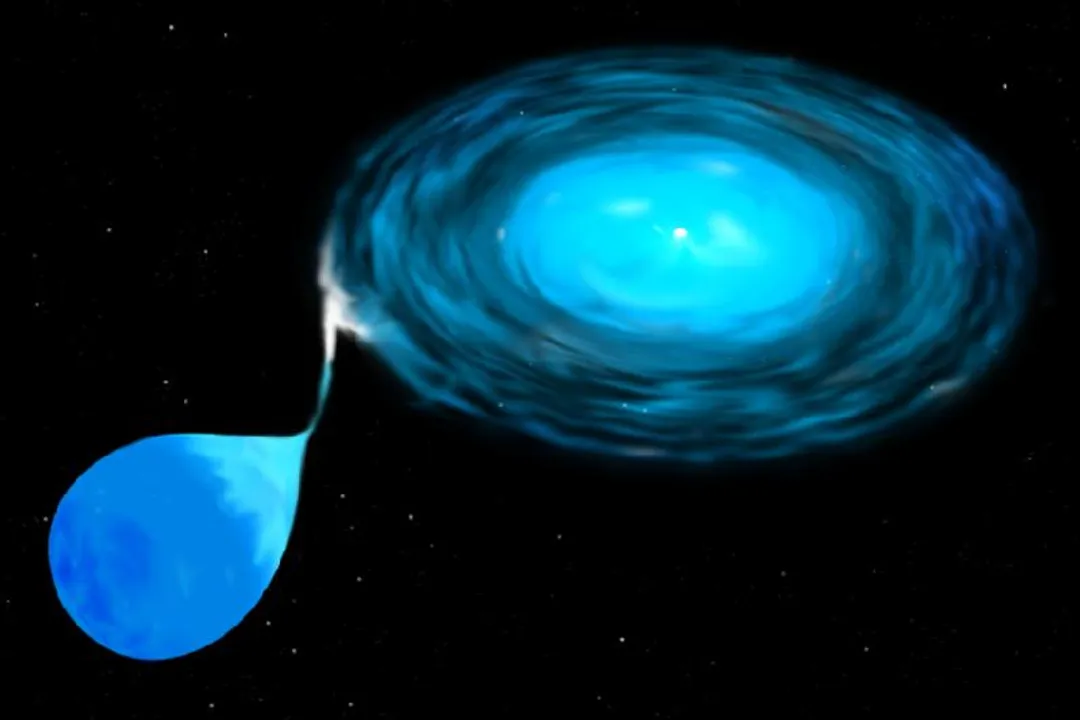
The spectacular death of a star—a supernova—is one of the most energetic events observable in the cosmos. These explosions briefly outshine entire galaxies, scattering the seeds of future stars, planets, and life across the void. [3] The question of how much mass is required to trigger such an event isn't a simple one-number answer; it depends entirely on the star's life story and the specific way it chooses to end its existence.
For stars, mass is destiny. It dictates their lifespan, their internal structure, and their final, dramatic exit. We are dealing with two primary avenues that lead to a supernova: the catastrophic gravitational collapse of a truly massive star, or the thermal runaway of a stellar cinder in a binary system. [3]
# Core Collapse Thresholds
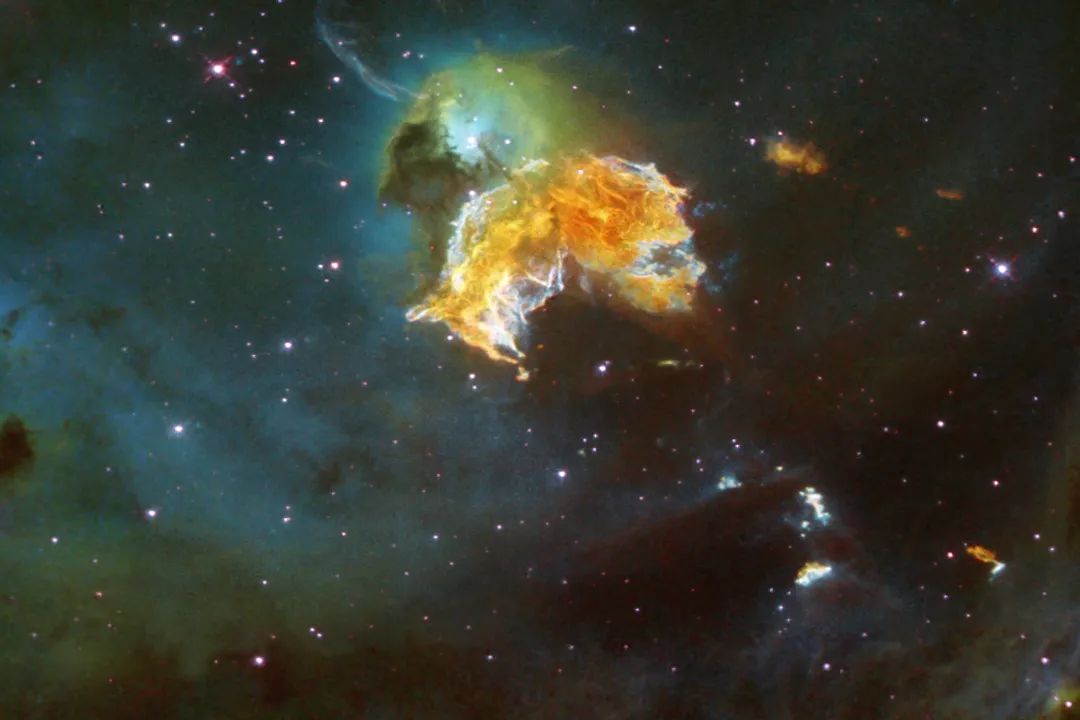
When astronomers discuss supernovae driven by a star's own weight, we are looking at Type II, Type Ib, and Type Ic events. [6] These arise from massive stars that have exhausted the fuel in their cores. A star needs to be quite substantial to even reach this stage. Generally, a star must start life with an initial mass of at least around eight solar masses () to avoid a quiet end as a white dwarf. [5]
These massive stars evolve through concentric shells of nuclear burning, fusing lighter elements into successively heavier ones. This process creates the outward thermal pressure that perfectly balances the crushing inward force of gravity, a state known as hydrostatic equilibrium. This fusion sequence continues until the core is converted into iron. Iron is the cosmological dead end; fusing it consumes energy rather than releasing it. [5] Once the iron core forms, the outward pressure support vanishes instantly. Gravity takes over, initiating a collapse that can send material inward at speeds reaching a fraction of the speed of light. [3]
# The Iron Core's Critical Mass
The direct trigger for the most common form of core-collapse supernova is not the total stellar mass, but the mass accumulated in that final iron core. When this core surpasses the Chandrasekhar Limit—roughly $1.44$ solar masses for a non-rotating object—electron degeneracy pressure, the quantum mechanical resistance holding matter up, can no longer counteract gravity. [3][7] This threshold marks the point of no return for the core.
For a star to create an iron core of this magnitude, its initial mass must typically be between about 10 and . As the core collapses, it compresses to nuclear density, and the sudden halt sends a powerful outward shock wave, resulting in a visible supernova. If the initial mass is slightly lower, say in the $9$ to range, the core may not reach pure iron but instead form a degenerate core of oxygen, neon, and magnesium (). Here, a different mechanism called electron capture can occur, where electrons are squeezed into protons, robbing the core of its supporting pressure and causing collapse, leading to what is sometimes termed an electron-capture supernova (or Type III). [3][6]
# The Upper Limits and Failed Explosions
The mass requirements become extreme for the most luminous explosions. Stars in the range of $140$ to (with low metallicity) can undergo pair-instability supernovae. In these hyper-energetic events, the core is so hot that photons spontaneously convert into electron-positron pairs, draining the internal pressure and triggering a runaway thermonuclear reaction that completely tears the star apart, leaving no compact remnant behind. [3]
For even more massive stars, those starting above , the core collapse is so profound that even the bounce mechanism fails. The core collapses straight through the neutron star phase and forms a black hole without producing a visible supernova explosion—a phenomenon often called a "failed supernova". [3] Some stars between $25$ and with solar metallicity might also collapse straight into a black hole after some fallback onto an initial neutron star. [3]
# The White Dwarf Detonation Pathway

The second main route to a supernova involves stars much less massive than those that collapse under their own weight—specifically, white dwarfs. These remnants are the charred cores of Sun-like stars that have long since shed their outer layers. A Type Ia supernova occurs when one of these white dwarfs finds itself in a binary system. [3][6]
In this scenario, the critical mass for the explosion is precisely the Chandrasekhar Limit (). The white dwarf gains mass, either by slowly siphoning material from a companion star or through a merger with another white dwarf. [3][6] As the white dwarf approaches this critical mass, the core heats up enough to ignite carbon fusion. Unlike normal stars, the white dwarf’s supporting pressure (degeneracy pressure) is independent of temperature, meaning it cannot regulate the reaction. The result is a runaway thermonuclear explosion that completely obliterates the star.
It is fascinating to note the contrast in mass scales here. A star might start life at perhaps and, after shedding most of its material, wind up as a white dwarf. That white dwarf then needs to accrete just more to cross the threshold and explode as a Type Ia. [7] The question then becomes: what happens to a solitary star between and ? It generally does not detonate. It quietly sheds its outer layers, becoming a planetary nebula, leaving behind a white dwarf below the Chandrasekhar mass, where it will cool into a black dwarf without a massive explosion. [7][5]
# The Complexity of Mass Determination
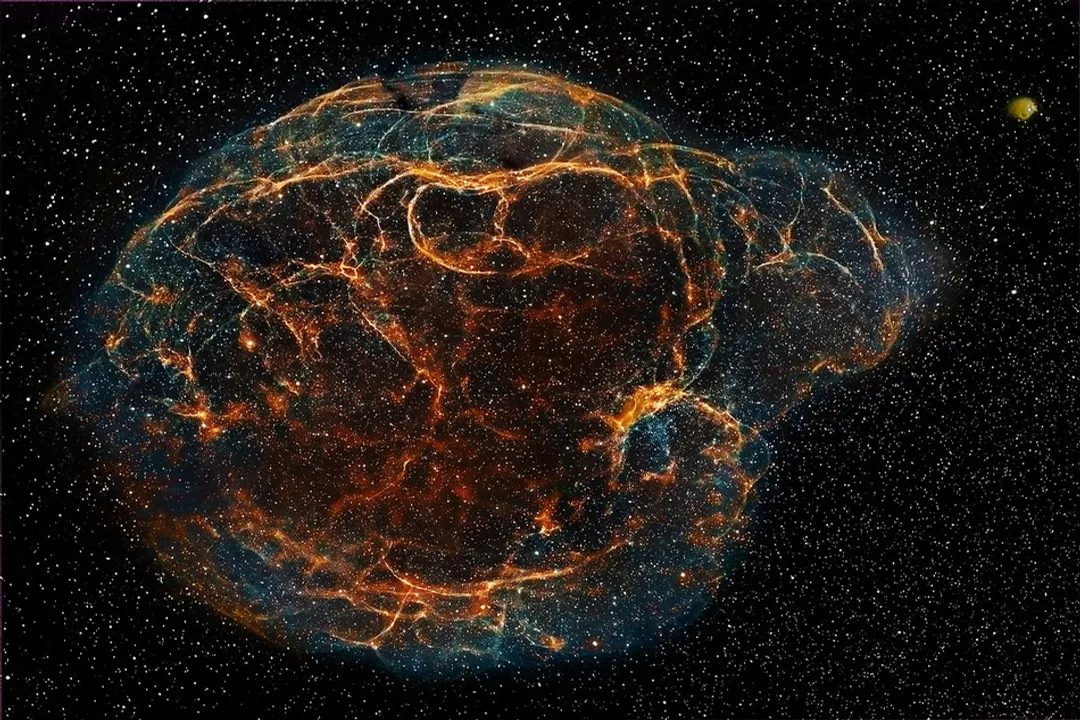
The mass determining a star's fate isn't just its initial size; it is a complex interplay of evolution and environment. The concept that a star's fate is determined solely by its initial mass turns out to be an oversimplification. Modern models suggest that the explodability of a massive star is determined more directly by its compactness—how densely its material is packed in the center—and the structure of its final silicon-oxygen interface just before collapse. [1]
This leads to an important point to consider: the initial mass is not the final mass. Stellar evolution involves constant mass loss via stellar winds, which is heavily influenced by the star’s metallicity (the abundance of elements heavier than hydrogen and helium). [3][1] For example, stars with very high metallicity lose mass more rapidly, meaning a star with an initial mass that might explode at low metallicity could shed enough material to fall below the critical mass threshold before collapsing, resulting in a black hole instead. [3] This sensitivity to the surrounding chemistry creates distinct "islands of explodability" across the mass-metallicity landscape. [1]
The contrast between the two main types highlights how mass plays different roles. For a core-collapse event, mass is needed to build the enormous iron core ( or more) that triggers the demise, requiring an initial star over . [7] For a Type Ia event, mass is added externally to a stable remnant until it hits a specific, smaller core mass limit ().
To illustrate this difference in scale, consider our own Sun, which is about . If someone wanted to force the Sun to explode via core collapse (which it cannot do naturally), they would need to dump in several times its own mass, effectively increasing its total mass past the barrier. [4] Conversely, to make a supernova by dumping mass onto a white dwarf, you only need a fraction of a solar mass, provided the resulting object exceeds . [3] The solar system contains nowhere near enough material to meaningfully alter the Sun's fate in a core-collapse sense; the Sun comprises over $99.8%$ of the entire system's mass, with Jupiter and Saturn holding almost all the rest. [4]
Ultimately, the mass needed for a star to go supernova is defined by the physical mechanism that overcomes gravity's relentless inward pull. For core-collapse, it is the inability of the iron-fusing core to support itself once it exceeds , requiring a parent star generally greater than . [7] For Type Ia, it is the white dwarf companion reaching the same limit through accretion or merger, a process available to much smaller initial stars. [3] The exact conditions are so delicate that subtle variations in a star's composition can shift the final outcome from a bright explosion to a silent collapse into a black hole. [3]
Related Questions
#Citations
Supernova - Wikipedia
How much iron would need to be dumped into the sun to make it go ...
The explodability criterion: How to make a star go supernova
How massive does a main sequence star need to be to go type 1 ...
Supernova Definition & Example | Study.com
The different types of supernovae explained - Astronomy Magazine
Supernova - Sun.org
What Is a Supernova? | NASA Space Place – NASA Science for Kids