What is the farthest galaxy we can see with our eyes?
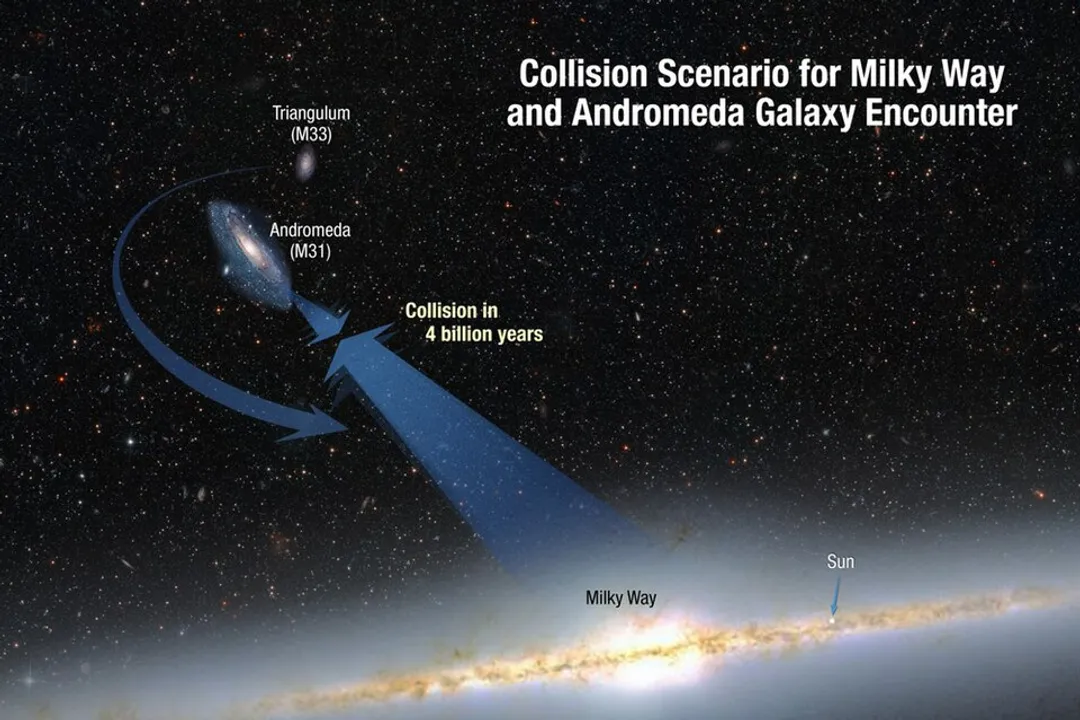
The farthest celestial object that the average person can spot without optical aid is not a distant star, but an entire island universe: the Andromeda Galaxy, also known by its catalogue designation, M31. While the term "galaxy" conjures images of the grand, swirling spirals seen in telescope photographs, what your unaided eye perceives is dramatically different from what instruments capture. It sits approximately 2.5 million light-years away from Earth, meaning the light striking your retina tonight began its voyage across the cosmos when Australopithecus walked the African plains. This makes it an incredibly distant yet accessible target, representing the very limit of human visual sensitivity to extended sources of light in the dark night sky.
# Galactic Neighbor
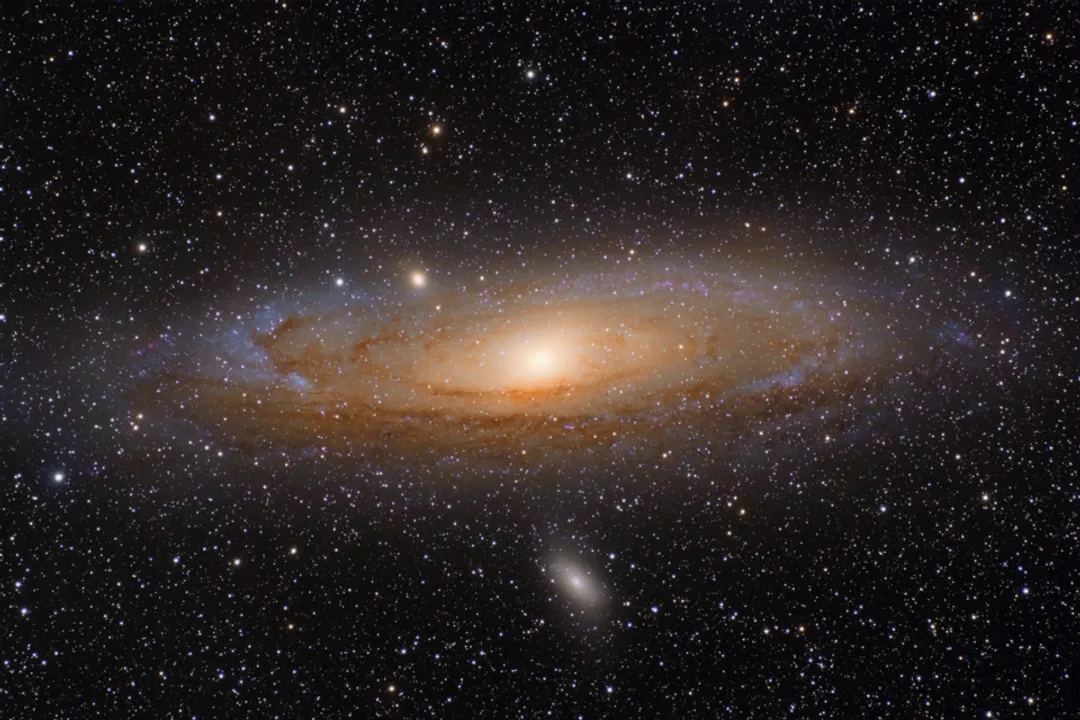
Andromeda is considered our nearest major galactic neighbor. Even though it is incredibly far away, its sheer physical size—it is actually larger than our own Milky Way—allows enough of its total light to reach us for detection. While we can see individual stars in the Milky Way that are farther away, Andromeda holds the title for the most distant galaxy detectable by eye. When you locate this object, you are truly seeing something beyond the confines of our own stellar system.
# Visual Appearance
If you manage to find Andromeda under perfect conditions, you won't see the classic pinwheel shape. Instead, it will present as a small, faint, elongated, or slightly fuzzy patch of light, somewhat resembling a detached piece of cloud. This appearance is due to the concept of surface brightness. While Andromeda’s total luminosity might be equivalent to that of a much brighter, closer object, its light is spread out over a relatively large area of the sky.
To put this into perspective, consider this comparison: if a single, unrelated star existed at the same distance as Andromeda, it would need to be blindingly bright—far surpassing any star visible to the naked eye—to be seen easily. However, because Andromeda is diffuse, its light energy is distributed thinly across the sky, dipping just below the threshold our rods and cones can resolve as a distinct shape. The eye integrates that faint, spread-out light into a single perceived smudge against the background darkness.
# Viewing Conditions
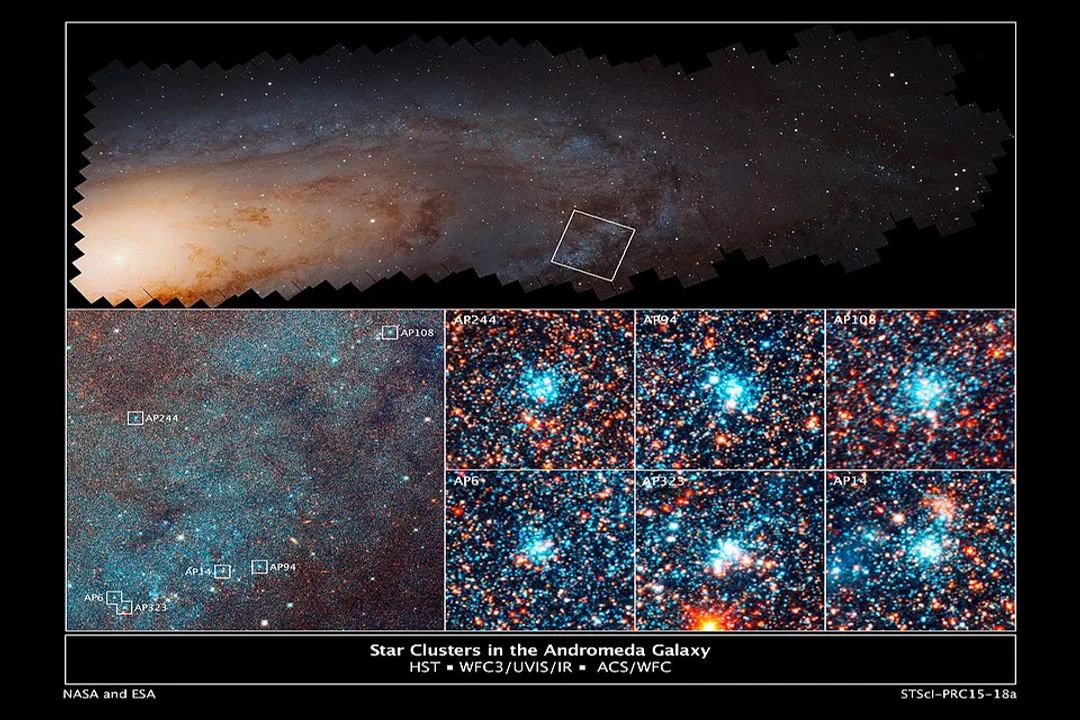
The visibility of M31 is highly dependent on atmospheric and environmental factors, acting as a crucial variable in this naked-eye observation. Seeing this galaxy requires a truly dark location, far removed from the light pollution of cities. Even a bright moon can significantly wash out the faint light required for this observation. Ideal conditions involve a clear, dry night, preferably during the new moon phase, allowing your eyes ample time to adapt to the darkness—a process that can take up to 30 minutes. If you look for it in the autumn months, it will be positioned high in the northern sky, making it easier to spot once you know where to look.
# Beyond the Eye

When we talk about what the unaided eye can perceive, we are discussing a specific limitation defined by the sensitivity of the human retina, often quantifiable in apparent magnitude—the brightness of an object as seen from Earth. For M31, this is generally around magnitude 3.4, but this value only holds true when the light is concentrated or the observer has extremely dark adaptation.
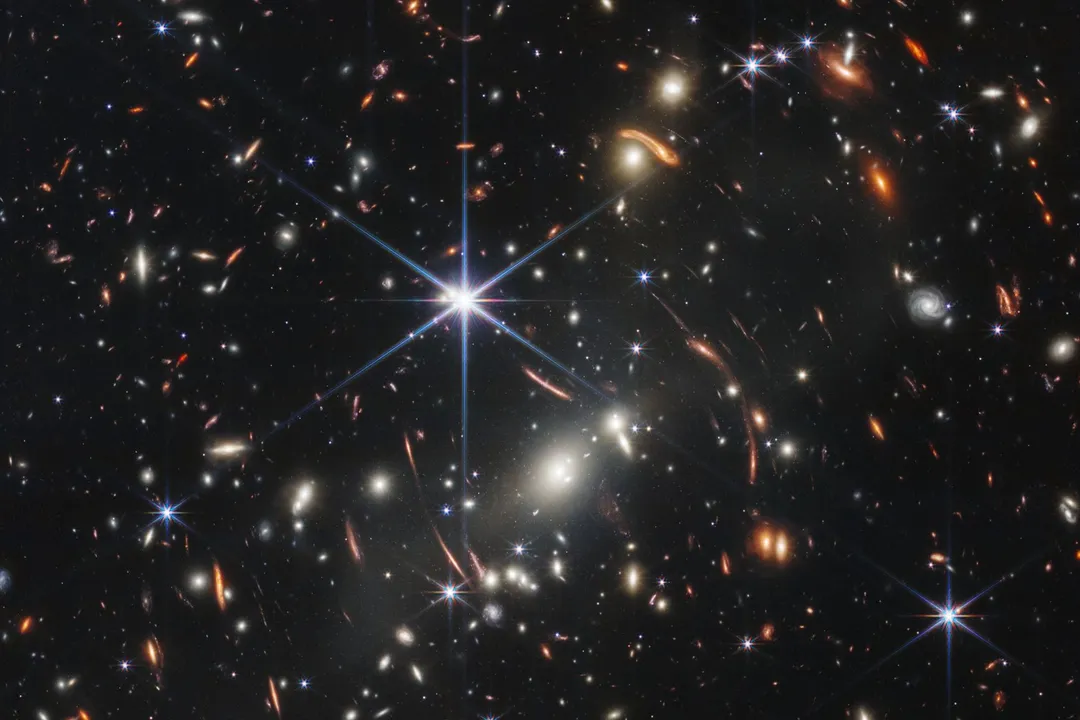
If we move past what our eyes can gather, the universe opens up dramatically. Telescopes, of course, gather far more light, revealing details within Andromeda itself, such as its central bulge and surrounding dust lanes. Instruments have pushed our observational limits far beyond M31. For instance, the Hubble Space Telescope has captured images of galaxies billions of light-years away, showcasing light that began its journey when the universe was only a fraction of its current age. This stark contrast highlights that while Andromeda is a triumph of natural human vision, it represents just the very threshold of our cosmic neighborhood.
# Practical Viewing Guidance
To successfully locate this distant beacon, a structured approach is helpful. First, you need to identify the Great Square of Pegasus on a clear autumn night. From there, use a star chart or a planisphere to locate Andromeda, which is situated near the constellation Cassiopeia.
If you are struggling to see the faint smudge, try a technique known as averted vision. Instead of looking directly at where you suspect the galaxy is located, look slightly to the side of that position. The rods in your peripheral vision are generally more sensitive to low levels of light than the cones concentrated in the center of your eye. By shifting your gaze slightly, you are allowing that integrated, diffuse light from M31 to fall onto a more sensitive part of your retina, often making the faint patch suddenly "pop" into view. This simple shift in focus is often the difference between missing the galaxy entirely and confirming you have seen an object 2.5 million light-years away.
#Videos
What is the Farthest Space Object We can SEE? | Star Gazers
Related Questions
#Citations
What is the farthest space object that we can see with only our eyes?
What is the most distant astronomical object that can be seen with ...
Andromeda Galaxy - Wikipedia
The Most Distant Thing You Can See With the Naked Eye ... - YouTube
Sharpest ever view of the Andromeda Galaxy - ESA/Hubble
How Far Can Humans See In Space? - World Atlas
Starwatch: the furthest thing you can see with the naked eye
What is the most distant thing we can see? - Space