What is the difference between SPHEREx and JWST?
The arrival of new infrared observatories often prompts a comparison with the current gold standard, the James Webb Space Telescope (JWST). While both instruments peer into the cosmos using infrared light, NASA's forthcoming SPHEREx mission is designed with a distinct set of priorities that position it as a complement rather than a direct competitor to JWST. [1][3] The key distinction lies not just in what they see, but how much of the sky they map and the specific questions they aim to answer about the universe's history.
# Survey Design
JWST is famous for its stunning, high-resolution, deep-field images, focusing intense observation time on small patches of the sky to resolve the earliest galaxies or scrutinize exoplanet atmospheres. [1] Its strength is unparalleled sensitivity and angular resolution for specific targets.
SPHEREx, an acronym for Spectro-Photometer for the History of the Universe, Epoch of Reionization, Small Scale Survey, is fundamentally a survey mission. [9] Its primary goal is to create the first-ever full-sky map in the near-infrared. [9] Think of it this way: JWST takes incredibly detailed, hours-long photographs of specific portraits, whereas SPHEREx is gathering billions of color readings across the entire cosmic landscape to create a massive, detailed cosmic atlas. [1] This all-sky approach is essential for studying the large-scale structure of the universe and the remnants of the Big Bang. [3][9]
The sheer volume of data SPHEREx is designed to collect across the entire celestial sphere mandates a different instrument approach than the highly agile, pointed observations characteristic of JWST. While JWST's instruments are optimized for spectroscopic analysis of individual, faint objects, SPHEREx uses its unique spectral capabilities to fingerprint light across the entire sky to tease out cosmological signals. [1]
# Spectral Coverage
A critical difference between the two observatories involves the specific parts of the infrared spectrum they prioritize. JWST excels in the near- and mid-infrared, allowing it to penetrate dust clouds and see highly redshifted light from the universe's first stars and galaxies. [1]
SPHEREx focuses specifically on the near-infrared range. [1] This specific band of light is crucial because it captures the redshifted glow from the epoch of reionization—the time when the first stars and galaxies began illuminating the neutral hydrogen fog that filled the early universe. [9] By systematically cataloging the faint spectral signatures across this band over the entire sky, SPHEREx seeks to quantify the distribution of matter and energy in the universe during that formative era. [9]
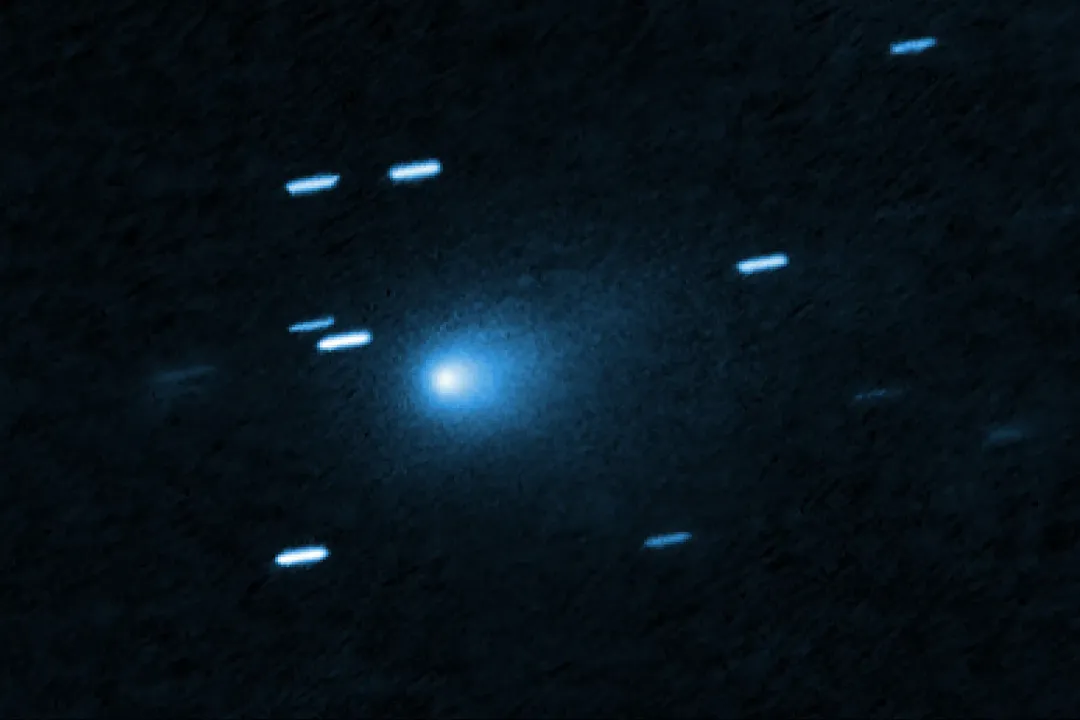
It is worth noting that even though both work in the infrared, the way they analyze the light differs significantly based on their primary science goals. For instance, if we look at a recent object like Comet 3I/Atlas, JWST might provide breathtaking, detailed spectroscopy of water ice composition in a specific region of the coma. [4][6] SPHEREx, conversely, would capture the integrated spectral fingerprint of the entire comet as it passes through the field of view, contributing to a massive database used to calibrate or contextualize observations about more distant, ancient objects. [4][6] The difference is one of high-resolution imaging versus high-cadence, full-sky spectral mapping.
# Mapping the Early Cosmos
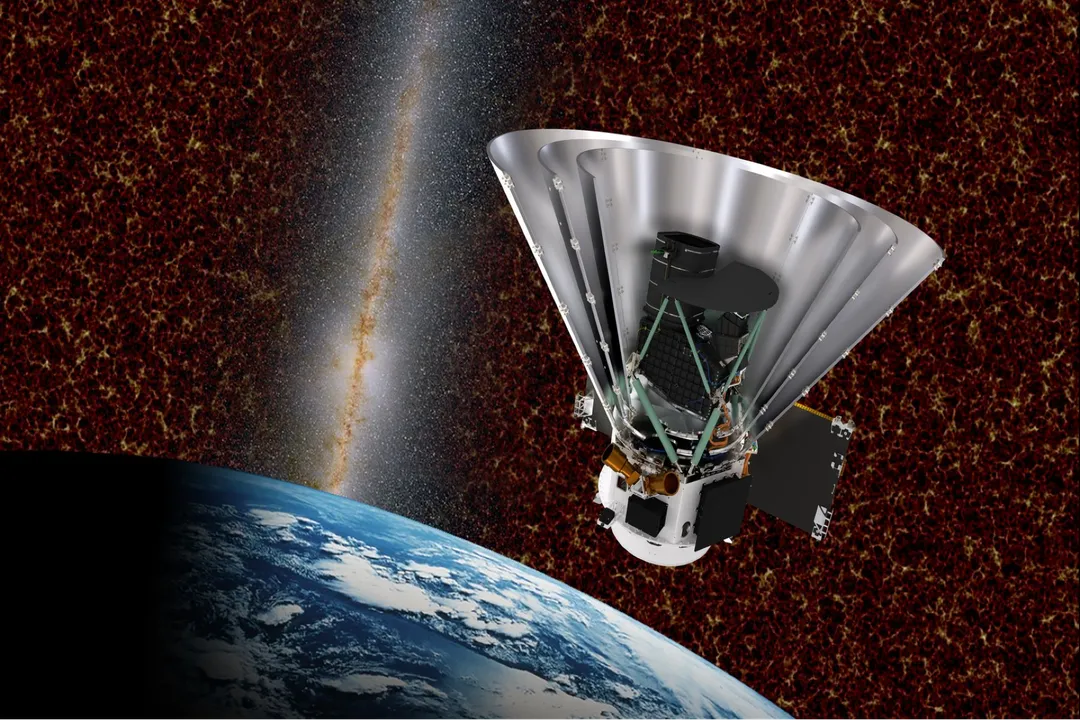
The fundamental inquiry driving SPHEREx is an understanding of the universe's origins, particularly the processes leading to the structure we see today. [3] It is designed to precisely measure the "cosmic infrared background" (CIB) and the distribution of galaxies. [9] By analyzing the spectrum of light coming from every direction, scientists can deduce the physical properties of the matter and radiation present billions of years ago. [9]
This mission is inherently statistical and mapping-oriented. It needs to see everything over time to build an accurate picture of uniformity and deviation. The sensitivity required for this full-sky survey might not match the absolute deep-field limits of JWST, but the breadth of coverage is unmatched by JWST's survey mode capabilities, as JWST's primary mission is to maximize exposure on the highest-priority, deepest targets. [1]
If you were planning a study comparing the local distribution of stellar nurseries, JWST would be your go-to for detailed characterization of one nursery over many hours. [1] If you needed to know the average infrared emission signature across the entire galactic plane to model dark matter effects on large scales, SPHEREx’s survey data would provide the foundational catalog. [9]
# Technical Footprint and Operations
While the precise technical specifications often remain more complex than simple comparisons allow, the mission profiles imply different operational constraints. JWST, positioned at the Sun-Earth L2 Lagrange point, requires cryogenic cooling to maintain its incredibly low operating temperature necessary for its sensitive mid-infrared instruments. [1] Its massive mirror and sunshield define its operational reality.
SPHEREx is scheduled to launch around February 2025 and is designed for a mission life of about two years. [1][7] It is set to launch on a SpaceX Falcon 9 rocket. [7] The fact that it is planned for a shorter, dedicated survey mission, compared to the decades-long potential of JWST, reinforces its role as a specific, focused probe into the structure of the early universe rather than a general-purpose astronomical observatory.
When considering the instrumentation, SPHEREx employs a time-domain spectrograph capable of imaging the entire sky multiple times throughout its two-year run. [9] This repeated scanning is key to its strategy: accumulating enough faint signals over time to create a high signal-to-noise map, even if the individual exposure time for any single spot is relatively short compared to a JWST deep field. This is a classic trade-off in astronomy: depth versus breadth; SPHEREx chooses breadth for cosmology, while JWST prioritizes depth for astrophysics and exoplanetology. [1]
# Insights into Cosmic Composition
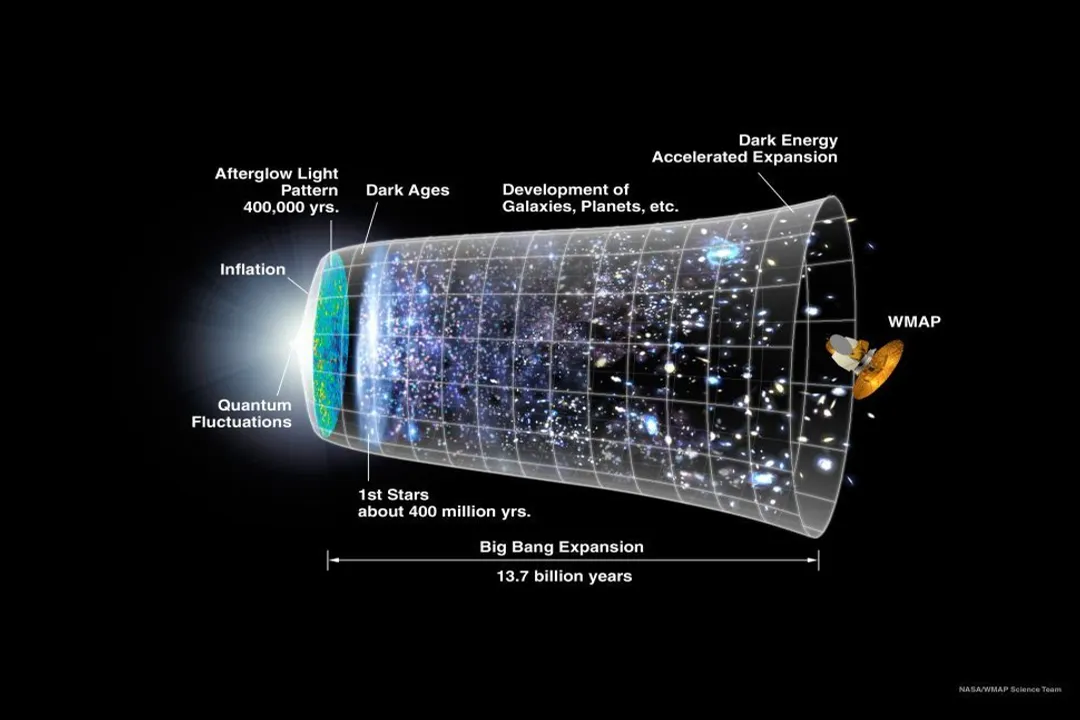
One fascinating area where these telescopes might cross paths is in analyzing faint, diffuse light. SPHEREx aims to map the CIB with unprecedented precision. [9] This background light is a mixture of emissions from all sources integrated across cosmic history. By isolating the components related to the Big Bang's echo and the first light sources, scientists can constrain models of structure formation—how tiny quantum fluctuations in the very early universe grew into the massive clusters and voids we see today. [3][9]
For example, consider the elemental abundances in the galaxy. JWST can provide pristine data on the chemical makeup of a single, extremely distant galaxy's atmosphere or star-forming region. [1] SPHEREx, on the other hand, will generate data that allows astronomers to build a statistical map of how the average metallicity or dust content might evolve across large cosmic volumes, providing context for those individual JWST discoveries. This statistical context is often what validates or refutes the theories derived from singular, spectacular JWST findings. If the full-sky survey reveals an unexpected large-scale anisotropy in the infrared background, it might point toward physics beyond the standard model of cosmology, which is a much broader question than JWST is typically tasked to answer directly.
The concept of comparing datasets from both can yield unique value. Imagine finding an anomalous spectral signature in the SPHEREx all-sky map that corresponds to a known feature in the early universe model. An astronomer could then immediately query the JWST archive to see if that same feature, or a similar-looking galaxy, has been observed in high detail in a targeted pointing, providing immediate ground-truthing between the large-scale survey and the fine-grained imager. This iterative process between surveys and deep imagers is how astronomical knowledge advances most rapidly.
# Scientific Output
The intended scientific payoff clearly separates the two missions. JWST provides stunning visual and spectroscopic evidence of known phenomena—like capturing the formation of stars or analyzing the air on alien worlds. [1] SPHEREx seeks to quantify the invisible or diffuse history of the universe—the large-scale cosmic web and the lingering energy from the earliest light. [9]
The mission profile suggests that SPHEREx will be vital for probing the nature of dark energy and dark matter by mapping the distribution of visible matter (galaxies) in 3D space over vast cosmic distances. [3][9] This distribution is heavily influenced by the gravitational pull of dark matter, and mapping it systematically across the sky is a powerful constraint on cosmological parameters.
Ultimately, the comparison isn't about which is "better," but which tool is right for the specific scientific question. If you are looking at where the light is coming from in extreme detail, you point JWST. [1] If you are looking at what the aggregate light of the entire sky is made of across different epochs, you use SPHEREx. [9] They are two sides of the infrared coin, one focused on depth and specificity, the other on breadth and cataloging the cosmic structure in its entirety. [1] The success of one will undoubtedly shape the follow-up observations planned for the other, creating a richer overall picture of cosmic evolution. [3]
#Videos
Technology Comparison: SPHEREx vs JWST in Observing 3I/ATLAS
Related Questions
#Citations
NASA's new SPHEREx space telescope to launch in February
Technology Comparison: SPHEREx vs JWST in Observing 3I/ATLAS
NASA's new telescope is more powerful than James Webb
SPHEREx and JWST reveal what comet 3I/ATLAS is… and isn't |
NASA has created a more powerful James Webb Space Telescope ...
SPHEREx and JWST reveal what comet 3I/ATLAS is... and isn't
A fancy new telescope is heading to space: Here's what SPHEREx ...
There has been interest in the JWST data on 3I/ATLAS recently and ...
NASA Finalizes Plans for Its Next Cosmic Mapmaker