What is the binary star theory?
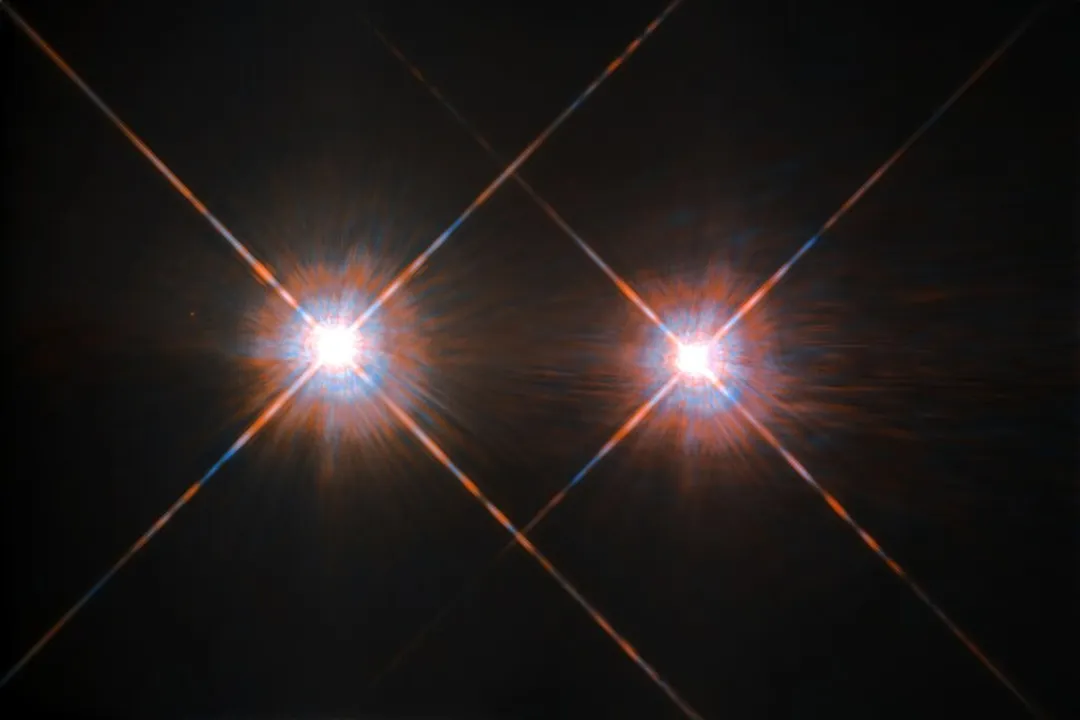
More than half of the stars visible in the night sky are not solitary objects like our Sun. Instead, they exist in pairs or even larger groupings, gravitationally locked in an eternal dance around a common center of mass. [1][2] This phenomenon, known as a binary star system, represents the standard rather than the exception in the galactic population. While our solar system features a single central star, the physics governing the cosmos often favor the creation of multiple-star configurations.
# Binary Systems
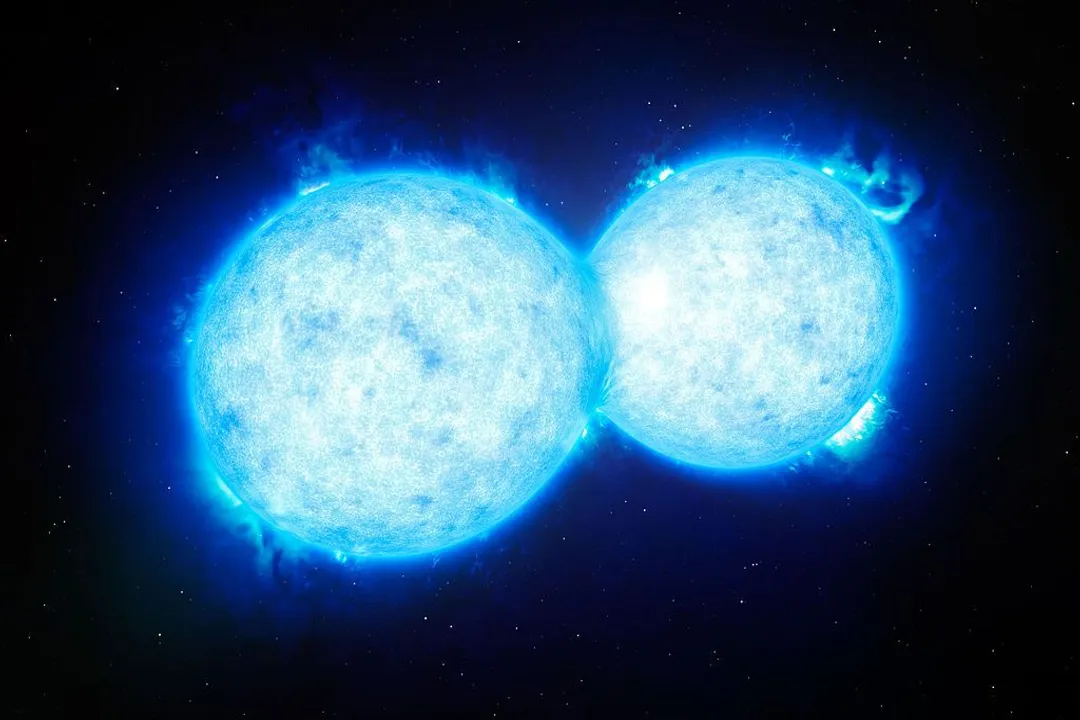
A binary star system consists of two stars that orbit their shared center of mass, often referred to as the barycenter. [1] These stars are held together by mutual gravitational attraction. [5] While to the naked eye they might appear as a single point of light, more powerful instruments reveal the distinct components of the pair. These systems are not merely aesthetic curiosities; they provide astronomers with the most reliable method for measuring stellar mass, which is otherwise difficult to determine. [1] By observing the orbital period and the distance between the stars, scientists can apply Kepler's laws to calculate the mass of the individual components with high precision. [1][6]
# Stellar Formation
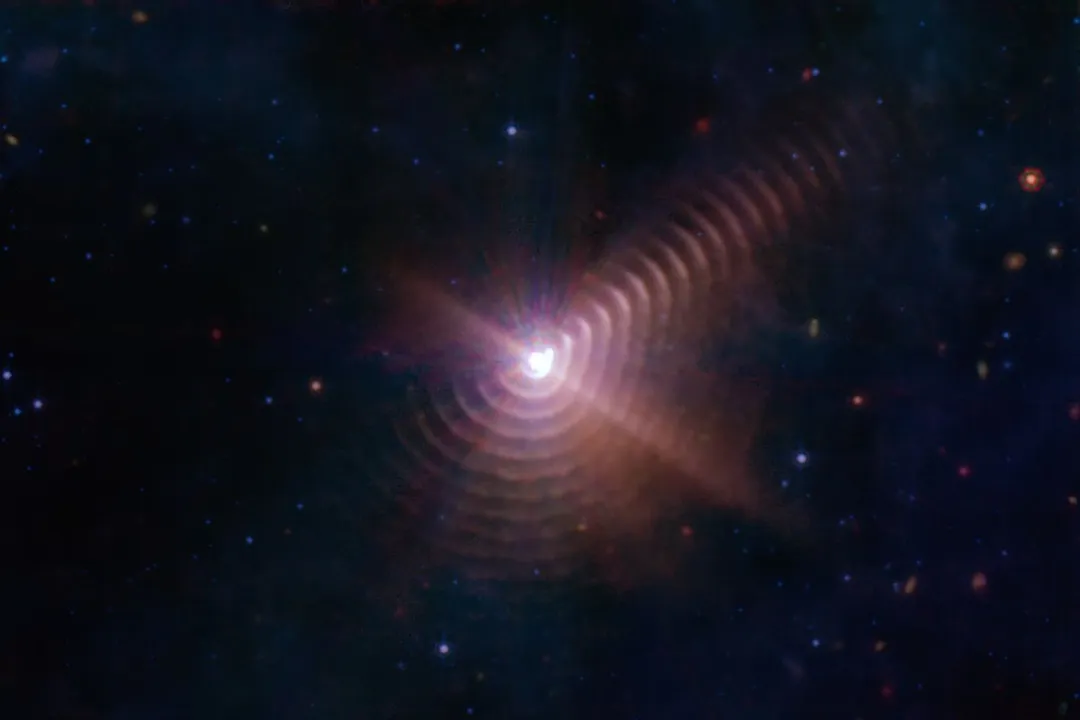
The prevailing scientific consensus suggests that binary stars are usually born together from the same collapsing cloud of gas and dust. [3] As the cloud fragments and collapses, the conservation of angular momentum leads to the formation of multiple dense cores. [3][7] If these cores are close enough, they become gravitationally bound. [7] Recent computer simulations have provided clarity on how this process unfolds, showing that the disks of gas and dust surrounding young stars—known as accretion disks—can interact or even merge during these early stages. [3] This shared origin explains why binary stars often possess similar chemical compositions and ages, functioning as cosmic twins formed in the same nursery. [3]
# Orbital Mechanics
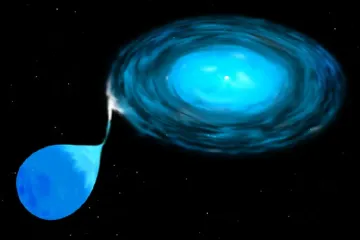
The motion within these systems depends heavily on the mass of each star and their separation distance. When stars are separated by a vast distance, they interact weakly and move independently for long periods. [2] Conversely, if they are close, their orbits are tighter and faster. [2] In some scenarios, stars are so close that they share outer atmospheric layers, creating a contact binary where gas flows from one star to the other. [8]
Understanding these orbits requires looking at how we detect them. Astronomers use several distinct methods to identify binary systems, as shown in the table below:
| Detection Method | Description | Primary Limitation |
|---|---|---|
| Visual Binary | Two stars are directly resolved by a telescope. | Requires the stars to be far apart. |
| Spectroscopic Binary | Doppler shifts in light reveal orbital motion. | Does not provide direct distance data. |
| Eclipsing Binary | One star passes in front of the other, dimming light. | Requires specific orbital alignment. |
| Astrometric Binary | One star "wobbles" due to an unseen companion. | Requires high-precision tracking over time. |
These methods allow researchers to overcome the challenges of distance. For instance, an eclipsing binary is particularly valuable because the timing of the dimming events allows for accurate measurements of both the size and the mass of the stars involved. [6]
# Solar Origins
A lingering question in astronomy is whether our own Sun was once part of such a system. The theory that the Sun might have started its life with a binary companion has been a subject of intense research. [4] The motivation for this hypothesis stems from the fact that most stars form in clusters and frequently in pairs, making the Sun’s solitary status a statistical outlier. [4]
Some researchers argue that if the Sun had a massive companion, it could have influenced the early architecture of the solar system, potentially nudging objects in the Oort cloud or affecting the distribution of planetary bodies. [4] However, evidence remains circumstantial. If the Sun did have a sibling, that companion likely escaped long ago due to gravitational interactions with passing stars in the birth cluster, leaving the Sun alone in its current state. [4] While there is no direct proof of a "missing" twin, the statistical prevalence of binary stars remains a strong argument for the Sun having had a more crowded upbringing.

# Planetary Habitability
A common concern regarding binary stars is whether planets can survive in such environments. Stability is the primary factor. If a planet orbits one star in a binary system, known as an S-type orbit, the presence of the second star can introduce gravitational perturbations that might eject the planet or make its orbit highly elliptical, rendering it uninhabitable. [5]
However, stable orbits exist. A planet can orbit both stars simultaneously in what is termed a P-type or circumbinary orbit, often compared to the fictional planet Tatooine. [5] In these configurations, the two stars appear as a single object from the planet's perspective, or as two distinct suns in the sky. Provided the planet maintains a sufficient distance from the binary pair, its orbit can remain stable for billions of years, potentially allowing for the development of life. [5] The density and complexity of the gravitational field in a binary system simply impose stricter requirements on what constitutes a "habitable zone" compared to a single-star system.
# Evolutionary Outcomes
Binary systems do not remain static; they evolve, sometimes with dramatic consequences. When one star in a binary pair exhausts its nuclear fuel and expands into a red giant, it may begin dumping mass onto its companion. [2] This mass transfer can lead to a variety of outcomes:
- Stable accretion: The smaller, denser companion (often a white dwarf) steadily accumulates material.
- Novae: If a white dwarf accumulates enough hydrogen on its surface, a thermonuclear explosion occurs, causing a sudden, bright increase in luminosity. [8]
- Type Ia Supernovae: If the white dwarf reaches a critical mass limit known as the Chandrasekhar limit, it can no longer support itself and undergoes a catastrophic detonation. [8]
These events are distinct from the collapse of massive single stars. Because these supernovae occur when a white dwarf hits a specific mass threshold, they shine with a predictable, consistent brightness. [8] This consistency allows astronomers to use them as "standard candles" to measure distances to far-off galaxies, serving as a vital tool for mapping the expansion rate of the universe.
# Cosmic Patterns
Recent research into the formation and evolution of these systems has shed light on why certain star systems look the way they do today. [7] By analyzing the distribution of orbital periods and the mass ratios between stars, scientists have uncovered specific patterns that suggest stellar birth is a structured, albeit chaotic, process. [7][9] It appears that the environment—the density of the star-forming region—plays a critical role in determining whether a system remains binary or if the stars eventually drift apart. [7]
This suggests that the binary star theory is not a single unified concept but a collection of observed dynamics that explain how gravity dictates the lifecycle of stars. Whether through the slow transfer of matter between aging stars or the potential early influence on planetary systems, binary stars represent the complex, interdependent nature of the cosmos. Every binary system serves as a laboratory for testing gravity, stellar evolution, and the formation of planetary architectures, offering a window into the dynamic history of the universe.
Related Questions
#Citations
Binary star - Wikipedia
What are binary stars? | Space
Born Together: A New Look at Binary Stars - Oden Institute
The Sun May Have Started Its Life with a Binary Companion
Multiple Star Systems - NASA Science
Binary and Multiple Stars: Crash Course Astronomy #34 - PBS
New discovery sheds light on binary star formation and evolution
Binary star systems, while commonplace in our known universe ...
The importance of binary stars - arXiv