What is Kuiper Belt and Oort Cloud?
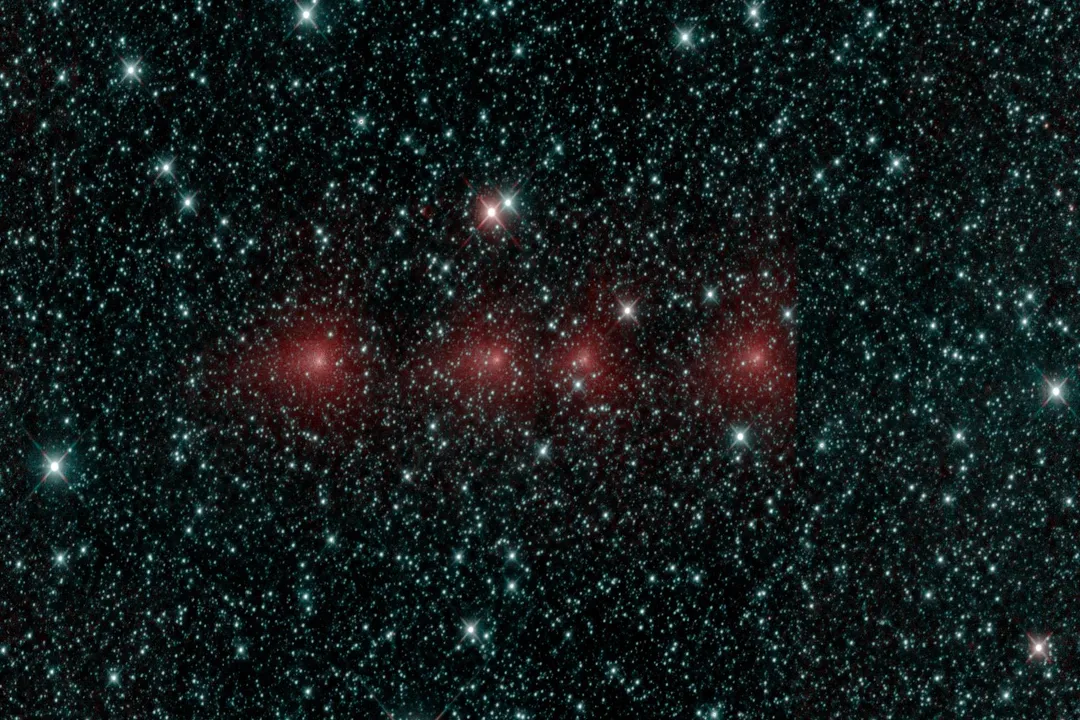
Beyond the orbit of Neptune, the solar system does not simply end. Instead, it transitions into a vast, frigid frontier filled with icy debris and dormant remnants from the dawn of our planetary neighborhood. [1] For most of history, humanity viewed the solar system as the collection of planets we could clearly identify. We now know that two distinct regions—the Kuiper Belt and the Oort Cloud—define the outer boundaries of our home, each playing a distinct role in the architecture of space. [2][9]
# Kuiper Belt
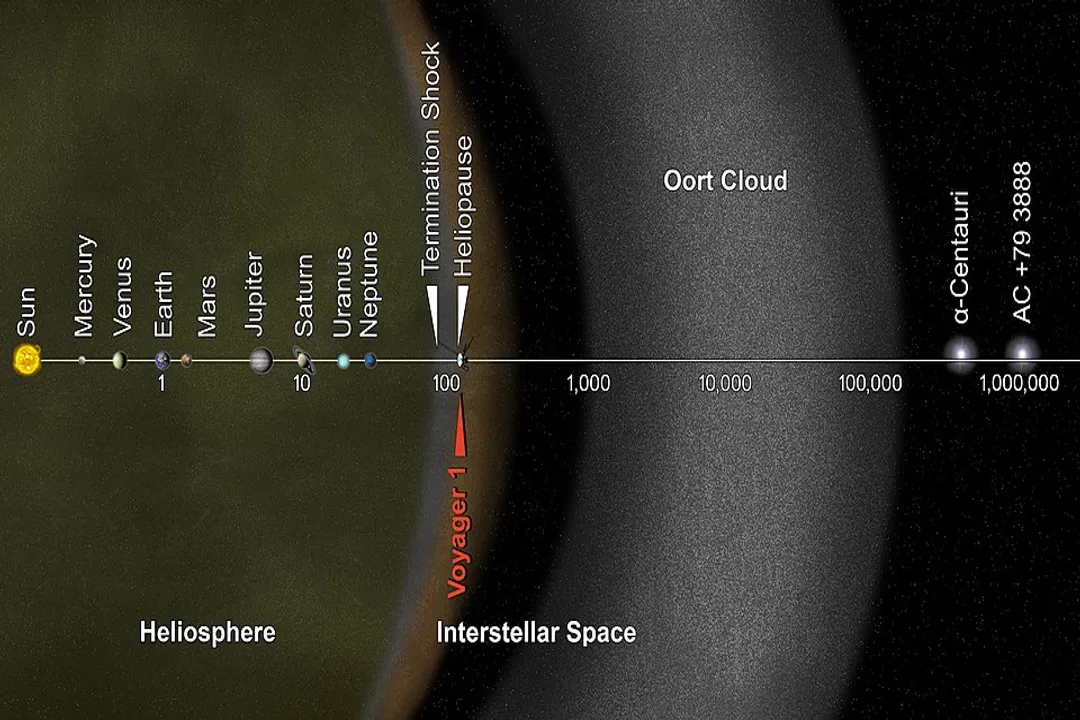
The Kuiper Belt is a disk-shaped region of icy objects located just outside the orbit of Neptune, spanning a distance of approximately 30 to 50 astronomical units (AU) from the Sun. [1][3] One astronomical unit is equivalent to the average distance between Earth and the Sun, making this region relatively "close" in cosmic terms compared to what lies further out. [10]
This region is often described as a donut-shaped ring. It is heavily populated with millions of icy bodies, which are essentially the leftovers from the formation of the solar system. [1] These objects, often called Kuiper Belt Objects (KBOs), are composed largely of frozen volatiles like methane, ammonia, and water ice. [1][2] The most famous resident of this belt is Pluto, which was reclassified from a planet to a dwarf planet in 2006, precisely because astronomers realized it was one of many similar objects sharing this orbital neighborhood. [3]
Studying the Kuiper Belt provides a time capsule of the early solar system. Because these objects have remained relatively unchanged for billions of years due to the extreme cold, they retain the chemical signatures of the nebula from which the Sun and planets condensed. [1] While we have sent probes like New Horizons to visit Pluto and fly past other KBOs, our physical contact with this region remains limited to these brief encounters. [3]
# The gap
Between the outer edge of the Kuiper Belt and the inner boundary of the Oort Cloud lies a region that is often mistakenly perceived as empty space. [4] In reality, this area is home to "scattered disc" objects. These are bodies with orbits that have been altered by gravitational interactions, often pushing them into eccentric, tilted paths that take them far from the ecliptic plane—the flat disk where the planets orbit. [1]
The density of matter in this region is significantly lower than in the Kuiper Belt. While it contains few stable, permanent structures, it serves as a transit zone for objects that are being nudged inward toward the Sun or outward toward the deeper reaches of the solar system. [4] This region highlights the dynamic nature of our solar system; gravitational influence from the giant planets, particularly Neptune, acts as a shepherd or a scatterer for these smaller bodies, constantly reshuffling their paths. [1]
# Oort Cloud
The Oort Cloud is far more mysterious and distant than the Kuiper Belt. Unlike the flat, disk-like structure of the Kuiper Belt, the Oort Cloud is a massive, spherical shell that surrounds the entire solar system. [6][10] It is estimated to begin at approximately 2,000 to 5,000 AU and extend to as far as 100,000 AU—nearly a quarter of the way to the next nearest star system. [1][6]
To visualize this distance, if the distance from the Sun to Earth is one step, the inner edge of the Oort Cloud is two miles away, and its outer boundary is fifty miles away. We have never directly observed the Oort Cloud; its existence is inferred based on the mathematical study of cometary orbits. [6][9] Long-period comets—those that take hundreds or thousands of years to orbit the Sun—appear to arrive from all directions, not just the ecliptic plane. [1][10] This implies they originate from a spherical cloud rather than a flat disk.
The Oort Cloud is likely home to trillions of icy bodies. [6] These objects are loosely bound by the Sun’s gravity. Even the weak gravitational pull of passing stars or the tides of the Milky Way galaxy can tug on these objects, occasionally knocking them out of their orbits and sending them plunging toward the inner solar system as long-period comets. [10]
# Comparison
The following table highlights the primary differences between these two regions to clarify their distinct roles in the solar system:
| Feature | Kuiper Belt | Oort Cloud |
|---|---|---|
| Shape | Disk (Torus) | Sphere (Shell) |
| Distance | 30–50 AU | 2,000–100,000 AU |
| Visibility | Directly imaged by telescopes/probes | Hypothetical (inferred from comets) |
| Population | Millions of bodies | Trillions of bodies |
| Comet Type | Short-period comets (<200 years) | Long-period comets (>200 years) |
# Comet origins
The distinction between the Kuiper Belt and the Oort Cloud is best observed through the behavior of comets. Astronomers classify comets based on how long they take to complete a single trip around the Sun. [2]
Short-period comets, such as Halley’s Comet, have orbital periods of less than 200 years. Their orbits are usually aligned with the flat plane of the planets, suggesting they originated in the Kuiper Belt. [1] When the gravity of a giant planet like Neptune or Jupiter alters the orbit of a Kuiper Belt object, it can shift it onto a path that enters the inner solar system, where the heat of the Sun begins to vaporize its ices, creating the characteristic glowing coma and tail. [2]
In contrast, long-period comets arrive from every direction, often falling in from high above or below the plane of the planets. [10] These comets possess orbits that last thousands or even millions of years. Because their arrival is not restricted to the ecliptic plane, it serves as the strongest evidence for the existence of the spherical Oort Cloud. [6] These comets are essentially "visitors" from the deepest cold of our solar system, disturbed from their distant perches by the gentle pull of passing galactic neighbors. [10]
# Scientific significance
One might wonder why these distant, dark regions matter to those of us on Earth. The primary value lies in planetary science and history. The objects within the Kuiper Belt and the Oort Cloud have not changed significantly since they formed alongside the Sun approximately 4.6 billion years ago. [1]
While Earth has been geologically active—with volcanoes, plate tectonics, and erosion constantly recycling its surface—the icy bodies in the far reaches of the solar system are static. Analyzing their chemical composition helps scientists determine the initial conditions of the solar nebula. For instance, the ratio of different isotopes of water and organic molecules found in comets originating from these regions provides data on where Earth’s water and the building blocks of life may have come from. [1]
From an observational standpoint, these regions present a technical barrier. We cannot send a probe to the Oort Cloud with current propulsion technology; it would take tens of thousands of years to reach it. Consequently, our knowledge relies on indirect observation and predictive modeling. [9] If we were to calculate the travel time for a modern spacecraft, even at the speeds achieved by the Voyager probes, the Oort Cloud remains practically unreachable. This forces scientists to rely on data from comets that visit us, treating these objects as "delivery services" that bring pieces of the outer solar system to our doorstep for analysis.
Another critical insight is the role of gravity. The Oort Cloud is not just a storage facility for ice; it is a gravitational buffer. The objects located there are constantly interacting with the galaxy. While they are far, the stability of our inner solar system is linked to these gravitational exchanges. Even a small shift in the Oort Cloud can result in a comet trajectory change, reminding us that our solar system is not a static machine but a dynamic system interacting with the wider galaxy. [10]
Understanding these regions is vital for mapping the full extent of the Sun's influence. While the Kuiper Belt is our immediate neighborhood, the Oort Cloud represents the outer "fence" of our solar system, defining the transition point where the Sun's gravitational dominance begins to fade into the influence of other stars.
#Videos
Kuiper Belt And Oort Cloud Explained - YouTube
Related Questions
#Citations
The Kuiper Belt and the Oort Cloud: What to know - Ad Astra
Comets, the Kuiper Belt and the Oort Cloud
[PDF] Kuiper Belt and Oort Cloud - NASA
What is between the Kuiper Belt (30 to 50 AU) and the Oort Cloud ...
Kuiper Belt And Oort Cloud Explained - YouTube
Oort cloud - Wikipedia
Relationship of the Kuiper Belt to the Oort Cloud | ESA/Hubble
[PDF] Kuiper Belt and Oort Cloud - ESO.org
Space in a Snap: Where does the solar system end? The Oort Cloud.
Oort Cloud - NASA Science