What do astronauts do for hygiene in space?
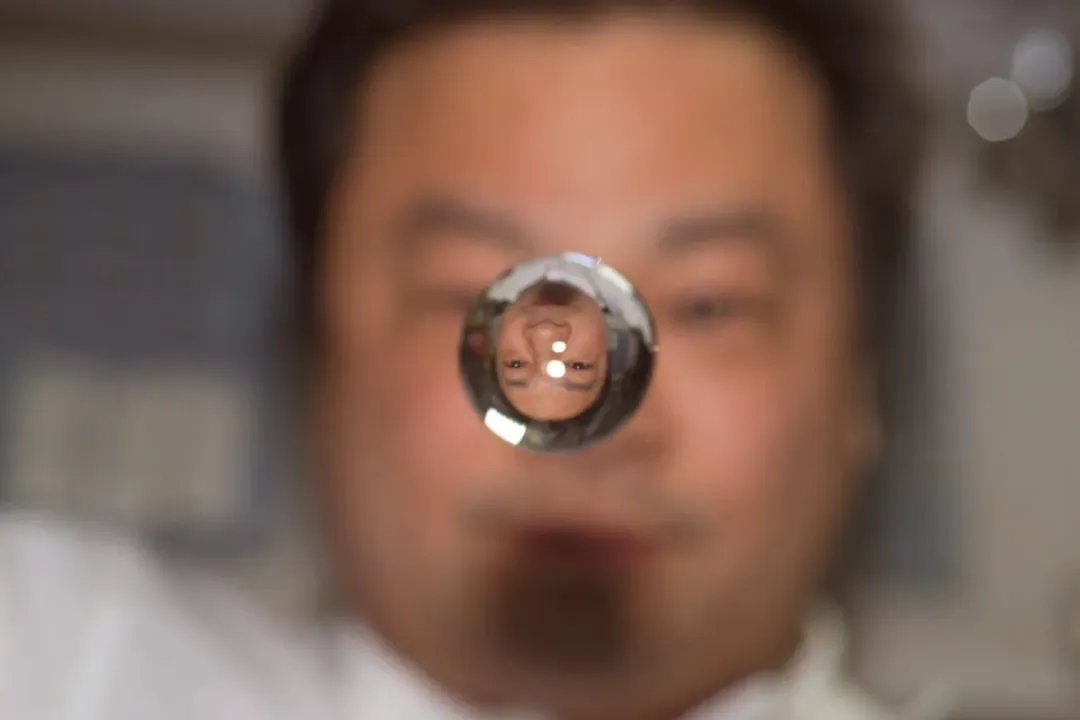
The reality of daily life hundreds of miles above Earth mandates a complete rethinking of tasks we consider automatic, and personal hygiene is no exception. In the weightless environment of the International Space Station (ISS), water doesn't flow, soap doesn't lather and drain away, and stray particles pose a genuine hazard to sensitive equipment and crew members alike. Astronauts trade the familiar comforts of Earthly washing routines for resourceful, conservation-focused alternatives that are closer in spirit to a meticulous military field operation than a relaxing spa visit. [1][2]
# Water Physics
Gravity is the silent partner in every terrestrial bathing ritual, providing the necessary force to pull water down the body and into the drain. [1] On the ISS, that force is gone, meaning water, if not strictly controlled, will form floating spheres that can adhere to surfaces, electronics, and even float into an astronaut’s eyes or lungs. [1][2] This fundamental physical constraint dictates every subsequent hygiene decision.
Beyond the physics, there is the harsh logistics of space travel: mass. Every drop of water launched into orbit is heavy, expensive payload that must be minimized. [2] This scarcity drove an evolution in hygiene practices across the history of spaceflight. Early missions relied on minimal supplies, but modern living in orbit is sustained by a marvel of engineering: water recycling. [2] The ISS system is incredibly effective, capable of recovering approximately 93% of wastewater, which includes moisture from crew members’ breath and even purified urine, transforming it back into usable drinking water. [2][3] This near-total reclamation underscores that hygiene is inseparable from life support management in space.
# Body Cleansing
For astronauts today, the concept of a traditional shower is largely relegated to historical training simulations or memories of home. While the Skylab station featured a shower, it was an awkward, time-consuming affair. [1] Astronauts had to secure their feet, erect a fireproof, cylinder-shaped wall from floor to ceiling, and use a pressurized bottle attached overhead to spray water from a hose. [1] This system was so cumbersome that the average shower took over two hours, despite only using about three liters of water, and required painstaking suctioning of every sudsy drop afterward to protect electronics. [1] Paul Weitz, the first to use the Skylab shower, reported smelling good afterward, but the inconvenience was palpable. [1]
The Space Shuttle and ISS eras reverted to a far simpler, water-saving technique, essentially an upgraded sponge bath. [1] Astronauts squeeze liquid soap and water from pouches onto their skin. [1] A cleaning cloth or wet wipe is used to scrub the body. [3] This method eliminates the danger of free-floating water droplets bouncing around sensitive panels. [2] An interesting point is that the necessity of this method isn't solely due to water shortage; Curator Jennifer Levasseur notes that utilizing existing, simpler sponge-bath solutions was more cost-effective than designing, building, and launching a specialized, heavier shower apparatus. [1] While the initial Apollo and Gemini missions also used sponge baths, they lacked the water recycling that makes the current method sustainable, often leading to returning crews carrying a "strong scent" after long stints without changing clothes. [1]
It is important to consider that, despite the clinical, temperature-controlled nature of the station environment, astronauts still generate biological waste like natural skin oil (sebum) and sweat, particularly after required daily exercise. [2] The sweat, however, behaves differently; astronaut Mike Hopkins noted that sweat tends to cling in pools on the skin, around the eyes, or even form noticeable blobs that can fly off, rather than evaporating as quickly as it does on Earth. [1]
# Hair Care
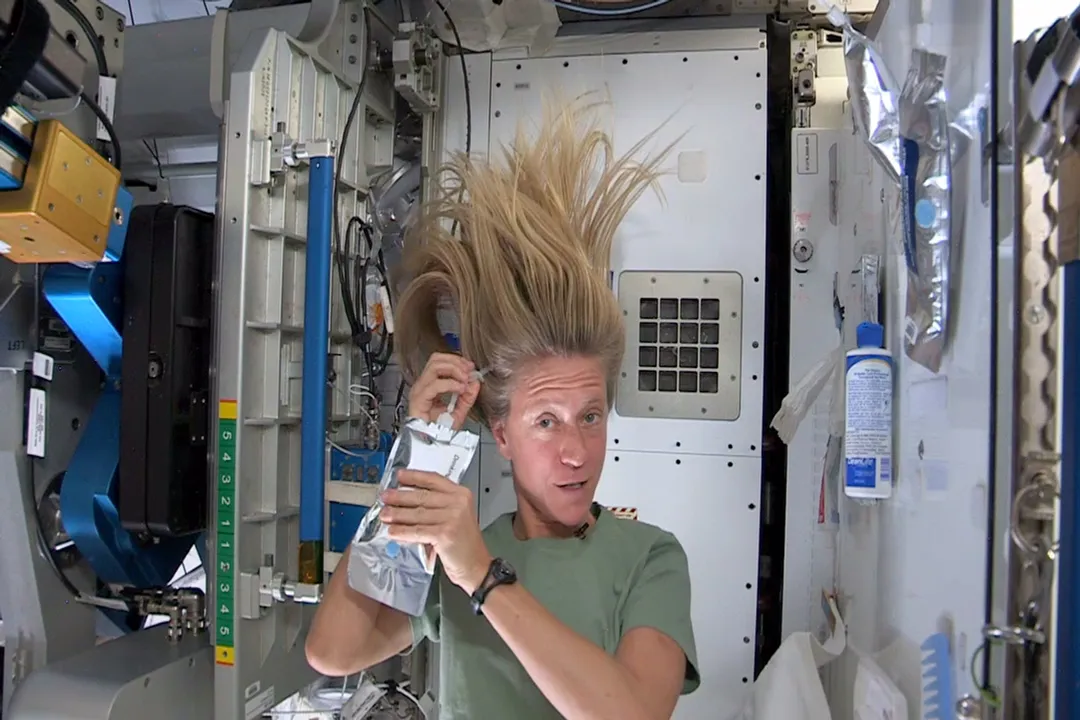
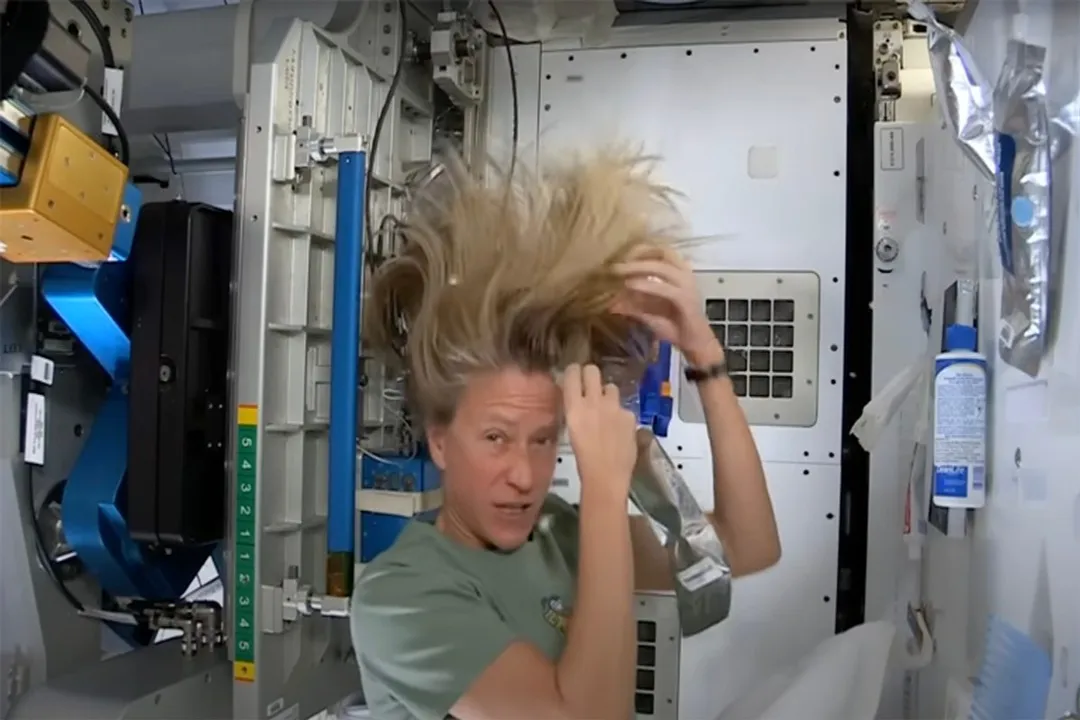
Washing hair follows the same conservation principles as full-body washing. The primary tool is no-rinse shampoo. [1][2] This product, initially developed for hospital patients unable to shower, allows for cleansing without the need to rinse the soap out with copious amounts of running water. [2] The procedure is straightforward but requires precision: the shampoo is applied directly from a pouch or with hands, vigorously massaged into the scalp, and then completely towel-dried. [3] After this, astronauts can comb or brush their hair, allowing any remaining moisture to naturally evaporate in the cabin air. [3]
This seemingly small task highlights a significant safety consideration. Stray hairs and whiskers are not just unsightly; they become micro-debris hazards. [3] Anything that floats free can be inhaled or cause mechanical irritation to an astronaut’s eyes. [3] The necessity of containing these tiny particles leads to specific techniques for related tasks, such as using hair clippers fitted with a built-in vacuum device to capture clippings immediately, preventing them from dispersing into the environment. [3] This vigilance against microscopic contamination is an ever-present aspect of station life that Earth-dwellers rarely consider.
# Oral Routine
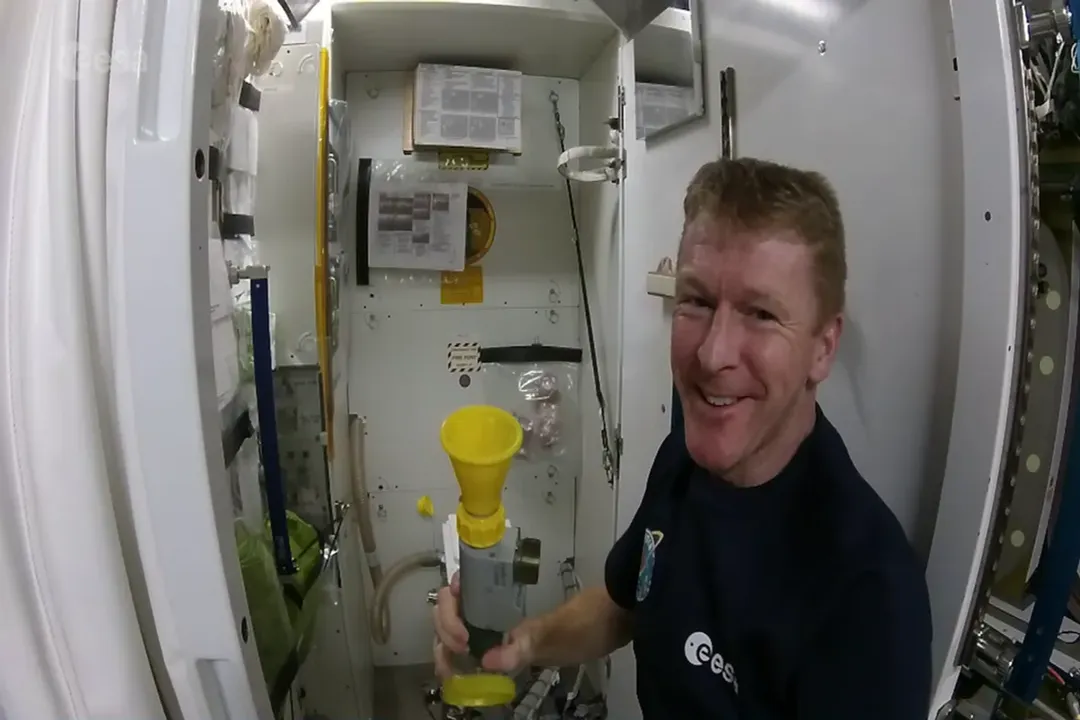
Brushing teeth is one of the hygiene tasks most closely resembling life on Earth, with one major modification: the disposal of the output. [2] Astronauts use their preferred brand of toothpaste, often squeezing a small amount of water from a drink bag onto the bristles to wet them, or simply using the water clinging to the toothbrush from the environment. [2]
The critical difference emerges post-brushing. Without a sink, there is no conventional spitting. [2] Astronauts have two main options: they can either swallow the resulting frothy foam, which is why many opt for edible toothpaste when possible, or spit the residue into a towel for later disposal. [2][3] Cleaning the brush involves using more water, which is similarly managed—swallowed or wiped away. [2] This choice between swallowing waste products or introducing more solid waste requiring disposal is a constant micro-management decision in orbital living.
# Clothing Management
Laundry is another area where the concept of "washing clothes" is abandoned in favor of wearing items until they are hygienically spent. [3] The clothing issued to the crew is specially designed to be dirt-resistant and fast-wicking, allowing for extended, repeated use. [2] Underwear and socks might be worn for several days, while shirts and trousers can last for weeks. [2]
When garments are finally deemed too soiled, they are placed into airtight bags. [2] For everyday wear, these bags of discarded clothing are loaded into cargo containers destined for Earth. Upon re-entry, the container and its contents are intentionally burned up in the atmosphere, effectively disposing of the waste. [2][3] More costly items, like specialized pressure garments or space suits, are handled differently; they are carefully packed to return to Earth where they can be cleaned and reused for future missions. [2] This system transforms laundry day into a cargo manifest and atmospheric disposal event.
# Final Cleanliness Checks
Even tasks as routine as shaving or trimming nails require special consideration for debris control. [3] Shaving can still be done using cream, a razor, and a towel, much like on Earth, though some opt for an electric razor that automatically collects the whiskers for neat disposal. [3]
Nail clipping presents a classic microgravity contamination problem. To prevent clippings from floating away and becoming hazards, an astronaut positions themselves directly in front of an air intake vent. [3] The airflow pulls the tiny clippings against the mesh filter, where they can be vacuumed out later during general station cleaning routines. [3] This method of using existing environmental controls—the air circulation system—to manage solid waste is a prime example of adapting standard procedures to the unique constraints of the orbital habitat. [3]
| Hygiene Task | Earth Method Principle | Space Method (ISS) | Water Management Focus |
|---|---|---|---|
| Body Wash | Gravity-fed rinse/drainage | Sponge bath with liquid soap and wet wipes [3] | Use minimal water; air-dry/towel off excess [1] |
| Hair Wash | Rinsing under running water | No-rinse shampoo, massaged and towel-dried [2][3] | Zero rinse water needed [1] |
| Tooth Brushing | Rinsing mouth and sink drainage | Swallow toothpaste/foam or spit into a towel [2] | Minimize water usage; use edible paste [2] |
| Laundry | Washing in large volumes of water | Wear until soiled, then dispose of via re-entry [2][3] | Water consumption entirely eliminated for cleaning cycle [3] |
The ingenuity extends to other small areas, such as washing utensils, which is largely eliminated by using disposable containers for food and drink, with any soiled items simply wiped down using a wet wipe instead of water. [2] The cumulative effect of these highly managed, non-flowing processes means that while astronauts maintain a basic level of cleanliness sufficient for their sterile environment, the sensory experience of true washing—the feeling of rinsing off sweat and soap—is something missed deeply, often resulting in simple pleasures like standing in the rain or jumping into a pool being a priority immediately upon return to Earth. [1] Living in space is a masterclass in resource conservation, where every drop of water represents not just a cleansing opportunity, but a recycled piece of the life support system itself. [3]
Related Questions
#Citations
Personal hygiene in space - Astronauts - Agence spatiale canadienne
Morning Routine in Space - NASA
How astronauts shower, brush teeth, wash clothes and keep clean
How to Shower in Space | National Air and Space Museum