What degree do you need to work with satellites?
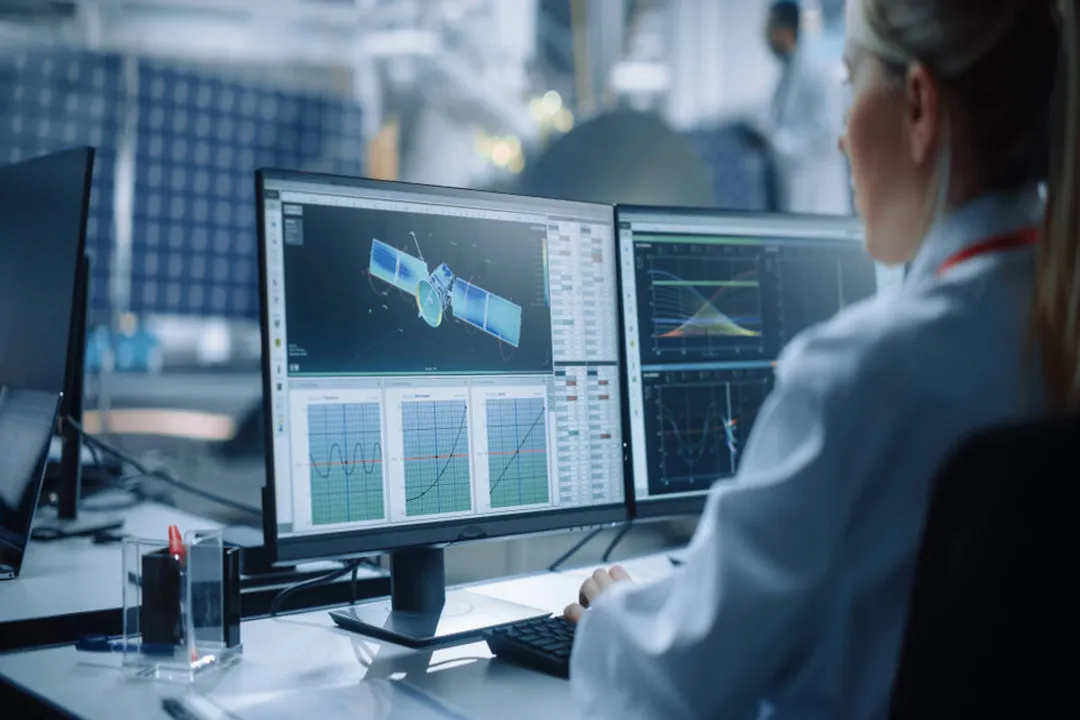
Working on satellites is a multi-disciplinary effort that requires a blend of rigorous academic training and applied technical skill. While the common assumption suggests that only rocket scientists build satellites, the reality is that the industry relies on a diverse range of professionals, from software developers and electrical engineers to systems architects and physics specialists. [2] No single degree serves as a universal key to every role, but specific academic paths provide the necessary foundation for entering the field. [9]
Most entry-level positions require at least a bachelor’s degree in an engineering or technical discipline. [2][4] The path you choose often dictates whether you focus on the hardware—the physical structure, power systems, and propulsion—or the software and communications side—the code, signal processing, and ground station operations. [5]
# Engineering Disciplines
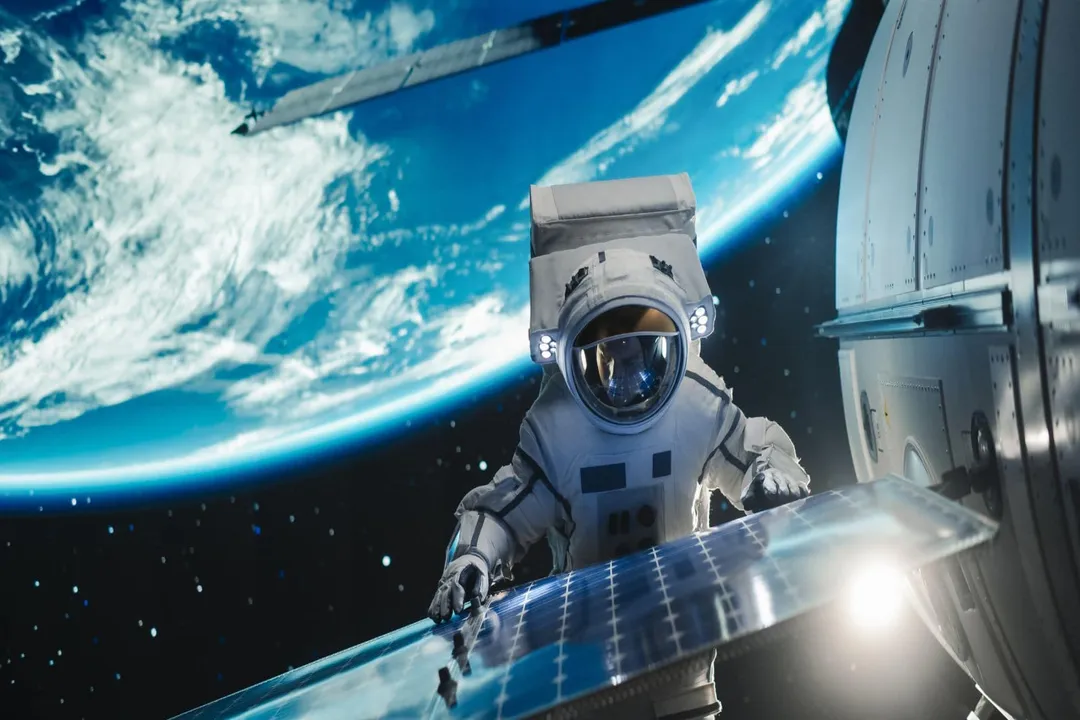
Aerospace engineering stands out as the most direct route into the satellite industry. This curriculum specifically covers orbital mechanics, propulsion, aerodynamics, and spacecraft design. [9] Programs in this field usually provide a comprehensive overview of how a satellite operates within the vacuum of space, dealing with extreme temperature fluctuations and radiation. [3] Students often study structures, materials, and flight dynamics, which are critical for anyone designing the bus or payload of a satellite. [7]
Mechanical engineering is an equally viable path, particularly for those interested in the structural design and thermal management of satellites. [9] Spacecraft must be built to withstand the intense vibrations of a launch and the harsh environment of orbit. A mechanical background allows engineers to tackle these challenges by focusing on CAD (Computer-Aided Design), finite element analysis, and materials science. [7] Many satellite companies actively recruit mechanical engineers because their training in stress analysis and fluid dynamics transfers well to propulsion and structural deployment mechanisms. [3]
Electrical engineering is essential for the "brains" and "nerves" of any satellite. Satellites are essentially complex electronic systems requiring power management, signal transmission, and data processing. [8] Electrical engineers design the circuitry that allows the satellite to communicate with ground stations, handle radiation-hardened components, and manage energy budgets derived from solar panels. [5] With the rise of software-defined radios and high-throughput satellites, expertise in radio frequency (RF) engineering and signal processing is in high demand. [4]
# Specialized Roles

Computer science and software engineering have become increasingly significant as modern satellites rely heavily on complex onboard software for attitude control, data processing, and autonomous navigation. [4] If you enjoy coding more than building physical components, this path is ideal. Satellite software involves working with real-time operating systems (RTOS), embedded C or C++, and high-level languages like Python for data analysis. [1] The ability to write code that cannot be easily patched once it is in orbit makes this a high-stakes, specialized field.
Physics and mathematics are often overlooked but are fundamentally important. Orbital mechanics—often referred to as astrodynamics—relies on precise mathematical modeling to determine how a satellite reaches its destination and maintains its position. [3] A degree in physics can lead to roles in trajectory analysis, satellite constellation management, and scientific payload development. [7]
Systems engineering bridges the gap between these disciplines. A systems engineer does not necessarily build a single component but manages the entire satellite project, ensuring that the electrical, mechanical, and software subsystems work together effectively. [5] This role often requires a broader understanding of multiple domains, making it a common career progression for engineers who have spent several years gaining deep technical experience in one specific area. [8]
| Role | Primary Academic Focus | Key Technical Skill |
|---|---|---|
| Satellite Structures Engineer | Mechanical Engineering | CAD/Stress Analysis |
| RF Communications Engineer | Electrical Engineering | Signal Processing |
| Flight Software Engineer | Computer Science/EE | Embedded Systems/C++ |
| Mission Operations/Dynamics | Aerospace/Physics | Astrodynamics/Python |
| Satellite Systems Engineer | Systems Engineering | Requirements Management |
# Skill Requirements
Academic credentials provide the framework, but the satellite industry places a premium on practical application. Employers look for candidates who have moved beyond theoretical coursework. [1] Proficiency in specific tools and languages is often the deciding factor during the hiring process.
If you are pursuing an engineering degree, you should prioritize developing proficiency in industry-standard software. [4] Familiarity with MATLAB and Simulink is almost a baseline requirement for anyone involved in modeling satellite dynamics or control systems. [7] For those interested in structural or thermal design, deep knowledge of CAD software like SolidWorks or NX is critical. [3]
Programming capability is a necessity, regardless of your primary engineering discipline. Automation is used throughout the industry to test hardware, process telemetry data, and simulate mission scenarios. [5] Python is the lingua franca for data analysis and ground segment scripting, while C and C++ are standard for embedded flight software. [4] Gaining experience in these languages—even outside of formal coursework—demonstrates the initiative employers value. [1]
# The Project Experience
One of the most effective ways to break into the field is through hands-on project experience, particularly in university programs like CubeSat launches or rocketry clubs. [1] These projects simulate the lifecycle of a real satellite mission: requirements definition, design, manufacturing, testing, and operation. [2] Participating in these activities is often more impactful during an interview than a high GPA alone. [1]
These experiences teach you the realities of hardware constraints. You learn, for instance, that a part that looks perfect in a 3D model may be impossible to manufacture with available equipment, or that power consumption requirements often conflict with mass constraints. Navigating these trade-offs is exactly what a professional satellite engineer does daily. [7]
Beyond university clubs, seeking internships at space companies or government research labs provides exposure to the industry’s pace and standards. [2] The satellite sector operates with high barriers to failure; learning how to work within strict safety and quality assurance standards is an education in itself. [6]

# Professional Pathways
Entering the satellite industry does not always require an advanced degree, but a Master’s degree or PhD can be an advantage for research and development (R&D) positions. [3] Companies involved in next-generation technology, such as optical inter-satellite links or advanced propulsion, often prefer candidates with specialized research experience. [4] However, many operational roles—such as those in satellite ground station management or routine maintenance—value practical experience and certification over academic research. [6]
The industry is also bifurcated into commercial and government sectors. Government work often requires specialized clearance and a deeper adherence to specific procurement and regulatory standards. [6] Commercial satellite companies, particularly in the "NewSpace" sector, tend to prioritize speed, iteration, and agile development methods. [4] Understanding these cultural differences can help you tailor your resume and interview approach.
A frequently missed point is that engineers who can communicate technical concepts to non-technical stakeholders often advance faster. [8] Satellite programs are expensive and involve many stakeholders—investors, government agencies, and partner organizations. Being able to explain why a technical design choice is necessary, or identifying risks in simple terms, makes you a more effective member of any mission team. [5]
# The T-Shaped Professional
While it is tempting to focus exclusively on one niche, the most effective satellite engineers often follow a "T-shaped" development path. This means having a broad awareness of the entire satellite ecosystem—knowing how the electrical power system interacts with the flight computer, or how the mechanical structure affects signal transmission—while maintaining deep, specialized expertise in one specific area. [8]
This cross-disciplinary awareness prevents siloing. An electrical engineer who understands the thermal implications of their component placement is far more efficient than one who designs in a vacuum. You can develop this mindset by taking electives outside your major. If you are an aerospace engineer, take a course on computer architecture or signal processing. If you are a computer scientist, take a class on physics or control systems. This breadth makes you significantly more adaptable during the design and integration phases of a mission. [5]
# Practical Entry Advice
If you are currently deciding on a major, look for programs that offer project-based learning. Avoid curricula that are purely theoretical; satellites are tangible, physical machines, and the best education involves building them. [1] If your university lacks a space-focused club, look for robotics, drone, or radio control clubs. The fundamental challenges of remote operation, power management, and real-time communication are strikingly similar across these fields. [1][4]
Once you are ready to apply for jobs, look for positions in testing, integration, and operations, even if your ultimate goal is design. [5] Starting in integration and testing exposes you to the "hardware in the loop" phase, where you see how the engineering designs actually function. This provides a deep, intuitive understanding of satellite systems that is difficult to gain from a desk job in design. [2]
Finally, keep in mind that the landscape is constantly evolving. The shift toward small, mass-produced satellites—often called "constellation" manufacturing—has changed the industry requirements. Companies now value assembly-line efficiency and high-volume quality control as much as they value the traditional, slow-and-steady approach used for massive, multi-billion-dollar government satellites. [4] Keeping abreast of these trends through industry news and networking will help you identify which skills are becoming relevant and which are becoming legacy.
Related Questions
#Citations
Satellite Engineers of Reddit, How did you get there?
Educational Requirements for Careers in the Space Industry
Careers in Space Degrees That Make it Happen
How to Become a Satellite Engineer in 2026: Skills, Pathways ...
What does a Satellite Systems Engineer Do? How to Become One.
What does a Satellite Specialist do? Career Overview, Roles, Jobs
What major should I get to design and construct satellites? - Quora
Satellite Systems Engineer - it availability
How to Become an Aerospace Engineer