What are the two most abundant gases in a nebula?
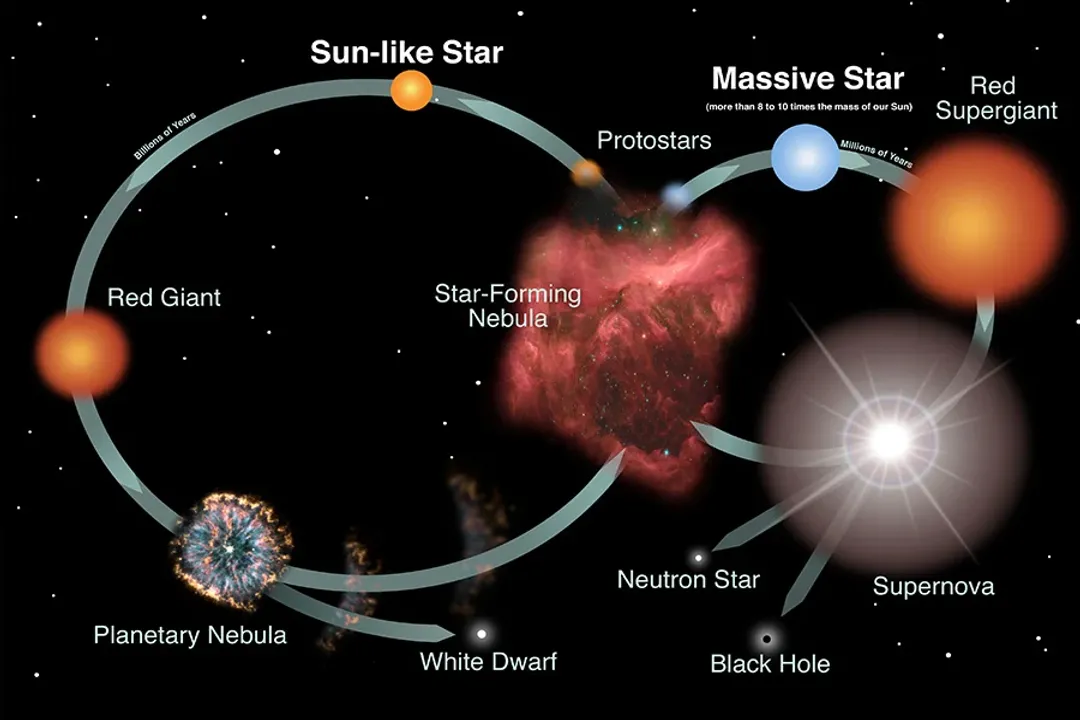
The vast, luminous clouds scattered across the night sky that we call nebulae are fundamental components of our galaxy, acting as the birthplaces and graveyards of stars. To the naked eye, they appear as ethereal smudges of light, but through a telescope, their true nature as colossal structures of gas and dust becomes apparent. Understanding what these clouds are made of is key to understanding stellar evolution and galactic chemistry. While nebulae host a variety of molecules and even complex dust grains, their elemental composition, much like that of the stars they create, is strikingly simple, dominated by just two elements in overwhelming measure.
# Cosmic Mixture
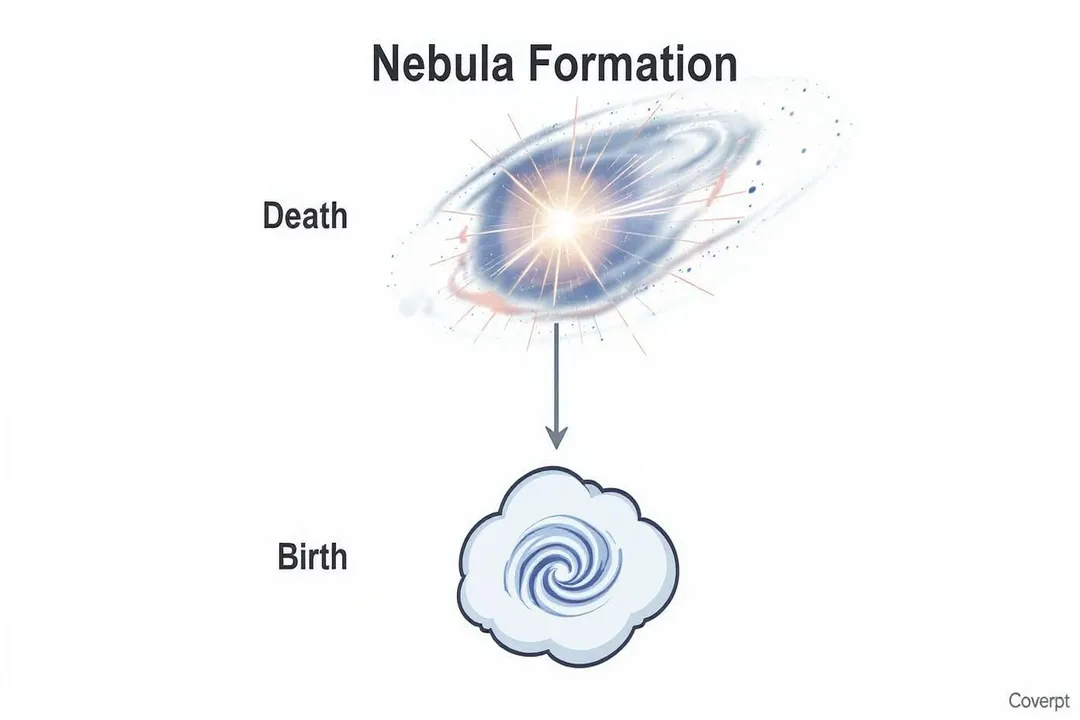
When astronomers break down the chemical makeup of a nebula, the results are remarkably consistent across different types of these interstellar clouds, whether they are emission, reflection, or dark nebulae. The overwhelming bulk of any given nebula is composed almost entirely of the two lightest elements forged in the universe: hydrogen and helium. These two gases account for the vast majority of the mass and volume within these stellar nurseries and remnants. If you were to sample a piece of a nebula and subject it to spectroscopic analysis, you would find that the signal strength for these two elements completely dwarfs that of everything else present. The remaining fraction is made up of heavier elements, often referred to collectively as "metals" by astronomers, which include things like oxygen, nitrogen, and carbon.
# Hydrogen First
Hydrogen is unequivocally the most abundant component within any nebula, often making up around seventy-five percent or more of the total mass. This dominance reflects the composition of the universe shortly after the Big Bang, as hydrogen was the first element to form. In the context of a star-forming region, this hydrogen gas is the primary fuel source. Stars ignite when enough of this gas collapses under its own gravity until the core pressure and temperature ignite nuclear fusion, converting hydrogen into helium.
The sheer quantity of hydrogen dictates many of the physical properties of the cloud itself, such as its overall density and opacity. For example, a large molecular cloud, which is a type of dense nebula, is essentially a vast reservoir of cold, molecular hydrogen (), waiting for the right gravitational trigger to begin collapsing into protostars. Considering that the sun itself is primarily made of hydrogen, it is a logical conclusion that the stellar material from which it formed—the nebula—would share that fundamental composition.
# Helium Presence
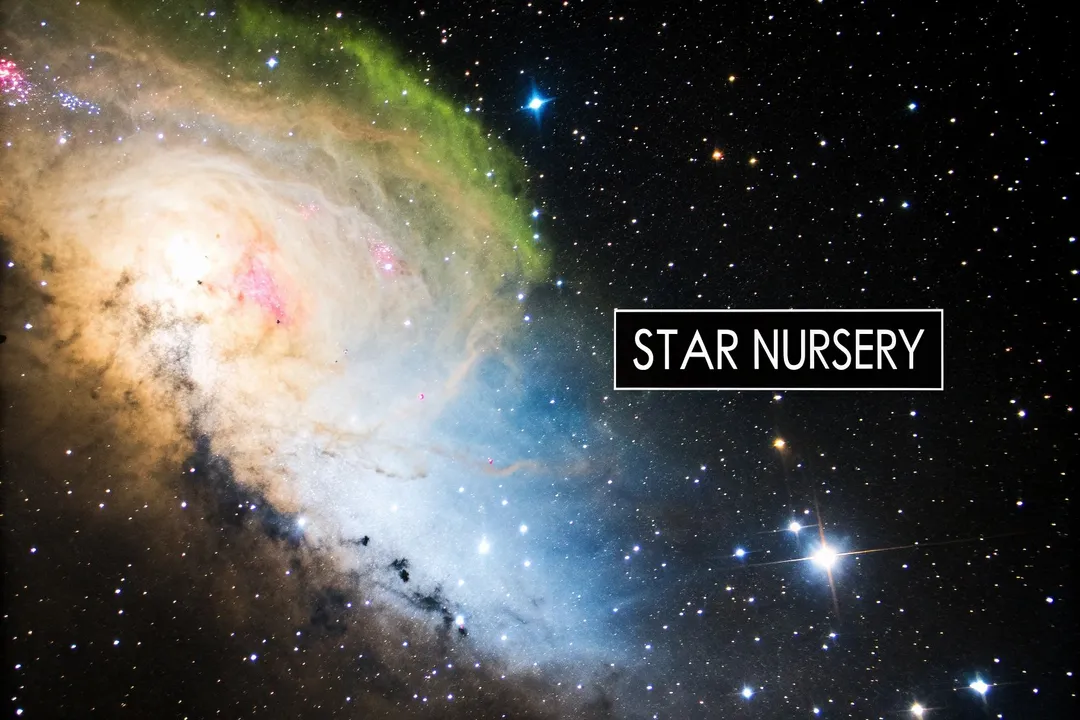
Following hydrogen, the second most common constituent is helium. Helium atoms represent the next largest fraction of the material in these clouds. Like hydrogen, helium is a product of the earliest moments of the universe, existing abundantly from the beginning. In a pristine nebula, the helium present is primarily primordial, meaning it was created during the Big Bang nucleosynthesis, much like the majority of the hydrogen.
However, in nebulae that are associated with dying stars, such as planetary nebulae or supernova remnants, the amount of helium can be significantly higher than in a simple star-forming cloud. This is because the stars that created those nebulae have already processed much of their core hydrogen into helium through fusion during their main-sequence life. When these massive stars reach the end of their lives and expel their outer layers, they enrich the surrounding interstellar medium with freshly created helium, meaning the local gas composition reflects the chemical evolution of that star. The ratio between the two lightest gases, therefore, acts as a subtle fingerprint, telling astronomers whether they are looking at a region where stars are just beginning to form or one shaped by the death of massive, evolved stars.
# Trace Chemistry
While hydrogen and helium dominate the mass, the visible and chemically interesting aspects of many nebulae often come from the trace amounts of heavier elements. These heavier components, though comprising only a small percentage of the total mass, are vital because they are responsible for the vibrant colors we observe when looking at emission nebulae.
The presence of these trace gases allows nebulae to interact with ultraviolet light emitted by nearby hot, young stars. When a star pumps out intense UV radiation, it strips electrons from the atoms in the cloud—a process called ionization. As the electrons recombine with the ions, they release energy at specific wavelengths, creating the distinct spectral lines that we see as color. For instance:
- Oxygen atoms often emit green or blue light when ionized.
- Nitrogen and Sulfur also contribute to the rich tapestry of colors seen in deep-sky images.
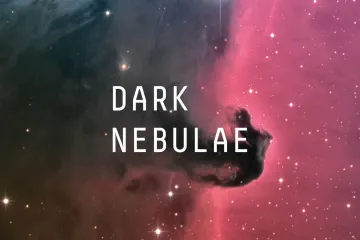
- Carbon compounds, often locked within dust grains, play a significant role in obscuring light, leading to the creation of dark nebulae.
These heavier elements are not merely accidental contaminants; they are the building blocks for the next generation of rocky planets and, eventually, life. A nebula composed solely of hydrogen and helium would likely only form gas giants, as there would be insufficient material for terrestrial worlds. The existence of just a few percent of heavier elements is what allows a star system to eventually develop an asteroid belt or a rocky planet like Earth. When comparing the elemental abundance in a nebula to the composition of our own planet, it becomes clear just how much material is recycled. For example, while hydrogen and helium might make up 98% of the nebula's mass, the remaining 2% is the entire inventory from which silicates, iron cores, and water—the components of Earth—must eventually condense.
# Interstellar Medium
To fully appreciate the composition of a nebula, one must consider its origin: the Interstellar Medium (ISM). Nebulae are simply localized, denser concentrations within the far more diffuse gas and dust that permeates the space between stars. The ISM itself has a chemical makeup that mirrors the nebulae within it, reflecting the cosmic history of the galaxy. The ISM is a dynamic environment, constantly being enriched by older stars and dispersed by newer ones.
When we look at the oldest parts of the ISM or at the most pristine nebulae, their elemental ratios—overwhelmingly hydrogen and helium—serve as a time capsule, offering clues about the universe's very first moments. Astronomers study these abundances to test models of Big Bang nucleosynthesis, which predicted the initial ratio of hydrogen to helium in the early cosmos. Any significant deviation from the expected to ratio in a given cloud can point to intensive stellar processing in that region.
If you were to track the chemical evolution of a region of the galaxy, you would find that every time a massive star lives and dies, it seeds the surrounding ISM with its fusion products—oxygen, carbon, neon, iron—in a process known as stellar nucleosynthesis. These "metals" then become incorporated into the next generation of nebulae that collapse to form new stars. This cycle of enrichment means that a nebula near the galactic center, formed from gas recycled through many previous stellar generations, might have a slightly higher percentage of these trace elements than a cloud in the sparsely populated outer spiral arms, even though both are fundamentally and by mass. This subtle variation in the trace element fraction, while dwarfed by the bulk hydrogen and helium, is what drives the differences in observed nebula colors and the potential for forming different classes of planets. Understanding the near-total dominance of the two simplest elements sets the baseline, allowing scientists to isolate the effects of the minuscule, but crucial, heavier components.
Related Questions
#Citations
What gas does a nebula contain of? : r/askastronomy - Reddit
What Is a Nebula? Key Facts for Space Lovers - Dubai Telescope
What two elements comprise most of a nebula? hydrogen ... - Brainly
Nebula - Gas, Dust, Radiation | Britannica
Astronomy Homework 5 Flashcards | Quizlet
9/29 The most abundant gases in a nebula are - Physics - Gauth
What Is a Nebula? A Cosmic Cloud Guide - Space Ranger Fred
What is a Nebula? Definition, Examples, Types & Photos
What the interstellar medium tells us about the early universe