What are the gases in a nebula?

The cosmic canvas, often called a nebula, is far from empty space; it is an immense, diffuse cloud of gas and cosmic dust where the building blocks of stars and planets reside. When astronomers talk about the components of these stellar nurseries or stellar remnants, the conversation quickly centers on a few key elements that dominate the mix, though the exact chemistry shifts depending on the nebula's type and history.
# Dominant Gases
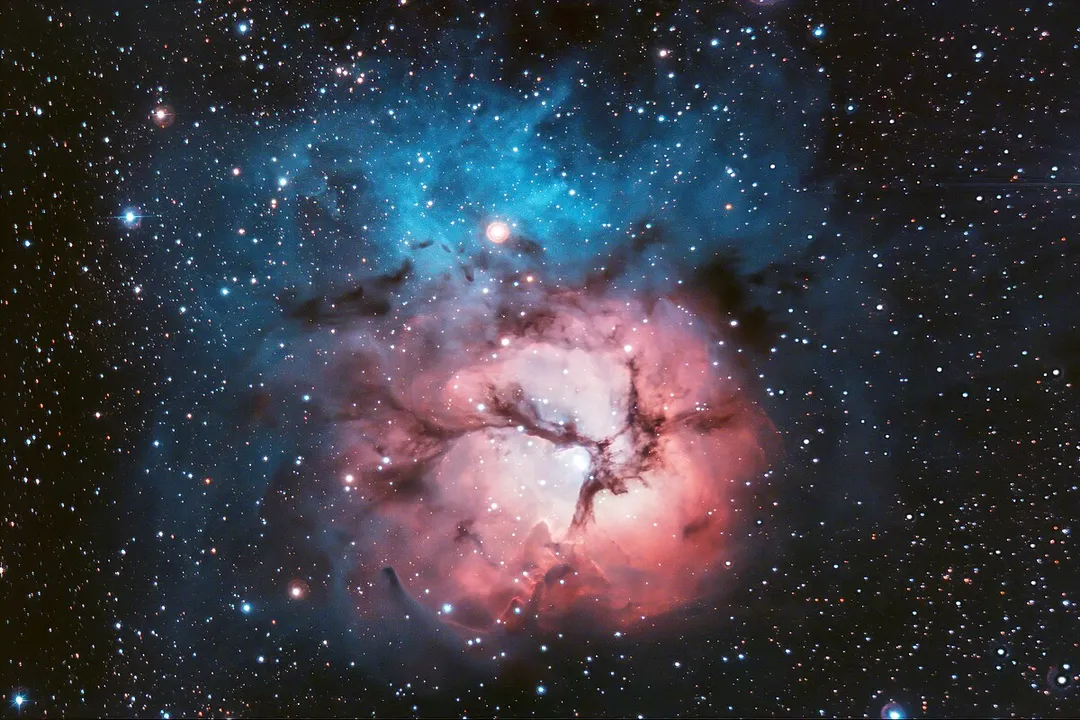
The overwhelming majority of the material within any given nebula, especially those associated with star formation, consists of the universe's lightest and most common elements: hydrogen and helium.
In fact, for many large, diffuse nebulae—the clouds where stars are born—hydrogen and helium make up nearly 99% of the gaseous content. The universe itself follows this trend, being roughly 74% hydrogen and 24% helium by mass in its primordial state.
The physical state of the hydrogen within the nebula is a critical factor that dictates how the cloud interacts with radiation and, consequently, how it appears to us. Astronomers categorize nebulae based on this state:
- H I Regions: These clouds consist mainly of neutral hydrogen atoms.
- H II Regions: These are nebulae where the hydrogen is ionized (H+), meaning its electrons have been stripped away, typically by intense ultraviolet (UV) radiation from nearby hot stars. These regions are often called emission nebulae.
- Molecular Clouds: Here, hydrogen exists in its molecular form (). These are the coldest and densest phases of interstellar gas, serving as the primary sites for star formation.
While hydrogen and helium dominate the mass, other elements are present, though in much smaller proportions. In star-forming regions, these trace elements make up only about 1% of the total material. In nebulae that are stellar remnants, like planetary nebulae, the abundance of heavier elements can be higher relative to the total mass because they were produced inside the now-deceased star.
# Trace Elements Abundance
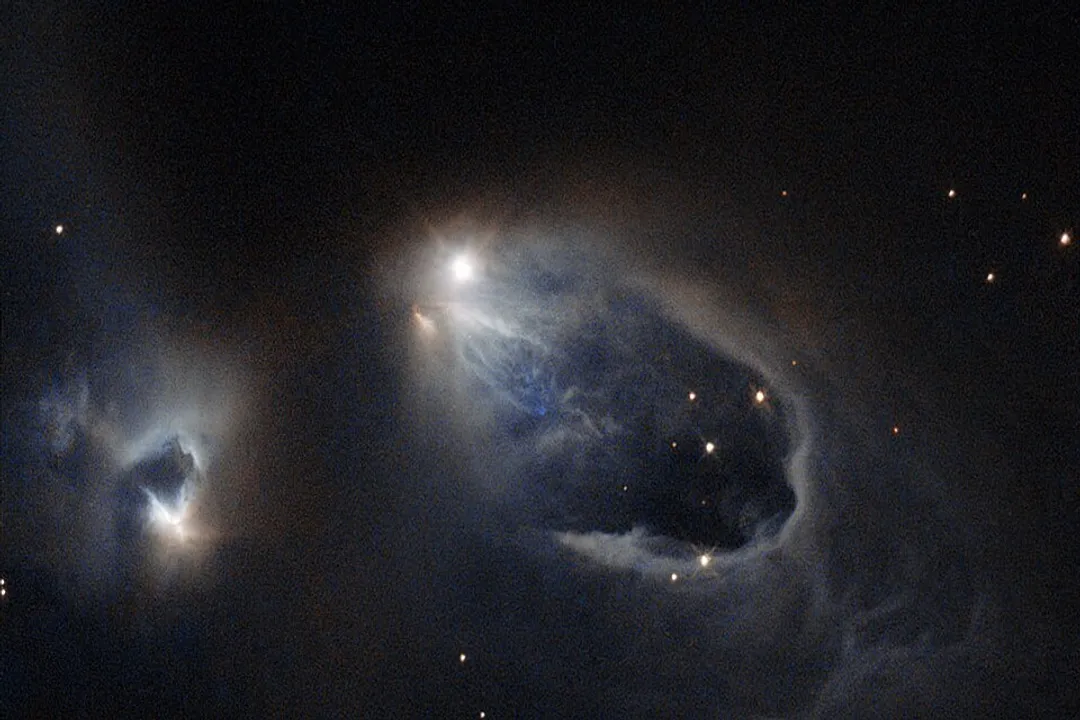
Beyond the ubiquitous hydrogen and helium, the remaining small percentage of gas includes elements forged either in the Big Bang or within stars. The specific makeup of these trace gases is often responsible for the spectacular colors observed in many nebulae when they are excited by nearby starlight.
Key trace elements often cited include:
- Oxygen: Often present, capable of emitting green or blue light when ionized.
- Carbon: Essential for the formation of complex molecules, though much of it can become locked up in dust grains.
- Sulfur: Another element found in these clouds, often identifiable through specific spectral lines.
- Neon: Mentioned as a trace gas component.
- Nitrogen: Present in small amounts and can contribute to visible color profiles.
In a planetary nebula—the shell ejected by a dying, mid-mass star—the composition reflects the star’s nuclear history. These shells contain elements up to iron, but generally nothing heavier, as the star wasn't massive enough to fuse beyond that point. Elements like oxygen and carbon are common products of this stellar aging process.
# Spectral Signatures and Color
The ability to identify these gases relies on their unique spectral emissions. When an atom is energized, such as by UV photons from a hot or type star, its electrons jump to higher energy levels. As they fall back down, they release photons at specific wavelengths, creating a distinct color signature.
For example, in a typical region, the return of excited hydrogen to its neutral state predominantly produces light at a wavelength of , which is in the red part of the spectrum, giving many star-forming nebulae their characteristic red glow. Conversely, doubly-ionized oxygen () often emits in the green or blue part of the spectrum, and ionized helium () contributes blue emission. Imaging these nebulae with narrowband filters allows astronomers to isolate the light from these specific elements, mapping out the distribution of hydrogen, oxygen, and sulfur, among others, within the cloud.
# The Role of Interstellar Dust
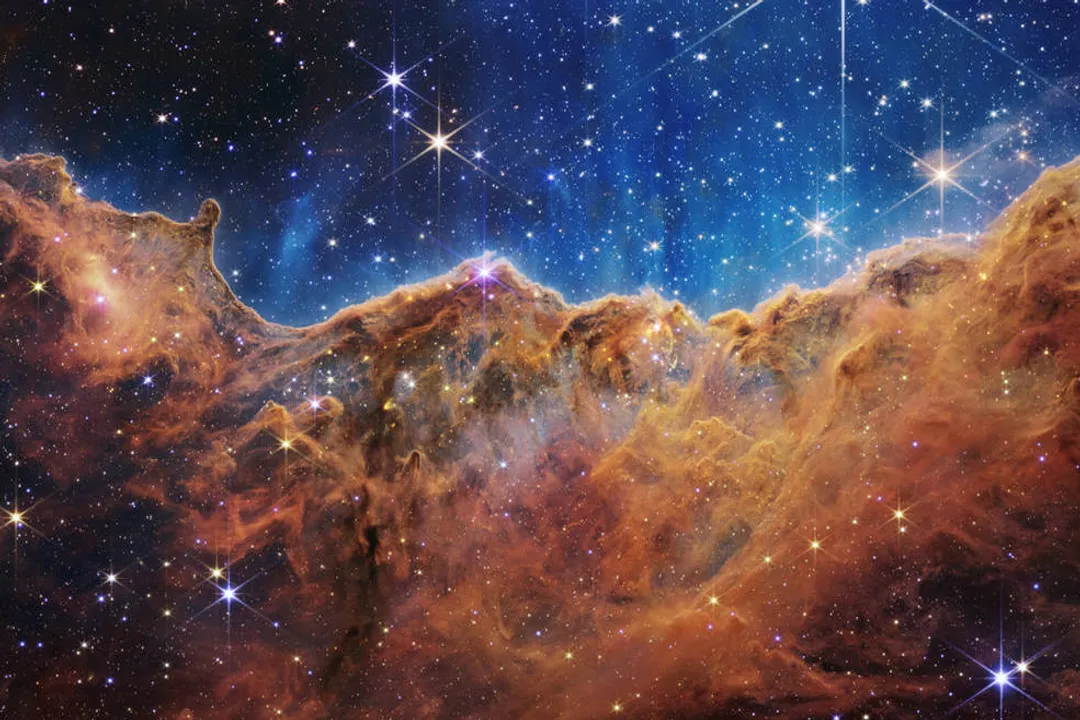
While the question focuses on gases, it is impossible to fully describe the chemical contents of a nebula without acknowledging the associated interstellar dust, which is intricately linked to the gas dynamics.
Dust grains, which constitute only about $0.7$ percent of the total mass of the interstellar medium, profoundly influence the physical conditions within the gas. Dust is composed partially of silicate material (like terrestrial rock, though amorphous) and a carbonaceous component. Elements like iron, silicon, and magnesium are often found sequestered in this solid form rather than in the gas phase.
This dust is crucial for gas chemistry:
- Molecular Formation: Molecular hydrogen () does not form efficiently in the gas phase. Dust grains provide the necessary surface area for hydrogen atoms to collide, stick, and form molecules, leading to the creation of cold molecular clouds where star formation begins.
- Radiation Control: Dust grains are highly opaque to optical and ultraviolet photons, meaning they absorb starlight much more effectively than the gas does at those wavelengths. This absorption is what allows cold, dark molecular clouds to exist, shielding the interior from the harsh radiation that would otherwise dissociate the molecules.
The interplay between gas and dust is a constant process. Small grains found in diffuse interstellar medium tend to coagulate into larger ones within denser clouds, which alters the cloud's ability to absorb shorter-wavelength radiation.
As a point of perspective for the casual observer, the sheer emptiness of a nebula is astonishing. While we visualize these objects as thick, colorful clouds, even the densest regions are an excellent vacuum by Earth standards. Earth’s atmosphere boasts about molecules per cubic centimeter, whereas the densest nebulae might only contain around $10^4$ molecules per cubic centimeter. Imagine taking a cloud the size of our entire planet Earth and finding that it weighs only a few kilograms—that speaks volumes about the scale and tenuous nature of the gas we observe.
# Chemical Evolution and Stellar Impact
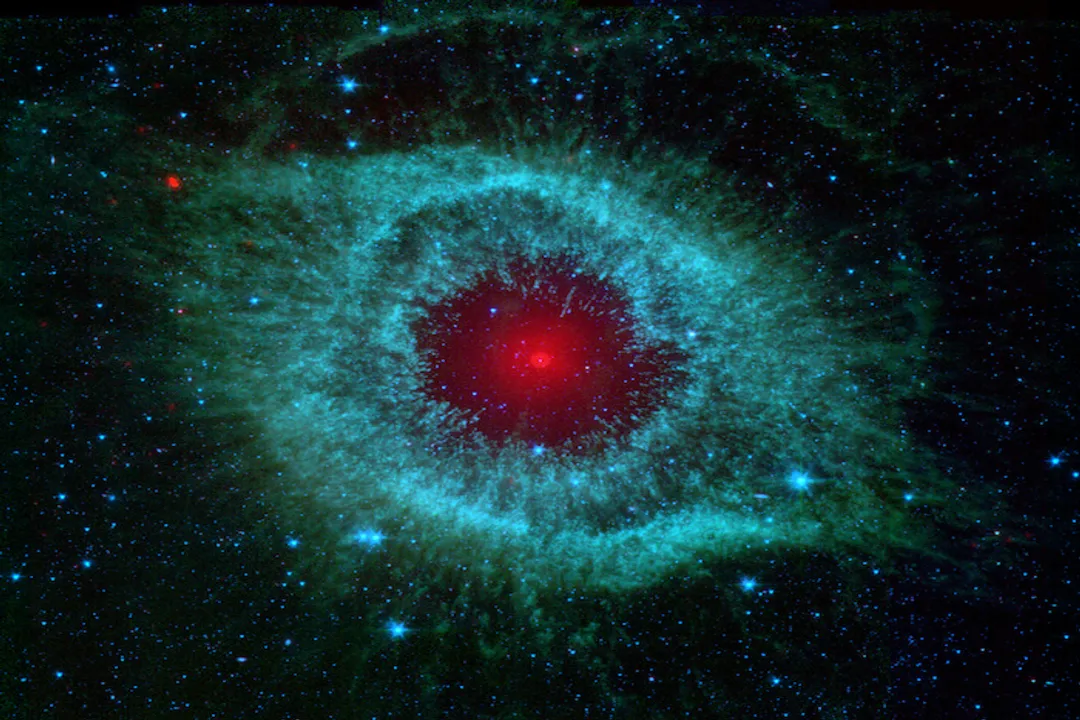
The gas composition within any nebula tells a direct story about stellar evolution, linking the cloud to the past and future of star systems.
# Birth Cradles vs. Death Scenes
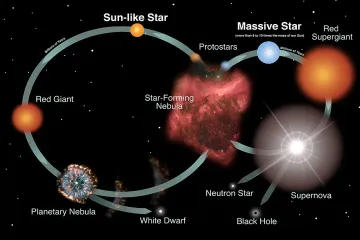
Nebulae formed through star collapse (like giant molecular clouds) are rich in primordial hydrogen and helium, poised to become the next generation of stars. These are the raw ingredients. In contrast, nebulae that represent the final stages of stellar life—planetary nebulae and supernova remnants—are chemically enriched.
- Planetary Nebulae: These are the expelled outer layers of a sun-like star reaching the end of its life. They contain the elements synthesized during the star’s main-sequence and giant phases, which typically includes elements up to iron.
- Supernova Remnants (SNRs): These are the aftermath of massive star explosions. The explosion itself is the universe’s factory for creating elements heavier than iron, scattering them, along with other synthesized material, back into the interstellar medium to enrich future generations of gas clouds.
This recycling process means that the gas in a younger nebula, like the Orion Nebula, will have a higher abundance of these heavy elements (metals, in astronomical terms) compared to older, more pristine clouds closer to the Big Bang era.
An interesting consequence of observing the gas components through imaging techniques, especially with ground-based telescopes like the Very Large Telescope, is the revelation of turbulence. The widths of the spectral emission lines are broadened not just by the random thermal motion of the gas atoms, but by bulk, chaotic movements known as turbulence. Hydrogen, being the lightest, moves the fastest due to temperature alone, but the observed line broadening across different elements points to these larger, turbulent eddies. These turbulent motions are sustained by energy injected on vast scales—from powerful stellar winds pushing the gas outwards, or the massive shockwaves from a recent supernova explosion moving at thousands of kilometers per second. This energetic input prevents the kinetic energy from simply decaying into heat through viscosity across the entire cloud structure.
# Categorizing Nebulae by Gas State
The physical state of the hydrogen directly influences the nebula's classification and appearance. The differences in radiation fields associated with ionized, neutral, or molecular hydrogen lead to distinct observational types.
| Nebula Type | Hydrogen State | Primary Visible Mechanism | Key Gas/Dust Presence |
|---|---|---|---|
| Emission Nebula (H II Region) | Ionized () | Emits light from excited, recombining gas | , trace heavy elements |
| Reflection Nebula | Neutral () or Molecular () | Scatters blue light from nearby stars (Rayleigh scattering) | Neutral , , significant dust content |
| Dark Nebula | Neutral () or Molecular () | Blocks light from objects behind it | High concentration of dust, (cold) |
| Planetary Nebula | Ionized () | Ionized by the hot central white dwarf | Enriched in elements up to Iron () |
Integrated Flux Nebulae () represent another chemical subset. These are typically found far from the galactic plane and are illuminated not by a single star, but by the cumulative energy of all stars in the Milky Way. Their composition includes hydrogen, dust particles, and notably, carbon monoxide—a molecule that becomes a significant component in these specific, faintly illuminated clouds.
Understanding the gas components of a nebula—from the overwhelming prevalence of molecular hydrogen in a cold star cradle to the highly ionized oxygen in a hot emission region—is essential because the gas itself is the raw material. It dictates the light we see, the processes that occur within, and the next generation of stars and planets that will eventually form from its dispersal. The nebula is truly the cosmic recycler, turning spent stellar matter back into the foundation for new suns.
Related Questions
#Citations
What gas does a nebula contain of? : r/askastronomy - Reddit
What Is a Nebula? | NASA Space Place – NASA Science for Kids
Nebula - Gas, Dust, Radiation | Britannica
Nebula - Wikipedia
Nebula
Emission Nebula Facts For Kids | AstroSafe Search - DIY.ORG
Emission Nebula | COSMOS