What are the three reasons why living things Cannot survive on the Moon?

The Moon, Earth’s constant celestial companion, appears serenely beautiful from our distant blue vantage point, a familiar silver disc in the night sky. Yet, stepping onto that dusty surface reveals an environment fundamentally opposed to life as we know it. It is a world of stark, uncompromising physics where terrestrial biology—from the smallest microbe to the largest complex organism—would instantly cease to function. While the dream of lunar habitats persists, the reality is that three colossal environmental barriers must be overcome before any sustained colonization can begin, let alone independent survival. These challenges are not minor engineering hurdles; they are fundamental threats to the basic processes that sustain organic chemistry.
# Airless Void
Perhaps the most immediate threat to any living thing outside a protective shell on the Moon is the near-perfect vacuum of its environment. The Moon possesses an extremely thin exosphere, but it is so tenuous that it is functionally a vacuum in terms of life support. On Earth, our atmosphere provides the necessary pressure that keeps water—the essential solvent for all known life—in its liquid state, and it supplies the oxygen needed for respiration. Without atmospheric pressure, the boiling point of water drops dramatically, even at the relatively cool temperatures found in lunar shadow.
For a human exposed to this vacuum, the consequences are swift and catastrophic. Within seconds, any exposed moisture—the water in the eyes, mouth, and lungs—would begin to vaporize and boil away in a process called ebullism. While the idea of exploding is a dramatic exaggeration often portrayed in fiction, the rapid loss of water vapor and the resulting internal expansion would cause severe tissue damage and incapacitation. Oxygen supply is the other critical component missing. Without breathable air, aerobic respiration ceases immediately, leading to unconsciousness in under a minute and death shortly thereafter. This absence of atmosphere eliminates pressure, blocks the air we breathe, and means there is no mechanism to keep heat from radiating away too quickly in the dark, or to moderate the intense solar bombardment during the day.
# Temperature Swings
The lack of an atmosphere also directly precipitates the second major existential threat: extreme temperature fluctuations. Earth’s atmosphere acts like a global blanket, circulating heat, trapping some of the sun’s warmth, and preventing surface temperatures from becoming too hot during the day or too cold at night. The Moon has no such moderating effect.
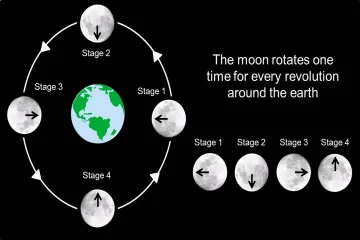
A lunar day lasts about 29.5 Earth days, meaning the surface experiences approximately two weeks of direct, unfiltered sunlight followed by two weeks of total darkness. When the sun is high, surface temperatures can soar well above the boiling point of water, reaching approximately (). Any unprotected organic material would quickly cook or decompose under these conditions. Conversely, once the sun sets, the temperature plummets rapidly due to the lack of trapped heat, dropping to bone-chilling lows near (). For most terrestrial life, crossing such a vast temperature range—a span of nearly —is simply incompatible with the structural integrity of cell membranes and the function of complex proteins. Life requires a relatively stable thermal environment to maintain its intricate chemical machinery; the Moon offers none of this stability.
To contextualize this, consider the challenge for even basic engineering. A simple computer server, designed for a moderate to operating range, would fail almost instantly under either lunar extreme. Organisms are vastly more complex and sensitive than electronics, meaning that even a short exposure to the lunar "noon" or "midnight" would denature essential biological components, rendering recovery impossible.
# Radiation Hazard
The third insurmountable obstacle for unprotected lunar life is the barrage of high-energy radiation. On Earth, we are shielded by two powerful systems: a thick atmosphere and a global magnetic field generated by our planet's molten core. This combination effectively deflects or absorbs the most dangerous cosmic rays and solar particle events. The Moon has neither.
Without a significant atmosphere or a global magnetosphere, the lunar surface is perpetually bathed in intense radiation from both galactic cosmic rays and solar flares. This radiation carries enough energy to penetrate deeply into organic tissue, causing significant damage to DNA and cellular structures. For microbes, this might mean rapid mutation or death; for larger organisms, it would mean acute radiation sickness, cancer, and rapid failure of vital systems. Even brief exposure is lethal over time, and a prolonged stay outside shielding would be fatal within a short period.
The radiation environment on the Moon is a spectrum of danger. Galactic Cosmic Rays (GCRs) are highly energetic particles originating from outside our solar system, which are constant and extremely difficult to stop. Then there are Solar Particle Events (SPEs), which are massive bursts of radiation released during solar flares, capable of delivering lethal doses in a matter of hours if an astronaut is not shielded deep underground or within specialized habitats. For any plant or animal attempting to establish itself on the surface, this constant bombardment acts like an invisible, high-speed assault on their genetic code.
# Synthesis of Hostile Factors
While the vacuum, the thermal extremes, and the radiation form the primary trio of reasons, these factors interact in ways that amplify the danger. For instance, the lack of atmosphere ensures that micrometeorites, which burn up harmlessly in Earth's air, strike the Moon's surface unimpeded, kicking up abrasive dust—known as regolith—that poses a significant mechanical and chemical threat to equipment and potentially biological systems.
To better illustrate the engineering challenge this composite environment presents, one can look at the sheer protective mass required for human survival. Consider a simplified comparison of the shielding needed for a baseline radiation dose:
| Environment | Approximate Equivalent Shielding Thickness | Primary Effect Mitigated |
|---|---|---|
| Earth Sea Level | (Atmosphere/Magnetosphere) | Radiation, Pressure |
| Lunar Surface | of loose soil or equivalent water-rich material | Galactic Cosmic Rays/SPEs |
| Underground Habitat (5m deep) | Effective Surface Shielding | Pressure (Achieved via habitat structure) |
This highlights that simply having breathable air inside a tin can is insufficient; the habitat must be built into the ground or wrapped in meters of lunar material just to manage the radiation, a task complicated by the need to simultaneously maintain internal pressure and manage the swing.
Another crucial, often overlooked factor is the low gravity. While th of Earth's gravity might seem manageable, the long-term effects on complex biology, particularly cardiovascular, skeletal, and reproductive systems, are completely unknown and likely detrimental. Life evolved under the constant pull of . While low gravity isn't an instant killer like vacuum, it fundamentally alters the physiological parameters that living things have adapted to over billions of years. We do not have long-term data suggesting complex terrestrial life can successfully reproduce and develop across multiple generations solely in low gravity environments, making sustained life impossible even if the other three factors were somehow solved externally.
# Engineered Survival
The fact that these three primary threats—vacuum, temperature, and radiation—are so extreme means that any survival on the Moon requires creating a completely self-contained, artificial biosphere. It is not about adapting life to the Moon; it is about building a small, pressurized, temperature-controlled, radiation-proof Earth bubble on the Moon. This contrasts sharply with environments like Mars, which, despite its own harshness, at least possesses a tenuous atmosphere that offers some minor shielding and higher ambient pressure, making the engineering problems slightly less absolute than on the airless Moon. For the Moon, the system must be entirely closed-loop, meaning every single molecule of oxygen, water, and nutrient must be recycled perfectly, as there is no surrounding environment to buffer mistakes or replenish losses. If a single gasket fails in a habitat seal, the result is not just a slow leak, but immediate exposure to the vacuum. The margin for error is functionally zero.
The combination of these factors dictates that life cannot simply "take hold" on the Moon. A seed dropped on the regolith would not germinate; it would desiccate and be irradiated before freezing or baking, depending on whether it landed in shadow or sunlight. Water would instantly sublime or boil away, and without atmospheric pressure to hold it down, it would simply escape into space over time. Living things require a stable medium—air and liquid water—to mediate their metabolism and exchange energy. On the Moon, that medium is absent, replaced by a destructive vacuum, thermal whiplash, and ionizing radiation. These three insurmountable environmental states ensure that, absent massive technological intervention, the Moon remains a sterile, silent realm.
#Videos
How Long Can a Human Survive on the Moon? | The Dr. Binocs Show
Related Questions
#Citations
What are three reasons life can not survive on the moon? - Quora
Give three reasons why living things cannot survive on the moon
3 problems we need to solve before we can live on the moon - HeroX
Moon Facts - NASA Science
How Long Can a Human Survive on the Moon? | The Dr. Binocs Show
ELI5 Why is there no life on the moon even when it is pretty close to ...
Why is there no life on the Moon? - Filo
Why doesn't anyone live on the moon yet? - Popular Science
Give three reasons why living things cannot survive on the Moon.