What are the three main components of the universe?
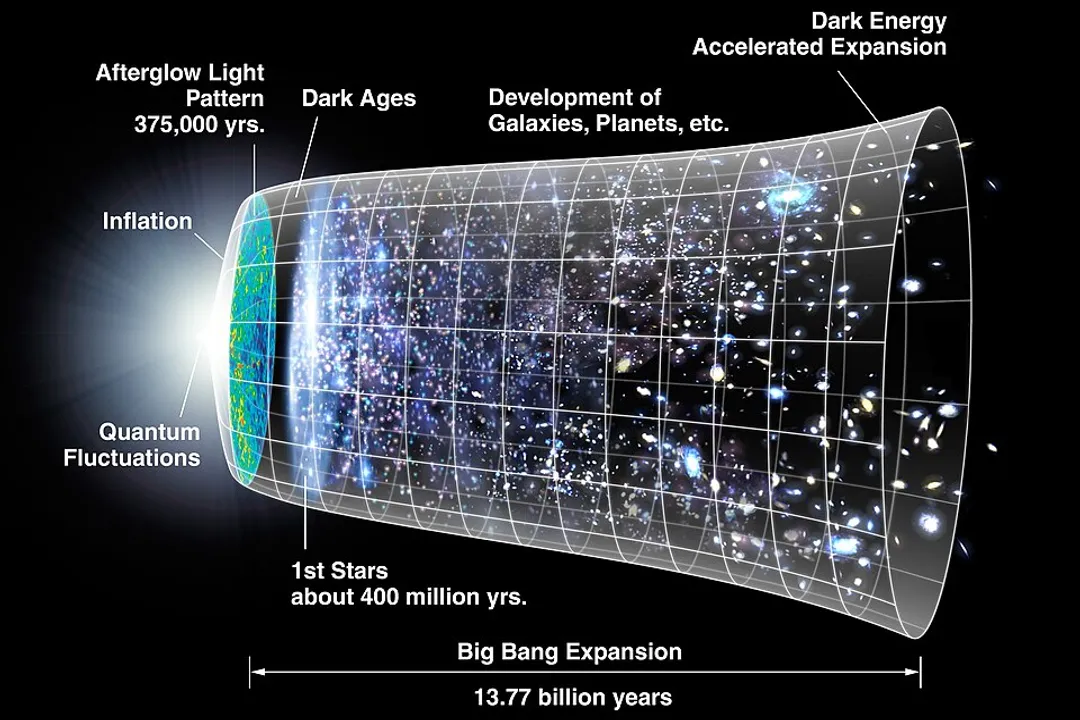
The universe we perceive—the swirling nebulae, the distant galaxies, the solid ground beneath our feet—represents only a tiny fraction of what is actually out there. For centuries, science focused on cataloging the stars and planets, assuming this was the complete inventory. However, modern cosmology reveals a far stranger reality: the vast majority of the cosmos is composed of constituents we cannot directly see or touch, operating under principles that challenge our everyday intuition. [1][2][5] When cosmologists tally up the total mass-energy content of the universe, the composition boils down to three principal categories: the familiar, the elusive, and the accelerating mystery. [1][6]
# Visible Content
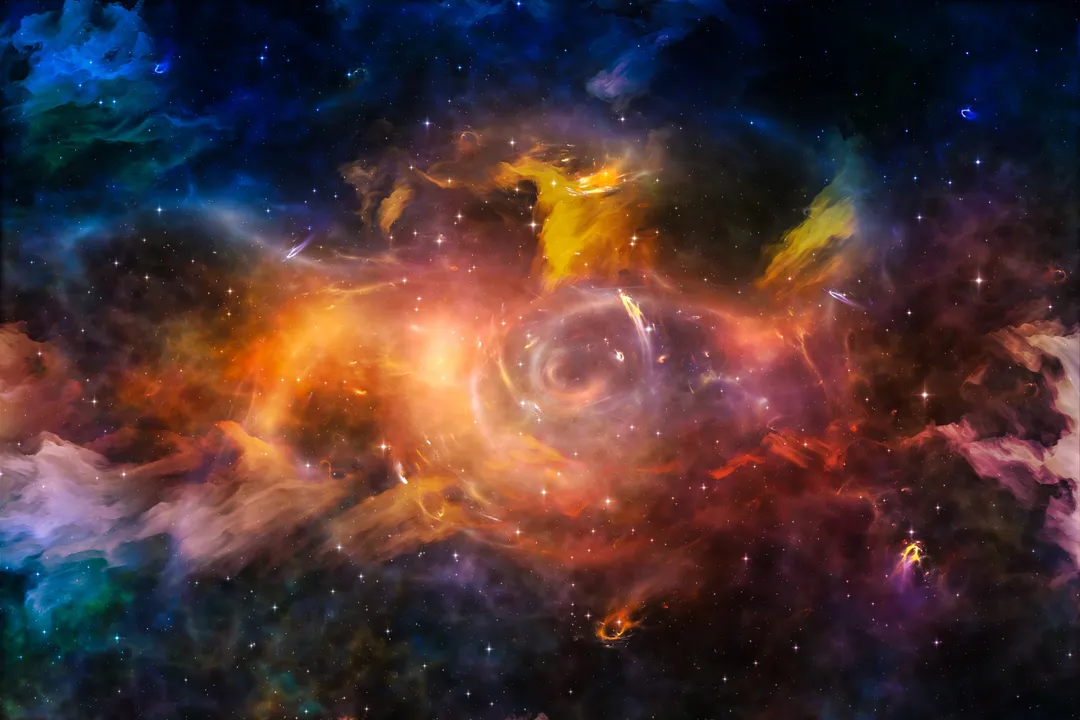
Everything we have ever directly observed or measured falls under the umbrella of normal matter, often referred to scientifically as baryonic matter. [1][5] This category includes the familiar building blocks of reality: protons, neutrons, and electrons. [1] This matter is what forms stars, planets, dust clouds, gas, and, of course, all living things. [3][5] When astronomers use powerful telescopes to map galaxies or study the light spectra from distant objects, they are charting this normal matter. [1]
Yet, this visible inventory presents a profound cosmological irony. Despite its ubiquity in our local experience, normal matter accounts for a mere five percent of the total mass-energy density of the entire universe. [1][6] This is a humbling realization for observational science. Everything we have ever known, touched, or seen through electromagnetic radiation—from the hydrogen gas in the Orion Nebula to the iron core of the Earth—is just the cosmic froth on a much deeper sea. [1][5] The methods we developed to understand the visible world only describe a small, peripheral part of existence.
# Invisible Anchor
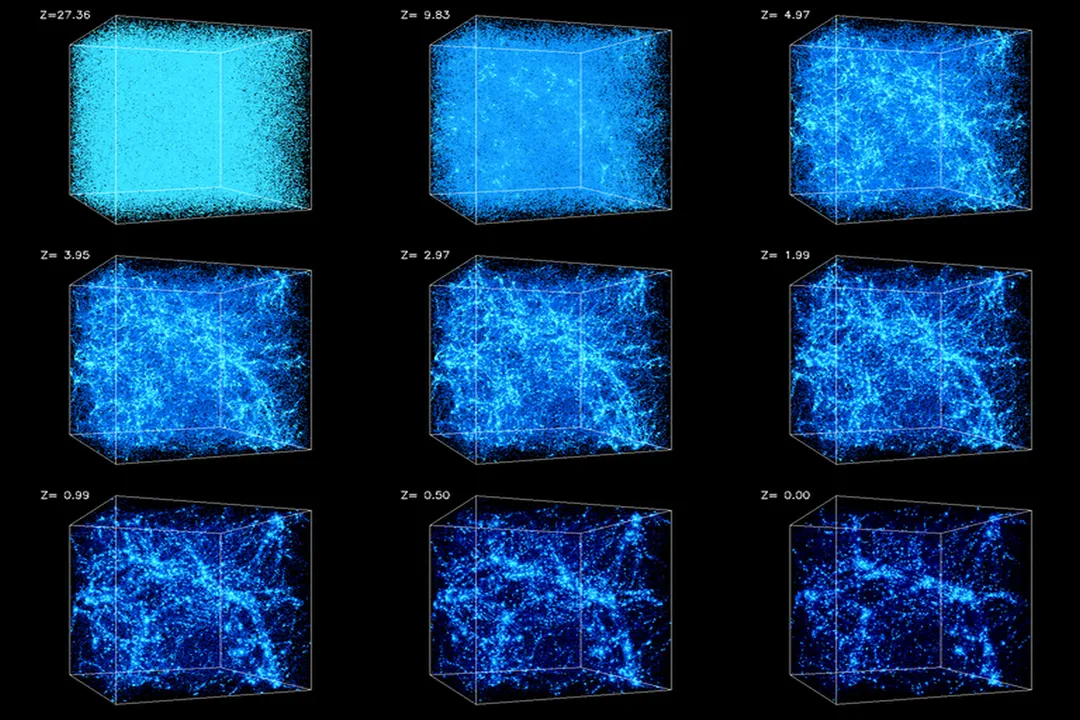
If normal matter is only five percent, what makes up the remaining ninety-five percent? The next major component, accounting for roughly 27% of the universe's mass-energy, is dark matter. [1][6][10] The term "dark" is literal: this substance does not appear to emit, reflect, or absorb light or any other form of electromagnetic radiation, rendering it completely invisible to conventional telescopes. [2][9]
The evidence for dark matter is purely gravitational. Without it, galaxies would simply fly apart. [2] Observations of galaxy rotation curves—how fast stars orbit the galactic center—show that there must be significantly more mass present than what we can see in stars and gas. [9] Furthermore, studies of gravitational lensing, where the gravity of massive objects bends the light from things behind them, consistently map out huge halos of unseen material surrounding galaxies and clusters. [2] Dark matter acts as the gravitational scaffolding upon which the visible structures of the universe are built. [1][2] We infer its existence and distribution, but its fundamental particle nature remains one of physics' most pressing unsolved problems. [9]
# Expanding Force
The final, and most dominant, component is perhaps the most perplexing: dark energy. [1][2] This entity is thought to make up approximately 68% of the universe’s total mass-energy budget, dwarfing both dark matter and normal matter combined. [1][6][10] Unlike dark matter, which clumps gravitationally, dark energy acts in opposition to gravity; it is a pervasive, repulsive force that is pushing the universe apart at an ever-increasing rate. [1][5][6]
This discovery came from observations in the late 1990s which showed that the expansion of the universe is not slowing down due to gravity, as previously expected, but is actually accelerating. [6] Dark energy is often conceptualized as an intrinsic property of space itself—a kind of constant vacuum energy. [2] As space expands, more space is created, and thus, more dark energy comes into existence, driving further acceleration. Think of it less like an explosion pushing outward and more like the stretching of a rubber sheet that gets faster the more you stretch it. [2]
# Cosmic Budget
To grasp the sheer scale of this cosmic composition, it is helpful to visualize the proportions clearly. The universe is divided almost entirely between two unknowns and one familiar substance. [1][6]
| Component | Approximate Percentage of Total Mass-Energy | Nature |
|---|---|---|
| Dark Energy | 68% | Repulsive force causing accelerated expansion [1][6] |
| Dark Matter | 27% | Non-luminous mass inferred via gravitational effects [1][9] |
| Normal Matter | 5% | Protons, neutrons, electrons; everything visible [1][5] |
This table immediately highlights the extraordinary state of our current knowledge. If we compare the two dark components to the matter we understand, the imbalance is staggering. Dark matter alone is more than five times as abundant as all the atoms in all the stars, planets, and nebulae across every galaxy. [6] Dark energy is almost fourteen times the mass-energy of everything tangible. This implies that our most tangible reality is merely a trace element in the grand scheme of cosmic reality. [10]
The distinction between dark matter and dark energy is crucial, as they perform opposite cosmological functions. Dark matter provides the attractive gravity needed to form structures like galaxies and clusters—it acts as an anchor. Dark energy provides the repulsive pressure that dictates the ultimate fate and large-scale geometry of the universe—it acts as the engine of separation. [1][2]
# Future Study
The three-component model—normal matter, dark matter, and dark energy—forms the current CDM standard model of cosmology. [1][6] While the proportions are well-constrained through various measurements, the physical identity of the two dark components remains elusive. Research efforts are currently focused intensely on decoding these mysteries. [9]
For dark matter, experiments both deep underground and in space seek to detect the hypothetical particles that might constitute it, such as WIMPs (Weakly Interacting Massive Particles) or axions. [9] On a larger scale, mapping the distribution of dark matter through increasingly precise gravitational lensing surveys helps refine models of how structure formed in the early universe. [2]
Identifying dark energy is arguably more difficult because it appears to be a property woven into the vacuum of space itself. Researchers continue to monitor distant supernovae and the cosmic microwave background to measure the precise rate of expansion over cosmic history, hoping to see if the dark energy density remains constant or if it changes over time—a key piece of data that could rule out certain theoretical explanations. [6] Should the density of dark energy vary significantly across vast timescales, it would suggest a dynamic field rather than a static property of space.
Ultimately, understanding these three components is not just an academic exercise; it dictates the future structure and destiny of everything. The relationship between the gravitational pull of dark matter and the repulsive push of dark energy will determine whether the universe continues expanding forever, leading to a cold, dark "Big Freeze," or if some unknown interaction might lead to a different, perhaps less likely, eventual state. [2] The foundation of the universe, as we currently understand it, rests on a massive scaffolding of the unknown. [1]
#Videos
What Makes Up Most Of The Universe? - Physics Frontier - YouTube
Related Questions
#Citations
Building Blocks - NASA Science
ESA - What is the Universe made of? - European Space Agency
Components of the Universe | Texas Gateway
What is the universe made of? | Center for Astrophysics
Universe - Wikipedia
All the Contents of the Universe, in One Graphic - Visual Capitalist
What makes up the universe's composition? - Facebook
What Is the Universe Made Of? - Northrop Grumman
What Makes Up Most Of The Universe? - Physics Frontier - YouTube