What are the requirements to live on Mars?
The initial hurdle for settling Mars is confronting a world intrinsically hostile to human biology. We cannot simply step out of a lander and begin setting up camp; the environment demands immediate, comprehensive technological mediation for survival. [4] The thin atmosphere, while composed largely of carbon dioxide (about 95%), exerts so little pressure—less than one percent of Earth’s sea-level pressure—that liquid water boils away instantly at ambient temperatures. [2] This near-vacuum state necessitates that every habitat be a rigorously maintained pressure vessel, constantly battling against the tendency to leak its precious, breathable atmosphere into the surrounding void. [6]
# Surface Conditions
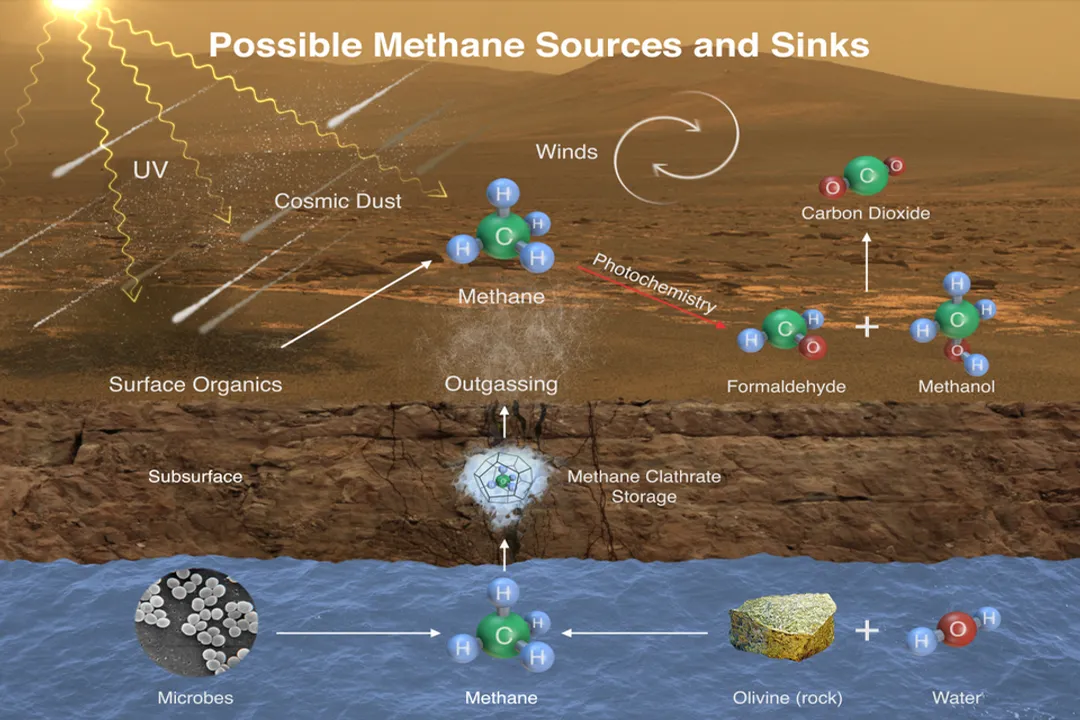
The Martian surface presents several overlapping physical challenges. Temperatures fluctuate wildly, dropping to averages around () or lower at the poles, though equatorial daytime highs can briefly reach above freezing. [2] Surviving these swings requires excellent insulation and significant internal heating, which drives up power demands. [6]
Perhaps the most insidious threat is the lack of a global magnetic field and a thick atmosphere to deflect cosmic rays and solar energetic particles. Astronauts on Mars would be exposed to significantly higher levels of radiation than on the International Space Station or on Earth. [4] This constant bombardment necessitates substantial shielding for any long-term habitat, pushing designers toward burying structures under the Martian soil, known as regolith, or utilizing lava tubes for natural protection. [4] While the surface gravity is only about 38% of Earth’s, which might seem manageable, the long-term effects on bone density and muscle mass are a serious medical concern that requires continuous countermeasures. [2] It is important to recognize that the Martian surface is not merely cold and dark; it actively seeks to dismantle biological systems through radiation and depressurization. If an astronaut were suddenly exposed to the surface environment without a pressurized suit, the sudden pressure drop would cause the body's water to vaporize rapidly, leading to immediate, catastrophic failure. [2]
# Life Support Systems
To sustain life, a colony requires a closed-loop Environmental Control and Life Support System (ECLSS) that mimics Earth’s cycles as closely as possible. [6] The primary components are air, water, and food, all of which must be managed with near-perfect recycling efficiency due to the sheer difficulty of resupply from Earth.
# Air Provision
Creating breathable air is one of the first engineering tasks. Since the atmosphere is mostly , technology is being developed to convert this abundant resource into oxygen. Experiments have demonstrated the feasibility of using solid oxide electrolysis to split molecules into oxygen and carbon monoxide. [2] This process is vital, as it not only supplies the necessary breathing gas but also offers a way to generate propellant for return journeys or surface mobility, illustrating how necessary life support technology overlaps with logistical support. [1] Within the habitat itself, systems must scrub exhaled , control humidity, and maintain a specific atmospheric pressure slightly lower than Earth’s to minimize structural stress, while keeping the oxygen partial pressure safe for humans.
# Water Management
Water is arguably the most critical commodity, needed for drinking, hygiene, growing food, and producing rocket fuel. Finding accessible water is non-negotiable. Current data strongly suggests that vast quantities of water ice are locked beneath the surface, especially near the poles and in mid-latitudes. [1][2] The requirement here is the technology to efficiently mine, melt, purify, and recycle this ice. Every drop of wastewater—from respiration, hygiene, and even urine—must be processed through complex filtration and distillation systems to return it to potable quality. [6] The efficiency required for Martian water recycling must surpass anything currently used on long-duration space missions, demanding recovery rates approaching 98% or higher just to maintain a stable inventory.
# Food Cultivation
Reliance on imported, shelf-stable food from Earth is a stopgap, not a sustainable long-term plan. [6] Martian colonists must become farmers. This points toward controlled-environment agriculture, most likely using hydroponic or aeroponic techniques within pressurized greenhouses where soil, a major source of contamination and unpredictable mass, is minimized or eliminated. [6] Growing food locally reduces launch mass significantly and contributes to the psychological well-being of the crew. [6] A key constraint here is providing the correct spectrum of light and managing the nutrient solutions, which must also be recycled efficiently along with the water used in the process.
# Habitat Engineering
The structure that houses the crew must function as a miniature, independent Earth, capable of surviving centuries, not just years. [4] The requirements for a habitat go beyond mere pressure containment; they include radiation shielding, temperature regulation, dust mitigation, and durability against micrometeorites.
# Design and Location
One practical approach centers on In-Situ Resource Utilization (ISRU). Shipping heavy construction materials like steel or concrete from Earth is prohibitively expensive due to launch costs. Therefore, Martian habitats will likely be built from Mars. This means using locally sourced materials, primarily the regolith, for construction. [1][4]
A common design concept involves inflating a primary pressure vessel inside a protective shell made of packed or sintered regolith. [4] Another option is excavating underground or adapting natural features like lava tubes. [4] If a colony begins with prefabricated modules, these must be rapidly covered with several meters of Martian dirt to protect the inhabitants from radiation, which is a significant logistical step that must occur immediately upon deployment.
| Habitat Component | Primary Requirement | Earth Equivalent Challenge |
|---|---|---|
| Pressure Hull | Withstand psi differential | Maintaining air seals under thermal stress |
| Shielding | Several meters of regolith or lava tube cover | Atmospheric protection/Magnetic field |
| ECLSS | $98%$ water/air recycling rate | Global ecosystem stability |
| Power System | Constant, reliable megawatt-scale output | Baseload electrical grid stability |
The material science behind sealing these habitats against the corrosive, abrasive Martian dust—which can clog mechanisms and degrade seals—is another area demanding high expertise.
# Powering the Colony
All aspects of Martian life support, agriculture, communications, and mobility rely on continuous, substantial electrical power. [6] Solar power is an option, but Mars receives less sunlight than Earth, and massive, frequent dust storms can drastically reduce output for weeks or months at a time. [2][6] This variability means a solar-only grid is too risky for life support systems that cannot fail. [6]
For a truly permanent, high-demand settlement, a compact, reliable nuclear fission reactor becomes a necessity. These reactors offer high power density independent of solar cycles or atmospheric opacity, providing the baseload energy required to run separators, water electrolyzers, and environmental controls 24/7. [6] The logistical and political challenge of safely deploying and operating a nuclear power source on another planet is immense, but the alternative—a power outage that causes life support to fail—is unthinkable.
# The Human Element
Beyond the hardware, the requirements for Martian settlers involve rigorous psychological and medical preparation. The crew will face profound isolation, confinement, and distance from Earth, with communication delays ranging from about 6 to 44 minutes round trip depending on orbital alignment. This delay eliminates real-time conversation with Mission Control, forcing a high degree of autonomy and trust among the crew.
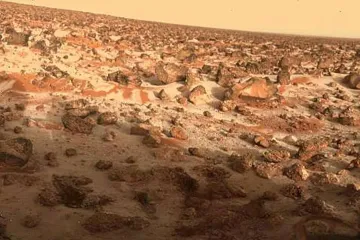
Long-term exposure to lower gravity is a known health risk, potentially leading to irreversible degradation of the cardiovascular and skeletal systems if not aggressively countered with daily, intensive artificial loading protocols—think specialized exercise equipment far more advanced than what astronauts use today. [2] Furthermore, the selection process for the first settlers will prioritize not just technical skills but exceptional emotional stability, conflict resolution abilities, and group cohesion, as there will be no immediate external relief or replacement personnel available. The initial team must function as an extremely resilient, self-governing unit. One critical consideration often overlooked in the rush to talk about hardware is the necessity of creating environments that promote mental health, perhaps through virtual reality access to Earth environments or dedicated private spaces, to combat the visual monotony of the red landscape and enclosed habitat.
# Operational Readiness Checklist
Establishing a self-sufficient presence moves through distinct phases, each requiring specific pre-deployment requirements to be met. Before the first human steps out, automated systems must prove their reliability over several years.
- Resource Verification: Ground-penetrating radar and rovers must map significant, easily accessible subsurface water ice deposits. [1]
- ISRU Demonstration: Automated systems must successfully extract oxygen from the atmosphere and water from the ice for a minimum of two Martian years, storing reserves for the first crew.
- Habitat Pre-positioning: Robotic landers must deliver and deploy shielded habitat modules, pressurized with inert gas or initial oxygen stores, prior to crew arrival. [4]
- Power Grid Establishment: A reliable power source, likely a small nuclear reactor, must be fully operational and connected to the primary habitat site before the crew leaves Earth orbit. [6]
- Contingency Stockpile: A minimum of one year’s worth of non-recyclable consumables (e.g., specialized medications, replacement filters, backup electronics) must be safely landed and inventoried.
The sheer scale of the logistics involved means that the requirements to live on Mars are currently defined by the ability to build and launch hundreds of metric tons of automated precursor hardware—equipment that must work perfectly without human intervention for years—before a single human steps onto the surface. The difficulty isn't just surviving the environment; it's proving that our machines can build the foundation for us to survive before we commit human lives to the venture.
#Videos
Can We Live on Mars? - YouTube
Related Questions
#Citations
The Habitability of Mars - The Mars Society of Canada
Mars: Facts - NASA Science
Life on Mars - Wikipedia
Settling Mars - National Geographic Education
Can Humans Live on Mars? What Would it Look Like? | EFK
Necessities | COLONIZING MARS: THE NEW FRONTIER
Can We Live on Mars? - YouTube
Challenges facing the human exploration of Mars
Life support - Marspedia