What are the living conditions on Mars?
The crimson surface of Mars presents a scene of stark, beautiful desolation, yet beneath that dramatic sky lie environmental conditions profoundly hostile to terrestrial life as we know it. Settling on the Red Planet demands not just technological ingenuity but a fundamental understanding of just how unforgiving the Martian environment truly is compared to Earth. Before any long-term settlement can be established, prospective inhabitants must contend with an atmosphere that offers almost no protection, temperatures that plummet to extreme lows, and a constant bombardment of space radiation.
# Martian Atmosphere
The air on Mars is incredibly thin, possessing a surface atmospheric pressure that averages only about 6 millibars, which is less than one percent of Earth's sea-level pressure. This meager pressure is so low that liquid water cannot exist stably on the surface; it would immediately boil away or freeze, depending on local conditions.
The composition of this thin atmosphere is a major hurdle. It is overwhelmingly dominated by carbon dioxide, making up about 95 percent of the total. Nitrogen and argon are present at about 2.7% and 1.6%, respectively, while oxygen exists only in trace amounts, around 0.13%. Humans require an atmosphere with significant partial pressures of oxygen for survival, meaning that without a sealed, pressurized environment, survival time would be measured in seconds. Furthermore, the lack of a significant atmosphere means that the planet is exposed to unfiltered solar and cosmic radiation, a deadly threat that Earth’s thick blanket of air largely blocks.
# Temperature Extremes
Perhaps the most immediately recognizable deterrent to outdoor living is the cold. Mars is significantly farther from the Sun than Earth, resulting in much colder average temperatures. While the temperature can reach a relatively balmy 70 degrees Fahrenheit (20 degrees Celsius) near the equator at high noon during the summer, this pleasant warmth is fleeting.
The average surface temperature hovers around a frigid (). Even more challenging are the nighttime lows, which can plunge to around (). This massive diurnal (day-night) swing is exacerbated by the thin atmosphere, which cannot retain heat effectively as the Sun sets. For any long-term habitat, this requires highly efficient, durable insulation and robust heating systems capable of handling deep-cryogenic conditions every night. Understanding this thermal challenge, one can begin to see that a habitat will need to be more like a subterranean bunker or a heavily insulated, pressurized module than a simple greenhouse; the exterior temperature alone dictates massive thermal gradients that stress any building material.
# Surface Hazards
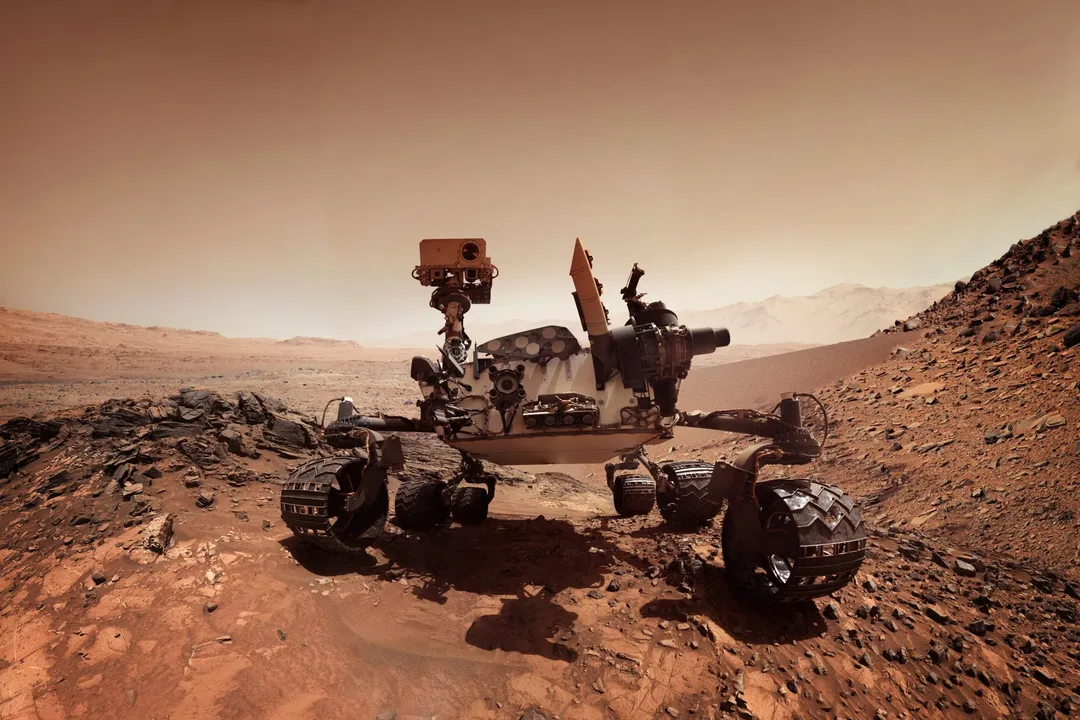
The ground itself presents multiple layers of concern beyond the extreme weather. The Martian surface is constantly irradiated. Unlike Earth, Mars lacks a global magnetic field to deflect charged particles streaming from the Sun and deep space. The thin atmosphere provides only minimal shielding against this ionizing radiation. Exposure to these levels of radiation presents significant long-term health risks, including cancer and central nervous system damage, to any unprotected human presence.
The very soil, called regolith, also poses a unique problem. While it contains elements that could eventually be used for resources, it is laced with toxic compounds, specifically perchlorates. These salts are highly reactive and poisonous to humans, requiring careful processing before the soil could ever be considered safe for use in agriculture or even as a building material that might break down into breathable dust. Any shelter must be designed to keep this abrasive, chemically active dust out, which is a task made harder by the low gravity, which may allow fine dust to remain suspended longer than on Earth.
# Shelter and Sustenance Needs
Establishing a living space on Mars necessitates overcoming the deficiencies in atmospheric pressure, temperature, and radiation protection simultaneously. The concept of a "home" on Mars shifts from a structure offering protection from weather to one that serves as a self-contained, miniature Earth.
# Pressurization and Atmosphere Generation
The primary function of any habitat must be maintaining an internal pressure greater than the Armstrong limit, where bodily fluids boil without a suit. This means inflatable or rigid structures capable of holding a terrestrial-like pressure are essential. Since the Martian atmosphere is predominantly carbon dioxide, life support systems must efficiently strip out the breathed out by inhabitants and replenish the lost oxygen. Techniques like the Mars Oxygen In-Situ Resource Utilization Experiment (MOXIE), which demonstrated the ability to produce oxygen from atmospheric on a small scale, offer a crucial step toward self-sufficiency, but scaling this up for a permanent crew is a monumental engineering task.
# Water and Power
While the surface is dry, water ice is known to exist, particularly beneath the surface and at the poles. Accessing and processing this subsurface ice will be the primary method for obtaining potable water and breathable oxygen (through electrolysis). Securing a reliable, continuous energy source is equally critical, as heating, air recycling, lighting for agriculture, and water processing all require substantial power. Solar power is an option, but the dust storms that can obscure the Sun for weeks on end pose a serious threat to consistent energy generation, suggesting that a nuclear power source might be more reliable for base-load needs. If Martian settlers relied solely on solar arrays, they would need massive battery backups or redundant systems, perhaps requiring them to calculate daily energy consumption based on predicted dust opacity, a necessary administrative step Earth-bound engineers rarely face.
# Food Production
For true long-term habitation, importing all food from Earth is unsustainable due to mass and cost constraints. Settlers will need to grow their own food, requiring sealed agricultural modules, often referred to as aeroponics or hydroponics, where crops are grown without soil or with sterilized, treated regolith. This farming must occur under controlled lighting and temperature, entirely divorced from the exterior environment, essentially turning interior compartments into complex, high-tech vertical farms.
# Analyzing Habitability Factors
When comparing the primary challenges, it becomes clear that they are interconnected. The thin atmosphere contributes directly to the extreme temperature swings and the high radiation load. This layered dependency means that fixing one problem often requires addressing another. For instance, building habitats underground or covering them with several meters of Martian regolith solves the radiation shielding problem and helps stabilize internal temperatures, reducing the energy load for heating/cooling.
| Environmental Factor | Martian Value | Earth Equivalent Comparison | Primary Survival Impact |
|---|---|---|---|
| Atmospheric Pressure | $<1%$ of Earth's sea level | Near vacuum | Instant ebullism, no liquid water stability |
| Average Temperature | () | Extremely cold climate | Requires continuous, massive heating |
| Primary Atmospheric Gas | (95%) | (78%), (21%) | Asphyxiation, need for extraction |
| Magnetic Field | None (Localized remnants only) | Strong global field | High exposure to cosmic and solar radiation |
Considering the necessity of radiation shielding, Martian living spaces will likely prioritize subsurface construction or heavily shielded surface modules rather than the dome-shaped structures often seen in science fiction. A colony's initial success will likely hinge on rapidly deploying systems to extract subsurface water ice—a necessity for both life support and propellant production—before focusing on expanding above-ground living areas that would require far more advanced, lightweight shielding materials. The focus shifts from shelter to total environmental enclosure.
# Legacy and Future Life
The current conditions on Mars—the low pressure, the cold, the radiation—are utterly lethal to unprotected Earth-based organisms. This harsh reality underscores why scientists search for past or present microbial life, which might exist deep underground where liquid water could persist, shielded from surface conditions. Any life that evolved there would have done so under entirely different parameters than life on Earth.
For humans, the living conditions dictate a dependency on technology that is almost absolute. Unlike a remote Earth outpost where a failure might lead to rescue or temporary hardship, a failure in Martian life support—air recycling, power generation, or pressure containment—means immediate catastrophe. The environment demands an expertise in redundancy and systems maintenance far exceeding any terrestrial requirement. In effect, living on Mars means constantly residing within a machine that must mimic a billion years of terrestrial evolution to sustain a single human being.
#Videos
Can We Live on Mars? - YouTube
Related Questions
#Citations
Mars: Facts - NASA Science
Life on Mars - Wikipedia
Life on Mars?
The Habitability of Mars - The Mars Society of Canada
Why Cosmic Radiation Complicates the Search for Life on Mars
Life on Mars: Your Questions Answered | The Planetary Society
An Origin of Life on Mars - PMC - NIH
Can Humans Live on Mars? What Would it Look Like? | EFK
Explore: Life on Mars - Lunar and Planetary Institute
Can We Live on Mars? - YouTube