What are the best conditions for viewing Mars?
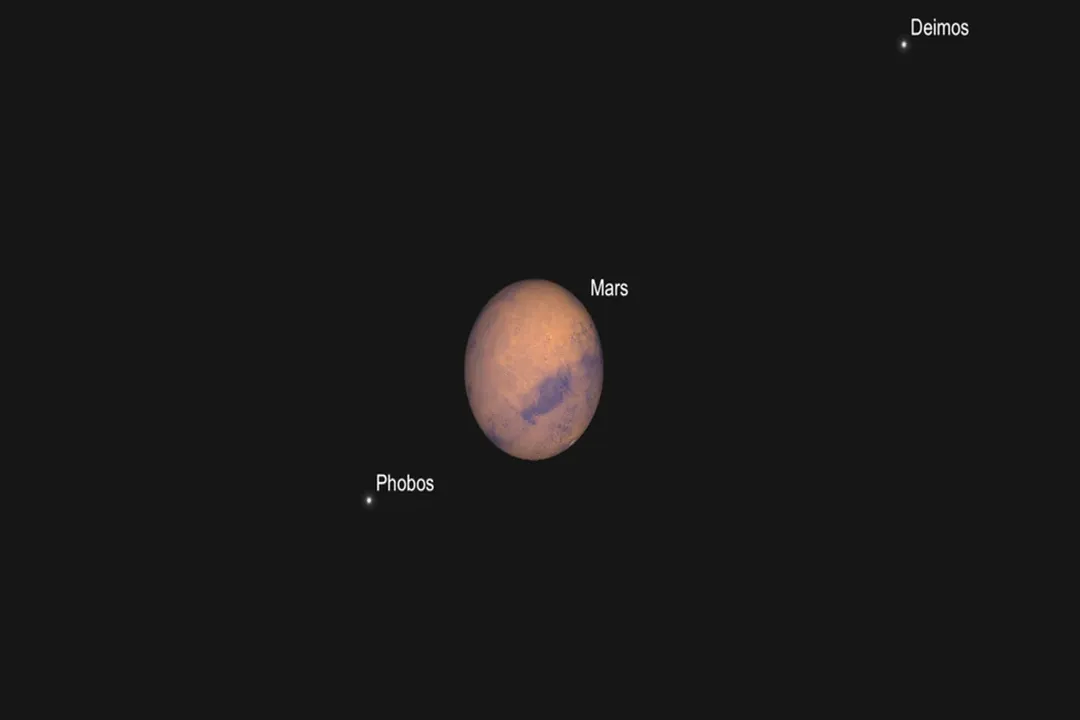
Observing Mars, the ruddy wanderer of our solar system, is a deeply rewarding pursuit for amateur astronomers, but it often comes with higher expectations than reality delivers. Unlike the Moon or Jupiter, Mars is small and far away, meaning that seeing its surface details requires patience, the right equipment, and, most importantly, nearly perfect atmospheric conditions. Success isn't just about having a big telescope; it hinges on understanding when and how the planet presents itself through Earth's turbulent air.[2][4]
# Closest Approach
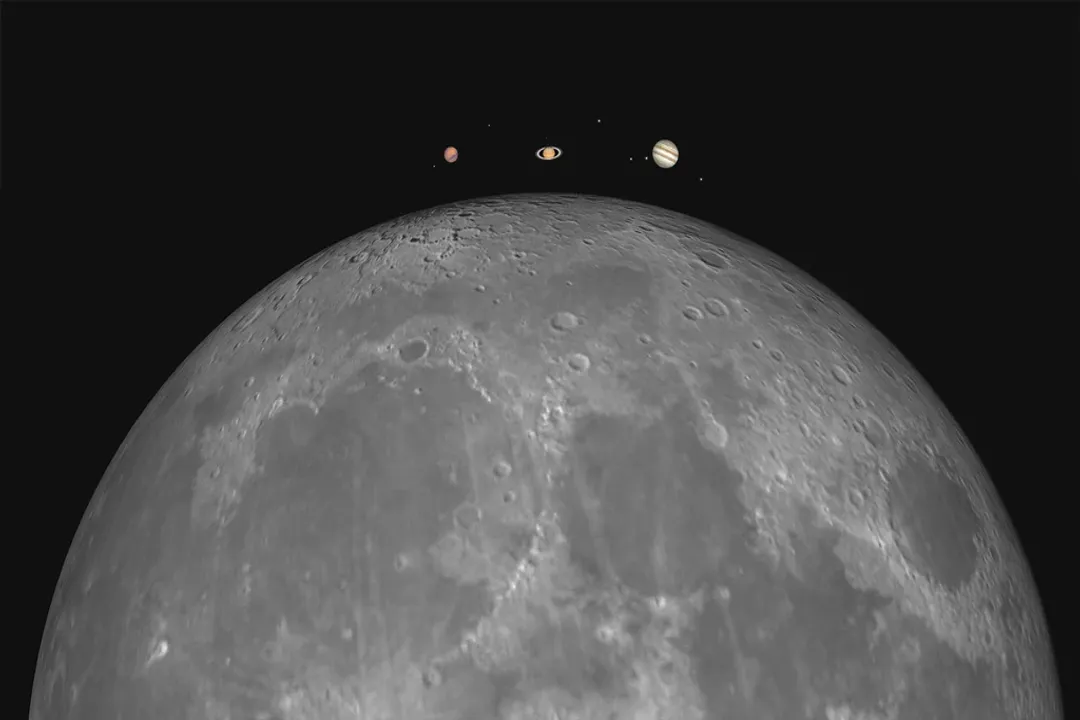
The biggest factor governing how well we can see Mars is its orbital relationship with Earth, specifically the timing of its opposition. Opposition occurs when Earth passes directly between the Sun and Mars, making Mars appear brightest and largest in our sky.[2][6] This happens roughly every two years, though the distance between the planets varies significantly because both orbits are elliptical.[1] When Mars is at its closest approach to Earth during opposition, it can appear up to 25 arcseconds across, offering the best possible apparent size for observation.[3]
However, the closest opposition isn't always the best opposition for viewing from a specific location. Mars's orbit is inclined relative to the Earth's orbit around the Sun, meaning that even at opposition, Mars might be very low in the southern sky for observers in the Northern Hemisphere.[9] A low altitude subjects the light rays from Mars to a much longer path through the thickest, most turbulent parts of Earth's atmosphere.[4] For instance, if an opposition occurs when Mars reaches its maximum northern declination, it will never rise very high above the horizon for viewers in the mid-to-upper northern latitudes, resulting in perpetually poor views regardless of the apparent size.[9] Therefore, the ideal scenario combines a close opposition with a high maximum altitude for the observer's location.
If Mars is viewed near conjunction—when it is on the opposite side of the Sun from Earth—it appears tiny, dim, and requires high magnification just to locate.[6] During these times, features are impossible to discern, though one might still notice its distinct orange-red color compared to surrounding stars.[5]
# Sky Stability
While the planet's proximity dictates its potential size, the stability of our atmosphere dictates how much of that potential we can actually use. Astronomers refer to two primary atmospheric conditions: seeing and transparency.[4]
Seeing relates to the steadiness of the air, often described as the optical quality of the atmosphere. Excellent seeing means the stars appear sharp and don't twinkle much; poor seeing results in shimmering, blurred images, making fine detail on any planet impossible to resolve.[4] On nights with poor seeing, even a large aperture telescope will produce a fuzzy image because the atmospheric turbulence magnifies the image while simultaneously blurring it.[3] High altitudes, away from ground-level heating and weather systems, generally provide better seeing, but local thermal currents rising from patios, driveways, or even the telescope tube itself can ruin a night's potential.[2][4]
Transparency is different; it measures how clear the atmosphere is—how much light is scattered or absorbed by dust, haze, or high, thin clouds.[4] High transparency means the image contrast will be good, allowing fainter surface features, like the polar caps, to stand out against the planet's disk.[4] A night can have perfect, steady seeing but poor transparency due to high humidity or distant smoke, resulting in a sharp but washed-out view.
A useful way to conceptualize this trade-off is to imagine the atmosphere as a faulty lens. Perfect seeing is a lens that is perfectly still; perfect transparency is a lens that is perfectly clear. You need both to bring Mars into sharp focus. For instance, when looking for subtle surface features, contrast is paramount, favoring high transparency, whereas when trying to resolve a fine edge or polar cap boundary, atmospheric steadiness (good seeing) becomes the dominant requirement.[2] If your telescope is collecting light effectively (good aperture) but the atmosphere is boiling, the view will still be disappointing.

# Telescope Power
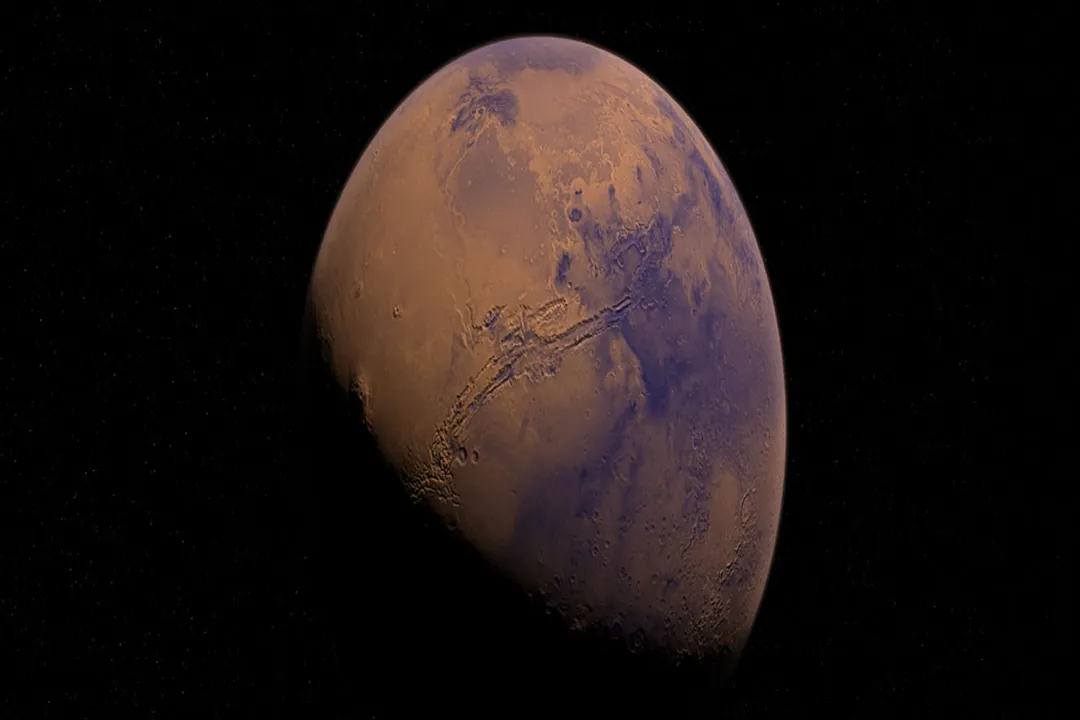
To see details on Mars, you need adequate aperture and sufficient magnification, used judiciously. Aperture—the diameter of the main lens or mirror—determines the resolution or the smallest detail your telescope can theoretically separate.[7] To effectively see features like the Sinus Meridiani or the polar caps, observers often aim for a magnification of around 200x, though up to 400x might be required for the finest details, provided the seeing supports it.[7]
It is a common mistake to assume that simply cranking up the magnification is the key. Exceeding the practical limit imposed by the atmosphere or the telescope's aperture leads to a magnified, but blurry, image.[3] A rough guideline for maximum useful magnification is about 50 times the aperture in inches (or 2 times the aperture in millimeters).[2] If the seeing is poor, using 100x might actually yield a better visual experience than struggling with a fuzzy 300x image, as the lower power provides a steadier overall view.
A practical test for evaluating seeing during an observation session is to focus on a bright star or Jupiter, not Mars itself. If the star's diffraction rings (or the planet's image) are oscillating wildly, you know immediately that high magnification on Mars will not be fruitful that evening, saving you time and frustration. This diagnostic step, checking atmospheric stability before committing to observing the slower-moving planet, is a valuable habit to develop.
# Surface Details
When conditions finally align—Mars is high in the sky, opposition is near, and the air is steady—what can a backyard observer expect to see?[2] The overall appearance will be a distinct, reddish-orange disk, sometimes with a slightly brighter, bluish-white cap visible at one of the poles.[5][6]
Features visible depend heavily on the exact timing within the Martian year, as surface features change seasonally.[1] When viewing is at its peak, patient observers might discern variations in surface brightness, such as the dark regions like Syrtis Major, which stand out against the lighter, dustier plains.[6] Seeing these features clearly depends on the contrast between the dark basaltic regions and the lighter, oxidized plains, as well as the absence of global or regional dust storms, which can completely obscure the surface.[4]
Coloration is an important clue. The planet has a predominantly reddish hue due to iron oxide dust, but observers can sometimes note subtle differences in shading around the limb (the edge of the disk) or within the features themselves.[5] While the North and South Polar Caps are generally visible, the appearance of the southern cap often waxes and wanes more dramatically with the Martian seasons than the northern one.[6]
To enhance contrast and isolate specific features, using filters is often recommended.[8] A blue filter can increase contrast between dark surface markings and the reddish dust or even help tease out faint polar cap details, as the dust reflects blue light poorly.[4] Conversely, a red filter tends to darken the reddish desert areas, potentially making blue/white features like the polar caps stand out even more clearly against the now deep-crimson background.[8] However, an interesting observational strategy involves avoiding extreme color filters during nights of mediocre seeing. When the atmosphere is slightly unstable, over-filtering (especially with deep red or blue) can reduce the overall brightness too much, sacrificing resolution for marginal color enhancement. A mild yellow or light orange filter often provides the best balance of contrast boost without sacrificing too much light transmission when the seeing is only average.[4]
Related Questions
#Citations
Mars: Facts - NASA Science
The Ultimate Guide to Observing Mars - Celestron
Realistic expectations for viewing Mars : r/telescopes - Reddit
How To Observe Mars | High Point Scientific
What Should I expect to see when viewing Mars (& planets)
Viewing Mars - Getting Started With Observing - Stargazers Lounge
What magnification is required to see detail on Mars / other local ...
How To Get The Best Views of Mars - Mile High Astronomy
When is the best time to observe Mars from Earth? - Facebook