Were there volcanoes on the Moon when dinosaurs were alive?
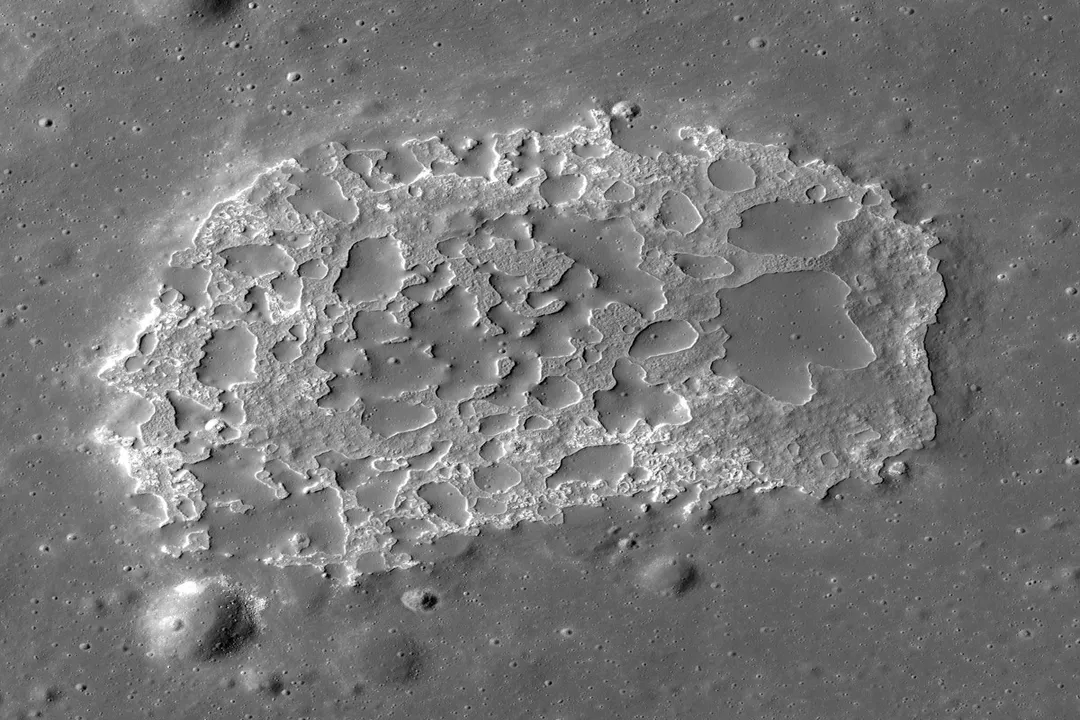
For generations, humanity looked up at the lunar surface and saw a world frozen in time. The dark, sprawling plains known as maria were long understood to be the remnants of massive lava floods from billions of years ago. Astronomers and geologists had reached a consensus that the Moon was a geologically dead world, having ceased its volcanic engine roughly two to three billion years ago. [1][7] This narrative, however, has undergone a dramatic shift due to recent evidence retrieved from the lunar surface. It appears that while dinosaurs roamed Earth, the Moon was not the silent, dormant companion we once imagined. [4][10]
# Lunar History
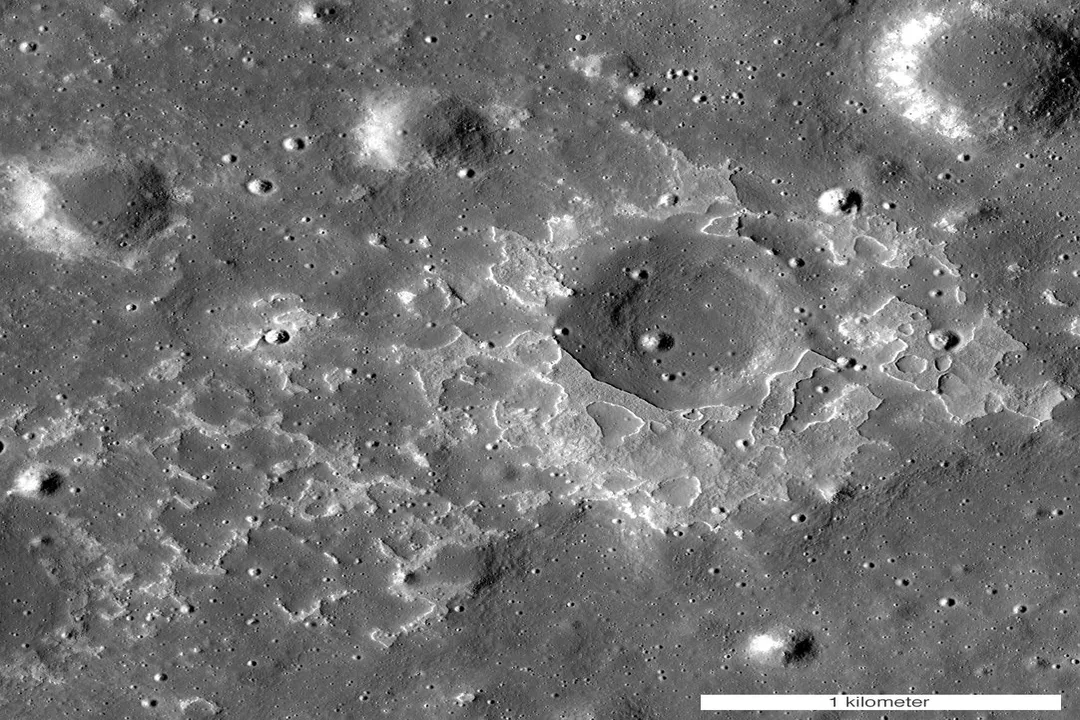
The long-held standard for lunar geology suggested that the Moon cooled quickly after its formation due to its small size. Without the internal heat generated by radioactive decay or the tidal forces that keep larger bodies geologically active, the Moon was thought to have quieted down almost entirely shortly after the solar system's chaotic early years. [2][9] This theory relied heavily on the dating of rock samples brought back by the Apollo missions, which predominantly showed ancient ages for volcanic basalt. [6][7]
However, planetary science is rarely static. As more samples become available and our analytical techniques grow more sensitive, we have begun to see a more nuanced picture of lunar history. The dark maria—the "seas" visible from Earth—are indeed ancient, formed during a period of peak volcanism. [9] Yet, finding evidence of activity from much later epochs would require looking at the Moon with a new level of precision. [4]
# Chang'e Discovery
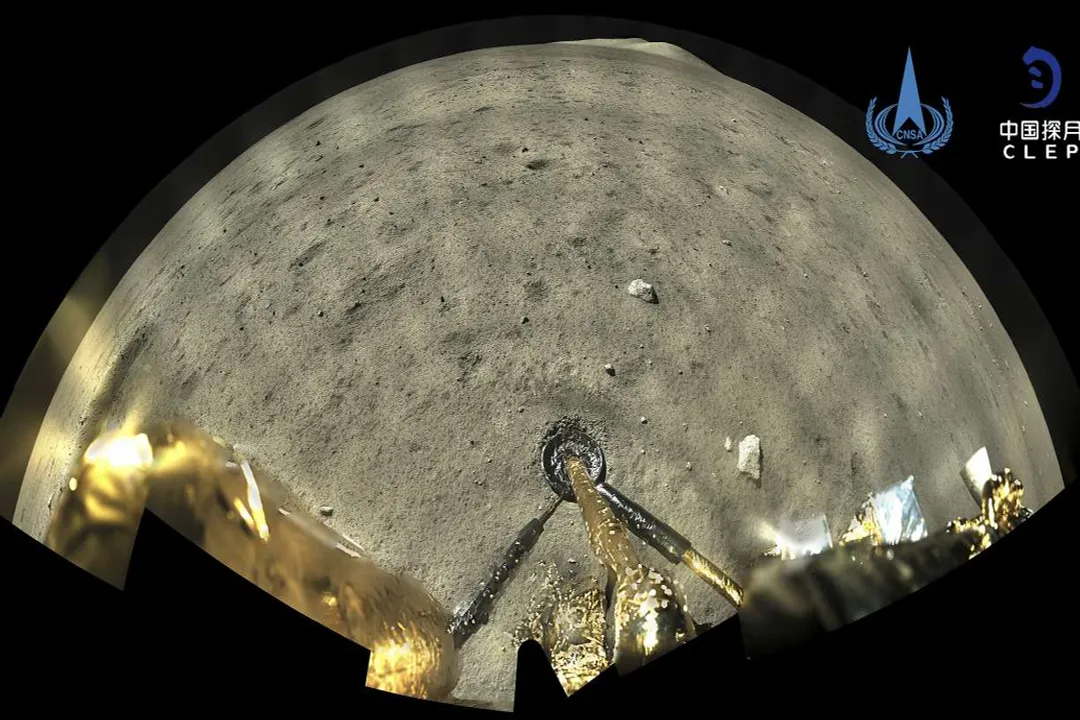
The turning point arrived with the results from China’s Chang'e 5 mission. In 2020, this robotic craft landed on a portion of the Moon that had not been sampled by the Apollo astronauts, specifically targeting an area of the Oceanus Procellarum, or the "Ocean of Storms". [1] When the sample capsule returned to Earth, scientists began the meticulous work of sifting through the lunar soil to understand what might be hidden in the dust. [4]
Deep within these samples, researchers identified microscopic glass beads. These were not random debris, but rather clear indicators of explosive volcanic activity, often described as "fire fountaining". [10] When lava erupts with enough gas content, it sprays into the air, cools rapidly, and turns into tiny, spherical glass droplets. [6] By analyzing these beads, scientists determined they were approximately 120 million years old. [4][10]
# Dinosaur Era
Connecting this date to terrestrial history offers a striking perspective. If the Moon was experiencing volcanic fire fountaining 120 million years ago, it means the lunar surface was alive with molten activity during the Cretaceous period. [6] This was a time when the Earth was dominated by dinosaurs, including giants like the Triceratops and the ancestors of Tyrannosaurus rex. [5][10]
While the dinosaurs were navigating vast forests and battling for survival on Earth, the Moon was undergoing a late-stage volcanic twitch. This discovery forces a re-evaluation of how much heat a body of the Moon's size can retain. [4] It challenges the idea that the Moon's internal engine simply shut down, suggesting instead that it may have been sputtering along much longer than models previously allowed. [1][4]
# Thermal Mystery
The existence of these eruptions presents a compelling scientific puzzle. Typically, the Moon is considered too small to maintain the high temperatures necessary to melt the mantle and drive volcanism for billions of years. [2] Cooling rates are often tied to surface-to-volume ratios; smaller objects lose their internal heat to space faster than larger planets like Earth or Mars. [9]
To have volcanic activity this late, there must be a mechanism to sustain or generate that heat. [4] Scientists are currently considering a few possibilities:
- Radioactive Heating: There may be a higher concentration of radioactive elements, such as potassium, thorium, or uranium, in the lunar mantle than previously estimated, providing a persistent heat source. [2]
- Tidal Forces: Complex gravitational interactions between the Earth and the Moon might generate enough tidal heating to keep some portion of the lunar interior soft and molten. [2]
- Localized Melting: The volcanism might not have been a global phenomenon but a highly localized event, triggered by specific mineralogical conditions in the deep mantle that allow for melting at lower temperatures. [1]
# Comparison Table
To visualize the timeline of volcanic activity on our two worlds, we can look at the relative phases of activity.
| Time Period | Earth Volcanic Activity | Moon Volcanic Activity |
|---|---|---|
| 3.5 Billion Years Ago | Intense, frequent eruptions | Peak period of Maria formation |
| 500 Million Years Ago | Significant tectonic activity | Waning, rare activity |
| 120 Million Years Ago | Active (Plate Tectonics) | Late-stage "Fire Fountaining" |
| Present Day | Highly active | Geologically dormant |
The discrepancy between the two bodies is significant. Earth’s volcanism is driven by plate tectonics, a process that constantly recycles the crust and keeps the interior hot. The Moon lacks this recycling mechanism, which makes the 120-million-year-old volcanic evidence all the more surprising. It suggests that the lunar interior held onto its primordial heat far longer than expected, or that the Moon has a unique way of generating localized heat that we are only beginning to decipher. [1][2]
# Future Research
This discovery changes our strategy for future lunar missions. If there were eruptions in the Cretaceous period, it is possible that even more recent volcanic activity occurred elsewhere on the Moon—perhaps as recently as a few million years ago. [4] To find these, scientists need to look at different landing sites. The current samples only represent a single location, and the Moon is a large world with diverse geological features. [1]
Future lunar missions, both robotic and crewed, will likely prioritize searching for these small, elusive glass beads in other volcanic regions. By cataloging the exact timing and distribution of these late-stage eruptions, we can reconstruct the Moon's thermal history with far greater accuracy. [2] The Moon, once viewed as a static and uninteresting rock, is slowly revealing itself to be a more dynamic world than anyone dared to imagine. It serves as a reminder that in planetary science, our understanding is only as good as the samples we have in our hands. [6][10]
#Videos
ScienceCasts: Young Volcanoes on the Moon - YouTube
Related Questions
#Citations
Volcanoes were erupting on the Moon while dinosaurs roamed ...
Young Volcanoes on the Moon - NASA Science
TIL when dinosaurs roamed Earth, there were active volcanoes on ...
The moon had active volcanoes into the dinosaur age, study finds
Volcanoes were erupting on the Moon while dinosaurs roamed ...
Lunar Volcanism in the Time of the Dinosaurs! - Mini Museum
Volcanoes on the Moon May Have Erupted During the Dinosaur Age
ScienceCasts: Young Volcanoes on the Moon - YouTube
Was volcanic activity more prevalent when the dinosaurs roamed?
Tiny glass beads suggest the moon had active volcanoes when ...