Is walking on Mars possible?

Stepping onto the dusty, rust-colored surface of Mars is a dream for many, but the actual experience of walking there involves physics and environmental constraints that differ significantly from our daily life on Earth. A human standing on Mars faces roughly 38% of the gravity found here, which fundamentally alters the mechanics of locomotion and human movement [2][7].
# Gravity impacts
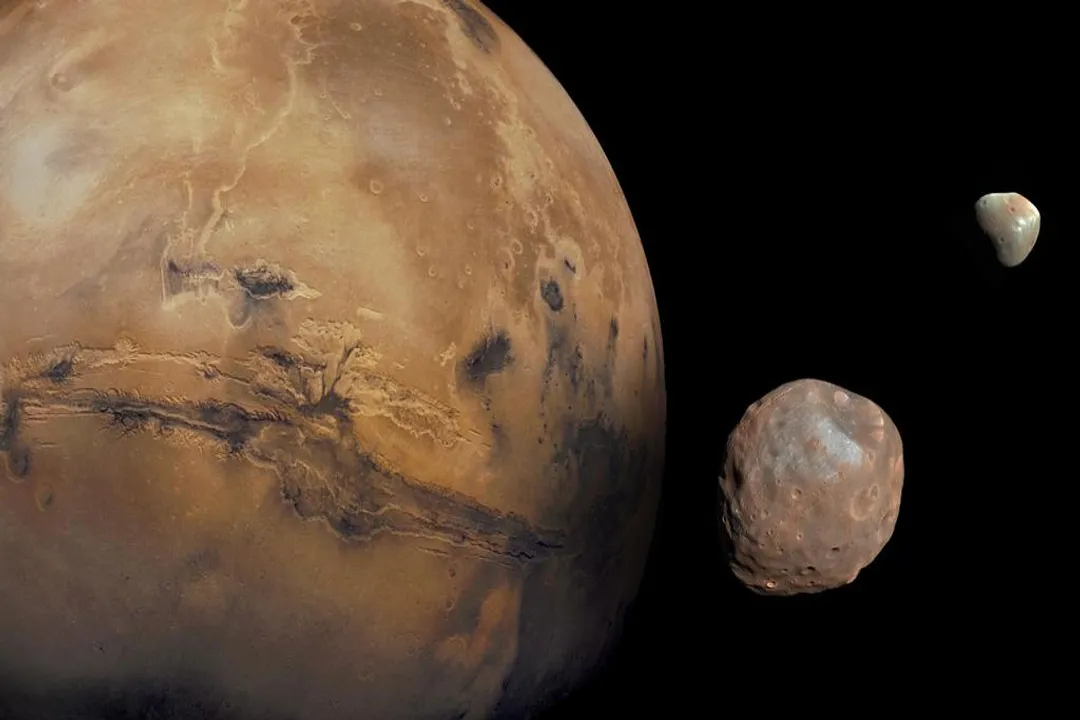
On Earth, walking is an efficient rhythm of falling and catching oneself. Our bodies are calibrated to the gravitational pull of 1g. When you move to an environment with 0.38g, your weight drops significantly, but your mass remains the same. This means you have the same inertia when you try to change direction or stop [7].
Researchers and biomechanists have studied how this lower gravity influences human gait. In a 1g environment, humans switch from walking to running at a specific speed to remain efficient. On Mars, this threshold changes. You might find that a standard walking pace becomes inefficient, prompting a more natural transition to a "loping" or hopping gait earlier than you would expect on Earth [2][8].
This change in gravity affects more than just your feet. Your inner ear, which controls balance, will need time to adjust to the new gravitational cues. Walking uphill or across uneven, cratered terrain could feel closer to wading through water or moving on the moon, where every step carries a risk of over-correcting your trajectory. You would likely need to learn a new way to shift your center of gravity to avoid stumbling [7][8].
# Suit necessity
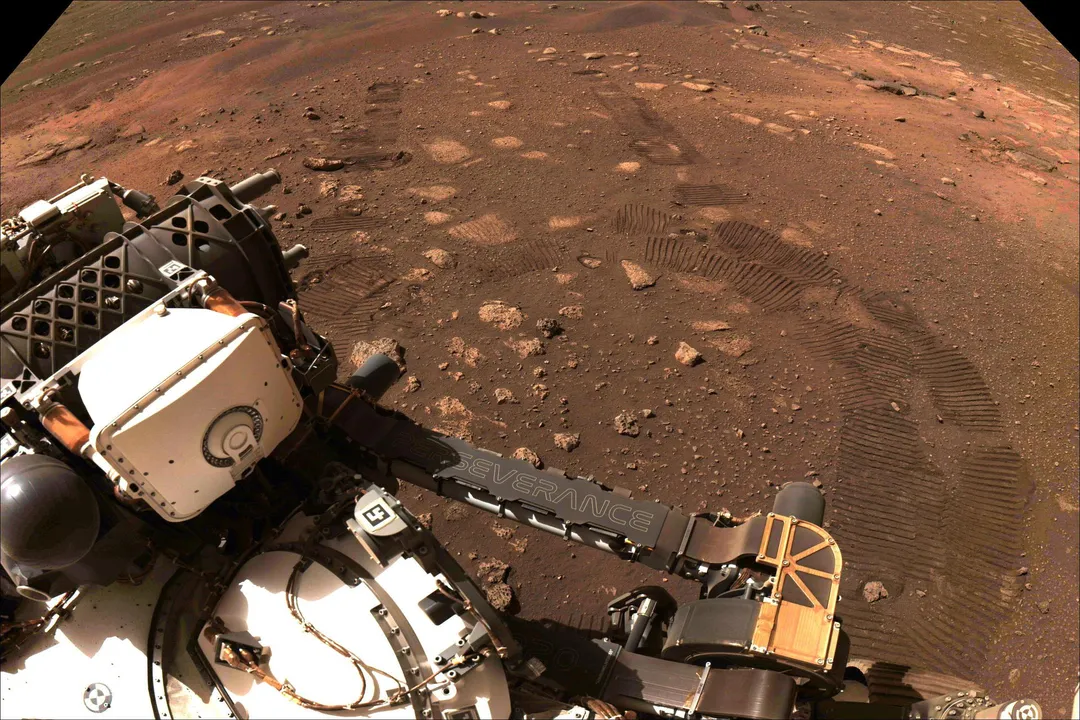
The idea of walking on Mars without a spacesuit is not physically possible for a human. The atmosphere on Mars is thin, composed primarily of carbon dioxide, and it lacks the pressure required to keep human blood and other bodily fluids in a liquid state at body temperature [5].
Without a pressurized suit, the lack of atmospheric pressure would cause gases in your body to expand, leading to severe medical crises. Furthermore, the temperature on Mars fluctuates drastically. At the equator, it might reach 70 degrees Fahrenheit at noon, but it can drop to negative 100 degrees Fahrenheit or lower at night. Radiation protection is another critical factor; the thin atmosphere provides little protection against solar and cosmic radiation, making a protective suit essential for safety [5].

# Gait dynamics

Current simulations suggest that walking on Mars will not look like a leisurely stroll in a park. Because of the lower gravity, the forces your legs apply to the ground will be lower. To generate the same traction, you would need to be mindful of your contact with the surface. Loose regolith—the fine, sand-like dust covering the planet—adds an extra layer of complexity.
Data from simulations suggests that human movement on Mars might resemble a bouncy, rhythmic hopping. This motion allows astronauts to maintain control while minimizing energy expenditure. If you try to walk with a standard Earth gait, you might find yourself slipping or not gaining enough grip on the dusty surface [2][7][9].
| Movement Type | Earth Characteristic | Mars Characteristic |
|---|---|---|
| Walking Pace | Natural efficiency | Requires retraining |
| Running | Standard energy use | Bouncy, loping stride |
| Traction | High (ground friction) | Low (sandy/dusty surface) |
| Effort | Habitual | Conscious energy management |
This table highlights the shift from subconscious movement on Earth to a more deliberate, managed approach on Mars. On Earth, we do not think about how we walk; on Mars, every stride will require conscious adjustments to adapt to the lower weight and reduced friction [8].
# Planetary traversal
If one were to attempt to walk around the entire planet, the numbers are daunting. The circumference of Mars at the equator is approximately 21,344 kilometers (13,263 miles). If a person could maintain a steady walking pace of 4 kilometers per hour for 8 hours a day, it would take roughly 5,336 hours of walking time [1][10].
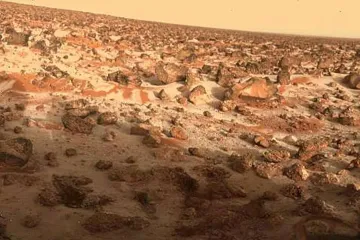
This equates to approximately 667 days of pure walking, not accounting for rest days, terrain obstacles, or the need to return to a base for supplies. This calculation assumes a flat, uninterrupted path, which does not exist on the Martian surface. Obstacles such as Valles Marineris—a canyon system that dwarfs the Grand Canyon—or the massive volcanoes like Olympus Mons would turn any attempt at circumnavigation into a mountaineering operation rather than a walk [1][10].
# Training simulations
Preparing for these conditions requires more than just physical fitness; it requires isolation training and psychological preparation. Projects like Mars500 demonstrated how human crews manage long durations in confined, simulated environments. These studies help researchers understand how psychological fatigue impacts physical performance, including the ability to perform tasks on the surface [6].
Training for surface activity involves wearing weighted suits in environments that mimic low-gravity movement. This allows astronauts to practice their gait and learn how to stabilize themselves while performing scientific tasks. By simulating the "Mars walk" in terrestrial environments like deserts or specialized facilities, teams can refine the movement techniques required to operate safely when they eventually arrive on the planet [6].
# Mission status
While human missions to Mars remain a long-term goal for space agencies like NASA and other international partners, the focus remains on robotic precursors and developing the heavy-lift launch vehicles necessary for such a trip [4]. The current roadmap involves establishing sustainable long-term presence strategies, which include habitats, power generation, and life support systems [3].
The path to walking on Mars is a series of technological steps. First, agencies must perfect the landing systems for heavy payloads. Second, they must verify the availability of resources like water ice, which can be converted into oxygen and fuel. Walking on the surface is the final, visible component of a system that must be built from the ground up [3][4].
# Operational checklist
For any future mission, the "Mars walk" will be part of a highly scripted operational plan. Here is a breakdown of what that might look like for an astronaut:
- Pre-walk check: Ensure the suit's life support system is functioning. Pressure and oxygen levels are verified.
- Suit calibration: Adjust the suit's joints and pressure settings for the specific terrain to be encountered.
- Safety tether: In early missions, astronauts will likely be tethered to a rover or habitat to prevent wandering too far from the safety of their base.
- Regolith management: Walking creates dust clouds. Astronauts must monitor dust buildup, as Martian dust is abrasive and could damage suits or airlocks.
- Communication check: Maintain constant contact with the base or orbital relay, as communication delays with Earth prevent real-time assistance.
This checklist is not merely a procedural guideline; it is a survival necessity. Because of the harsh environment, the margin for error is minimal compared to terrestrial hiking. The combination of radiation, dust, and isolation ensures that every walk on Mars will be a high-stakes activity, distinct from anything humans have done before.
As we continue to develop these technologies, our understanding of human physiology in space continues to grow. We are moving from theoretical models of how humans might move on other worlds to practical, tested simulations that prepare crews for the reality of standing on another planet. The transition from walking on Earth to walking on Mars is a shift in physics, strategy, and engineering, but it remains a tangible goal for the coming decades.
#Videos
What would walking on Mars be like? - YouTube
Related Questions
#Citations
How long would it take to walk around Mars? - Space
If/When humans make the trip to Mars, will we be able to walk or will ...
Human mission to Mars - Wikipedia
Humans to Mars - NASA
When will a man be able to walk the surface of Mars without a space ...
ESA - Walking on 'Mars' - European Space Agency
What would the human gait look like on Mars?
Walking on Mars | Nature
What would walking on Mars be like? - YouTube
Taking a hike… on Mars! - Research Features