Is the Saturn V still the most powerful rocket?
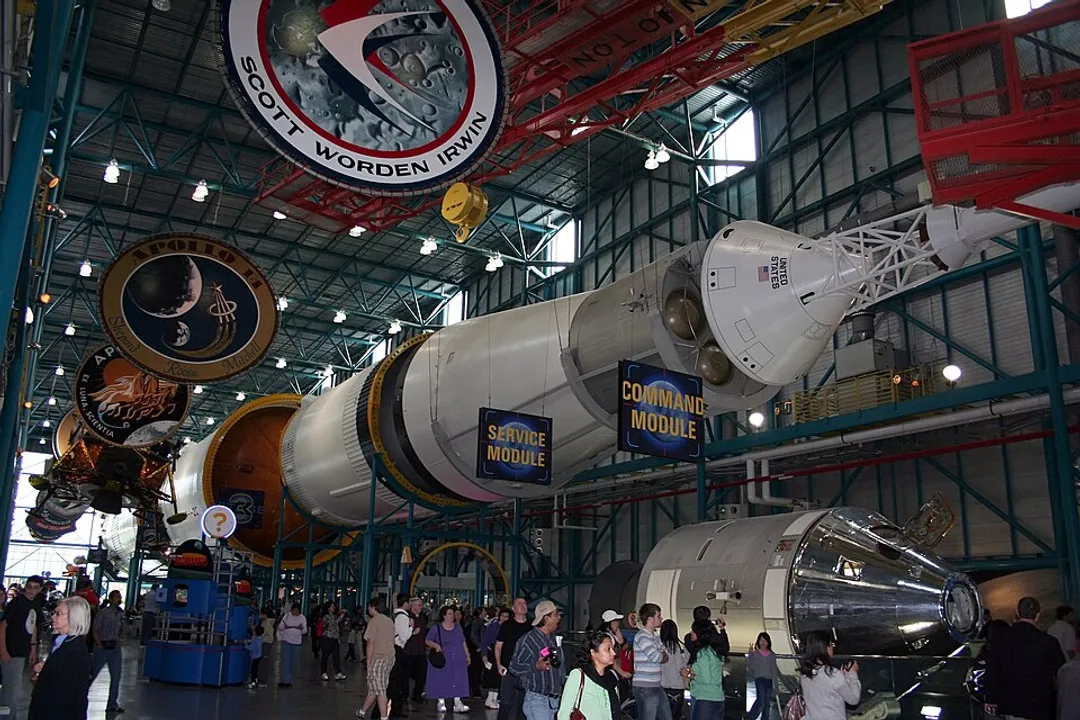
The Saturn V rocket stands as an enduring monument to human engineering ambition, a machine designed for a singular, monumental goal: landing humans on the Moon and returning them safely. Even decades after its last flight, the question of whether any other rocket truly eclipses its power persists within aerospace discussions. To answer this, one must first wrestle with what "most powerful" actually means when comparing vertical ascent vehicles across different eras.
# Defining Thrust
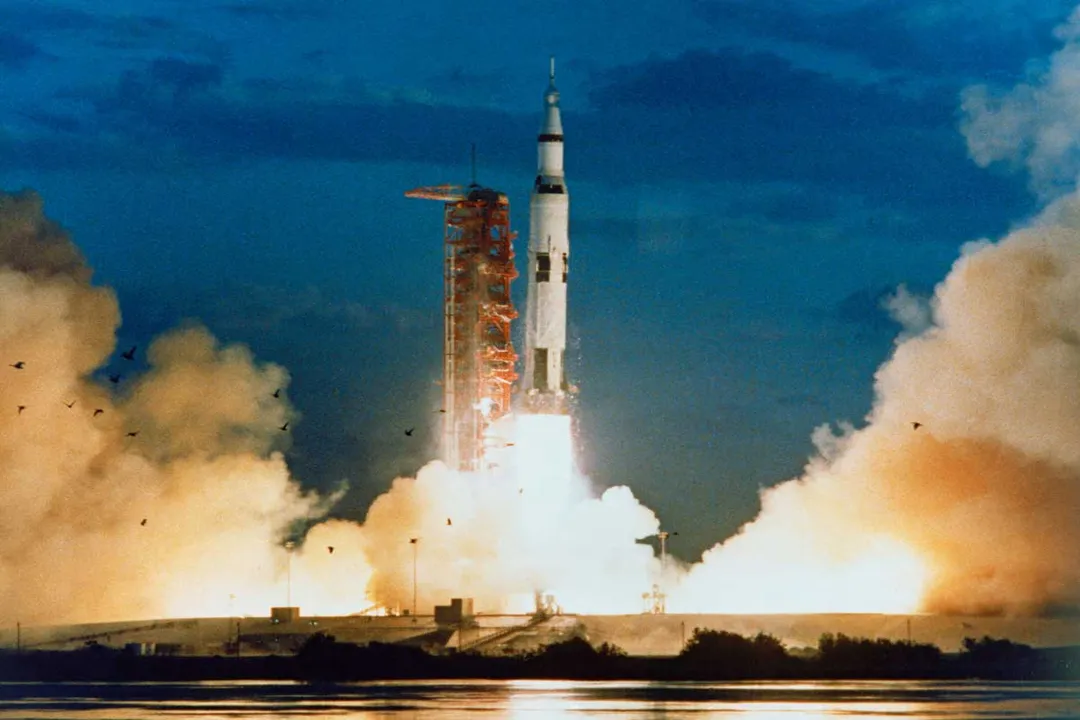
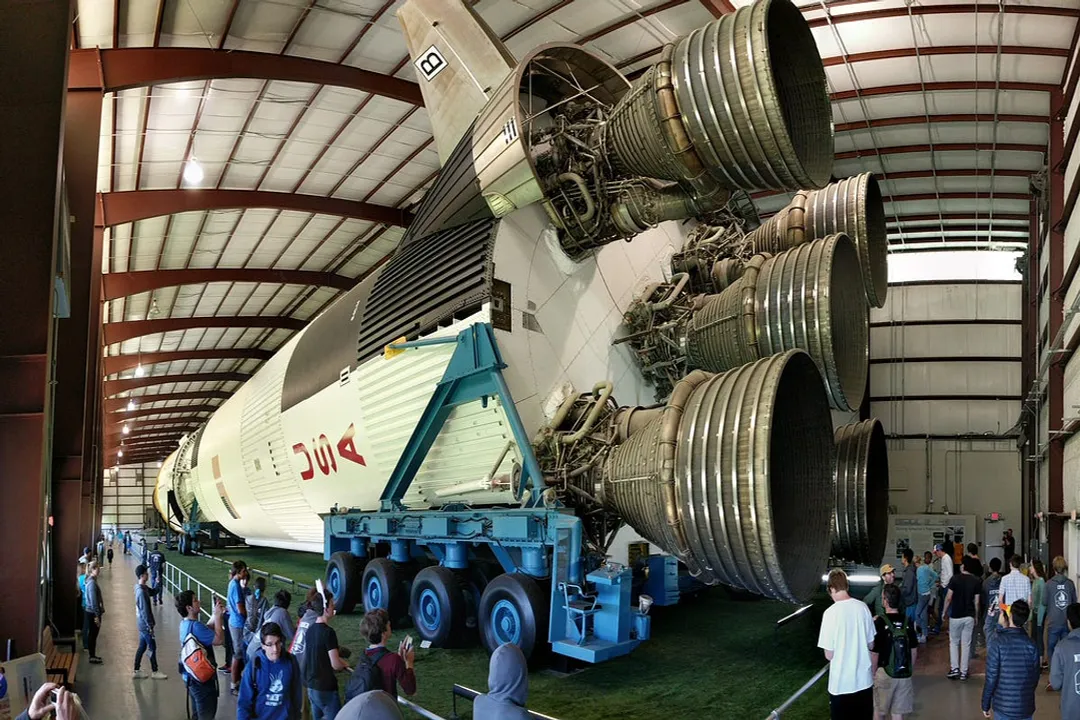
In common parlance, a rocket’s power is often immediately equated with its liftoff thrust, the brute force required to overcome Earth’s gravity and accelerate its massive stack of fuel and spacecraft. By this metric, the Saturn V was an absolute titan. Its gargantuan first stage, powered by five F-1 engines, generated approximately 7.5 million pounds of thrust at liftoff. This massive output was necessary to lift its fully fueled weight, which approached 6.5 million pounds.
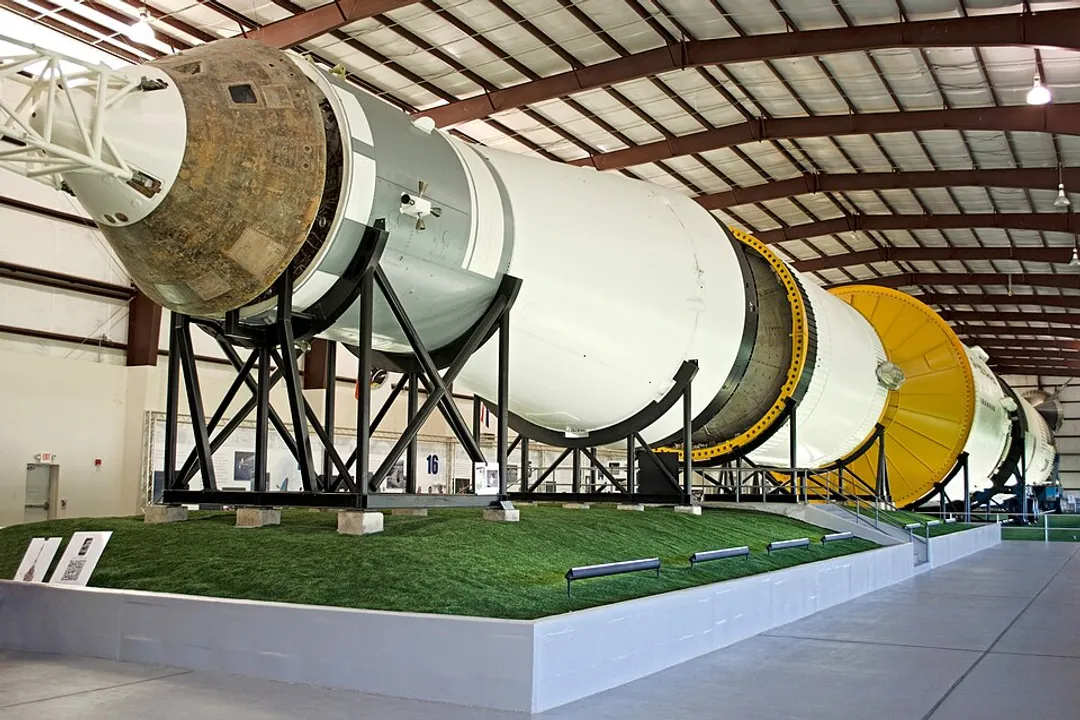
The sheer scale is difficult to overstate. The rocket stood an astounding 363 feet tall. Visitors to sites displaying the remaining rockets, such as the one at Space Center Houston, are confronted with its massive scale, recognizing it as nearly the length of a professional football field. This proven capacity to launch a large, complex stack capable of trans-lunar injection firmly places it in the upper echelon of rocketry history.
# The Soviet Rival

When discussing contenders for the Saturn V’s crown, the Soviet Union’s counterpart, the N1 rocket, invariably enters the conversation. The N1 was designed with comparable goals—launching cosmonauts to the Moon—and its specifications often show greater raw numbers in certain areas, leading to frequent online debate about which was truly superior.
The N1 featured a first stage utilizing 30 NK-15 engines clustered together, compared to the Saturn V’s five F-1s. If one simply multiplies the thrust of the smaller NK-15 engines, some calculations suggest the N1 might have had a higher theoretical thrust figure than the Saturn V. However, theory and reality diverge sharply here.
The Saturn V’s engine configuration, while still complex, proved remarkably reliable in flight. The N1, on the other hand, suffered catastrophic failures on all four of its uncrewed test launches. The enormous complexity of managing 30 engines vibrating and firing in close proximity created an operational nightmare that engineers could not conquer within the necessary timeline. This difference highlights a crucial distinction: achieving immense calculated power is one feat; reliably delivering that power during an actual, high-stakes mission is another entirely. The Saturn V’s validated success record sets a performance standard that the N1 never met.
# Capability vs. Capacity
Power isn't just about the initial push off the pad; it’s about what mass can be reliably placed where you want it—usually Low Earth Orbit (LEO) or, in the case of Apollo, on a trajectory toward the Moon. The Saturn V’s primary demonstrated capability was sending the three-man Apollo Command/Service Module and the Lunar Module toward the Moon. This required placing the required mass into a highly precise Earth orbit before committing to the translunar injection burn.
While raw thrust figures are compelling, payload capacity to a specific destination is often the more practical measure of a rocket’s operational power. The Saturn V was purpose-built for the Apollo mission profile, and it executed that profile perfectly.
The entire discussion around modern rockets, such as the behemoths being developed today, often pivots away from the Saturn V’s single-use design. Modern engineering places significant emphasis on reusability and cost per kilogram delivered to orbit. The Saturn V was an immense economic investment per launch because it was consumed entirely during its mission; its power came at a high price, justifiable only by the political and scientific imperative of the Moon landing. Any modern vehicle, even if it achieves a similar or slightly higher LEO payload mass in a single, expendable configuration, is measured against a different economic reality. The Saturn V was designed for an absolute maximum performance envelope where cost was secondary to success.
# Modern Super Heavy Lift
In the contemporary aerospace landscape, new rockets are emerging that boast tremendous potential capabilities. Vehicles like the Space Launch System (SLS) are designed to replace the Saturn V's role in deep space exploration, while private endeavors are pushing toward fully reusable, massive launchers.
When comparing today’s emerging rockets to the Saturn V, one often finds systems designed for greater theoretical capability, such as higher mass to LEO or the capacity for deep space cargo transport. However, these new systems are still in the proving stages, accumulating the flight heritage that the Saturn V accumulated over 13 successful, flawless missions. A rocket that has flown successfully multiple times, carrying humans to another celestial body, holds an authority that a ground-tested or partially successful vehicle cannot match. The proven power of the Saturn V, backed by the historical record of the Apollo program, remains unmatched by any vehicle that has yet achieved an equivalent operational success profile.
# A Benchmark of Success
Ultimately, declaring the Saturn V not the most powerful rocket requires defining "powerful" in a way that prioritizes theoretical thrust figures or future potential over actual, demonstrated, world-altering performance. If the standard is the highest total liftoff thrust ever certified and flown successfully on a human-rated deep space mission, the Saturn V still reigns supreme in the historical record. Its five F-1 engines, burning liquid oxygen and refined kerosene, provided the exact necessary push to send humanity past Earth’s hold, a feat that defines operational power in rocketry history. The legacy is not just in the size of the rocket, but in the incredible achievement it made possible.
#Videos
Is The Saturn V The Most Powerful Rocket? - Physics Frontier
Related Questions
#Citations
Why is the N1 not considered the most powerful rocket even if it was ...
Saturn V - Wikipedia
Which rocket is more powerful than Saturn V? - Quora
Is The Saturn V The Most Powerful Rocket? - Physics Frontier
The most powerful rocket ever built, in action. - Facebook
Saturn V at George W.S. Abbey Rocket Park - Space Center Houston
The Saturn V Rocket - Cradle of Aviation Museum
Saturn V: The largest and most powerful rocket | by Mriga | Nov, 2025
How "overpowered" was the Saturn 5 rocket? - Factual Questions