Is cosmos the same as galaxy?
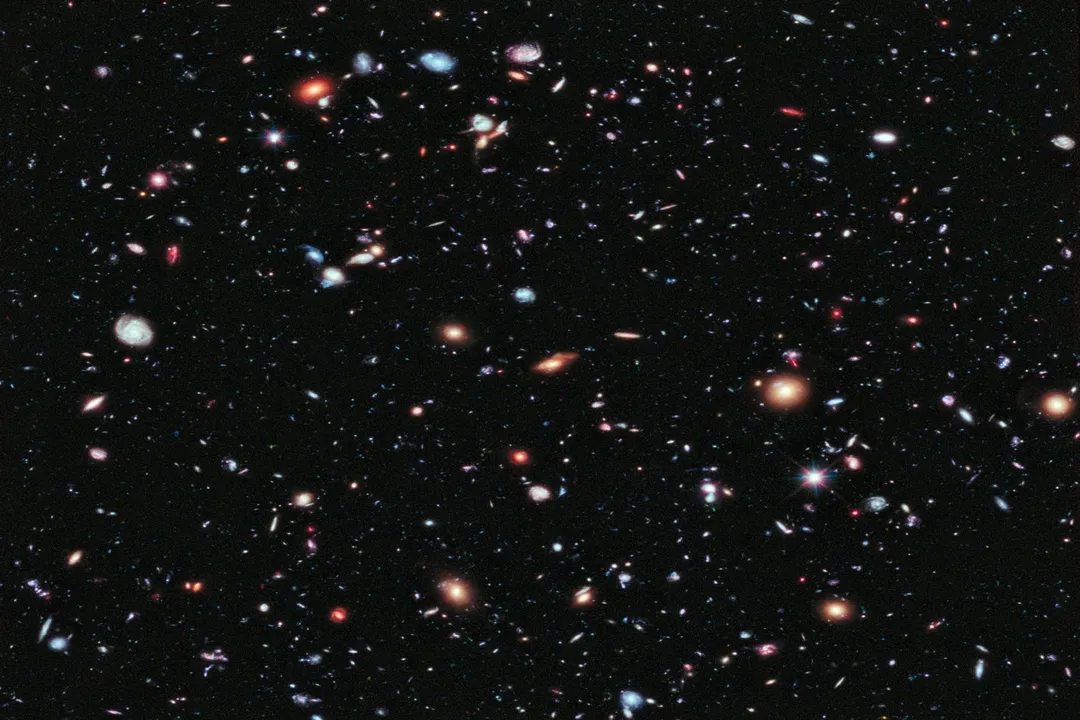
It is a common point of confusion to treat these astronomical terms as interchangeable, but they represent entirely different scales of reality. A galaxy is a massive, gravitationally bound structure of stars, gas, dust, and dark matter [^1.1][^1.3]. In contrast, the cosmos—or the universe—encompasses everything that exists, including all galaxies, energy, space, time, and matter [^1.2][^1.5]. Put simply, one is a specific object within the cosmic structure, while the other is the container for all that exists [^1.5].
# Defining Galaxies
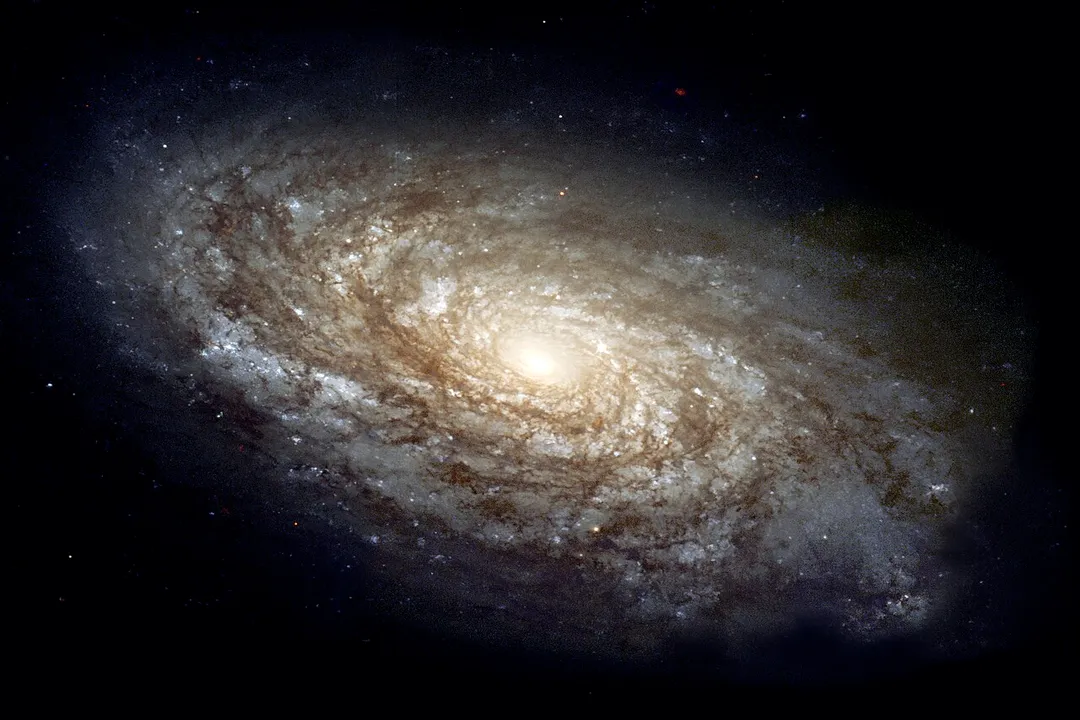
A galaxy is essentially a large-scale collection of stars and stellar remnants held together by their mutual gravitational attraction [^1.1][^1.3]. These systems are not merely random groupings; they are complex structures containing vast amounts of interstellar gas and dust, most of which are dominated by dark matter, which provides the gravitational scaffold for the visible components [^1.1][^1.3].
Galaxies vary significantly in size, shape, and composition. They range from dwarf galaxies, which may contain only a few million stars, to supergiant elliptical galaxies that house trillions of stars [^1.1]. Astronomers classify them primarily by their visual appearance, categorized into three main types:
- Spiral galaxies: These feature a rotating disk of stars and interstellar medium, often with a central bulge and prominent arms, much like our own Milky Way [^1.1][^1.3].
- Elliptical galaxies: These appear as ellipsoidal profiles with little visible structure, typically dominated by older stars and possessing relatively little interstellar gas [^1.1].
- Irregular galaxies: These lack a distinct, symmetrical shape, often resulting from gravitational interactions or collisions with other systems [^1.1][^1.3].
Most galaxies are not solitary. They are gravitationally organized into groups, clusters, and superclusters [^1.1]. Our own galaxy, the Milky Way, is part of the Local Group, a small cluster dominated by the Milky Way and the Andromeda Galaxy [^1.1].
# The Cosmos
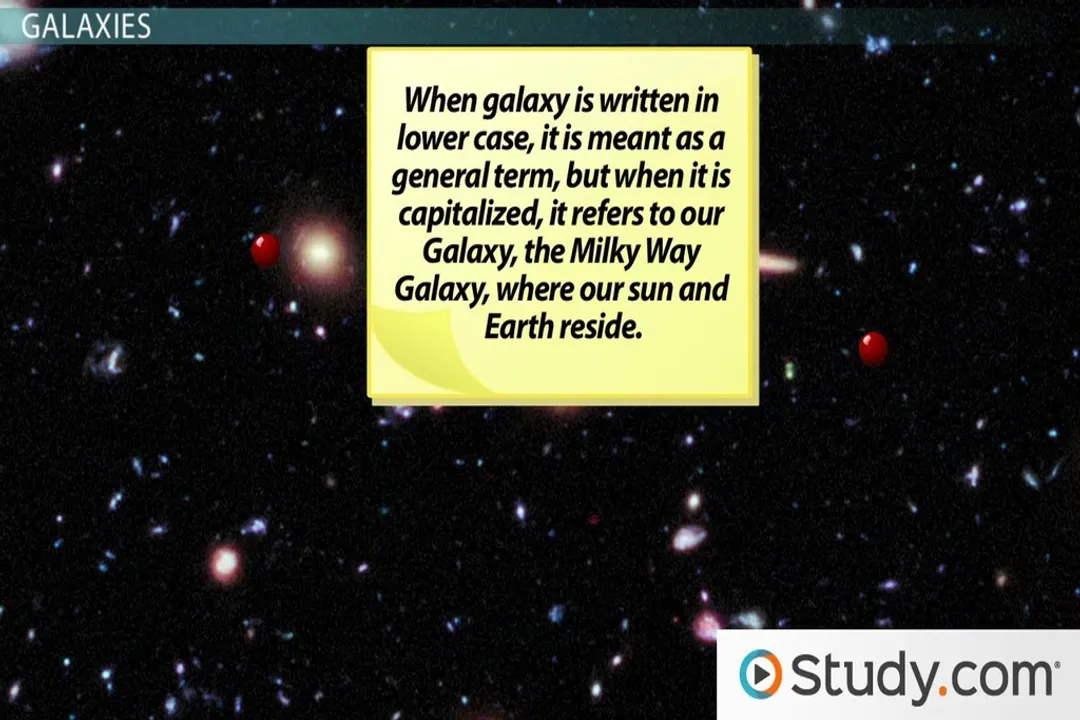
If a galaxy is a single, massive island of stars, the cosmos represents the entire ocean. The term "cosmos" refers to the entire physical universe considered as a unified whole [^1.2]. It is the sum total of all space, time, matter, and energy [^1.5]. While a galaxy has definite, albeit sprawling, boundaries defined by gravity, the cosmos has no such edge in any conventional sense [^1.5].
The cosmos includes billions upon billions of galaxies, each containing its own stars, planets, and nebulae [^1.4][^1.5]. When astronomers study the cosmos, they are looking at the largest possible scale of existence, including phenomena like dark energy—which makes up a large portion of the universe's total energy density—and the ongoing expansion of space itself [^1.5].
# Scale Comparisons
To grasp the difference between these concepts, it helps to visualize the hierarchy of space. Thinking about the scale helps eliminate the confusion between these terms.
| Structure | Description | Components |
|---|---|---|
| Solar System | A star and its gravitationally bound objects. | Sun, planets, moons, asteroids, comets. |
| Galaxy | A massive system of stars, gas, and dark matter. | Hundreds of billions of stars, planets, nebulae. |
| Cosmos | The totality of all existence. | All galaxies, all matter, all energy, space, and time. |
[^1.5]
If the entire cosmos were represented by the surface of Earth, the Milky Way Galaxy would be a single, small city on that planet. The Solar System, by comparison, would be smaller than a single grain of sand within that city. This illustration highlights that while we live within a galaxy, the galaxy itself is just a tiny building block of the much larger cosmos [^1.4][^1.5].
# Etymological Nuance
The origins of these words offer a clue to why they are often misunderstood. The word "galaxy" comes from the Greek galaxias, which means "milky," referring directly to the appearance of our own Milky Way in the night sky [^1.1]. Historically, before the early 20th century, astronomers believed the Milky Way was the entire universe [^1.3]. Because of this outdated belief, the terms were once used almost synonymously.
"Cosmos," on the other hand, comes from the Greek word kosmos, meaning "order," "harmony," or "the world" [^1.2]. While "galaxy" describes a specific observed structure, "cosmos" describes the nature of existence itself—the ordered state of everything that is. Understanding this distinction helps clarify why they cannot be the same; one is a name for a specific observation, and the other is a concept for the totality of reality.
# Practical Distinction
The most practical way to distinguish these is to consider your location. You are currently located on Earth, which orbits the Sun within our Solar System. That entire system is located in the Milky Way Galaxy. Beyond our galaxy lie hundreds of billions of other galaxies, all scattered throughout the vast expanse of the cosmos [^1.4][^1.5].
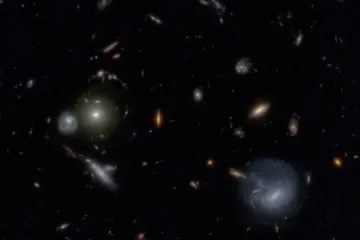
If you ever find yourself observing the night sky, realize that most of the stars you see with the naked eye are local residents of the Milky Way [^1.4]. To see the cosmos in its broader form, you would need to look toward deep-field images captured by telescopes, which reveal thousands of distinct galaxies in just a tiny patch of the sky—each one an entire "city" of stars similar to our own [^1.1][^1.4].
By recognizing that galaxies are the components and the cosmos is the collection, you gain a clearer picture of our place in the universe. We are not just in a galaxy; we are in a system that is one small part of an unimaginably vast, orderly whole [^1.5].
Related Questions
#Citations
Galaxy | COSMOS - Centre for Astrophysics and Supercomputing
Solar System, Galaxy, Universe: What's the Difference?
Cosmos | Stars, Galaxies, Nebulae | Britannica
Galaxy, Universe & Solar System | Overview & Differences - Study.com
Galaxy - Wikipedia