How to spot Jupiter in the sky tonight?
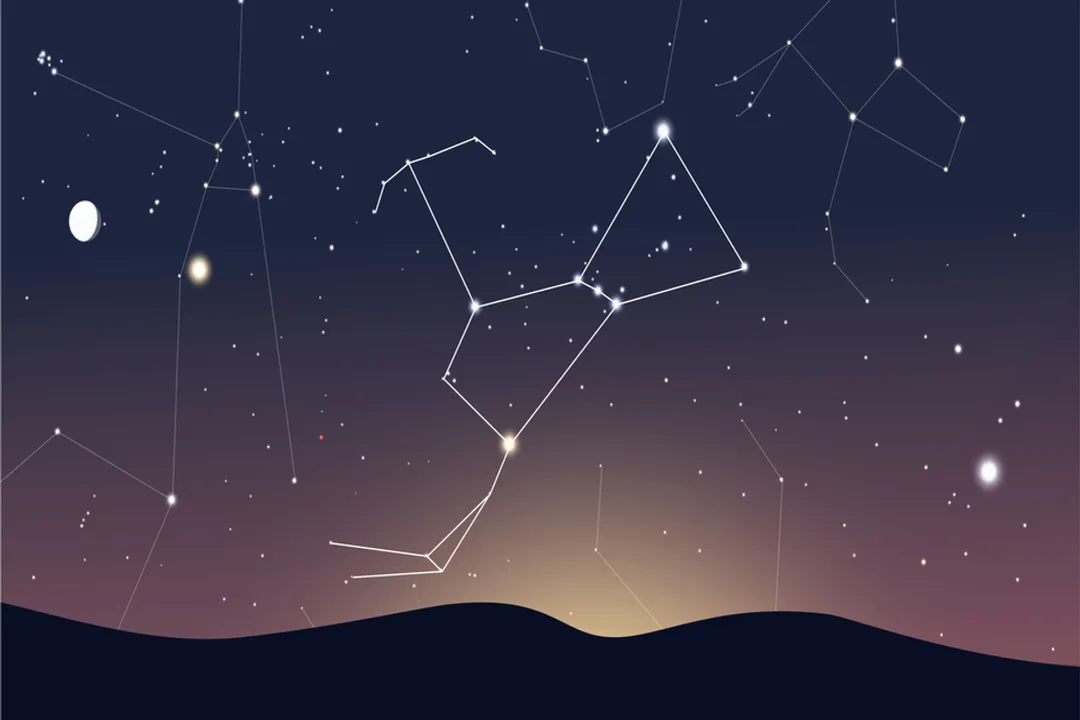
Gazing up at the night sky often leaves observers wondering which bright "star" is actually a distant world. Among the wanderers of our solar system, Jupiter frequently claims the title of the most brilliant object in the night sky, often outshining every star around it [6]. Because of its immense size and high reflectivity, spotting this gas giant requires nothing more than your own eyes, provided you know where to look and what to look for.
# Steady Light
The most fundamental way to distinguish a planet like Jupiter from the surrounding stars is by observing how the light behaves. Stars are so distant that they appear as mere pinpoints, making their light susceptible to atmospheric distortion. As air currents move across our line of sight, the starlight bends and refracts, causing it to twinkle or flicker [7].
Planets, however, are significantly closer to Earth and appear as tiny disks rather than points of light. While your eyes may not resolve that disk without aid, the light collected from a disk is more stable than the light from a point. Consequently, Jupiter typically shines with a steady, constant glow [7]. If you see a bright light that appears to be "dancing" or flickering rapidly, it is likely a star; if the light appears fixed and unmoving, you have likely found a planet.
# Visual Identification
Jupiter is often the third brightest object in the night sky, surpassed only by the Moon and Venus [6]. While Venus is incredibly bright, it is usually found close to the horizon near sunrise or sunset. Jupiter, by contrast, can appear at various altitudes throughout the night depending on the time of year and its current position in its orbit.
When identifying Jupiter, look for a creamy or off-white color. Unlike Mars, which often exhibits a distinct reddish hue, or Saturn, which can appear yellowish and dimmer, Jupiter presents a stark, brilliant white intensity [2]. Because it is a gas giant, it does not have the "twinkling" effect associated with distant stars, making it appear almost like a high-altitude airplane light that simply refuses to move across your field of vision [7].

# Digital Tools
Because the positions of the planets change constantly as they orbit the Sun, relying on memory is rarely effective. Fortunately, several digital resources provide real-time data on where Jupiter is located relative to your specific coordinates. Websites such as The Sky Live or Time and Date offer dedicated pages where you can input your location to see an interactive map of the night sky [1][3]. These tools effectively remove the guesswork, allowing you to see exactly which constellation Jupiter is currently occupying.
Many stargazers also use mobile applications that utilize the device’s internal gyroscope. By holding your phone up to the sky, these apps overlay a map of the planets and stars onto the actual view through your camera lens. This is perhaps the fastest way to confirm your sighting if you are unsure [10].
# Observing Equipment
While the naked eye is perfectly sufficient to spot Jupiter as a bright light, your experience changes significantly if you use even modest equipment. Using a pair of standard binoculars allows you to see the planet as a distinct disk rather than a point. In steady conditions, you may even be able to spot the four Galilean moons—Io, Europa, Ganymede, and Callisto—as tiny pinpricks of light arranged in a line on either side of the planet [6].
If you move to a telescope, the details become much more rewarding. A small backyard telescope can reveal the dark, horizontal bands of clouds that stripe the planet's atmosphere. While these features are subtle and require patience to observe, they confirm that you are viewing a massive, turbulent gas giant rather than a simple star [6].

# Practical Tips
To increase your chances of a successful sighting, consider the following methods. First, find a location with minimal light pollution. While Jupiter is bright enough to be seen from the middle of a city, the contrast is much better when you are away from streetlights [6].
Second, use the "fist method" to gauge altitude. If you are reading a guide that says a planet is "10 degrees above the horizon," you can measure this by holding your arm at full extension and holding your fist against the sky. The width of your fist is roughly 10 degrees. This helps you translate technical coordinates from a website into a physical point in the sky that you can easily track with your eyes [8].
Another frequent point of confusion involves airplanes. To rule them out, remember that airplanes move. If you are uncertain whether a light is Jupiter or a plane, observe it for three minutes. If the light maintains the same position relative to the surrounding stars, it is Jupiter. If it shifts even slightly, it is undoubtedly an aircraft [9].
# Timing Observations
The best time to view Jupiter is when it reaches "opposition," which occurs when Earth is directly between the Sun and the planet. During this time, Jupiter is at its closest point to Earth for the year, appearing at its brightest and rising as the Sun sets [2]. You do not need to wait for this exact date to see it, as the planet is visible for many months of the year, but the weeks surrounding opposition offer the clearest and most detailed views [8].
Before heading out, check the phase of the Moon. A bright, full moon can wash out the sky, making it harder to spot fainter objects, though Jupiter is usually bright enough to remain visible even in moonlight. Planning your observation for nights when the Moon is less prominent will provide a darker canvas, allowing you to see the planet’s steady glow with much greater clarity [10].
#Videos
How to Find Jupiter in the Night Sky - YouTube
Related Questions
#Citations
Where Is Jupiter? Location in the Sky and Visibility | TheSkyLive
Visible planets and night sky guide for April - EarthSky
Night Sky Tonight: Visible Planets at Your Location - Time and Date
How to Find Jupiter in the Night Sky - YouTube
Jupiter visible in the sky tonight - Facebook
Hello Jupiter! How to observe a gas giant - ESA
How To Identify Planets In The Night Sky - Adler Planetarium
How to find Jupiter in the night sky - Quora
Current Night Sky - Center for Astrophysics | Harvard & Smithsonian