How many years is a light-year?

It is easy to assume that a light-year measures time because the word "year" is right there in the name. This is a common misconception that stems from how we typically use time units to measure distance in our daily lives. If you ask a friend how far away a town is, they might say, "It is an hour away," equating the duration of a trip with the actual distance traveled. In astronomy, however, a light-year has nothing to do with time; it is strictly a unit of length used to measure the vast gaps between stars and galaxies. [1][3][6]
# Distance Measurement

A light-year is defined as the distance that light travels in a vacuum over the course of one Julian year, which is exactly 365.25 days. [1][7] Light moves at a constant speed of approximately 299,792 kilometers per second, or roughly 186,282 miles per second. [4][6] Because the speed of light is the fastest thing in the universe, it covers a significant amount of ground very quickly.
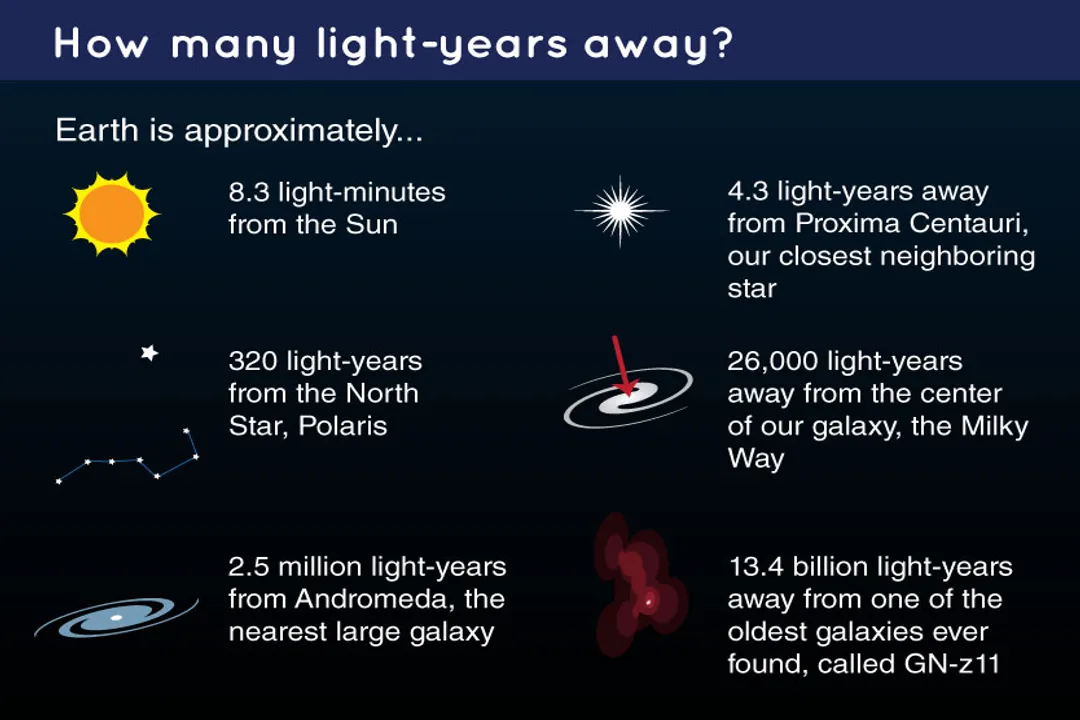
When you multiply the speed of light by the number of seconds in a year, you arrive at a massive figure. Specifically, a light-year is about 9.46 trillion kilometers or roughly 5.88 trillion miles. [1][9] Trying to use kilometers or miles to describe the distance to even the closest star—Proxima Centauri, which is about 4.2 light-years away—would require numbers so large they become almost meaningless to the human brain. Using light-years allows astronomers to condense these incomprehensible distances into smaller, more manageable figures. [3][6]
# Calculation Logic
To understand where this number comes from, you simply have to perform the math yourself. There are 60 seconds in a minute, 60 minutes in an hour, 24 hours in a day, and 365.25 days in a Julian year. [1] If you multiply these out (60 × 60 × 24 × 365.25), you get 31,557,600 seconds in a year. [4]
Once you have the total seconds, you multiply that by the speed of light. This simple calculation demonstrates the scale of the universe in a way that miles cannot. It essentially creates a standard ruler for space. [4][6]
| Time Unit | Calculation |
|---|---|
| Seconds in a year | 31,557,600 |
| Speed of light (km/s) | ~299,792 |
| Total distance (km) | ~9.46 Trillion |
This conversion is helpful because it anchors our perspective on how fast information and energy move across the cosmos. While light travels incredibly fast, the universe is so sprawling that even at that speed, it takes years, centuries, or even eons for light to bridge the gap between celestial objects. [3]
# Universal Scale
Space is big, and our typical methods of measurement fail us when we leave our neighborhood. Using kilometers is like trying to measure the distance between London and New York using only a ruler. It is technically possible, but it is not practical. For example, if we measured the distance to the center of our galaxy, the Milky Way, in miles, the number would be roughly 150,000,000,000,000,000 miles. [3][6] Reading and writing numbers with so many zeros is prone to error and offers little context.
Astronomers use other units besides light-years depending on the context. Within our own solar system, for instance, a light-year is actually too large to be convenient. Instead, scientists use the Astronomical Unit (AU), which is the distance from Earth to the Sun. One light-year is equal to about 63,241 AU. [1] When looking at even larger structures, like clusters of galaxies, astronomers often switch to parsecs. One parsec is approximately 3.26 light-years. [1] These different units are just tools for the job at hand; a light-year is the standard "ruler" for the interstellar neighborhood. [6]
# Light Lag
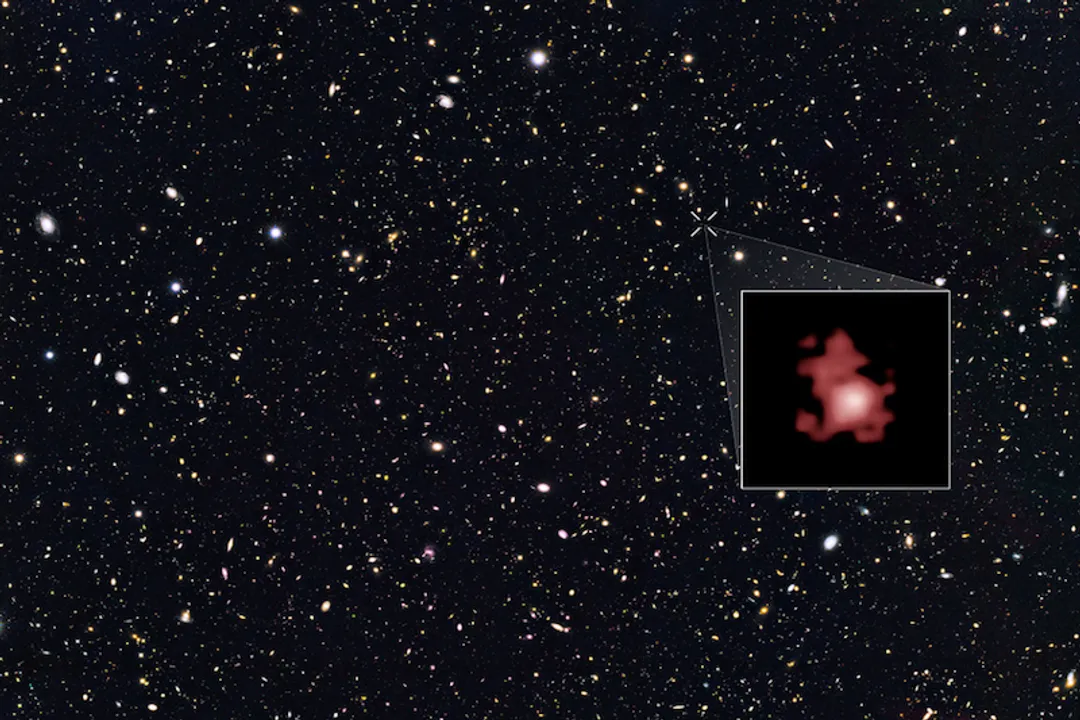
The fact that light takes time to travel creates a unique effect: whenever you look at a distant star, you are technically looking back in time. [2][9] When you see the light from a star that is 10 light-years away, you are seeing that star as it appeared 10 years ago. The light took 10 years to reach your eyes. [7]
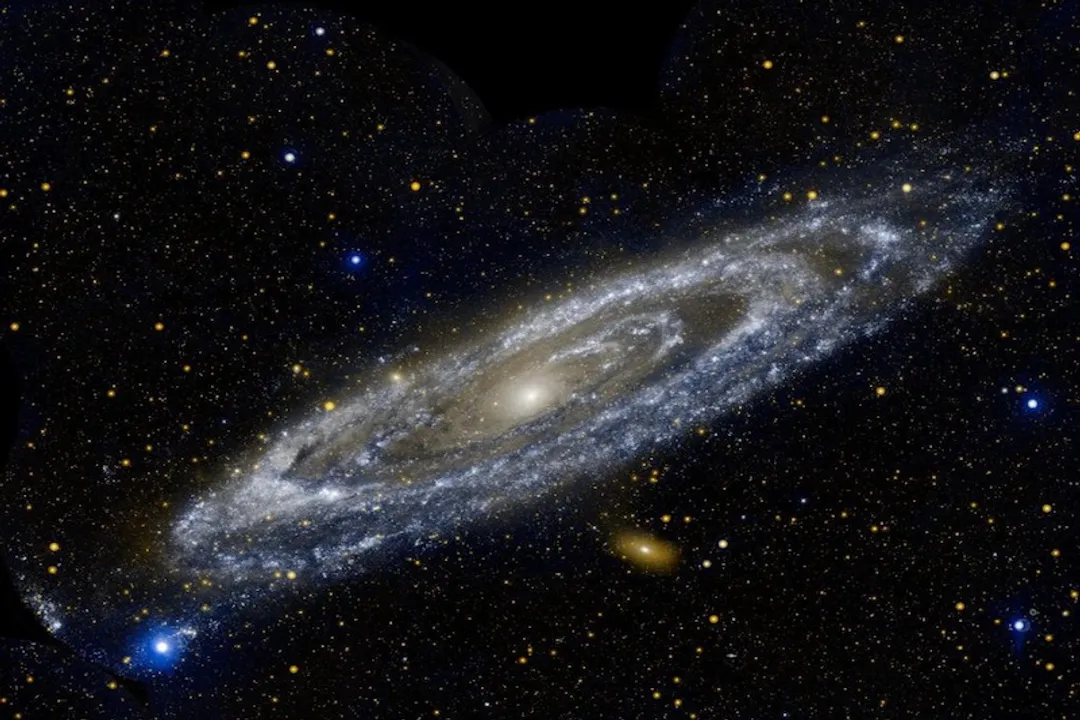
This concept is often confused with time dilation or the idea that light-years measure the time it takes to travel. If you could travel at the speed of light—which is physically impossible for objects with mass—a journey to the Andromeda Galaxy would take 2.5 million years. [6] However, the unit itself does not measure the duration of your trip; it measures the length of the road you are traveling on. The confusion usually arises because people conflate the time it takes to traverse the distance with the distance itself. [2][10]

# Vacuum Conditions
One detail that is often overlooked is that the definition of a light-year specifies that the light is traveling in a vacuum. [1] Light behaves differently when it moves through materials like water, glass, or even Earth's atmosphere. It slows down slightly because it interacts with the particles in those substances. In the near-empty space between stars, there is almost nothing to interfere with the light, so it maintains its maximum possible speed. [7]
If you tried to calculate a "light-year" while the light was passing through a thick medium, the distance would technically be shorter. This distinction is vital for high-precision scientific measurements, even if for general purposes, we treat the speed of light as a constant, unwavering number. [6]
# Mental Models
If you are trying to wrap your head around these scales, consider the "Earth-Moon" benchmark. Light travels from the Moon to Earth in just about 1.3 seconds. [6] Now, compare that to the Sun, which takes about 8 minutes and 20 seconds for its light to reach us. These are tiny, manageable snippets of time.
When you look at a light-year, think of it as a bridge. If you were driving a car at 100 kilometers per hour, it would take you roughly 10.8 million years to travel one light-year. This analogy helps strip away the abstract nature of the numbers. It highlights that while light-years are useful units for measuring the distances between stars, they represent gaps that are essentially impassable by any technology currently available to humanity. [3][9]
It is helpful to remember that scientists do not "calculate" a light-year in the same way they might calculate a tax return. It is a defined constant. Just as 1,000 meters makes a kilometer, the specific speed of light over a specific duration of time creates the length of a light-year. It is a fundamental definition, not a variable that changes based on where you are in the universe. [4][7]
If you find yourself wondering why astronomers do not just stick to one unit, it is because different scales require different perspectives. Using a light-year to measure the distance to the Moon would result in a tiny decimal point (0.00000004 light-years), which is just as annoying to read as a massive number of kilometers. Astronomy is a science of scale, and units like the light-year provide the right lens for the right distance. [6]
#Videos
How Many Years are in a Light Year? | The Speed of Light - YouTube
Related Questions
#Citations
Light-year - Wikipedia
ELI5: how many earth years are in a light year? - Reddit
What is a light-year? - NASA Science
Light Year Conversion - Omni Calculator
How Many Years are in a Light Year? | The Speed of Light - YouTube
What is a lightyear? | BBC Sky at Night Magazine
What is a light-year? - Cool Cosmos - Caltech
What Is a Light-Year? | NASA Space Place – NASA Science for Kids
1 light year is equal to how many years of the Earth? - Quora