How many Soyuz launches have failed?
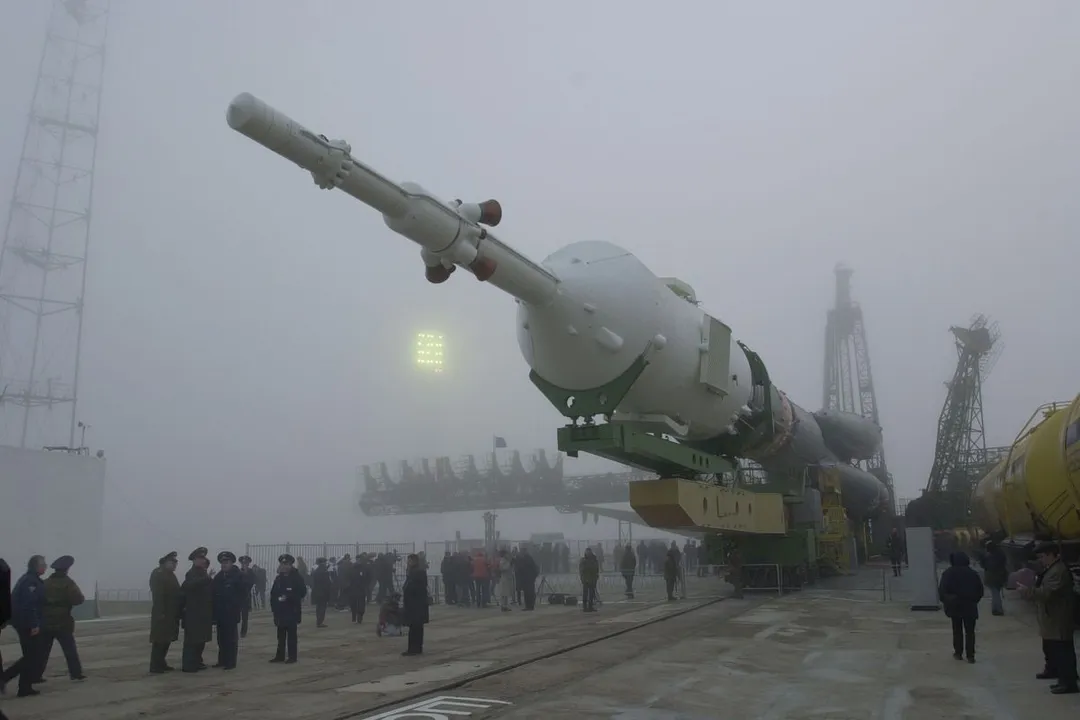
The Soyuz rocket family stands as arguably the most flown operational rocket in history, a testament to its enduring design and operational ubiquity across decades of spaceflight endeavors. [5][6] Given such an extensive operational history, the question naturally arises regarding its reliability record: how many times has a Soyuz launch ultimately failed to deliver its payload to the intended orbit or destination? Assessing this requires looking at the massive scope of its entire flight history, as well as examining specific, notable failures that have punctuated its otherwise strong performance record. [5]
# Total Record
To grasp the scale of Soyuz reliability, one must first look at the sheer volume of flights it has undertaken. As the backbone of Russian and later Roscosmos human spaceflight and a major provider of commercial launch services, the total number of missions is staggering. [5] Considering the entire lineage of the Soyuz rocket, which has seen numerous modifications and variants over the decades, the success rate hovers remarkably high. Across its entire history, the Soyuz rocket system has achieved a success rate generally cited in the high nineties, meaning that the vast majority of its thousands of missions have been successful. [5]
It is important to note that the success rate calculation often depends on the exact cut-off date and the specific variants included in the count, as the rocket has evolved significantly from its R-7 ICBM roots. [5] Nevertheless, for a vehicle that has been in continuous service for so long, maintaining reliability above 97% across thousands of launches places it among the most dependable heavy-lift vehicles ever flown. [5]
# Noteworthy Incidents
While the overall success percentage is high, failures do occur, and the nature of the failure—whether it involves a cargo mission or a crewed flight—carries vastly different implications. [3][8] The Soyuz vehicle has experienced failures across its various roles, including missions for both the Russian military and commercial satellite deployments. [2]
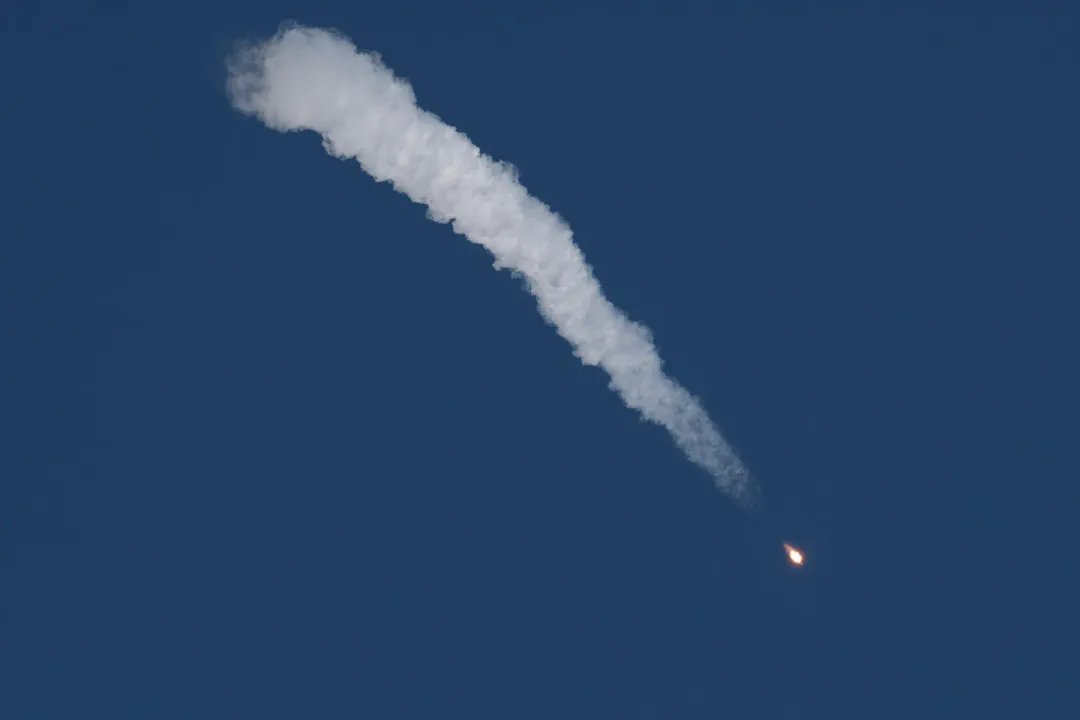
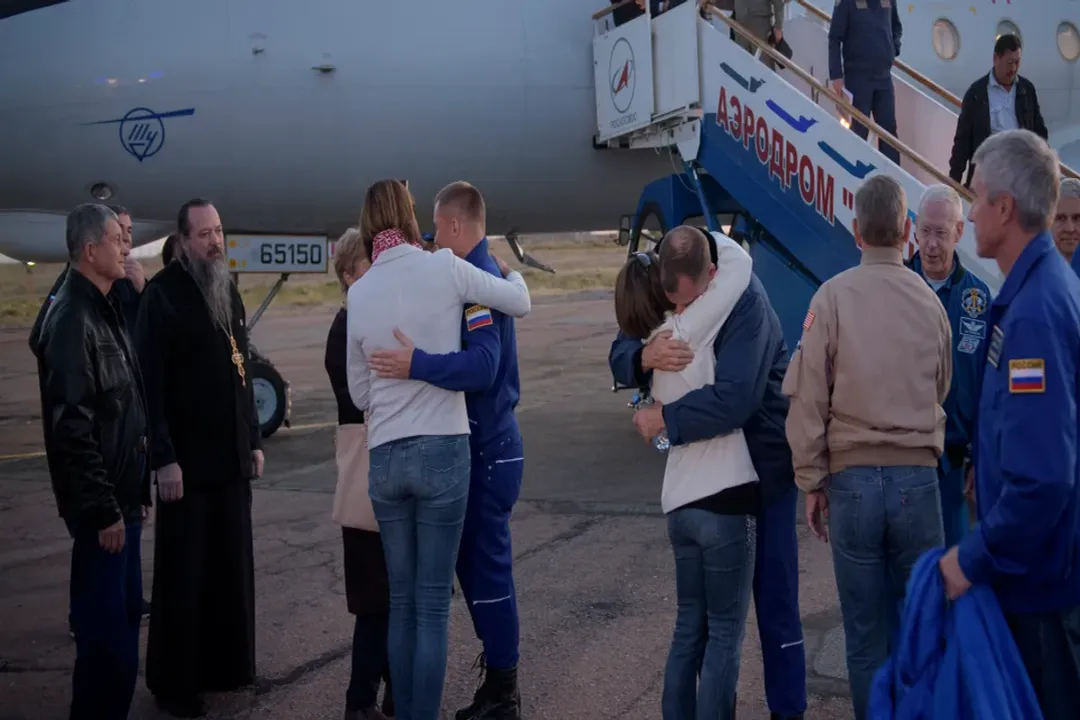
One of the most high-profile incidents in recent memory involved a crewed mission failure in October 2018. [8] This event involved the Soyuz MS-10 spacecraft carrying NASA astronaut Nick Hague and Roscosmos cosmonaut Alexey Ovchinin. [8] During the ascent phase, approximately two minutes into the flight, a problem occurred with the separation of one of the four strap-on boosters attached to the core stage. [3] This anomaly resulted in a pressure spike and caused the crew to execute an emergency abort sequence. [3]
The success of the emergency system during this launch failure illustrates a critical aspect of the Soyuz design philosophy. Although the rocket itself failed to place the crew into orbit, the crew escape system functioned exactly as designed, activating the launch abort sequence to pull the capsule away from the malfunctioning rocket core. [4] The capsule then performed an emergency landing in Kazakhstan. [8] The crew survived the hard landing, a feat that underscores the built-in safety margins specifically engineered for human-rated variants of the launcher. [4] A successful emergency descent following an in-flight failure is operationally distinct from a successful launch, yet it is often a crucial data point for assessing astronaut safety. [4]
Another failure occurred more recently in the context of commercial launches. For instance, records tracking Russian launch failures show an incident in July 2019 involving a Soyuz-2.1a rocket carrying a military payload which resulted in a launch failure. [2] Such failures, though rare compared to the total flight count, necessitate thorough investigation by Russian space authorities before subsequent launches resume. [3]
# Booster Separation
The mechanism behind a number of failures points back to the physical architecture of the Soyuz rocket itself. The vehicle utilizes a cluster configuration, employing four strap-on boosters that fire concurrently with the core stage engine at liftoff. [3] These boosters are designed to separate from the core stage around 118 seconds into the flight. [3]
If one of these strap-on engines fails to ignite correctly, or if the separation sequence malfunctions—as was the case in the 2018 crewed failure—the integrity of the entire ascent profile is compromised. [3] The mechanism involves explosive bolts and pneumatic pushers to separate the boosters cleanly. [4] When these complex, synchronized mechanical actions go awry, the result is almost always a mission loss, whether it's a satellite tumbling out of control or, in the worst-case scenario, an immediate crew abort. [4] Analyzing the historical list of failures shows that issues related to these primary separation events or engine ignition sequences represent recurrent, albeit infrequent, points of vulnerability in the design. [2]
# Recent Reliability
Focusing on the more modern operational period can give a clearer picture of current performance trends. By looking at a defined period, such as the list tracking Russian launch failures from late 2010 through early 2019, we can see the frequency of outright mission loss. [2] Within that specific timeframe, there were several documented failures involving various Russian launch vehicles, including a Soyuz-U failure in 2013 carrying a Progress cargo ship and the aforementioned 2018 Soyuz MS-10 crew failure. [2]
When comparing the failures listed in that specific recent window against the total Soyuz launches recorded globally, [5] it becomes apparent that the rate of catastrophic failure is extremely low, even in the 21st century. For example, if one takes the total launch count spanning many decades [5] and overlays the relatively small handful of actual mission losses (where the payload was destroyed or placed into an unusable orbit), the overall success rate remains exceptionally high. This modern data confirms that, statistically speaking, the probability of a Soyuz launch succeeding is far greater than the probability of it failing. [2][5] The engineering legacy of the R-7 design has proven remarkably adaptable to modern demands, only occasionally succumbing to unforeseen mechanical interactions during separation or staging. [3]
If we estimate the total number of Soyuz launches to be around 2,000 across all variants since its inception—a number hinted at by its record as the most launched rocket [6]—and cross-reference this with the documented failures across various historical records, the actual number of total catastrophic failures (where the payload/crew was lost) likely remains under 50 across the entire history. [5] This means that over 97.5% of all launches have been successful, providing a very solid track record for commercial and crew transport contracts. [5]
The enduring reliance on the Soyuz for transporting astronauts to the International Space Station, even while newer vehicles were developed, speaks volumes about the trust placed in its fundamental architecture, despite the occasional, highly publicized setback. [8]
Related Questions
#Citations
The success rate of Russian space launches in the last four years ...
[PDF] list of russian space launch failures since dec. 2010
Soyuz rocket failure: What went wrong, and what happens next
A Russian Soyuz Rocket Launch Failed, But Its Abort Safety System ...
List of Soyuz missions - Wikipedia
Soyuz is the most frequently launched operational rocket in ... - Quora
Breaking News | Soyuz launch a failure - Spaceflight Now
The Good News Buried in Thursday's Soyuz Rocket Failure | TIME
Shuttle vs. Soyuz reliability - NASA Spaceflight Forum