How many radiation belts does Earth have?
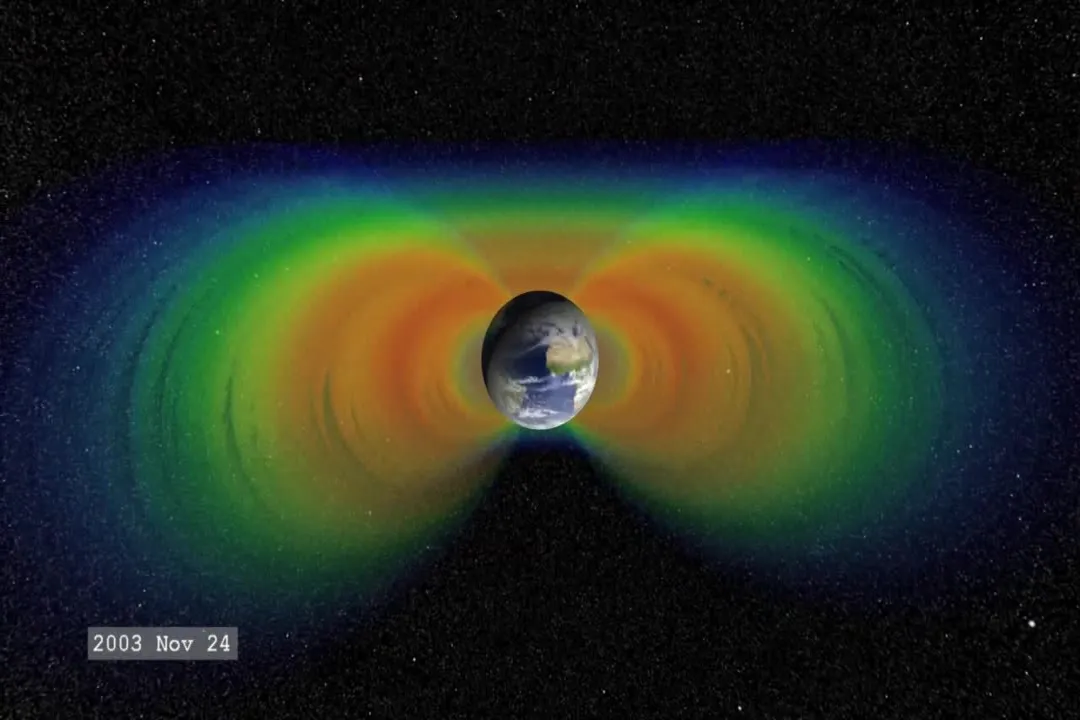
Earth sits within a protective magnetic bubble known as the magnetosphere, which shields our planet from the constant barrage of solar wind and cosmic rays. Within this magnetosphere, particles become trapped, creating distinct zones of energetic radiation. [2][4] For decades, the standard scientific model identified two primary radiation belts, known as the Van Allen belts. However, characterizing the exact number of these belts is not as simple as counting a fixed, permanent feature, because the magnetosphere is a highly volatile environment. [5] While textbooks often describe a dual-belt structure, the reality is a dynamic system that can shift, expand, contract, or even briefly gain a temporary third ring depending on space weather conditions. [3][8]
# Magnetic zones
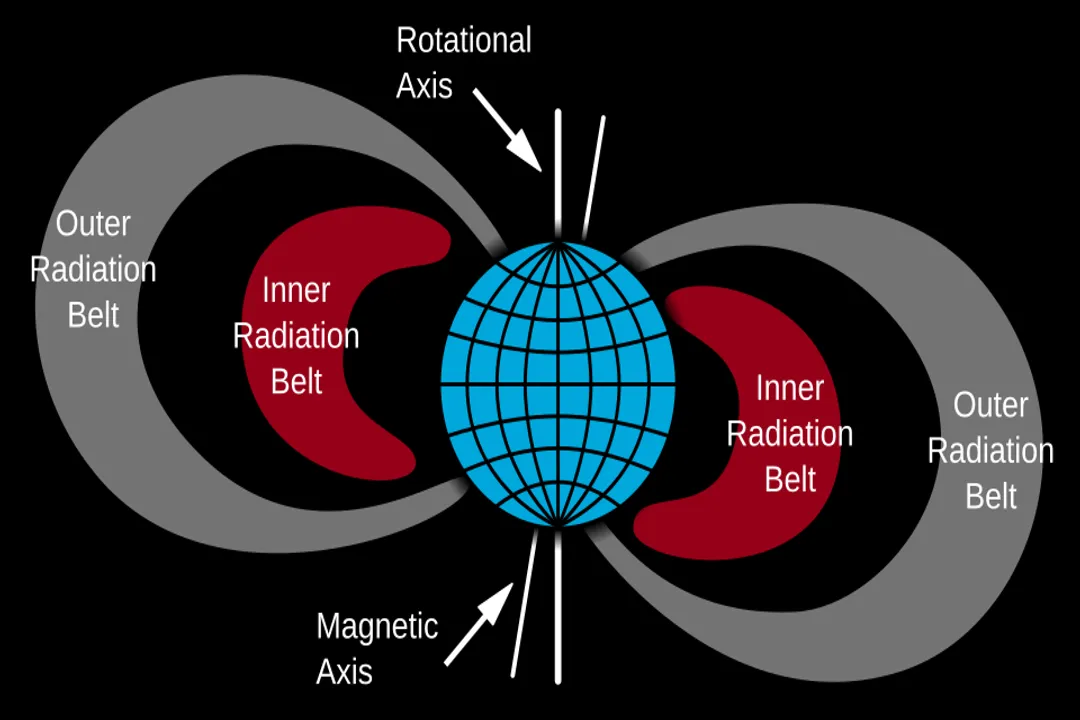
The classic definition of the Van Allen radiation belts describes two concentric, donut-shaped rings circling Earth. [1][6] These zones were among the first discoveries of the space age, identified by James Van Allen using data from the Explorer 1 satellite in 1958. [7] The inner belt is primarily composed of high-energy protons and some electrons. It sits relatively close to Earth, usually starting at an altitude of about 1,000 kilometers and extending up to roughly 12,000 kilometers. [1][2] This inner region is notably more stable than the outer regions, as the high-energy protons do not fluctuate as wildly as the electron populations further out. [7][10]
The outer belt, located beyond the inner belt, is significantly larger and primarily populated by high-energy electrons. This zone typically extends from about 13,000 kilometers to 60,000 kilometers above the surface. [1] Unlike the proton-heavy inner belt, the outer belt is exceptionally dynamic. Its shape, density, and size are dictated by solar activity. When the Sun ejects plasma during solar storms, these particles interact with Earth’s magnetic field, causing the outer belt to swell or diminish rapidly. [4][5] Because of this sensitivity to solar winds, the outer belt can change its intensity by orders of magnitude within hours, making it a critical area of study for satellite operators. [10]
# Belt dynamics
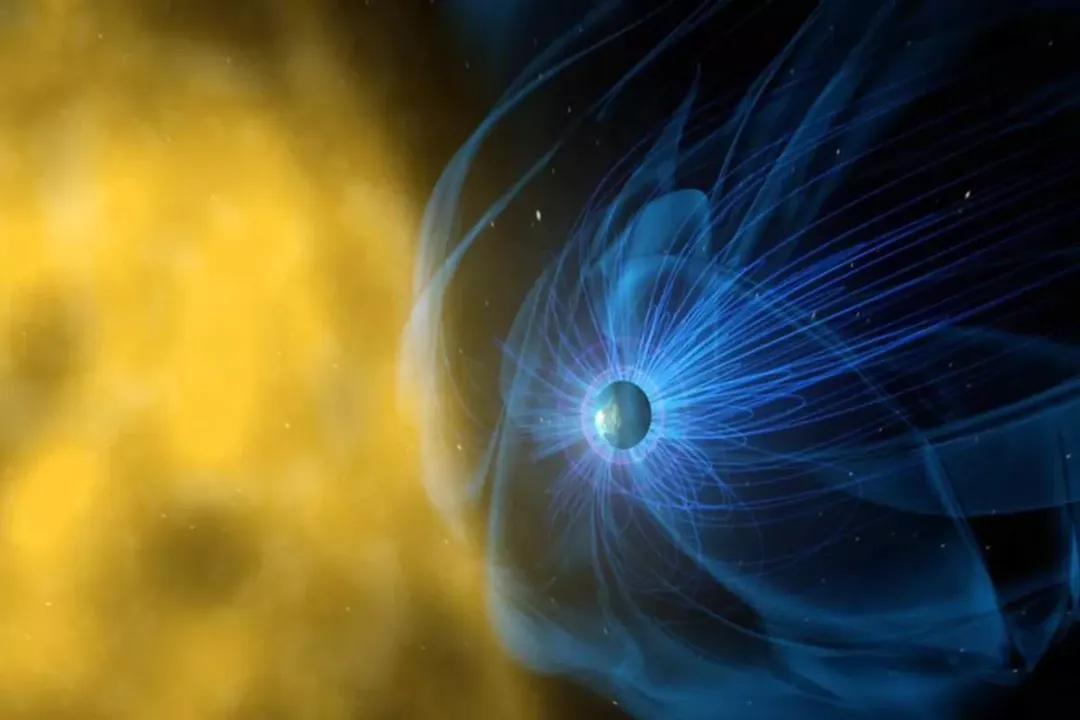
The structure of these belts is not a fixed, unchanging entity. The space between the inner and outer belts is often called the "slot region," which is generally empty of high-energy electrons. [9] However, this empty space is not permanent. During intense solar events, the slot region can fill with radiation, effectively merging the two belts or changing their boundaries entirely. [5][10] Scientists observe these changes through the lens of wave-particle interactions. Electromagnetic waves in space can accelerate electrons to nearly the speed of light, pushing them into the outer belt, or scatter them, causing them to rain down into the atmosphere, which is a process known as precipitation. [5][9]
Understanding why these belts fluctuate requires looking at the magnetosphere as a fluid system rather than a solid container. The plasmasphere, a region of cold, dense plasma near Earth, plays a major role in regulating the electron population in the outer belt. [10] When the plasmasphere expands, it can physically block the acceleration of electrons, keeping the outer belt weaker. When the plasmasphere is compressed by solar storms, it allows for more energetic activity, which can lead to rapid "killer electron" events that pose significant risks to spacecraft orbiting in those regions. [2][4]
# Third ring
The question of whether Earth has more than two belts gained significant attention in 2012 when researchers analyzing data from the Van Allen Probes identified a transient third radiation belt. [3] This phenomenon was unexpected. While the typical inner and outer structure persisted for most of the mission, this third, narrower ring appeared for about four weeks during a period of intense solar activity. [3][9] This temporary structure existed between the traditional inner and outer belts, effectively creating a "storage ring" for high-energy electrons. [3]
This discovery challenged the long-standing assumption that the two-belt model was the only standard configuration. Observations showed that this third ring was exceptionally stable during its existence, distinct from the outer belt which remained turbulent and susceptible to solar-driven changes. [3][8] It vanished eventually, likely due to a shockwave from the Sun that swept through the magnetosphere, clearing the particles away. [3] Recent studies, including observations from 2024, suggest that these transient rings are not merely statistical anomalies but recurring features during specific types of solar storms. [8] They serve as a reminder that the magnetosphere is responsive, capable of reorganizing its particle population in response to external pressures from space weather.
# Analyzing belt characteristics
To better understand why researchers distinguish between these zones, it helps to break down the composition and behavior of each belt type. The following data highlights the differences in particle behavior and stability found within Earth's magnetospheric environment.
| Belt Type | Primary Component | Stability | Typical Altitude |
|---|---|---|---|
| Inner Belt | Protons | Highly Stable | 1,000 - 12,000 km |
| Outer Belt | Electrons | Highly Dynamic | 13,000 - 60,000 km |
| Transient Belt | Electrons | Temporarily Stable | Between Inner/Outer |
This table clarifies that while Earth technically has two primary radiation belts, the transient third belt acts as a distinct physical phenomenon when conditions align. [3][8] The stability of the inner belt is attributed to the fact that its protons are much heavier and harder to move than the lightweight electrons that populate the outer and transient zones.
# Space weather
The variability of these belts is the primary driver of "space weather" impacts on technology. Because we rely on satellites for GPS, telecommunications, and weather forecasting, the behavior of these belts has direct consequences for our daily lives. [4] High-energy electrons in the outer belt can penetrate satellite shielding, causing "deep dielectric charging." This happens when electrons build up inside electronic components or cabling, leading to sudden electrical discharges that can fry sensitive circuitry. [2]
Satellite operators must account for these radiation environments when designing spacecraft. Shielding is essential, but it is not a perfect solution. Heavy shielding increases the weight and cost of a satellite, so engineers often rely on "radiation hardening"—designing electronics to withstand intense particle bombardment—and operational strategies, such as placing satellites in orbits that avoid the most intense areas of the belts, such as the South Atlantic Anomaly, where the inner belt dips closer to the Earth's surface. [1][2]
Predicting when the outer belt will swell or when a third belt will appear is a significant objective for researchers at agencies like NOAA and NASA. [4][9] By monitoring solar wind speed, magnetic field direction, and plasma density, scientists can issue warnings for satellite operators to enter "safe mode" during periods of high radiation. [4] The evolution of our understanding—from the initial discovery of two rings to the recognition of transient third belts and complex slot-region dynamics—has been vital for the security of modern space-based infrastructure. The belts are not just static bands of radiation; they are a lively, shifting part of the planetary environment that directly impacts human technological progress. [5][8]
#Videos
Discovery - Earth Has 3rd Radiation Belt | Video - YouTube
Related Questions
#Citations
Van Allen radiation belt - Wikipedia
What are the Van Allen Belts and why do they matter? - NASA Science
How did a third radiation belt appear in the Earth's upper atmosphere?
Radiation Belts | NOAA / NWS Space Weather Prediction Center
Characteristics, Occurrence, and Decay Rates of Remnant Belts ...
Discovery - Earth Has 3rd Radiation Belt | Video - YouTube
[PDF] Radiation Belts of the Earth - Space Physics Research
WVU physicist explains the arrival of new radiation ring in Earth's ...
Cutaway View of the Earth's Radiation Belts
About the Radiation Belts | ECT on RBSP