How does the Coriolis effect impact an astronaut walking toward the center of a rotating spacecraft?
Answer
The astronaut feels lighter.
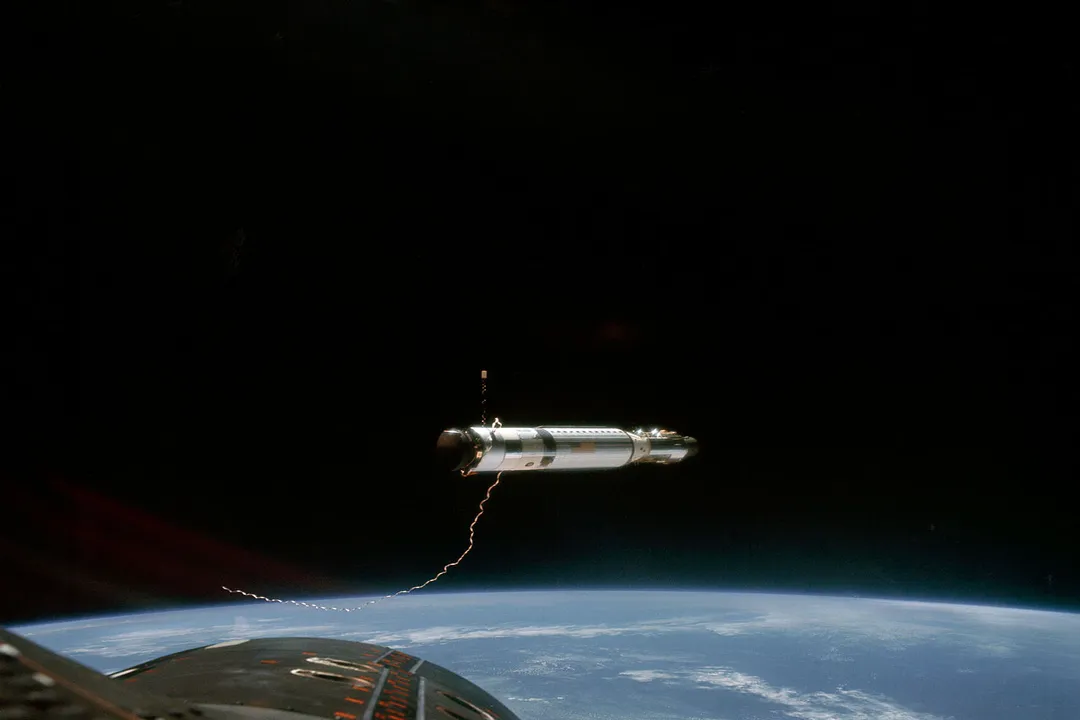
In a rotating environment, the perceived gravity is a result of centrifugal force, which changes relative to the distance from the center of rotation. When a crew member moves toward the center of the rotating spacecraft, they are moving into a zone of lower effective gravitational force, making them feel physically lighter. Conversely, moving with the direction of rotation increases the perceived force, making them feel heavier. These fluctuations create phantom pressures and nausea, necessitating designs that account for these vestibular disturbances.
#Videos
Artificial Gravity In Space - How To Create It? - YouTube
Can We Create Artificial Gravity? - YouTube
Related Questions
Why is it physically impossible to generate true gravity using mass on a spacecraft?What rotation rate is considered the upper limit for long-term comfort for humans on a spinning space station?What specific structural radius is required to achieve 1g while maintaining a comfortable 2 RPM rotation?What is the primary drawback of using constant linear acceleration to simulate gravity?How does the Coriolis effect impact an astronaut walking toward the center of a rotating spacecraft?What is the main benefit of using a tethered system for a rotating space station?What is the intended purpose of the Human-Powered Centrifuge for astronauts?Which force pushes occupants toward the outer walls of a spinning spaceship?What physiological decline in space missions necessitates artificial gravity solutions?What engineering concept is required to manage the vestibular system's response to artificial gravity?