How to create artificial gravity on a spaceship?
Humans evolved under the constant pull of Earth’s gravity, an influence that shapes everything from how our blood circulates to how our muscles and bones maintain density. In the weightless environment of space, these biological systems begin to decline, leading to issues like muscle atrophy and vision changes during long-duration missions. [3] To maintain human health during interplanetary travel, scientists and engineers propose creating a simulated gravity environment. This is not about generating a localized gravitational field through mass—which is physically impossible on a spacecraft scale—but rather mimicking the effects of gravity through acceleration. [3][5]
# Rotation Systems
The most practical and commonly discussed method for producing artificial gravity involves rotation. When a spaceship or a space station spins, it creates a centrifugal force that pushes occupants toward the outer walls. [3] This force acts as a substitute for gravity, pulling objects and people toward the "floor" of the rotating section. [5]
In this setup, the structure acts like a centrifuge. The force felt by the crew is determined by the radius of the structure and the speed of rotation. [9] The physics are straightforward: the further an object is from the center of rotation, the greater the force it experiences for a given rotation speed. This is why many conceptual designs for space stations resemble giant rings or rotating cylinders rather than small, cramped capsules. [4]
Engineers must carefully balance the rotation rate. If a station spins too quickly, it creates a significant "Coriolis effect," which can cause severe motion sickness and disorientation in humans. [4] The human inner ear is highly sensitive to rotation. Research suggests that a rotation rate of about two revolutions per minute (RPM) is the upper limit for long-term comfort for most people. [5]
# Design Constraints

To create a gravity-like force of 9.8 meters per second squared (1g) while keeping the rotation rate below the 2 RPM comfort threshold, the radius of the rotating section must be quite large. Mathematical analysis shows that to achieve 1g at a slow, comfortable rotation speed, the structure needs a radius of roughly 220 to 230 meters. [9]
This size requirement creates a massive engineering challenge. Building a rigid structure that spans nearly half a kilometer in diameter requires materials and launch capabilities that exceed current heavy-lift rockets. [4] To mitigate this, some designs propose tethered systems where two modules spin around a central hub connected by cables. This drastically reduces the structural mass compared to a solid rotating ring, although it introduces complexities regarding cable stability and docking. [3]
| Method | Mechanism | Primary Constraint |
|---|---|---|
| Rotation | Centrifugal Force | Structural size (Radius) |
| Acceleration | Linear Thrust | Fuel/Propellant mass |

# Acceleration Methods
Another way to simulate gravity is through constant linear acceleration. [3] If a spaceship uses its engines to maintain a steady acceleration of 9.8 meters per second squared, the occupants inside would feel pushed against the back wall of the ship, effectively experiencing a floor. [3] This method would be the most intuitive for humans, as it mimics the sensation of weight we feel on Earth without the side effects of rotation, such as the Coriolis effect or the need for a massive turning radius. [4]
The fundamental issue with this approach is the fuel requirement. According to the Tsiolkovsky rocket equation, maintaining constant acceleration for a long journey requires an astronomical amount of propellant. [4] With current chemical rockets, the fuel mass would be so high that the ship would have virtually no payload capacity for cargo or crew. Future propulsion systems, such as nuclear thermal rockets or advanced ion drives, would need to reach efficiencies far beyond current technology to make constant-acceleration travel a reality. [5]
# Biological Tradeoffs
Beyond the physical mechanics, the human element remains a significant hurdle. Even if a rotation system provides the correct amount of "weight," the environment is not identical to Earth. For instance, the Coriolis force creates a phantom pressure that changes depending on how a person moves. If an astronaut walks toward the center of a rotating station, they will feel lighter; if they walk in the direction of the rotation, they will feel heavier. [4]
These fluctuations can confuse the vestibular system, leading to nausea. One insight into managing this is the design of the interior space. Instead of traditional rectangular rooms, designers might need to prioritize radial layouts where the "floor" is curved along the path of rotation. Additionally, training astronauts to move slowly and avoid rapid head movements—similar to how divers train to avoid decompression sickness—could be essential for adaptation. [1][4]
# Engineering Solutions
The concept of artificial gravity has led to creative engineering solutions. For smaller, short-term applications, NASA has experimented with short-radius centrifuges, such as the Human-Powered Centrifuge. [2] These are not intended for the entire ship but rather for individual crew members to exercise in, simulating gravity for a short duration to counteract the physiological degradation of microgravity. [2]
This approach avoids the massive cost of spinning the entire vessel while still providing the medical benefits of gravitational loading. It suggests that the future of space travel might rely on a hybrid strategy: a microgravity environment for general living, combined with a daily "gravity treatment" inside a compact centrifuge to maintain bone density and cardiovascular function. [2][7]
# Gravity Generation
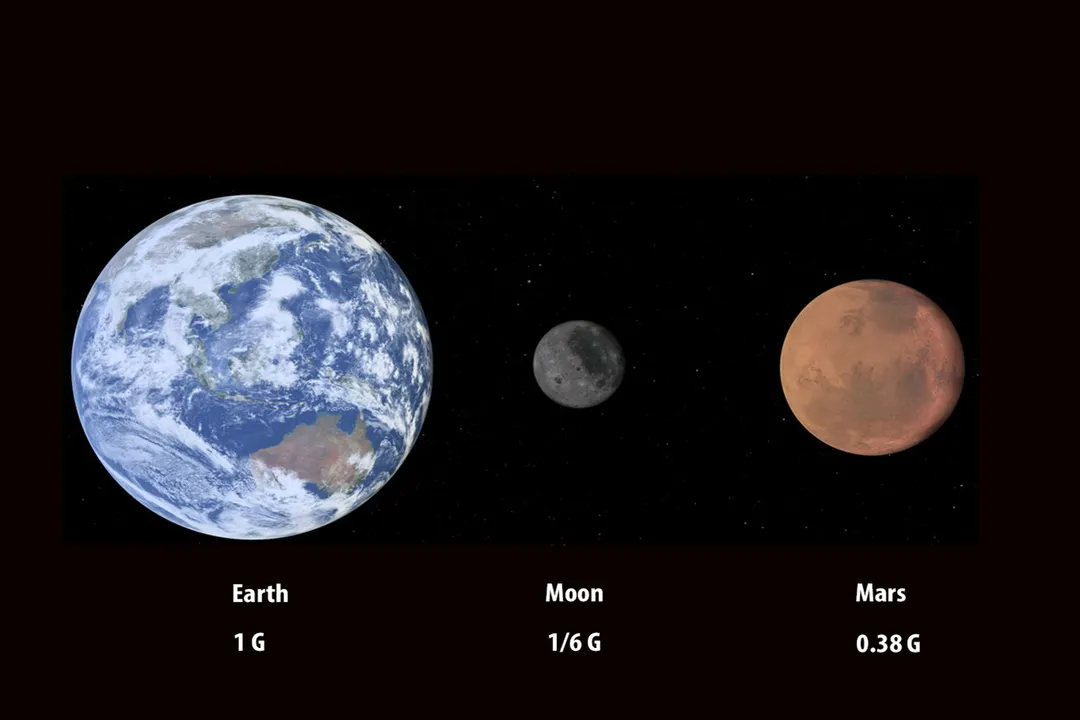
It is important to clarify that there is no currently viable technology to create "true" gravity—the type caused by mass—on a ship. Some science fiction concepts involve exotic matter or manipulating the Higgs field, but these are purely theoretical and lack a basis in observable physics. [3] Gravity on Earth is a product of the planet’s immense mass. To generate 1g of gravity using mass, you would need a small moon or an asteroid, which is incompatible with spacecraft propulsion. [5]
Therefore, the focus remains entirely on simulation. We are essentially trying to fool the body into thinking it is in a gravitational field. Whether that is achieved through the constant, energy-intensive thrust of a rocket or the continuous spin of a large ring, the goal is to create a reliable, consistent force. As we look toward missions to Mars and beyond, solving this challenge is less about discovering new physics and more about mastering the scale and structural integrity of our vessels. [4][10]
#Videos
Artificial Gravity In Space - How To Create It? - YouTube
Can We Create Artificial Gravity? - YouTube
Related Questions
#Citations
How do we produce artificial gravity in spacecrafts : r/AskPhysics
Spacecraft with Artificial Gravity Modules | T2 Portal
Artificial gravity - Wikipedia
3 Ways to Make Artificial Gravity in Space, Including a 'Holy Grail ...
How do space ships make artificial gravity?
Artificial Gravity In Space - How To Create It? - YouTube
Is it possible to create artificial gravity on a space station? - Quora
Artificial Gravity | The Engines of Our Ingenuity - University of Houston
[PDF] Exploring Artificial gravity - NASA Space Math