Does Saturn have an iron core?
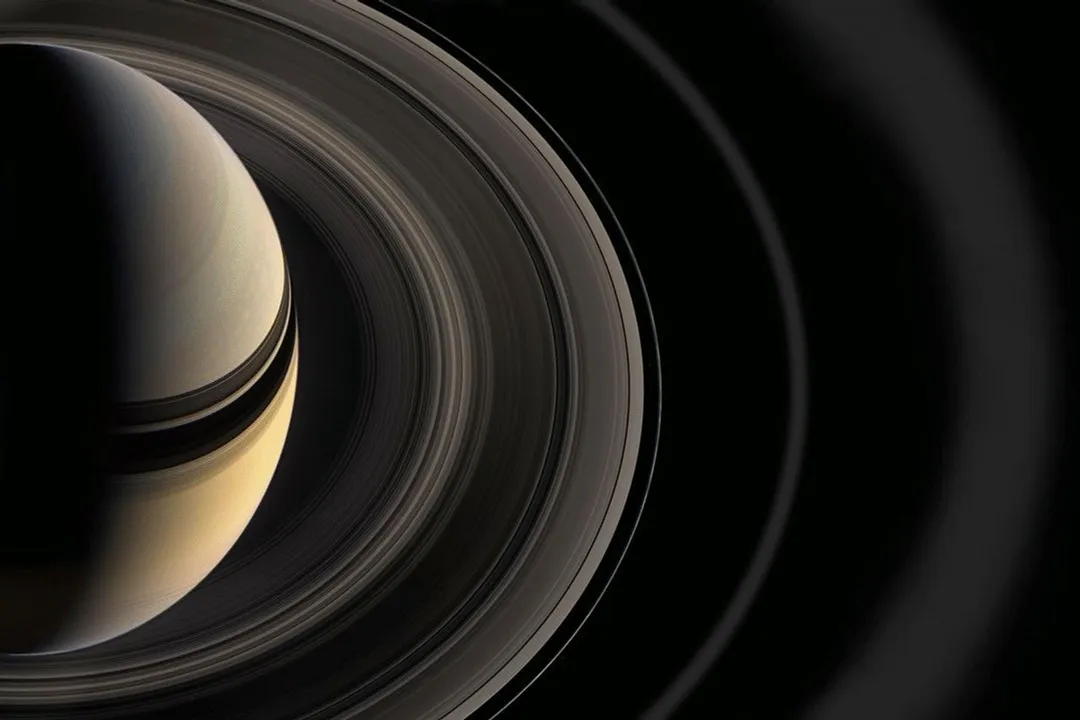
The question of what lies at the very center of the Solar System’s second-largest planet is one that astronomers have pondered for decades. Saturn, the magnificent ringed giant, appears deceptively light—it is the only planet that would float in water due to its low average density. Yet, beneath layers of swirling hydrogen and helium gas and liquid, immense pressure must compress material into something far more substantial. The search for an "iron core" in Saturn mirrors our understanding of terrestrial worlds, but the reality inside this behemoth is far more exotic and complex than a simple metallic ball.
# Gas Giant Layers
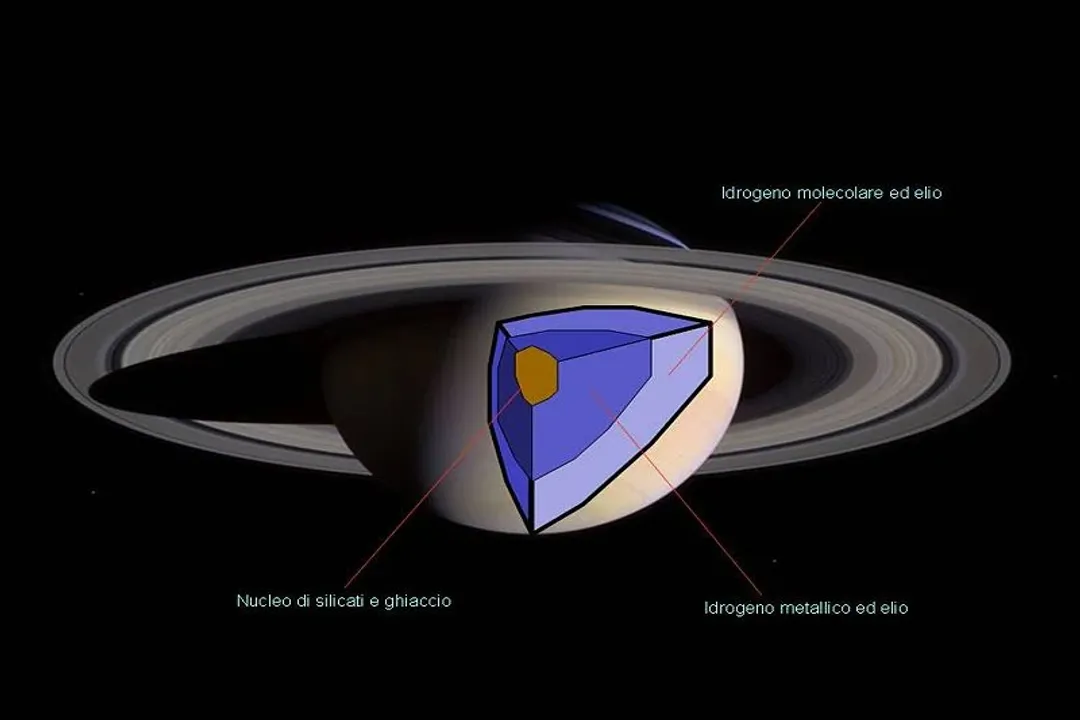
Saturn is classified as a gas giant, much like Jupiter and the Sun itself, being primarily composed of hydrogen and helium. However, this designation refers to the overwhelming majority of its substance, not its entire makeup. As one descends below the visible cloud tops, the pressure and temperature steadily climb, forcing hydrogen out of its familiar gaseous state.
Under these crushing conditions, hydrogen transitions into a supercritical fluid and, deeper still, into a liquid metallic state where it exhibits electrical conductivity. This conducting layer, known as the liquid metallic hydrogen mantle, is essential for generating Saturn’s intrinsic magnetic field through a dynamo effect. The planet radiates significantly more energy than it receives from the Sun, a process partially explained by another internal phenomenon: the sinking of helium droplets, which releases gravitational energy as heat.
# Foundation Formation
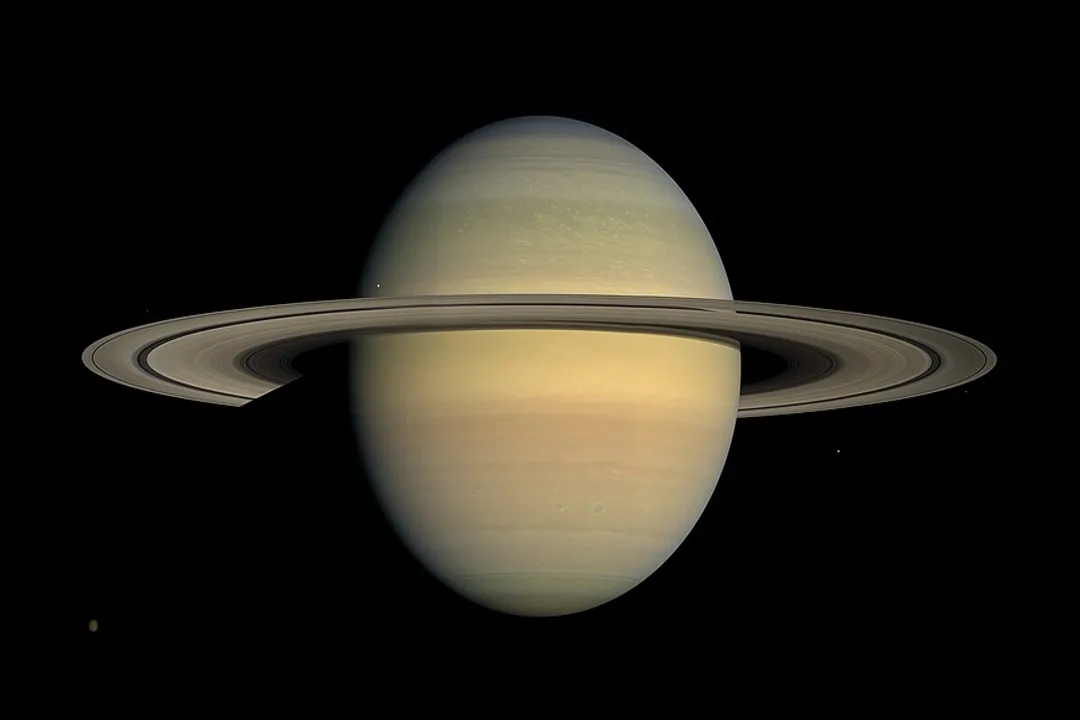
The prevailing theory for the formation of gas giants, the core accretion theory, suggests that Saturn could not have accumulated its vast gaseous envelope without first building a substantial foundation. This initial seed was expected to be a massive core composed of heavier elements—rock and ice—which had to form rapidly enough in the early solar nebula to begin capturing the surrounding hydrogen and helium before the disk dispersed.
Planetary models generally align with this concept, proposing a central core consisting of heavier materials. Specifically, scientific analysis points to this region being composed of materials like iron and silicates alongside other compounds, all solidified by the extreme conditions. While the composition shares a similarity with Earth's core, the sheer pressure and heat mean the internal states are vastly different.
# Core Mass Debate
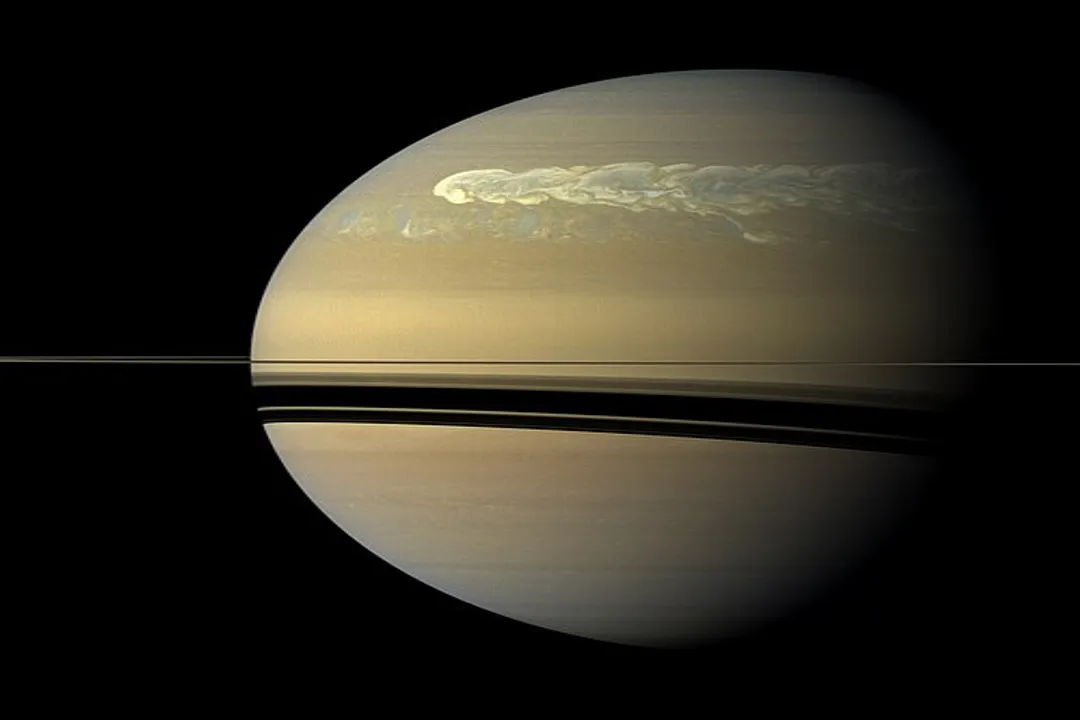
Determining the exact nature, size, and composition of Saturn’s center is immensely challenging because, unlike Earth, it lacks a surface we can measure directly with seismometers; data must be inferred from gravitational measurements, magnetic fields, and the behavior of the rings. This has led to a range of estimates for the central mass.
In one set of analyses from the early 2000s, scientists constrained the core mass to be between 9 and 22 times the mass of Earth, translating to a diameter around 25,000 kilometers. This scale of mass for the heavy stuff suggests a major accumulation of rock and metal.
However, more recent data, particularly derived from "ring seismology"—observing oscillations in the rings caused by Saturn’s internal structure—suggests a surprisingly different picture. These newer measurements indicate a core that is far more diffuse, having a mass equivalent to roughly 17 Earths, but occupying a region that takes up about 60% of Saturn’s entire radius.
If we consider the total mass of Saturn is about 95 times that of Earth, a core of 17 Earth masses makes up nearly 18% of the planet's total mass. This is a significant fraction, and it highlights an interesting contrast: while Earth's iron-nickel core is dense and relatively small in proportion to the planet's total size, Saturn’s heavy-element region is much larger in relative volume, even if the absolute density is lower due to the surrounding fluid layers.
# Fuzzy Boundaries
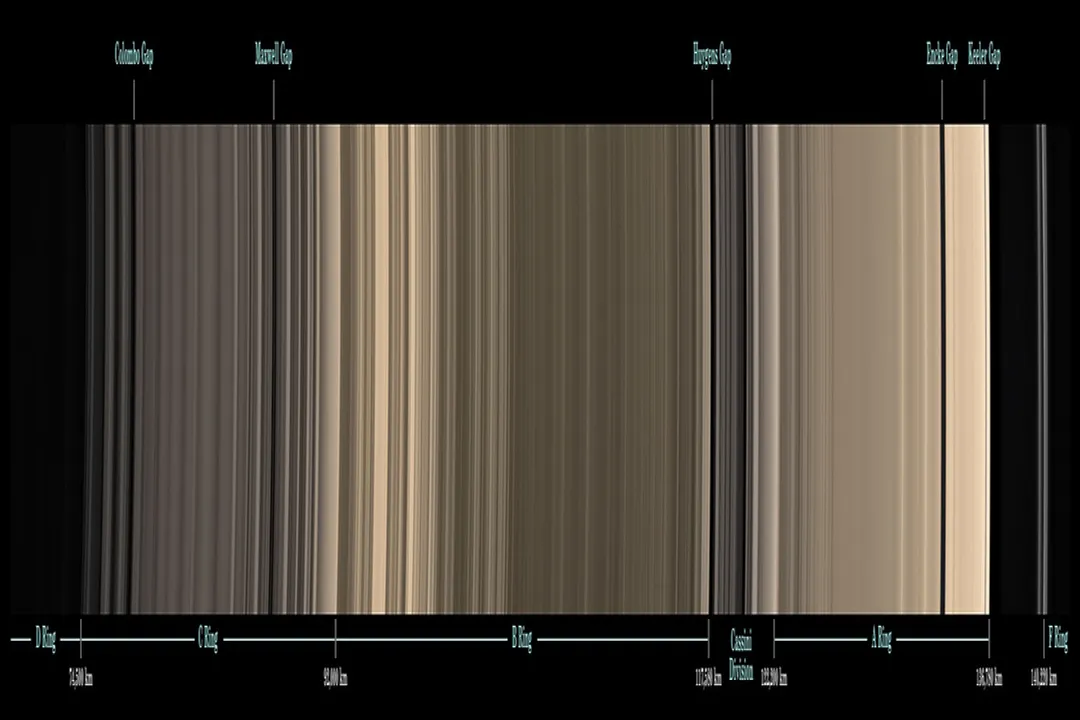
The concept of a diffuse core leads to a significant deviation from the simple model of a sharp boundary between a solid metal core and the overlying metallic hydrogen layer. If the core region extends to 60% of the radius and includes "liquid ices" above the heaviest elements, it implies that the materials—the iron, silicates, and heavier ices—are not neatly sequestered in a compact ball. Instead, they seem to be mixed or dissolving into the layers above them in a somewhat indistinct manner.
This "fuzzy" structure suggests that the traditional definition of a core might not perfectly apply to gas giants. The region where the dense, terrestrial-like material transitions into liquid metallic hydrogen may be gradual, meaning the iron content is distributed across a vast zone rather than concentrated in one sharp center point. This gradual mixing is one of the key mysteries that data from the Cassini mission helped reveal about the giant planet's interior.
# Heavy Elements and Magnetism
The presence of heavier elements, including iron, is confirmed by the fact that Saturn is enriched in these elements compared to the Sun, a result of accreting asteroids and comets over its lifetime. While the atmosphere is deficient in helium—possibly because the helium has rained down into the interior—the heavier, iron-bearing material must settle toward the lowest gravitational potential, the center.
The difficulty in precisely locating the "iron" component directly impacts how we model the planet’s magnetic field. The dynamo, which powers the field, is generated in the layer of liquid metallic hydrogen. A sharp, small, dense core might create a different magnetic signature than a large, diffuse region of heavier elements bleeding into the conductive metallic hydrogen layer. Although Saturn's magnetic field is much weaker than Jupiter's, it is still nearly 600 times stronger than Earth's. Understanding the precise location and state of the heaviest material helps scientists refine models of the fluid dynamics in the overlying metallic shell that drives this powerful field.
In essence, the short answer to whether Saturn has an iron core is yes, in the sense that its innermost region contains a substantial concentration of heavy elements, including rock and iron-like material. The nuance, however, is that this heavy material does not appear to form a distinct, solid iron sphere as seen in the terrestrial planets. Instead, it likely forms a very dense, possibly partially dissolved or diffuse center, nestled beneath layers of exotic, compressed hydrogen and helium compounds, making Saturn’s interior structure a far more gradual and chemically layered transition than simply solid core meeting gas envelope.
Related Questions
#Citations
Saturn: Facts - NASA Science
Considering its solid core, why is Saturn referred to as a gas giant ...
Saturn - Wikipedia
Saturn's interior | Research Starters - EBSCO
Does Saturn Have a Solid Core? - Universe Today
Do all planets have a molten core? - Astronomy Stack Exchange