Which planets have a high iron content?
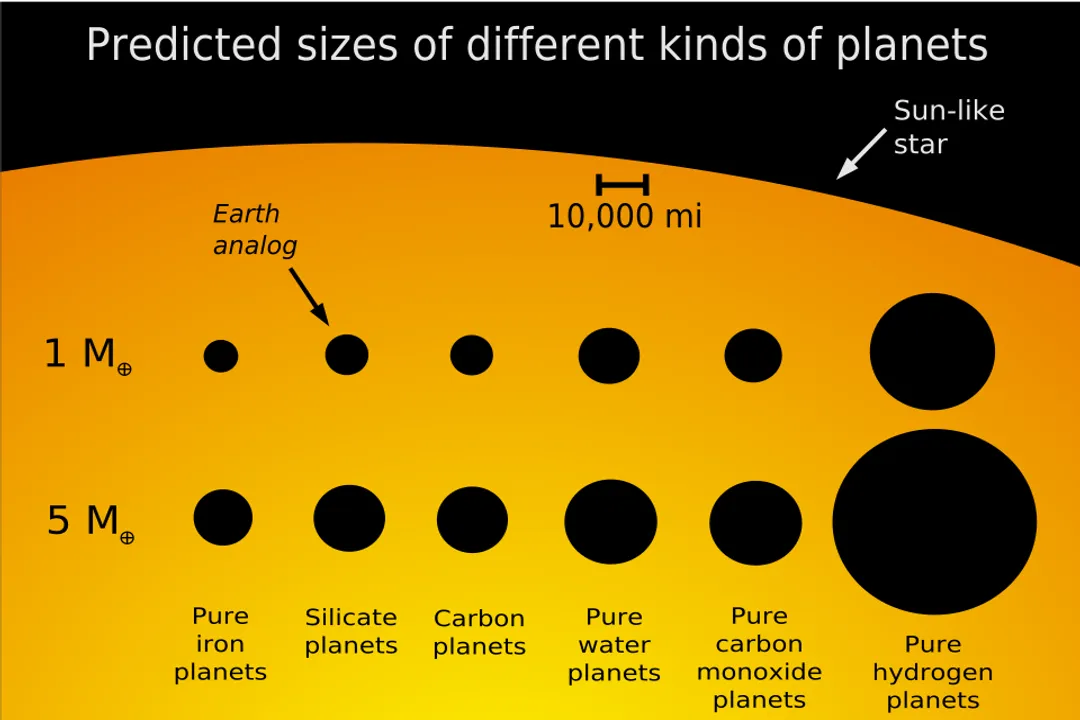
The composition of planets across the cosmos shows remarkable variation, but the concentration of iron, the fundamental component of dense planetary cores, serves as a crucial benchmark for understanding their formation and evolution. While Earth boasts a substantial iron core, which accounts for roughly one-third of its mass, the solar system and the wider galaxy contain worlds where this heavy element dominates the entire planetary structure. [1][3]
# Core Structures
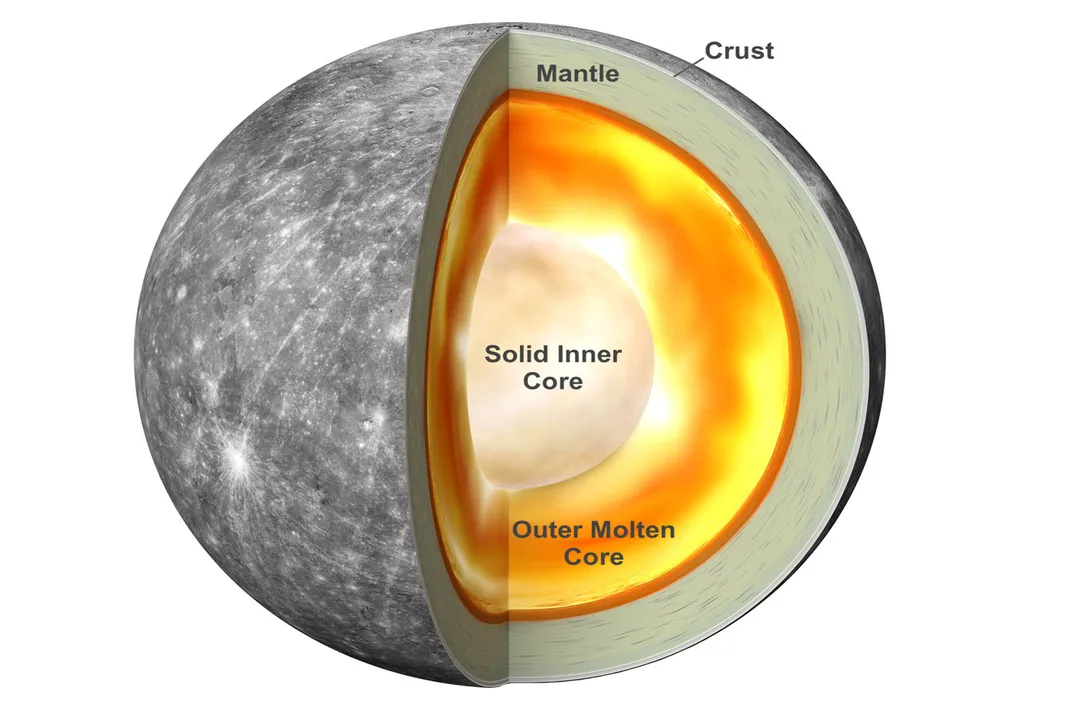
In our own solar system, the presence of a dense, metallic core is characteristic of the four inner, rocky planets. [3] Earth’s core, consisting mainly of iron and nickel, is essential to generating the protective magnetic field that shields our atmosphere from solar radiation. [3] However, when observing other bodies, we find that the sheer proportion of iron varies dramatically.
# Mercury’s Metal
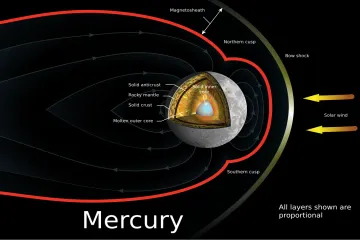
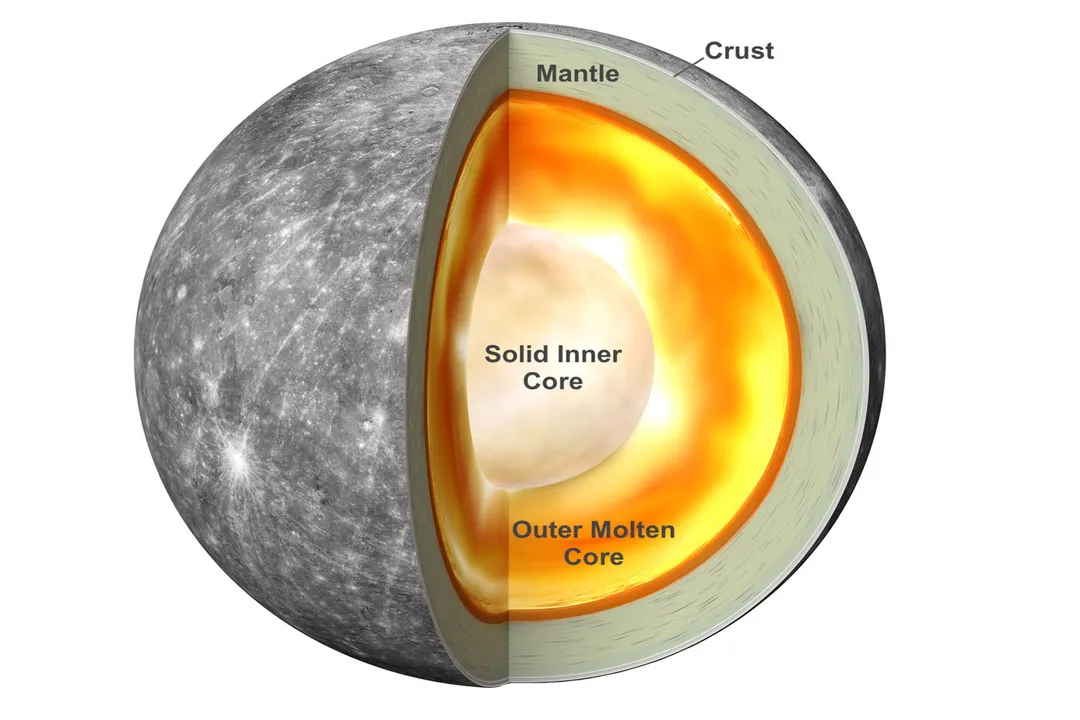
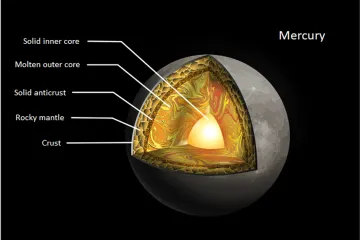
The innermost planet, Mercury, presents a striking example of iron enrichment relative to its overall size. Its core is enormous, making up an estimated 85% of the planet's total mass. [4][5] This dwarfs the proportion of iron found in Earth's core relative to Earth’s total mass. Mercury is effectively a world dominated by its metallic heart, possessing only a thin, remnant silicate mantle and crust. [4]
The leading explanations for this extreme composition point toward processes occurring early in the solar system’s history, specifically involving the Sun. [4][5] One theory suggests that the intense magnetic field generated by the young Sun acted as a powerful scouring agent. [4] This stellar magnetism may have stripped away Mercury's lighter, rocky outer layers—the silicate mantle—leaving behind the dense, iron-rich remnant we observe today. [2][5] Another proposed mechanism involves a massive impact event that vaporized the mantle material, though the magnetic stripping hypothesis currently garners significant attention. [5] Comparing Mercury's massive iron fraction (85% of its mass) against Earth's core (about 33% of its mass) immediately frames the discussion: we are moving from planets with large iron cores to planets that are mostly iron. [1]
# True Iron Worlds
Moving beyond our solar system brings us to exoplanets that push the definition of "iron-rich" to its extreme. These are worlds where iron is not just the dominant component of the core, but the primary constituent of the entire planet, lacking the substantial silicate layers typical of planets like Earth or Mars. [6]
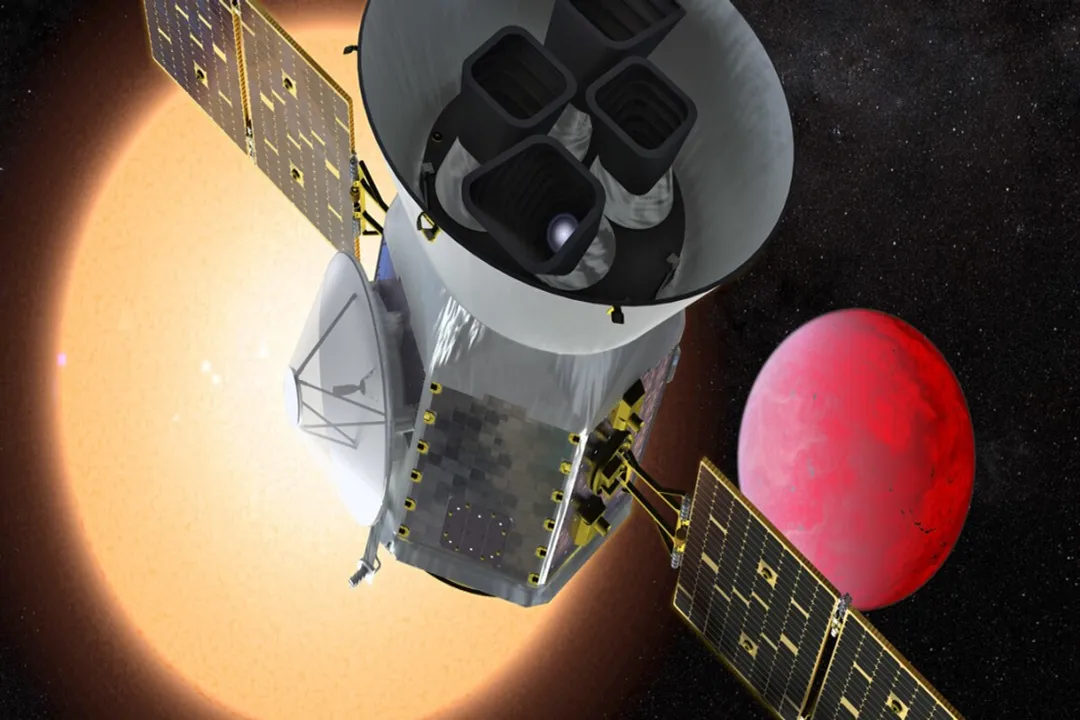
A significant recent discovery highlighted this possibility with the finding of TOI-849b. [6][7] This exoplanet orbits a star roughly 730 light-years away and is classified as a gas giant in terms of size, but its density measurements reveal a composition unlike any known gas giant or rocky planet. [6] Scientists estimate that TOI-849b is composed of approximately 65% iron by mass. [6][7] This means the planet is overwhelmingly metallic, possessing a core so large that it constitutes the vast majority of the world, leaving only a minimal, or entirely absent, silicate mantle. [6]
The existence of TOI-849b forces astronomers to reconsider standard planet formation models. If a planet of that mass accreted primarily from the materials available in its protoplanetary disk, it should have incorporated more silicates and rock to form a substantial mantle. [7] Its metallic nature suggests a dramatic evolutionary history, perhaps involving extreme heating or the aforementioned stripping of outer layers, though the scale required for a world this large is immense. [1][6] Hypothetically, a pure iron planet might be defined as one where the ratio of iron to silicates is very high, or even where the mass is concentrated almost entirely in the core, possibly down to a radius of around 1,000 kilometers for smaller hypothetical examples. [1]
# Formation Factors
The planetary environment dictates the final metallic composition. The relationship between a planet's iron content and its host star is proving to be a key area of study. [2]
The amount of iron a planet retains or develops relative to its lighter elements appears to be tied to the magnetic environment it forms in. [2] If a star has a particularly strong magnetic field, it might be more efficient at stripping the less dense, rocky materials from orbiting protoplanets, thereby creating a larger relative iron core fraction in the remaining body. [2] This offers a potential physical mechanism that could explain the compositional extremes observed between Mercury and other terrestrial worlds, and perhaps even the existence of worlds like TOI-849b.
It is also important to distinguish between planetary cores and whole-planet composition. While almost all large, rocky worlds likely possess an iron core, the defining characteristic of an "iron planet" in the scientific sense is the near-total dominance of that metal throughout the entire object. [3] The data on TOI-849b suggests that, unlike Mercury which is an outlier in our solar system, such metal-dominated worlds might be a predictable outcome in certain stellar neighborhoods. [6] Observing a planet 65% iron by mass suggests that the initial building blocks or the subsequent evolution strongly favored the accumulation of heavy elements over lighter rock-forming minerals. [7]
# Hypothetical Composition Limits
While direct measurements beyond our solar system are challenging, theoretical models suggest a lower limit for what constitutes a true "iron planet." These bodies are envisioned as remnants, perhaps the cores left over after a larger, gas-shrouded planet lost its atmosphere and mantle due to extreme radiation or tidal forces near its star. [1] If we consider a hypothetical body with a mass similar to Mars but composed almost entirely of iron, its physical characteristics—density, radius, and surface gravity—would be radically different from what we associate with a planet of that size composed of silicates. [1] For example, a body of to kg mass, if entirely iron, would likely have a radius near the 1,000 km mark, making it quite small for a planet, though comparable to many moons. [1] The density contrast between a silicate planet and an iron planet of the same radius is stark enough that transit timing variations or radial velocity measurements can sometimes hint at such unusual compositions, as was the case with TOI-849b. [6]
The next phase of discovery involves finding even more extreme examples or, conversely, bodies that retain just enough rocky material to be classified as differentiated terrestrial planets rather than pure metal remnants. Understanding the distribution of iron in these various planetary classes gives us vital clues about the initial chemistry of the stellar nurseries from which they formed and the thermodynamic processes that shaped their final states. [2][7]
Related Questions
#Citations
Iron planet - Wikipedia
Size of Planet Iron Core Depends on Star Magnetism - Labroots
Do all planets have an iron core like Earth or are we unique ... - Quora
Research News - Why Does Mercury Have a Big Iron Core?
Why Does Mercury Have Such a Big Iron Core? Magnetism!
Astronomers find a new planet that's mostly made of iron | WYPR
Scientists find a new planet that's mostly made of iron - Deseret News
Oxidation States of Iron in the Terrestrial Planets - NASA ADS
Which of solar system planets has highest amount of iron? - Facebook