What planet has the highest iron content?
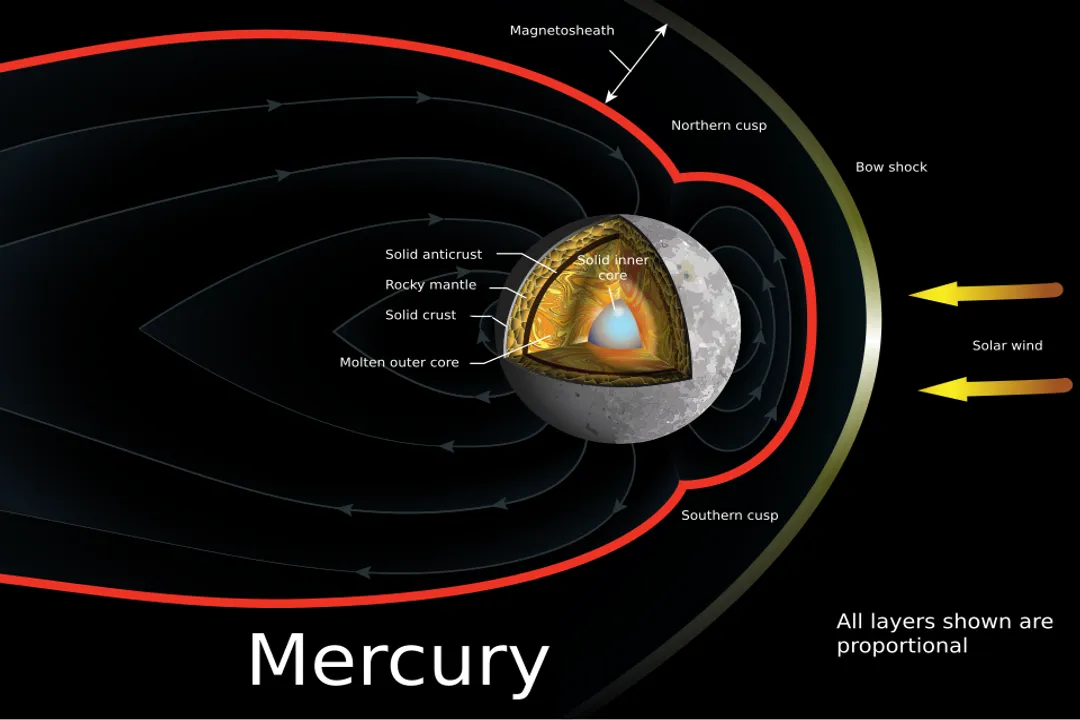
The planet in our solar system with the highest proportion of iron is Mercury. This small, innermost world defies the typical scaling of planetary composition, boasting a metallic core that constitutes an astonishingly large fraction of its total mass when compared to its neighbors. [1] While discussions about iron content in space must eventually include stars, which forge the element in their dying moments, when we look strictly at the planetary bodies we can study directly, Mercury reigns supreme in metallic density. [9]
# Solar Concentration
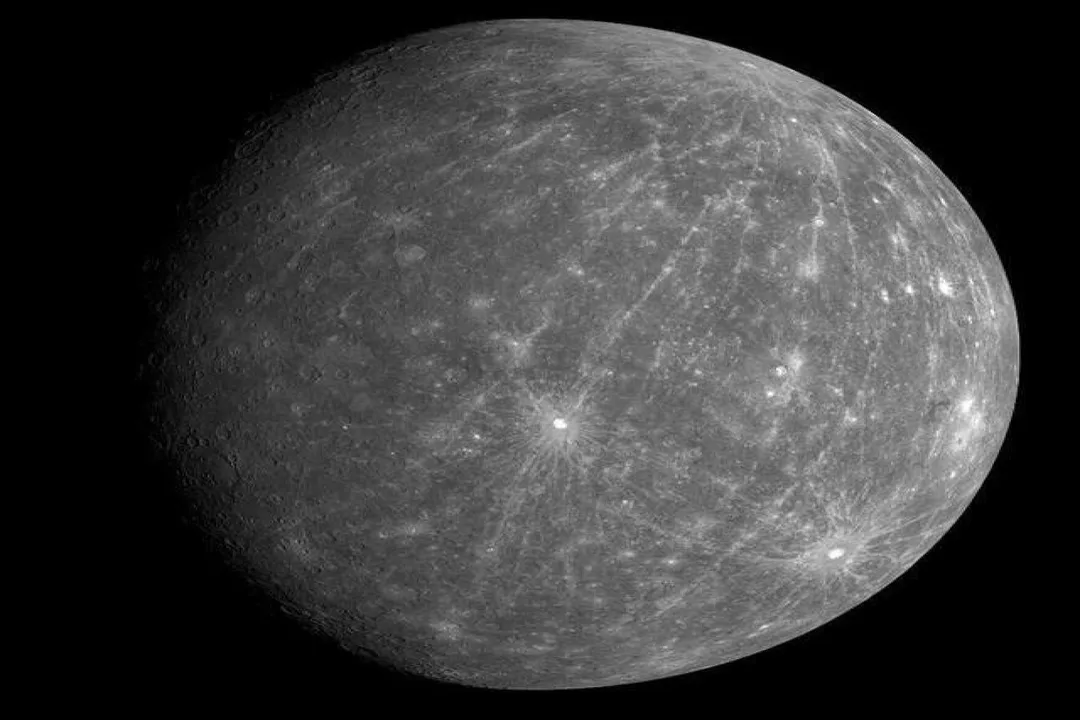
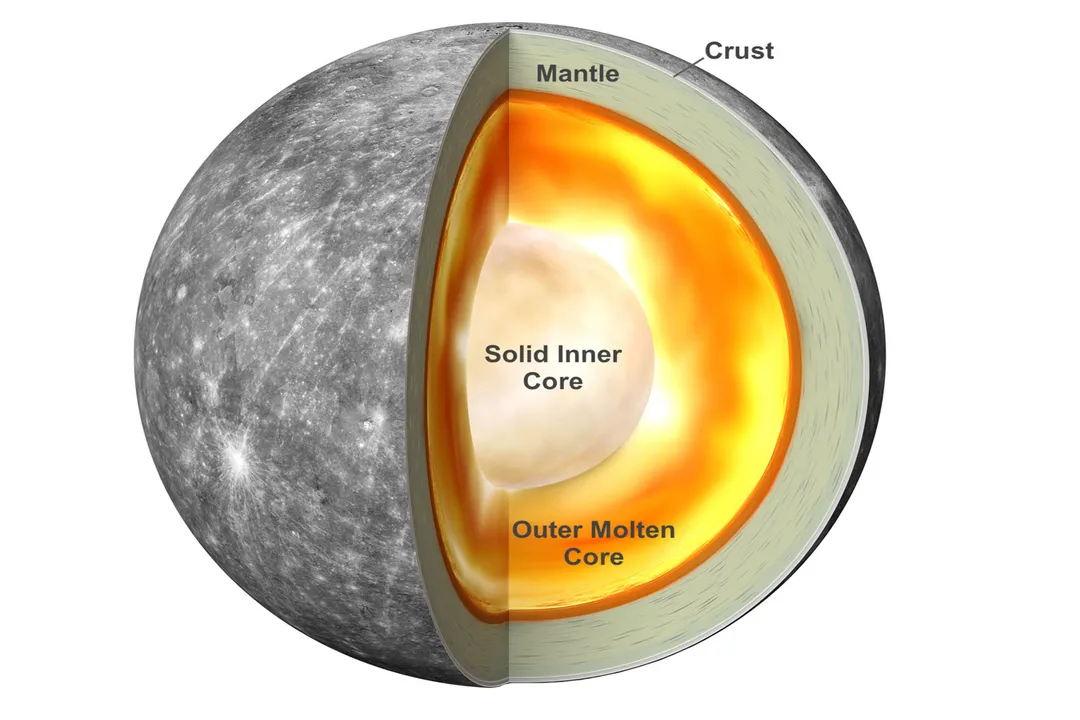
Mercury’s core is massive; estimates suggest it accounts for roughly 60% of the planet’s entire mass. [1] To put this into perspective, Earth's metallic core represents closer to 30% of our planet's mass, making Mercury’s iron dominance almost double that of our own world when measured as a percentage of total volume or mass. [6] The core itself is immense, thought to be between 400 to 700 kilometers thick. [1] This iron heart is not pure; it is likely alloyed with lighter elements, such as sulfur, which helps explain why it remains partially molten. [3]
The sheer scale of this iron concentration prompts significant scientific inquiry into Mercury’s violent past. One leading hypothesis suggests that Mercury formed much larger but suffered a catastrophic event—a giant impact early in its history. [4] This theoretical collision would have stripped away a significant portion of the planet’s lighter, silicate mantle, leaving behind the dense, iron-rich remnant we observe today. [4] An alternative, though perhaps less dramatic, explanation involves the environment close to the Sun. Intense solar wind, originating from the Sun, may have effectively "blown away" the lighter elements from Mercury’s surface and upper layers over billions of years. [3][4]
It is fascinating that despite its small size—Mercury is only slightly larger than Earth’s Moon—it generates a global magnetic field. [4] This phenomenon is usually attributed to the churning of a liquid iron outer core, a feature one might not expect from such a diminutive world. [4]
# Planetary Iron Comparisons
When evaluating terrestrial bodies in our Solar System, the comparison clearly favors Mercury. Earth, of course, is rich in iron, underpinning its strong magnetic field and dense structure, but its overall composition includes a much larger silicate mantle and crust relative to its metallic center. [6] Mars, often viewed as an iron-rich world due to its reddish surface color caused by iron oxide dust, actually contains less iron overall than Earth. [5] The visible redness on Mars is simply a surface phenomenon, not an indication of greater deep-seated metallic content compared to the inner two rocky planets. [5]
If we look at the metal core fraction among the inner, rocky worlds, the division is quite stark:
| Planet | Estimated Core Mass Fraction |
|---|---|
| Mercury | ~60% [1] |
| Earth | ~30% [6] |
| Venus/Mars | Significantly lower, though precise numbers vary |
This data point—Mercury having twice the proportional iron content relative to its mass compared to our home planet—suggests that the processes governing planetary formation near the Sun are fundamentally different from those farther out. It implies that the early solar nebula around the Sun was either enriched with heavier elements or that collision probabilities leading to mantle stripping were significantly higher in the innermost orbits. [4]
# Beyond Our System
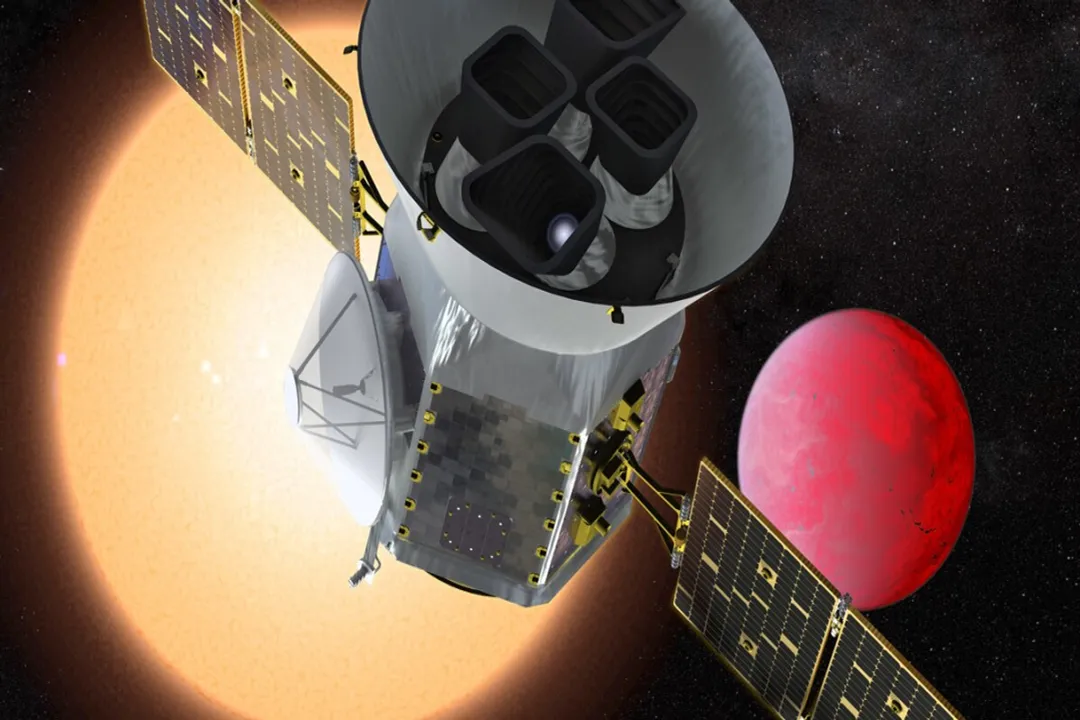
The search for other iron-heavy worlds has recently turned up an extraordinary candidate outside our Solar System: the exoplanet TOI-849b. [8][10] This object was discovered by NASA’s Transiting Exoplanet Survey Satellite (TESS). [8]
TOI-849b is a fascinating anomaly. It is roughly the size of Neptune but possesses a mass suggesting it is composed almost entirely of iron. [8] One description labels it as a "naked core". [10] Its estimated mass is about 55 times that of Earth, making it the most massive known rocky world, which presents a significant conundrum for current theories of planet formation. [8]
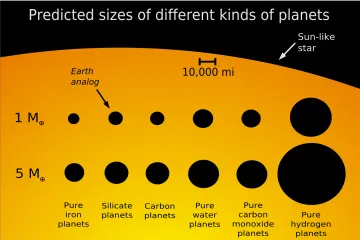
Planetary models suggest that planets the size of TOI-849b should generally be gas or ice giants, enveloped in vast layers of hydrogen, helium, or volatiles. [6] The fact that TOI-849b appears to be a massive, dense, metal-dominated sphere strongly indicates that it either underwent an extreme process of atmospheric stripping—perhaps losing its entire volatile envelope to stellar radiation—or that it formed in a unique way, perhaps through a process called core accretion where gas giant formation stalled, leaving behind only the massive core. [6][10] This exoplanet provides a natural laboratory to study planetary cores on a scale much larger than Mercury, pushing the boundaries of what we thought constituted a "rocky" planet. [8]
# Iron in the Cosmos
While Mercury and TOI-849b represent extremes in planetary concentration, the absolute quantity of iron in the universe belongs to stars. [9] Iron is a common element, but it is primarily created through stellar nucleosynthesis, especially in massive stars that fuse lighter elements up to iron in their cores. [9] When these stars go supernova, they release this massive reservoir of iron into the interstellar medium. [9]
Therefore, while Mercury has the highest percentage of iron among known planets, the total amount of iron scattered across space far surpasses what is locked up in any single planet. [9] Planets like Mercury are exceptional because they are differentiated bodies where gravity has pulled the heaviest elements—like iron—to the center, effectively concentrating cosmic debris into a metallic sphere that stands out against its lighter silicate surroundings. [3] This differentiation process, which creates Mercury’s dominant core, is a key marker of how planetary bodies evolved in the turbulent early Solar System. [4]
The unique composition of Mercury, and now the extreme nature of TOI-849b, shows that the dividing line between a gas giant and a massive rocky world is often blurred by intense environmental effects, leaving behind these remarkable metal-rich relics. [8][10]
Related Questions
#Citations
Mercury (planet) - Wikipedia
Is Mercury the only metal-rich body in the solar system? - Reddit
Research News - Why Does Mercury Have a Big Iron Core?
Why Does Mercury Have Such a Big Iron Core? Magnetism!
Does Mars contain more iron than the Earth?
How Mars got its rust : Nature News
Which of solar system planets has highest amount of iron? - Facebook
Astronomers find a new planet that's mostly made of iron | SDPB
Which contains more iron, stars or planets? - Quora
Scientists find a new planet that's mostly made of iron - Deseret News