Do other planets have iron cores?
Planetary interiors across the Solar System exhibit a wide range of compositions, but the heavy element iron certainly plays a significant role in many worlds. When we examine our own planet, Earth boasts a massive core composed primarily of iron and nickel, a result of billions of years of internal sorting where the densest materials sank to the center. [6] This process of planetary differentiation sets the expectation that other worlds, particularly those formed similarly, might follow suit.
# Rocky Worlds
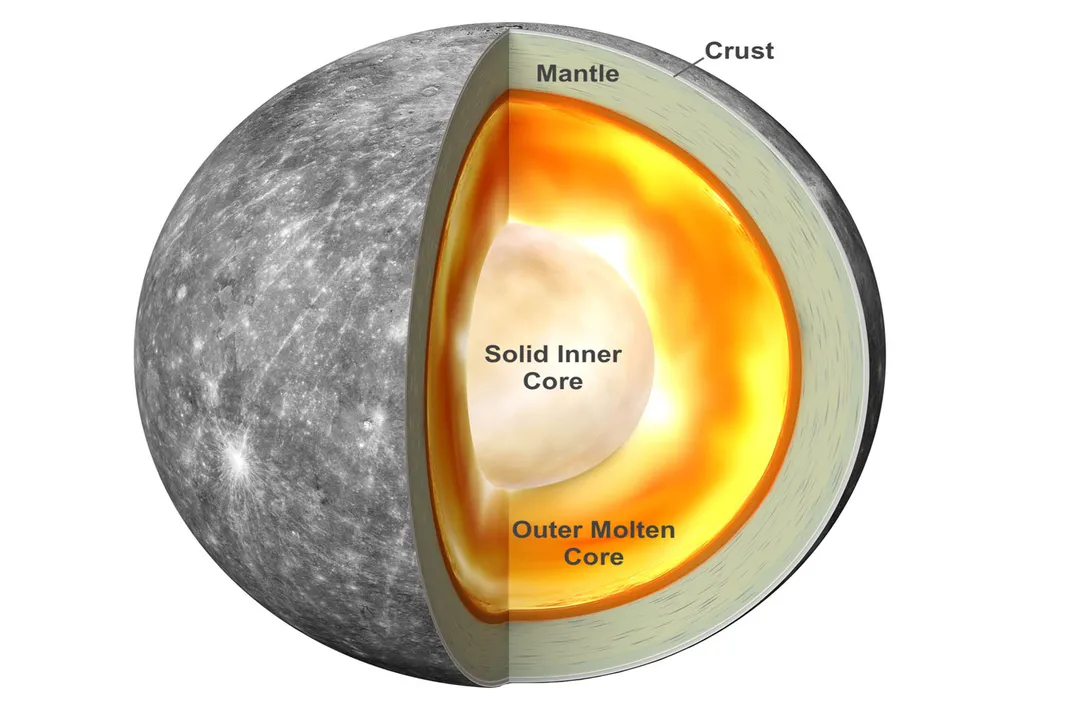
For the inner, terrestrial planets—Mercury, Venus, Earth, and Mars—the general expectation is that they possess metallic cores. [2] These worlds accreted from rocky and metallic materials present in the early solar nebula. Once large enough, internal heat generated by accretion and radioactive decay caused the material to melt, allowing the heavier iron to migrate inward, leaving lighter silicates to form the mantle and crust. [4] This stratification is a defining characteristic of a rocky planet that has undergone significant geological evolution.
It is generally assumed that most rocky bodies in our Solar System have iron cores, though the size and state can vary dramatically based on the planet's overall mass and thermal history. [1] For instance, Mars is thought to have a core made largely of iron, iron sulfide, and nickel, though it is considerably smaller relative to the planet's size than Earth’s core. [6]
# Outer Giant Structure
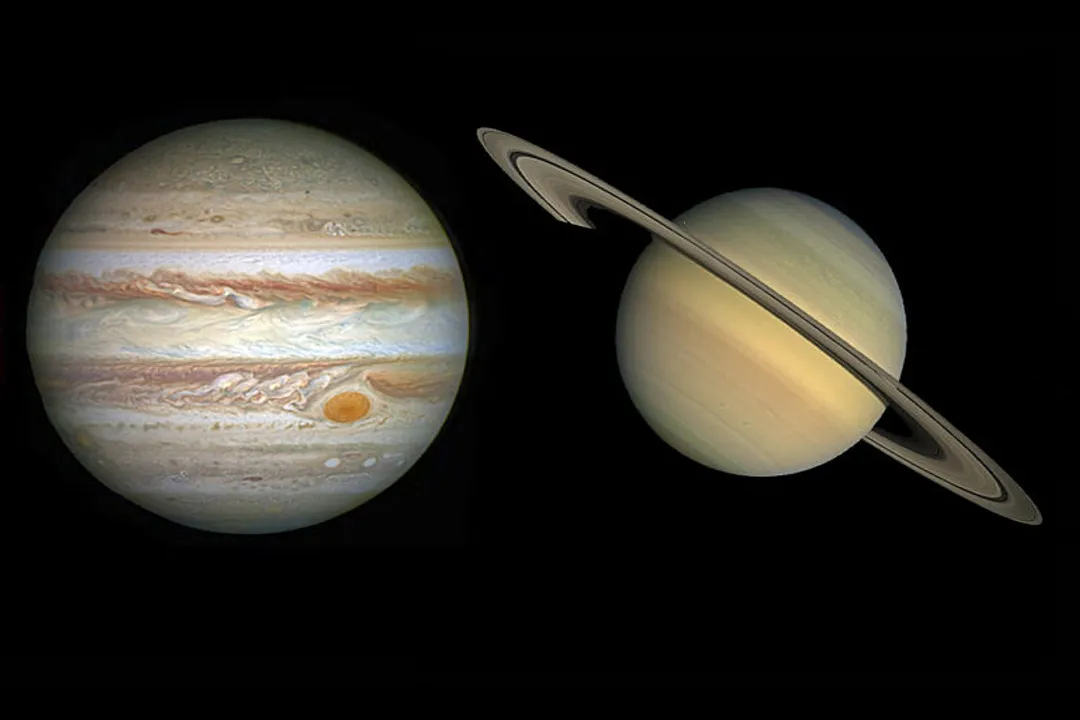
The situation becomes more complex when looking toward the gas and ice giants like Jupiter, Saturn, Uranus, and Neptune. While they lack the solid rocky surfaces we are familiar with, evidence suggests they too must have concentrated, dense centers. [2] These cores are likely composed of rock and metal, possibly including iron. [2] However, because these planets are so much larger and are dominated by vast envelopes of hydrogen, helium, and ices, the metallic core forms a much smaller proportion of the planet's total mass compared to Earth. [2] It is less about the absence of iron and more about its dilution within immense layers of lighter material.
# Mercury's Iron Shell
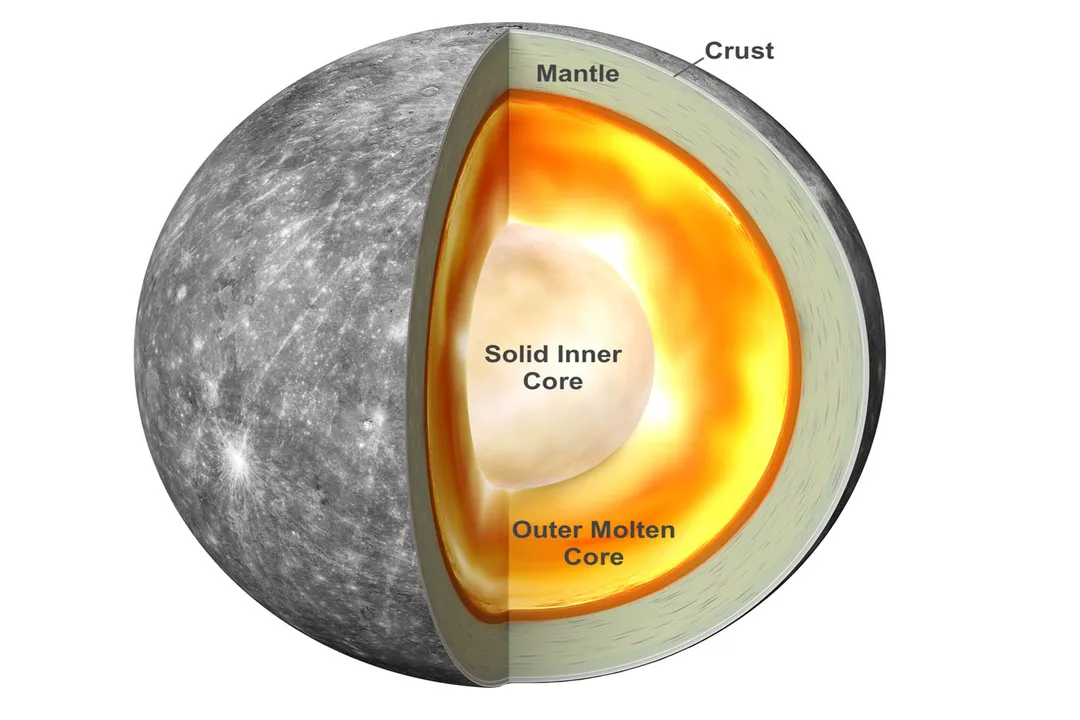
Mercury presents an astonishing contrast to Earth and Mars. It has a surprisingly large iron core relative to its overall size. [5] Data suggests that the core makes up about 60% of the planet's mass, far exceeding the core-to-mass ratio seen on Earth, where the core is roughly 30% of the total mass. [5][9] Understanding this discrepancy is key to understanding planetary accretion.
Two main theories attempt to explain Mercury's massive iron content. One idea posits that intense heat and radiation from the young Sun effectively boiled away or vaporized the lighter silicate materials, leaving behind the dense, heavy iron and nickel. [9] Another compelling possibility involves a colossal impact early in Mercury’s history, where a massive body struck the young planet and stripped away much of its lighter, rocky mantle, leaving the dense core largely intact. [9] This emphasizes that planetary composition isn't just determined by the initial mixture of raw materials, but also by dramatic, violent events that shape their final structure.
| Planet Type | Core Composition Expectation | Relative Core Size (Conceptual) | Primary Differentiation Driver |
|---|---|---|---|
| Terrestrial (Earth) | Iron/Nickel | Large Proportion | Differentiation (Melting/Sinking) |
| Terrestrial (Mercury) | Iron/Nickel | Very Large Proportion | Vaporization or Massive Impact |
| Giant Planets | Rock/Metal/Ice Mix | Small Proportion | Accretion of massive gas envelopes |
# Core Formation Influencers
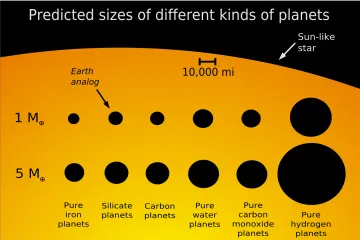
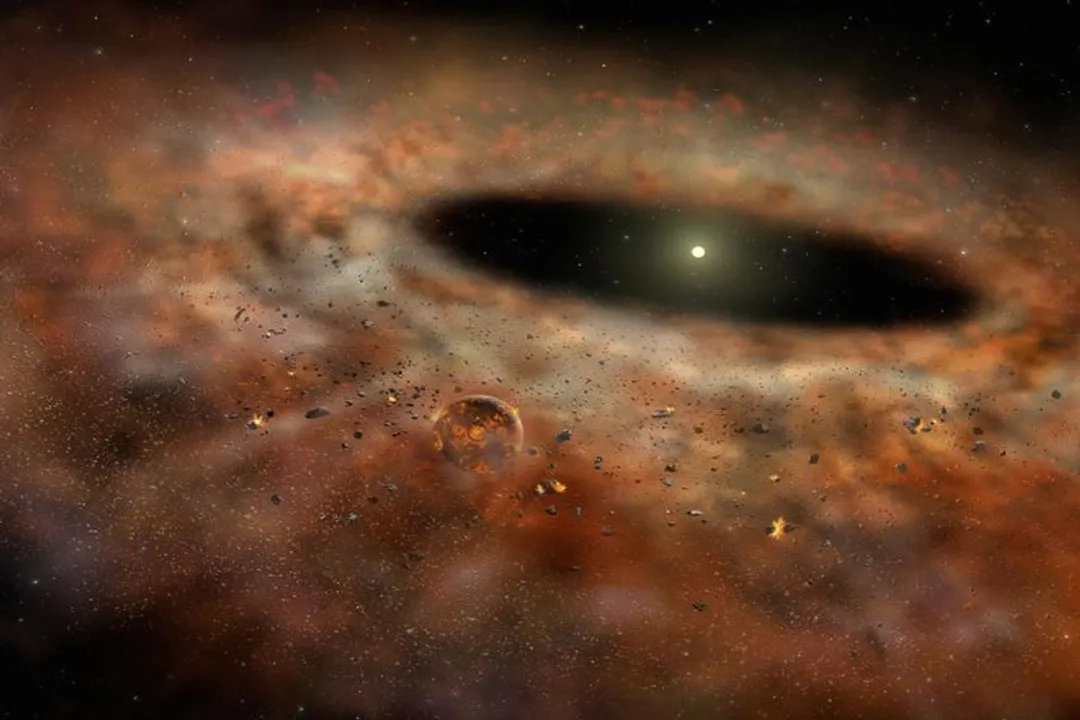
The mere presence of an iron core is tied directly to the processes that built the planet in the first place. [7] The availability of iron-bearing planetesimals during the accretion phase dictates the raw material budget. However, the final configuration isn't solely based on what was available; external forces matter too. It has been suggested that the physical environment in which a planet forms, perhaps even the magnetic field generated by its parent star during the protoplanetary disk stage, could affect the efficiency with which heavy metals condense and settle into a core structure. [8]
This idea leads to a subtle but important distinction: simply confirming an iron core exists doesn't fully tell the story of a planet's evolution. A planet that formed far from its star might retain a higher percentage of its initial metallic content locked within its mantle or crust if differentiation was incomplete, whereas a closer planet might have a more purely segregated core because of higher temperatures. [7] The core’s state—whether it remains molten or solidifies—also varies, depending on the balance between internal heat production and the immense pressures exerted by the overlying mass. [5] For example, while Earth's outer core is liquid (generating our magnetic field), the cores of smaller worlds like Mars may have cooled and solidified long ago.
In essence, while the foundational answer is that yes, many planets likely possess iron cores—particularly the rocky ones—the defining characteristic separating them isn't always the presence of iron, but rather the proportion of iron relative to the planet’s total bulk and how efficiently that iron has centralized over geological timescales.
Related Questions
#Citations
Do all planets have an iron core? : r/askscience - Reddit
Do all planets have an iron core like Earth or are we unique ... - Quora
Cores, Planets and The Mission to Psyche | News | Astrobiology
What are planets made of? | The Planetary Society
Do all planets have a molten core? - Astronomy Stack Exchange
What's Hiding Inside the Cores of Our Solar System? Ever wonder ...
6 The Cores of Other Planets - ScienceDirect.com
Size of Planet Iron Core Depends on Star Magnetism - Labroots
Why Does Mercury Have Such a Big Iron Core? Magnetism!