Do the other planets have a molten core?
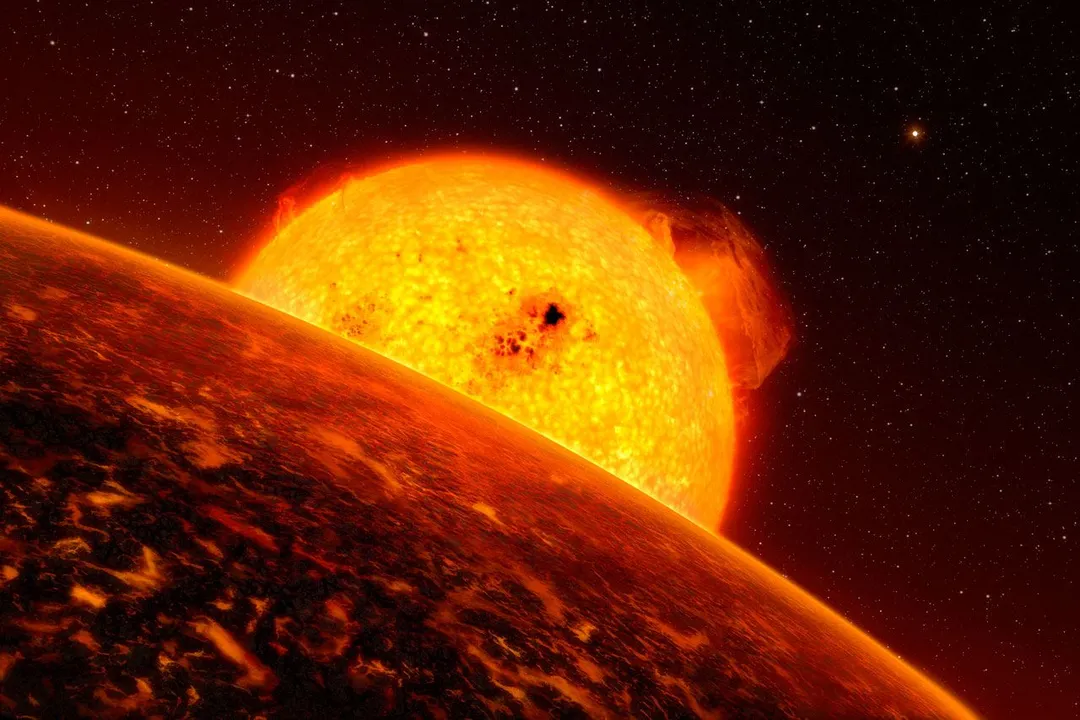
The question of what lies beneath the surfaces of our celestial neighbors is one that sparks immense curiosity, leading to the specific inquiry: do other planets possess a molten core similar to Earth's? The answer isn't a simple yes or no that applies universally across the Solar System and beyond. Planetary differentiation—the process where heavier materials sink to the center and lighter materials rise—is fundamental to planet formation, and this process typically results in a core, which may or may not still be liquid. [4][6] For the rocky bodies in our inner Solar System, the current state of that core heavily depends on size, composition, and age, all factors that dictate how much internal heat has been retained or generated over billions of years. [9]
# Terrestrial Planets

The terrestrial planets, or the rocky worlds, present a spectrum of core conditions. Our own planet, Earth, boasts a substantial, actively churning molten outer core responsible for generating the magnetic field that shields our atmosphere from solar winds. [6] This liquid layer surrounds a solid inner core. [6] When we look at our nearest neighbors, the story changes depending on the planet's mass and thermal history. [9]
# Mercury and Venus
Mercury, being the smallest terrestrial planet, has cooled down much faster than Earth. While it is known to have a large core relative to its size, its internal structure is thought to consist of a solid iron core surrounded by a shell of molten iron. [6] This is likely due to the initial energy from accretion and differentiation being massive enough to create a core that, despite its small size, still retains a liquid outer layer, though perhaps less active than Earth's. [1][2] Venus, similar in size to Earth, is generally believed to have a differentiated structure much like ours, including a molten core, although it lacks a global magnetic field like Earth's, suggesting its core dynamics are different, perhaps due to a lack of plate tectonics or a slower cooling rate in specific layers. [2][3]
# Mars Cooling
Mars presents a fascinating contrast. It is significantly less massive than Earth, which means it lost its internal heat much more rapidly. [1][9] Because of this smaller size and faster cooling, its core is generally thought to have solidified or at least significantly cooled to the point where it no longer generates a substantial global magnetic field like Earth's. [1][6] One perspective suggests that while Mars certainly had a molten core early in its history due to the heat of formation and radioactive decay, that heat has since dissipated enough for the core to become mostly or entirely solid iron/iron alloy today. [2] The loss of the magnetic field, consequently, is directly linked to this cooling process. [1]
It is interesting to consider that if Mars were only slightly larger—perhaps 20-30% of its current diameter—it might have retained enough mass and insulating material to keep its core molten today, illustrating the critical "Goldilocks zone" of planetary size for long-term internal activity. [9]
# Giants Interiors
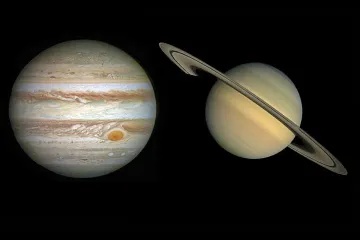
Moving outward from the Sun, we encounter the gas giants and ice giants, whose internal structures are vastly different from the rocky worlds, yet they too feature layers that are essentially molten or liquid under extreme pressure. Jupiter and Saturn, the gas giants, are not solid planets in the same way Earth is; their bulk is composed primarily of hydrogen and helium. [6]
# Jupiter and Saturn
Jupiter is thought to possess a dense core, but the matter surrounding it transitions into a layer of liquid metallic hydrogen, which is electrically conductive and contributes to its immense magnetic field. [6] This metallic hydrogen phase exists under pressures so extreme that hydrogen behaves like a liquid metal, not a gas or a simple liquid. [6] Saturn's structure is similar, though its layers are less compressed, featuring a core that might be rocky or a mix of heavier elements surrounded by liquid metallic hydrogen and then a thick layer of molecular hydrogen. [6] Both feature large, fluid, or molten regions essential to their geophysical properties.
# Ice Giants
Uranus and Neptune, the ice giants, have interiors dominated by heavier elements like oxygen, carbon, and nitrogen, often existing in high-pressure, super-pressurized fluid states—sometimes called "icy" materials, though they are far from the ice we know on Earth. [6] These layers are certainly not solid rock cores, but rather vast regions of hot, dense, electrically conductive fluid mantles where material behavior is exotic due to the pressure, essentially functioning as massive, partially molten envelopes around smaller, denser cores. [6]
# Formation and Heat Retention
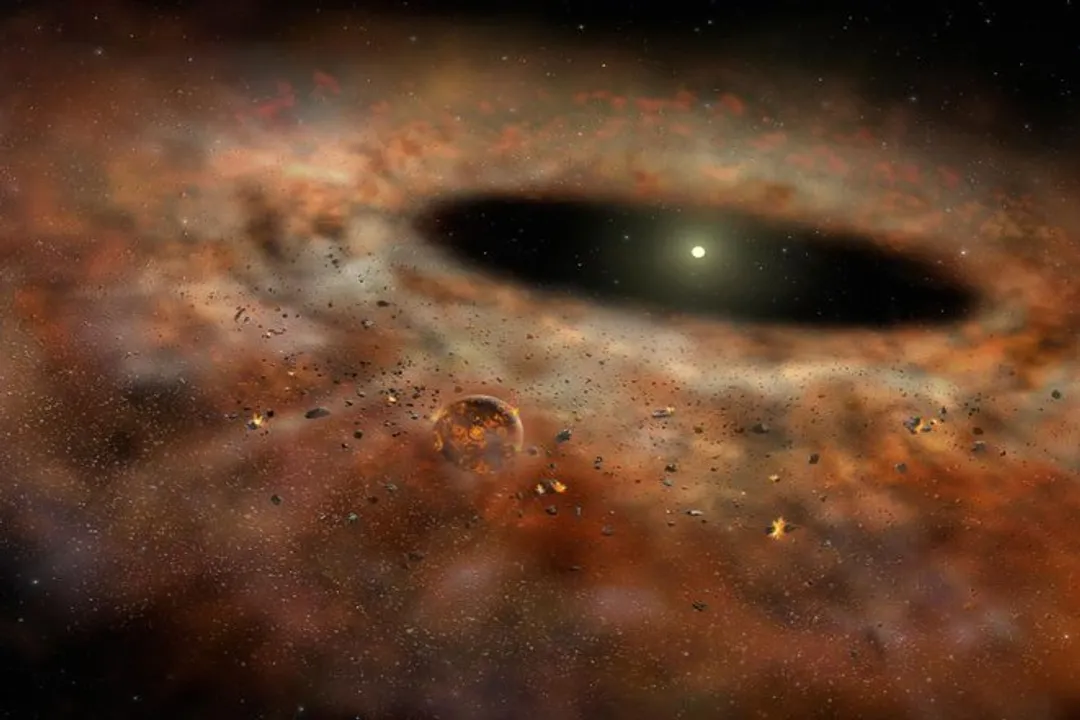
The fundamental reasons why a planet maintains a molten core boil down to two main factors: the initial energy of formation and the subsequent internal heating mechanisms. [9]
# Initial Energy
When planets form through accretion—the gradual sticking together of smaller planetesimals—the collisions release enormous amounts of gravitational energy as heat. [9] Differentiation, the sinking of dense iron and nickel to the center to form the core while lighter silicates form the mantle and crust, also releases heat due to the gravitational potential energy released as heavy materials move downward. [4] For planets like Earth and the larger terrestrial worlds, this initial heating was so significant that it melted the interior sufficiently to allow differentiation to occur. [4]
# Sustained Heat
For a core to remain molten over geological timescales, it needs a sustained heat source to counteract the natural cooling process. [1] On Earth, two primary sources continue to generate heat:
- Radioactive Decay: The slow breakdown of radioactive isotopes of elements like uranium, thorium, and potassium within the mantle and crust releases thermal energy. [1][2]
- Latent Heat of Crystallization: As the liquid outer core slowly cools and solidifies onto the solid inner core, it releases latent heat, contributing to the maintenance of the liquid outer layer. [2]
Smaller bodies like Mars simply didn't have enough mass to retain this heat over billions of years, leading to the freezing of their cores. [1][9] This relationship between mass and thermal history is a key principle in planetary science: size dictates longevity of an active interior. [9]
Consider the comparison between Earth and a hypothetical "super-Earth" in the exoplanet realm. A super-Earth, much larger than our planet, would retain heat far longer due to its smaller surface-area-to-volume ratio. This retained heat might keep its core molten for tens of billions of years, potentially leading to much longer-lasting magnetic fields and more dynamic geology than even Earth exhibits today. [4]
# Exoplanets and Core States
The discovery of thousands of exoplanets has expanded our understanding beyond the Solar System, showing that molten cores are not unique to our local neighborhood. Rocky exoplanets, even those seemingly inhospitable, are expected to possess them. [8]
# Water and Molten Layers
Surprisingly, the presence of large amounts of water or volatile compounds on a rocky exoplanet does not necessarily preclude a molten core. In fact, models suggest that even planets classified as "water worlds" could still have massive molten metal cores. [8] The presence of water might affect the mantle dynamics or the surface conditions, but the fundamental process of differentiation driven by gravity and initial heat likely still results in a dense metallic core, which may be liquid due to the residual heat of formation or ongoing tidal forces from a nearby star. [8] Tidal heating, where gravitational flexing from a parent star keeps the interior warm, can be a significant energy source for smaller bodies or those in close orbits, effectively restarting or sustaining a molten state that would have otherwise faded away. [2]
# Size Threshold
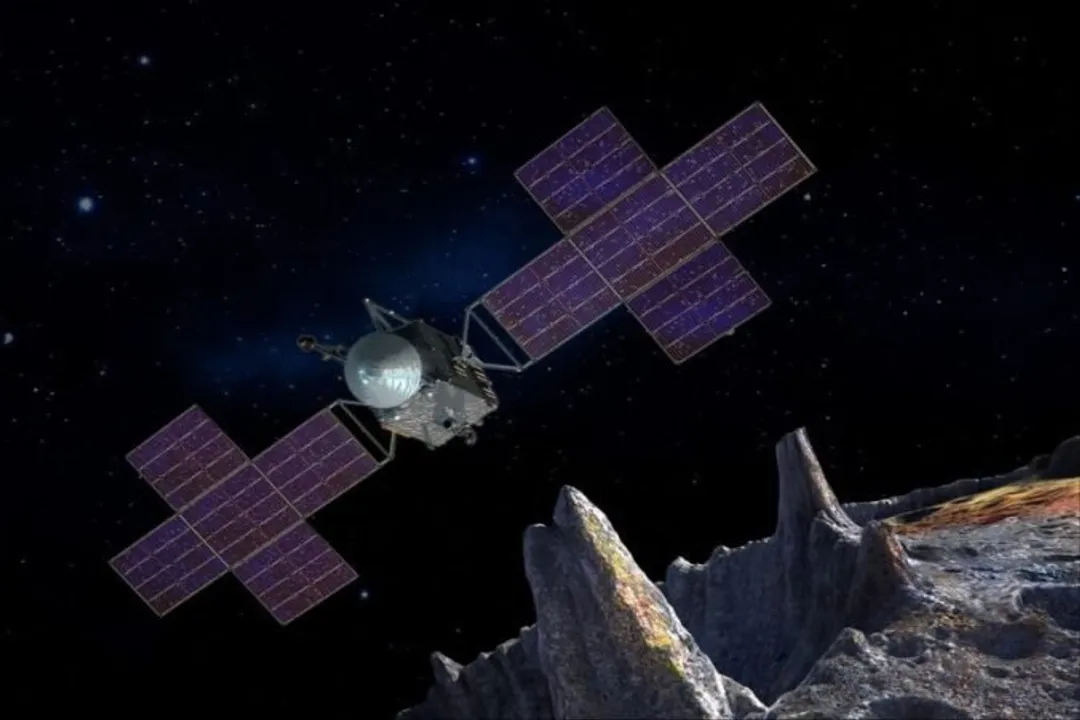
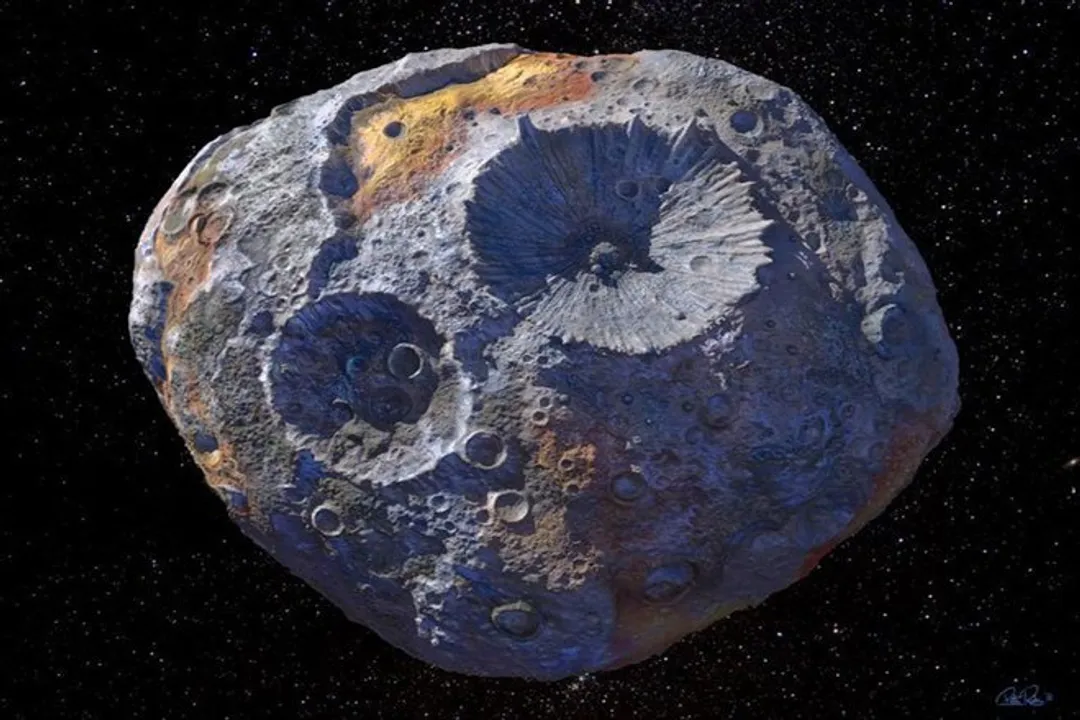
There appears to be a minimum size necessary for a planet to undergo significant differentiation and maintain a molten core for a substantial period. [9] While the exact cutoff is dependent on composition, smaller objects like asteroids or dwarf planets cool too quickly or never generate enough heat to fully differentiate into distinct layers of core, mantle, and crust. [9] The physics governing this involves the rate at which the interior cools relative to the initial thermal budget provided by accretion. [9] For bodies like the asteroid Psyche, which is thought to be a remnant of a planetesimal core, its current state gives us a direct look at what a fully differentiated, solid-metal world looks like after billions of years of cooling. [5] The ongoing and planned missions to such bodies are key to verifying models about core composition and state for all planets. [5]
| Planet Type | Expected Core State | Primary Heat Loss Factor | Key Example |
|---|---|---|---|
| Small Terrestrial | Solidified/Cooled | High surface-area-to-volume ratio [1] | Mars [6] |
| Earth-sized Terrestrial | Liquid Outer / Solid Inner [2] | Radioactive decay, latent heat [1] | Earth |
| Gas Giant | Metallic/Liquid Hydrogen/Core Mix [6] | Gravitational Compression/Structure | Jupiter [6] |
| Rocky Exoplanet | Molten (if young or tidally heated) | Tidal forces, initial accretion heat [8] | Super-Earths (hypothetical) |
When viewing images of terrestrial planets, one can often infer core status based on surface activity. Planets with active volcanism or significant internal geological features (like Earth) are much more likely to have a molten or partially molten interior sustaining that activity, whereas a geologically "dead" world like the Moon or Mars strongly implies a mostly solidified core. [1]
# Magnetic Fields and Cores
The connection between a molten, convecting core and a planetary magnetic field is one of the most critical pieces of evidence we have for these internal states. A global magnetic field requires three things: a region of electrically conducting fluid, sufficient energy to drive convective motion within that fluid, and rapid planetary rotation—the dynamo effect. [6]
Earth satisfies all these requirements with its liquid iron outer core. [6] Mars, having lost its internal heat, lacks the required convection, leading to the cessation of its global magnetic field early in its history. [1] The lack of a strong field on Venus, despite its similar size to Earth, suggests that even if its core is molten, the convection patterns are insufficient, perhaps due to a lack of plate tectonics preventing efficient mantle cooling which, in turn, cools the core boundary. [2]
For the giant planets, the liquid metallic hydrogen layer in Jupiter and Saturn acts as the conductive fluid for their massive dynamos. [6] Without these massive liquid layers, the powerful magnetic fields observed on these worlds would be impossible to explain. [6] The diversity in core states—from metallic hydrogen to silicate/iron mixtures to molten iron—highlights that "molten core" is a very broad term encompassing vastly different physical states driven by different pressures and compositions across the cosmos. [4] The study of these fields, whether through direct measurement (like the Pioneer and Voyager probes past Jupiter) or inference (like with exoplanets), remains our best tool for remotely sensing the subsurface state of distant worlds. [5] The ongoing study of Psyche is specifically aimed at understanding the structure of a world that cooled without the overlying mantle layers, giving us insight into the very heart of planetary differentiation. [5]
The sheer variety in planetary masses and resulting thermal histories means that the internal structure is rarely static; it is always evolving, cooling, or being influenced by external factors like the proximity to a star. While Earth is our only confirmed, active dynamo powered by a molten metallic core, the physics strongly suggests that molten or liquid layers are common features in the interiors of most bodies massive enough to have fully differentiated. [4] The distinction often lies in whether that molten region is actively generating a magnetic field or is simply a static, residual pool of melted material deep within a once-active world. [9]
#Videos
What a Journey to Different Planets Cores Looks Like - YouTube
Related Questions
#Citations
Do all planets have a molten core? Why? : r/askscience - Reddit
Do all planets have a molten core? - Astronomy Stack Exchange
Do other planets have a molten core? - Quora
6 The Cores of Other Planets - ScienceDirect.com
Cores, Planets and The Mission to Psyche | News | Astrobiology
What's Hiding Inside the Cores of Our Solar System? Ever wonder ...
What a Journey to Different Planets Cores Looks Like - YouTube
Some rocky exoplanets could have huge amounts of water in their ...
Minimum size for a planet to have a molten core