Could we terraform Callisto?
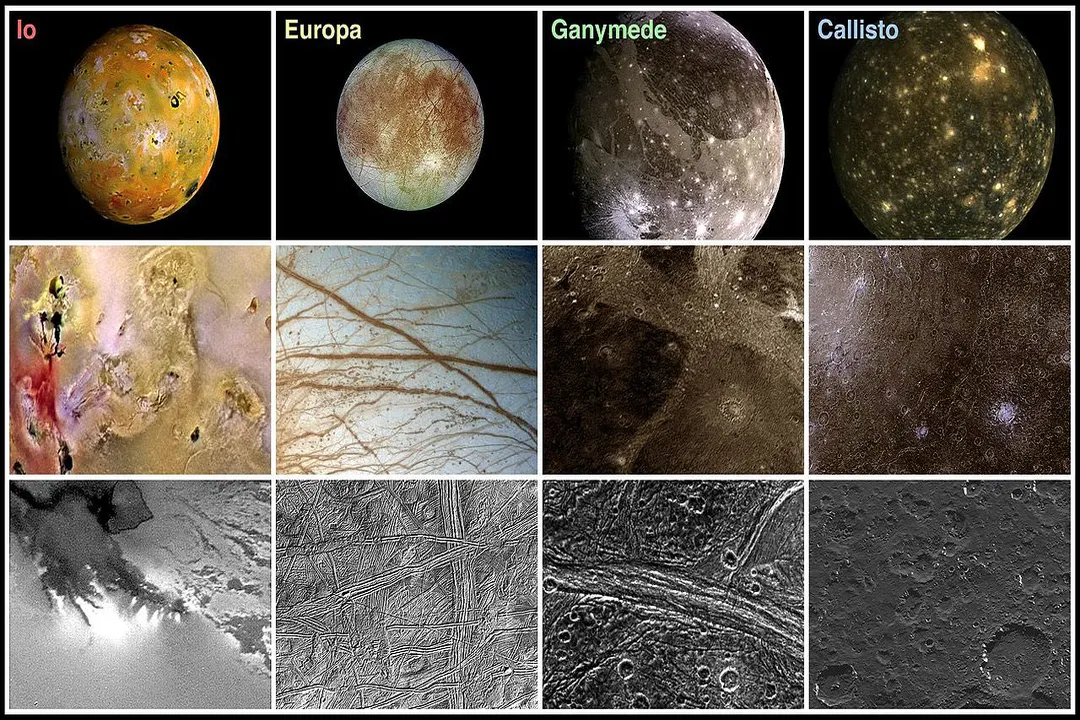
Callisto, the outermost of Jupiter’s four large Galilean moons, presents a fascinating, if immensely challenging, case study for planetary engineers dreaming of a second Earth. [5][6] While Mars often dominates discussions about extraterrestrial colonization, the icy giants in the Jovian system offer an alternative, though one requiring staggering leaps in technology and commitment. [5][6] To transform this crater-pocked, frozen world into something resembling home involves overcoming challenges rooted in extreme cold, low gravity, and a persistent lack of native atmosphere. [1]
# Icy Moon Status
The current conditions on Callisto are starkly inhospitable to human life as we know it. It exists in a state of deep freeze, covered in a thick crust of water ice and rock. [1] Scientists strongly suspect that beneath this icy exterior lies a vast, salty, subsurface ocean, potentially twice as deep as Earth's oceans combined. [1][6] This presence of liquid water, even if buried, is a major point in Callisto’s favor for future endeavors. [6] However, the surface is defined by its age and stability; it is the most heavily cratered object in the solar system, suggesting a geologically quiet history compared to its siblings like Io. [1]
The thin, wispy atmosphere that does exist is composed primarily of carbon dioxide (). [1][5] Surface temperatures hover around () or colder. [1] Furthermore, Callisto’s gravity is relatively weak, providing only about $12.6%$ of Earth's pull—roughly similar to the Moon’s gravity. [1] This low gravity is a factor that must be managed for long-term human health, though perhaps less critical than the temperature hurdle. [1]
# Galilean Contrast
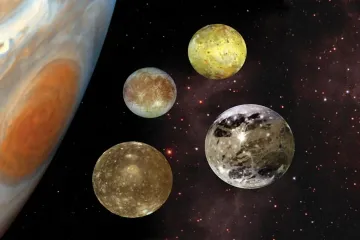
When evaluating the Galilean moons for terraforming potential, Callisto frequently emerges as the most favorable candidate, primarily due to its relationship with Jupiter’s intense magnetic environment. [1][5] Europa and Io are far more severely bombarded by radiation, owing to their closer orbits within Jupiter’s powerful magnetosphere. [5] Europa, while possessing a large subsurface ocean, is constantly irradiated, which would necessitate massive, immediate shielding before any surface work could even begin. [5] Ganymede, the largest moon, also faces a more difficult radiation scenario than Callisto. [5]
Callisto’s saving grace in this regard is its distance from Jupiter; it orbits further out, placing it on the edge of the most intense radiation zones. [1] While radiation is certainly present, the flux hitting the surface is significantly lower than for the inner Galilean moons. [1][5] This comparative safety translates into lower infrastructural costs for initial habitat protection, allowing terraforming efforts to potentially focus more resources on atmospheric introduction and thermal management rather than constant, heavy-duty radiation shielding for the entire surface. [5]
| Moon | Primary Advantage for Terraforming | Major Hurdle |
|---|---|---|
| Callisto | Least severe Jovian radiation environment | Extreme cold; low gravity |
| Europa | Massive, readily available water supply | Intense surface radiation |
| Ganymede | Largest moon; potential magnetic field | Greater size/mass for heating; radiation |
| Io | Volcanically active (heat/gas source) | Extreme vulcanism and radiation |
The sheer scale of the energy needed to melt the ice and create a substantial atmosphere for a world the size of Callisto is almost unimaginable, yet the comparative ease regarding radiation makes the initial steps potentially less deadly. [1]
# Atmospheric Buildup
The primary step in creating a habitable environment is thickening the atmosphere to retain heat and provide breathable air, or at least a pressure buffer. [7] On Callisto, the initial atmosphere is far too thin to support liquid water on the surface, as water would sublimate (go directly from ice to gas). [1]
The required gases must be introduced, either by importing them from external sources or by releasing trapped volatiles from the moon itself. [5] Given the vast quantities needed to create even a meager $0.5$ bar atmosphere, relying solely on the thin existing layer is insufficient. [5] One approach discussed is the in-situ release of gases. If the ice crust can be warmed, a significant amount of gas could be liberated. [1] However, current models suggest that even sublimating all the in the crust would still result in an atmosphere far too thin for human comfort. [1]
This points toward a requirement for importing materials—perhaps nitrogen or other necessary components—from the asteroid belt or other outer solar system bodies. [5] The logistics of transporting enough mass to create an atmosphere are staggering; this is where the concept transitions from pure science into large-scale engineering projects spanning centuries. [2] Think about the sheer volume: creating a stable, surface-pressure-equivalent atmosphere on a world with a radius of about requires introducing mass equivalent to many Earth oceans worth of material, but in gaseous form. [1]
# Heating Methods
With an atmosphere goal in mind, the next critical step is elevating the temperature above the freezing point of water to maintain liquid oceans and create a viable biosphere. [7] This requires immense energy to overcome the moon's distance from the Sun and the thermal inertia of its vast icy mantle.
One proposed method involves using large, orbiting solar reflectors or mirrors. [5] These megastructures would focus sunlight onto targeted regions of the moon, initiating the melting and sublimation process. [1][5] The concept is straightforward: increase the energy input drastically. Calculations suggest that a vast array of mirrors, perhaps kilometers across, would be necessary to achieve even moderate warming over the centuries-long timescales involved. [1] The technical challenge lies in deploying and maintaining such massive orbital infrastructure in the Jovian system, resisting gravitational perturbations and micrometeoroid impacts for generations. [5]
Another avenue involves utilizing the subsurface ocean itself. If the ice shell can be breached or melted through localized heating (perhaps using nuclear sources or geothermal taps, assuming any residual heat exists), warming the ocean could generate significant water vapor, contributing to both atmospheric pressure and temperature. [7] If the subsurface ocean is accessible, that water, which is already liquid, becomes a massive thermal battery ready to be "unlocked" into the environment. [6] The rate at which this stored heat could be released without causing catastrophic ice shelf collapse would be a major engineering constraint.
A critical consideration often overlooked when focusing solely on the Jovian environment is the need for management once warming begins. A runaway greenhouse effect is a possibility when introducing greenhouse gases like to raise temperatures. While we would start far colder than Venus, controlling the rate of warming by managing the reflectivity (albedo) of the surface—initially making it darker to absorb more sunlight, then perhaps lighter later—would be an ongoing, active process, not a one-time fix. [1]
# Gravity Constraints
The low surface gravity of Callisto, about , presents a persistent issue for any long-term human colony, even one with a comfortable atmosphere and temperature. [1] While humans can adapt to lower gravity environments, the long-term physiological effects on bone density, cardiovascular health, and reproduction are not fully understood, particularly over multiple generations born under standards. [1]
For a true terraforming scenario, one might debate whether raising the gravity is even possible. Since Callisto’s mass is fixed, gravity cannot be increased without somehow adding immense amounts of matter to the moon, a task exponentially harder than atmospheric generation. [1] Therefore, successful colonization of a terraformed Callisto means accepting a permanent, one-sixth Earth gravity environment. [1] Any long-term settlers would likely need rigorous exercise regimens or specialized artificial gravity environments within their habitats to mitigate the inevitable health decline associated with prolonged low-g exposure, even if the surface atmosphere is breathable. [1] This reality means that while the surface might become habitable, the lifestyle would always be intrinsically alien to terrestrial norms.
# The Timeline Conundrum
The time required for terraforming Callisto is the variable that most drastically separates science fiction from potential reality. [2] If we poured "all resources, money, and focus" into the project, the timeline could still be immense. [2] The challenges are so large that they aren't measured in years, but in centuries, if not millennia, for a complete transformation to a self-sustaining, Earth-like environment. [2]
If the goal is merely to create a pressurized dome environment or subsurface habitats that use native ice for water, the timeframe is much shorter, perhaps decades for the initial infrastructure. [2] However, true terraforming—creating a breathable, open-air environment—is a generational commitment. [2] One fictional scenario suggested that achieving a stable, fully breathable atmosphere on a moon like this could realistically take thousands of years based on current energy scaling estimates. [2] The biggest limiting factor is not the theoretical science of how to warm the ice or introduce gas, but the energy budget and the time needed to deploy the necessary infrastructure, such as the vast mirror arrays or mass transport systems. [2]
Considering the sheer scale difference: transforming Callisto is not like Mars, where the necessary mass for atmospheric gases is theoretically closer to hand, albeit still difficult to process. [5] On Callisto, we are modifying a world built almost entirely of rock and water ice, where the energy input required to overcome the baseline cold is the dominant hurdle. [5] The energy required to raise the temperature of a body this large sufficiently to maintain liquid oceans year-round, even with a thin atmosphere, is vastly more demanding than heating a smaller, drier planet like Mars. [7] This necessitates an energy economy far beyond current terrestrial capabilities, likely relying on fusion power or massive solar energy capture systems placed in high orbit around Jupiter or the Sun. [5]
The effort required for Callisto suggests that any successful project would have to be undertaken by a fully space-faring civilization, one that has already mastered deep-space travel and industrialization on a scale that dwarfs current global efforts. [2] It is a grand project that necessitates societal stability spanning many centuries, a commitment rarely seen in human history. [2]
#Videos
Colonizing Callisto - Third Largest Moon In The Solar System
Universe Sandbox 2 - Terraforming the Moons of Jupiter (Io, Callisto ...
Related Questions
#Citations
The Terraformation of Callisto : r/wonderdraft - Reddit
If we putted all resources, money, and focus on the terraformation ...
Which of the Galilean moons could we Terraform, and why?
Colonizing Callisto - Third Largest Moon In The Solar System
How Do We Terraform Jupiter's Moons? - Universe Today
Callisto Simulation | Terraforming Wiki - Fandom
Terraforming Callisto - Justin James - Prezi