Are there places where the Moon is not visible?
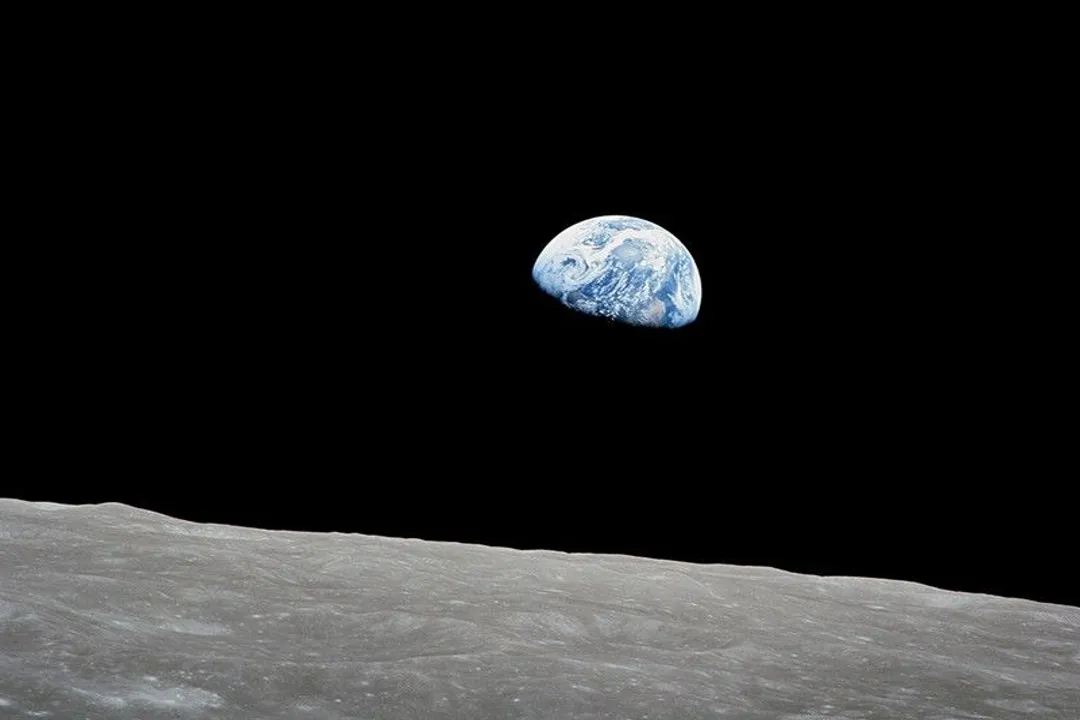
When we look up at the night sky, the Moon often feels like a constant companion, waxing and waning in its familiar cycle. We might notice it sets earlier or later depending on the day, but the immediate assumption for most people in the mid-latitudes is that if it's night, the Moon will be up somewhere. This assumption, however, breaks down entirely when we travel to the extremes of our planet’s surface. There are, indeed, specific locations on Earth where the Moon regularly disappears below the horizon for significant, continuous stretches of time. [5]
# Polar Horizon
The key to understanding these dark periods lies at the geographical North and South Poles. Much like the Sun, which experiences a six-month period of daylight followed by a six-month period of darkness at the poles, the Moon also subjects these locations to extended periods of invisibility. [1][3] It is not a case of the Moon being permanently absent, but rather that its orbital path, when viewed from the exact pole, keeps it entirely below the local horizon for weeks or even longer at a time. [2]
To an observer standing precisely at the North or South Pole, the celestial sphere appears to rotate horizontally around them, rather than rising and setting in an arc as it does further south or north. [1] If the Moon happens to be in a position where its angular distance from the celestial equator—its declination—keeps it sufficiently far below the equator while the Earth’s axial tilt is oriented a certain way, the observer will not see it ascend above their horizon. [1]
# Orbital Path
The reason the Moon's "down time" at the poles differs so dramatically from the Sun's is due to the Moon's own orbit around the Earth. The Sun’s cycle is tied directly to the Earth’s annual revolution around the Sun and its axial tilt, resulting in the famous six-month cycle of light and dark at the extreme latitudes. [1] The Moon, however, has a much faster orbital period, which complicates the situation at the poles. [7]
While the Sun stays high or low for months, the Moon's declination changes relatively quickly as it orbits. This means that a period of continuous visibility, or continuous absence, for the Moon at the pole is much shorter than the Sun’s yearly cycle. [1] The duration of invisibility depends entirely on the Moon's current orbital position relative to the Earth's tilt. [2] One might experience a few weeks of constant darkness followed by a period where the Moon is always visible above the horizon, cycling in and out over the course of its roughly $29.5$-day synodic period. [7]
This creates a stark contrast with the experience at mid-latitudes. If you are observing from, say, North, the Moon always rises and sets, taking about $12$ hours to traverse the sky, even if it's a New Moon and therefore invisible because it's up during the day. [7] At the pole, the horizon is the limiting factor, not the day/night cycle alone. [1]
# Southern View
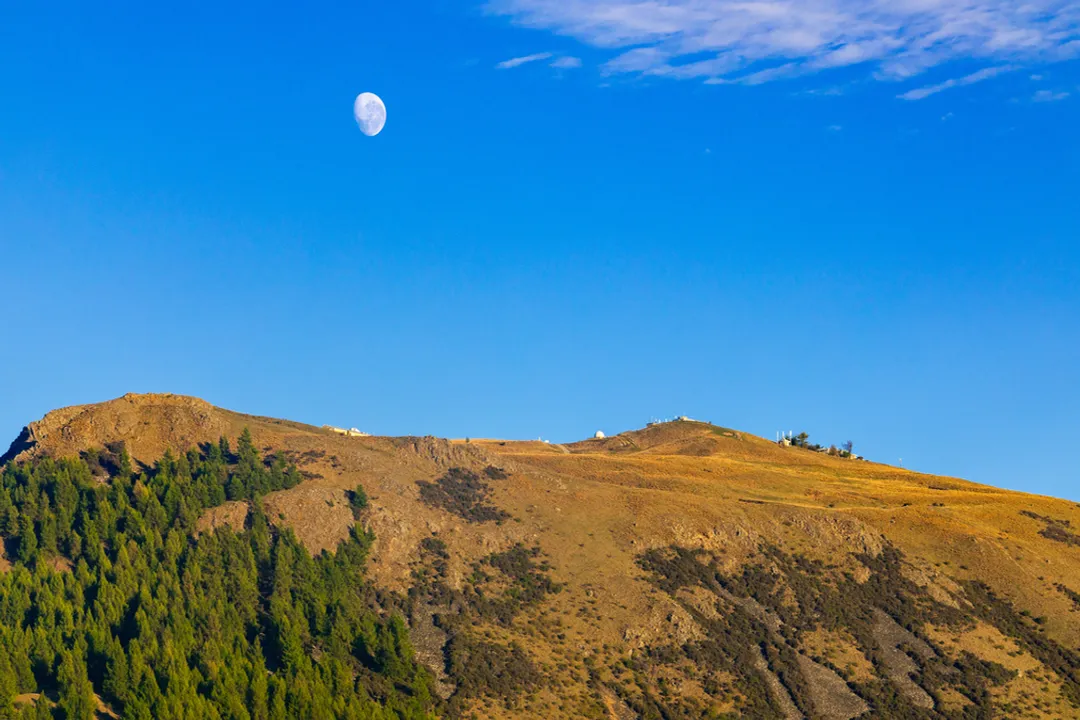
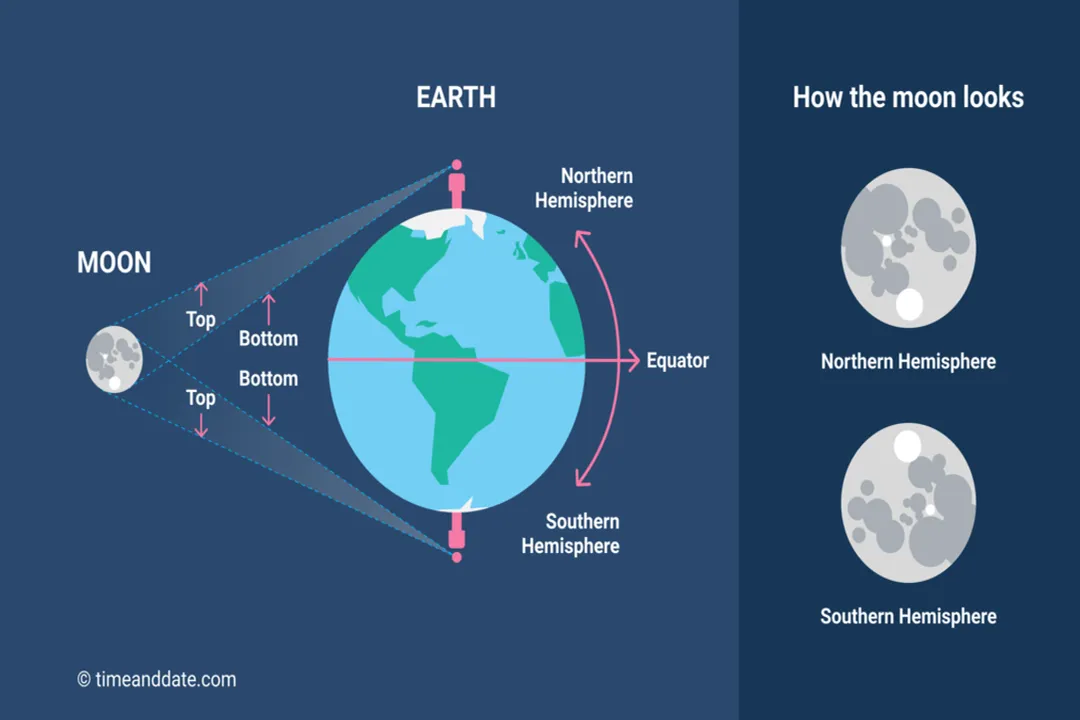
For those situated in the Southern Hemisphere, the experience of observing the Moon offers a fascinating variation, even if they are far from the South Pole. The orientation of the Moon appears "upside down" compared to how it is viewed in the Northern Hemisphere. [8] For instance, if the Northern observer sees a crescent Moon with the horns pointing to the right, a Southern observer will see the horns pointing to the left, provided both are observing the same phase near the horizon. [8]
This difference in appearance is a direct result of perspective; as an observer moves south, the celestial objects appear to rise and set differently relative to their head and feet. While this doesn't cause the Moon to become permanently invisible, it is a profound shift in the visual celestial mechanics that an observer at the pole experiences far more dramatically when the object remains below the horizon entirely. [8]
# Beyond Earth
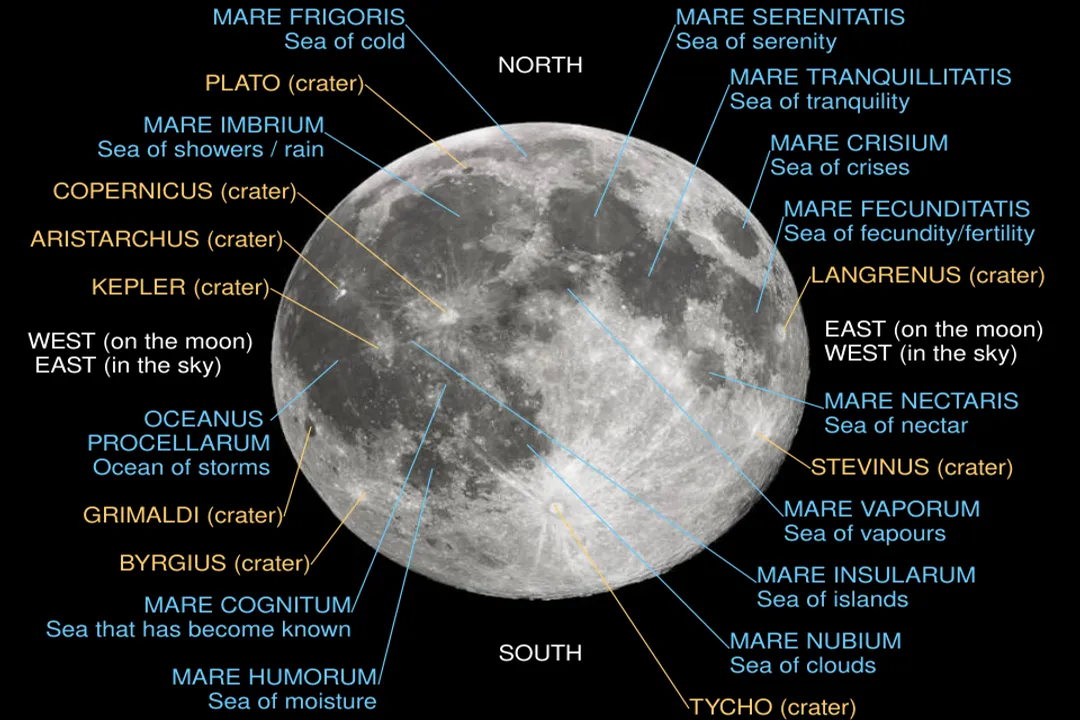
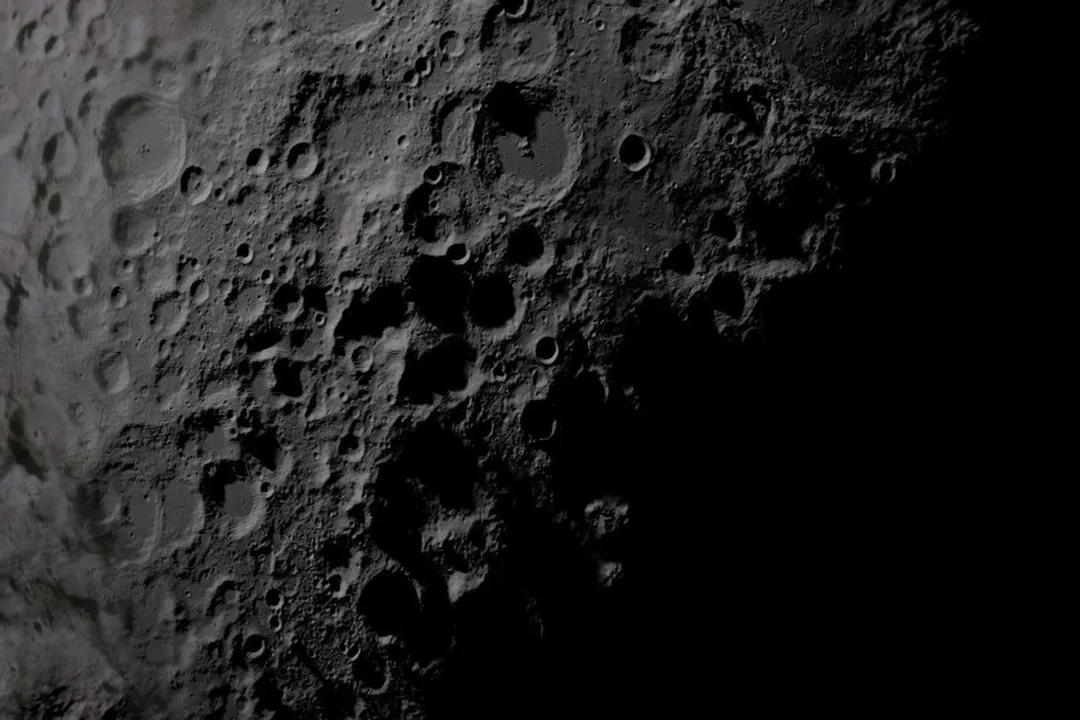
It is interesting to briefly contrast the situation on Earth with what might be happening on our celestial neighbor. While Earth-based observers near the poles lose sight of the Moon due to the planet’s rotation and tilt, on the Moon itself, the geography creates areas of permanent shadow. [4] Some regions near the Moon’s poles remain shielded from direct sunlight for billions of years because of the fixed orientation of the Moon relative to the Sun. [4] These permanently shadowed craters likely hold ice, offering a completely different kind of "invisibility"—not due to the horizon, but due to a lack of light source whatsoever. [4] This highlights that the concept of "never seeing" an object depends entirely on the geometry and environment of the observer. [4]
# Analyzing Observation Times
The fundamental difference between visibility at the equator, mid-latitudes, and the poles is the relationship between the observer’s latitude and the celestial body’s maximum declination. For an object to remain permanently above the horizon at a given latitude , the object's declination must always be greater than . Conversely, for the object to remain permanently below the horizon, its declination must always be less than . [1]
Since the Moon's declination varies between approximately and over its $27.3$-day sidereal period, [7] this imposes strict limits on continuous visibility.
Consider a location at latitude North. For the Moon to be permanently below the horizon, its declination would need to be less than , or . [1] Since the Moon regularly reaches declinations much further south than , it will dip below the horizon for a period. However, the Moon also regularly reaches declinations near . If the Moon reaches , it is definitely visible at North because . Therefore, the situation at North is that the Moon is below the horizon only when its declination falls between and . [1]
This means that the period of continuous invisibility at North is tied to how long the Moon spends in that specific declination band during its orbit, which is indeed a predictable, non-zero amount of time. [1] The closer one gets to the exact pole, the more pronounced and prolonged this low-declination period becomes until, theoretically, at the exact pole, the Sun's year-long cycle sets the stage for the Moon’s shorter, but still real, periods of absence dictated by its orbital plane. [2]
This dependency on declination provides an interesting perspective for ancient navigators or explorers operating near the polar circles. While the Sun offered a reliable, if long, marker of the summer and winter solstices, the Moon would have been an unreliable, intermittent clock for judging seasonal progression, sometimes vanishing for weeks or more even when the Sun was up. [5] A seasoned mariner might know, based on previous years of observation, that around the time of the midwinter solstice, the Moon might not show itself for a full fortnight near their high-latitude camp, forcing reliance solely on the stars or the Sun's brief midday arc. [3]
# Visibility Thresholds
We can map out the latitude where the Moon can be continuously above the horizon versus where it must dip below it. Since the Moon’s maximum northern declination is about , any location with a latitude higher than will experience times when the Moon is below the horizon. [1]
This means that any location north of approximately North or south of South will have periods where the Moon remains unseen because it cannot climb high enough above the horizon to clear the line of sight. [1][2] If you are at latitude, the Moon, at its most northerly point ( declination), will just graze the horizon without rising above it when viewed from the south, and vice versa. [1] For anyone further poleward than this line, the Moon’s inability to reach a high enough altitude above the horizon during its southern extremes guarantees periods of absence. [5] This demarcation line—the parallel—is the true boundary for guaranteed daily rise and set, setting it apart from the equator where the Moon always rises and sets daily, regardless of phase. [7]
The certainty of visibility is therefore a measure of latitude. In the tropics, the only time you won't see the Moon is when it is in its New phase and up during the day, or its Full phase and set during the day, making it absent for a period of about $12$ hours during the night or day respectively. [7] At , the absence extends from a few hours to potentially several weeks, depending on the Moon's orbital position relative to the Earth's tilt and the observer's exact latitude relative to the circle. [1][2]
#Videos
A rare 'Black Moon' is about to darken the sky - YouTube
Related Questions
#Citations
Is there a spot on the surface of earth that the moon can't be seen ...
Is there any point on earth where the moon stays below the horizon ...
Is there anywhere on Earth that the moon is never visible? The poles?
There Are Places On The Moon That Never See Sunlight – Here's Why
There are places where the Moon does not appear ... - Facebook
Lunar mare - Wikipedia
Moon Facts - NASA Science
Does the Moon Look the Same Everywhere? - Time and Date
A rare 'Black Moon' is about to darken the sky - YouTube