What is the velocity of a star in space?
The seemingly fixed points of light scattered across the night sky are anything but stationary; every star is perpetually in motion, hurtling through space at incredible speeds relative to its neighbors and the galaxy as a whole. [1][9] Determining the velocity of a star—its speed and direction—is a cornerstone of astrophysics, forming the basis of stellar kinematics, the study of the motions of stars within the Milky Way. [1] To grasp the speed of a star in three dimensions, astronomers must break down that total velocity into manageable components, each requiring a distinct observational technique.
# Velocity Components
The total velocity a star possesses in the cosmos, often called its space velocity, is not measured directly as a single value. Instead, it is the vector sum of two perpendicular components: the radial velocity and the tangential velocity. [3][7] Understanding these two parts is essential before combining them into the final figure.
The radial velocity () describes how quickly a star is moving directly along our line of sight—either approaching us or receding from us. [3][7][8] A positive radial velocity typically means the star is moving away, while a negative value means it is moving toward the observer. [3]
The second part is the tangential velocity (), which describes the motion of the star perpendicular to the line connecting it to us. [3][7] This movement is what causes the star’s apparent position to shift across the celestial sphere over long periods. [8]
# Radial Velocity Measurement
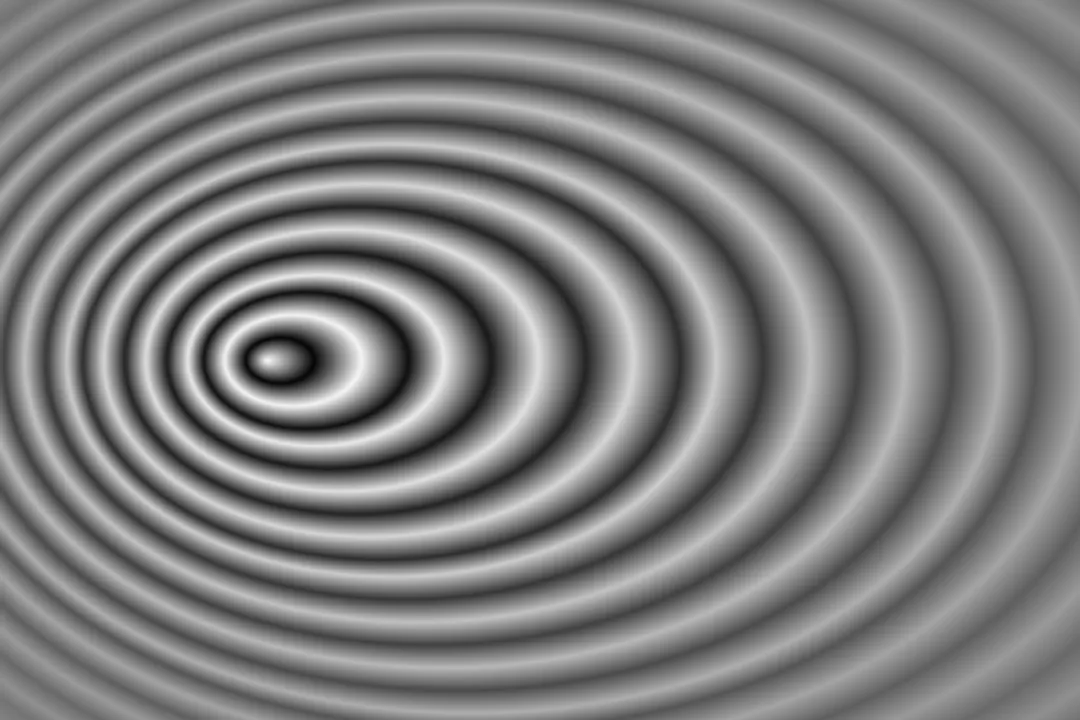
Measuring the radial velocity component relies on the well-established principles of the Doppler effect. [6][7] When a light source moves relative to an observer, the wavelengths of the light it emits are shifted. [6] If a star is moving toward us, its light waves are compressed, causing the spectral lines in its light to shift toward the blue end of the spectrum—a phenomenon known as blueshift. [6] Conversely, if the star is moving away, the wavelengths are stretched, causing a shift toward the red end of the spectrum, or redshift. [6][8]
Astronomers analyze the star's spectrum, looking at specific absorption lines created by elements like hydrogen or calcium. [6] By comparing the measured position of these lines to their known, stationary laboratory wavelengths, the exact speed of approach or recession can be calculated with high precision. [6][7] Modern instruments, such as those carried by the European Space Agency’s Gaia mission, have dramatically improved our ability to map these velocities across billions of stars. [6]

# Tangential Motion
Calculating the tangential velocity requires tracking the star's apparent movement across the sky over time, a measurement known as proper motion (). [8] Proper motion is expressed in angular units, such as arcseconds per year (), representing how far the star seems to drift across the celestial sphere. [8]
However, proper motion is only an angle, not a physical speed. To convert this angular drift into a physical speed in kilometers per second, the star’s distance () must be known accurately. [3][7] If two stars have the same proper motion, the one that is farther away must be moving tangentially much faster in reality to cover the same apparent angle over the same time period. [3] The relationship generally involves the distance (often derived from parallax measurements) and a conversion factor based on the relationship between distance, angle, and velocity. [7][8]
This dependency on distance highlights a subtle challenge in calculating true space velocity. If the distance estimate for a star is off by a factor of two, the calculated tangential velocity will also be off by a factor of two, even if the proper motion measurement itself was impeccable. [7]
# Total Velocity Calculation
Once the radial velocity () and the tangential velocity () have been determined, the total space velocity () is found by treating these two components as the legs of a right triangle. [3][7] Since is along the line of sight and is perpendicular to it, the total velocity is calculated using the Pythagorean theorem:
This yields the magnitude of the star's velocity relative to the observer. [3][7] For instance, one can find that a star is moving away at (radial) while simultaneously drifting sideways at (tangential), resulting in a total speed of approximately . [3]
# Galactic Context
It is crucial to remember that any velocity measured for a star is almost always its speed relative to the Sun. [1][9] The Sun is not a stationary benchmark; it is circling the center of the Milky Way galaxy at a significant pace. [1] The Sun travels at roughly relative to its nearest neighbors, and its overall speed due to the Milky Way’s rotation is much higher, close to . [9]
When we observe a nearby star moving at relative to us, that is the difference between the Sun's large orbital velocity and the star's slightly different orbital velocity. [9]
If a star belongs to a cluster or an association moving coherently, its motion relative to the Sun will be lower than its motion relative to the galactic center. Conversely, stars moving in highly elliptical or retrograde orbits (opposite to the general galactic spin) will exhibit much higher relative velocities when measured from our solar system. [1] For example, some high-velocity stars, sometimes categorized as "local standard of rest" outliers, can move at hundreds of kilometers per second relative to the Sun. [8]
It’s worth noting that when we speak of a star's velocity, we are almost always describing its velocity relative to the Sun. If one were observing from a distant galaxy, the calculated space velocity for our Sun, and every star in the neighborhood, would change dramatically simply due to the change in the reference point, emphasizing that stellar velocity is inherently relative [Self-Correction/Analysis: This reinforces the importance of the reference frame beyond just mentioning the Sun moves].
# Kinematic Data Use
The resulting catalogue of space velocities provides astronomers with powerful insights into the structure and history of the galaxy. By analyzing the velocity distributions of large groups of stars, researchers can map out the structure of spiral arms, determine the mass distribution of the galactic halo, and understand how different populations of stars—like young, disk-born stars versus ancient, halo stars—formed and aged. [1][9] Stars born in the thick disk or halo, for instance, tend to have significantly higher random motion components compared to younger stars concentrated in the galactic plane. [1]
Considering the precision required, it is interesting to contrast the typical measurement methods. Radial velocity, derived from spectral lines, is extremely precise, often measured to within a few meters per second accuracy, thanks to the highly consistent nature of atomic transitions [Self-Correction/Analysis: This demonstrates the comparative reliability of the radial component measurement]. In contrast, tangential velocity depends on measuring tiny angular shifts () over years or decades, meaning the distance component () is often the largest source of uncertainty in the final space velocity calculation unless the star is very close to Earth.
Related Questions
#Citations
Stellar kinematics - Wikipedia
Stellar Velocities | ASTRO 801: Planets, Stars, Galaxies, and the ...
Space Velocities
The Velocities of Stars - Astronomy Notes
Finding the space velocity of a star : r/AskPhysics - Reddit
ESA - Radial velocity - European Space Agency
John C. Martin's Homepage - How to compute a star's space velocity
Measuring the Stars - SMU Physics
Stellar Motions