Is it a star if it's flickering?

The perception of a star flickering or twinkling in the night sky is one of the most common celestial observations, often leading people to wonder if the object is unstable, changing color, or perhaps signaling something unusual like being near the end of its life [()]. In reality, when you observe a star seemingly flashing or shimmering, it is rarely the star itself acting erratically; rather, the phenomenon is almost always an optical effect caused by our own planet’s atmosphere [()]. The light from these distant suns travels across millions of light-years in a straight line, only to be bent and distorted in the final few miles as it punches through Earth's air before reaching our eyes [()].
# Atmospheric Distortion
The scientific term for this shimmering effect is astronomical scintillation, which describes the rapid variations in the intensity and position of a star's light [()]. Stars are so incredibly far away that they appear to us as perfect pinpoints of light. When this single, narrow beam of light enters the Earth's atmosphere, it encounters layers of air with varying temperatures and densities [()]. This turbulence causes the light path to refract, or bend, slightly and randomly many times per second [()][()].
Imagine looking through a swimming pool toward the bottom; the image appears distorted and wavy. The atmosphere acts like a vast, constantly churning lens system acting on the incoming starlight [()]. Because a star is an unresolved point source, this continuous bending causes the apparent brightness and position to jitter rapidly, which we interpret as twinkling or flickering [()]. This effect is so pronounced that it is simply an optical illusion created by the atmosphere, not a true physical change in the star itself [()][()].
# Star Light Path
The distance light travels is immense, yet its speed is finite; the light you see from a star left that star long before it reaches your eye, traveling at the speed of light [()]. The critical element in scintillation is how that light reaches us. Since stars are effectively points, the entire beam is susceptible to distortion by the atmospheric layers overhead [()].
A helpful comparison often made by observers is that planets rarely seem to twinkle, even when they are very bright in the sky. This difference arises because planets are much closer to Earth than stars. While they appear small to the naked eye, they present a slightly larger angular disc of light, rather than a perfect point [()]. When the atmosphere distorts the light from a planet, it might dim one edge while simultaneously brightening another, but these effects tend to cancel each other out across the face of the disc, resulting in a much steadier appearance compared to the flickering seen from a true point source star [()].

# Object Brightness
The intensity of the flickering sensation is heavily influenced by how bright the object is and where it sits in the sky. Brighter objects, whether they are stars or planets, often exhibit the most dramatic twinkling because the contrast between the object and the background is higher, making the minor fluctuations in brightness more noticeable [()].
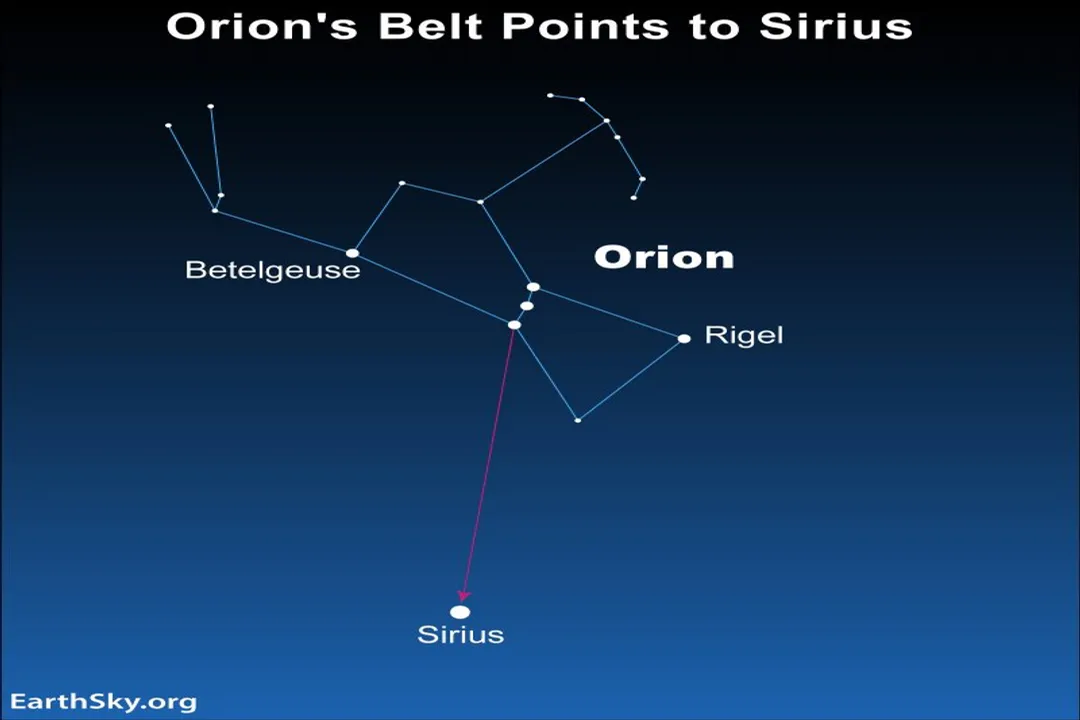
Certain stars are notorious for their visible twinkling, especially when they are low on the horizon. For instance, stars like Sirius, Capella, and Arcturus are frequently cited as examples of objects that can appear to flash dramatically [()]. This is because light from an object low in the sky travels through a much thicker column of Earth's atmosphere compared to an object directly overhead [()][()]. The longer the path through the turbulent air, the more opportunities there are for refraction and distortion to occur, leading to more pronounced scintillation [()]. If you observe the same bright star a few hours later when it has climbed higher in the sky, you will likely notice the flickering lessen considerably.
# Color Shifts
Sometimes, the "flickering" is accompanied by rapid shifts in color—perhaps an object appears red one moment and blue the next [()]. This multicolored flashing, sometimes observed with bright stars like Sirius, is also an extension of atmospheric scintillation. When the atmosphere is particularly turbulent, the light path is bent so severely that the different wavelengths (colors) of light are refracted at slightly different angles [()].
In essence, the atmosphere momentarily acts like a prism on the pinpoint of starlight [()]. Since blue light is typically refracted more than red light, a very bright star low on the horizon can display vivid, flashing colors as the atmospheric layers shift its light spectrum slightly toward the blue or red end of the visible range [()]. If you notice a very bright object showing rapid red, blue, and white flashes, you are likely looking at a very bright star or perhaps even a planet positioned very low above the horizon, where the atmospheric interference is at its maximum [()].
# Other Flashes
Not every bright, flickering object in the sky is a star subject to atmospheric scintillation. When trying to determine what you are seeing, it is helpful to consider movement and duration. If an object appears to be moving steadily across the sky, or if its flashing is too regular or slow, it is probably not a distant star [()][()].
What could it be instead?
- Aircraft: Airplanes have navigation lights that flash predictably, and their proximity to the ground means their light passes through the lower, often more turbulent, atmosphere, causing them to appear to twinkle strongly [()].
- Satellites: Many low-Earth orbit satellites, while generally appearing as slow, steady points of light, can sometimes reflect sunlight toward the observer in a way that creates a very brief, bright flash, which might be mistaken for a quick twinkle or blink [()].
- Planets: As mentioned, planets rarely twinkle, but they can still exhibit color separation when extremely low, which some observers might describe as flickering [()].
To distinguish between these possibilities, take note of the object's movement relative to the background stars. If the object is stationary relative to the fixed stars but shimmering, it is almost certainly a distant star or planet experiencing heavy atmospheric effects [()]. If it is moving smoothly across the star field, it is likely an artificial object like a satellite or airplane [()].
# Practical Observation
For the casual stargazer interested in reducing or understanding the flicker, the experience is dictated by location and timing. If you are trying to get the sharpest view of a star, timing your observation for when that star is near its highest point in the sky (its culmination) will offer the best results, as the light path through the atmosphere will be at its shortest [()]. This is a simple practical step: the closer to overhead, the less the air interferes. Furthermore, understanding that a star's "flicker" is a result of the light traveling through the air, not the star itself, provides a deeper context for stargazing. For example, on a very clear, still night with minimal wind shear in the upper atmosphere, even a low-hanging bright star might appear less agitated than during a night characterized by strong jet stream activity high above, even if both nights have low ground-level humidity. This illustrates that the atmospheric effect is dynamic and localized to the air column above the observer at that specific moment [()][()].
#Videos
What Does It Mean When A Star Is Flickering? - Physics Frontier
Related Questions
#Citations
Flickering multicolored star, what is it? : r/askastronomy - Reddit
There is a star in the sky that keeps flashing. What is it and ... - Quora
What is this rapidly twinkling red, blue, and white star I saw?
Stars Don't Really “Twinkle” When you see a star ... - Facebook
What Does It Mean When A Star Is Flickering? - Physics Frontier
Flashing star in autumn? Here are 3 candidates - EarthSky