What step follows the coagulation of macroscopic particles before gravity dominates growth?
Answer
Reaching the meter barrier problem phase.
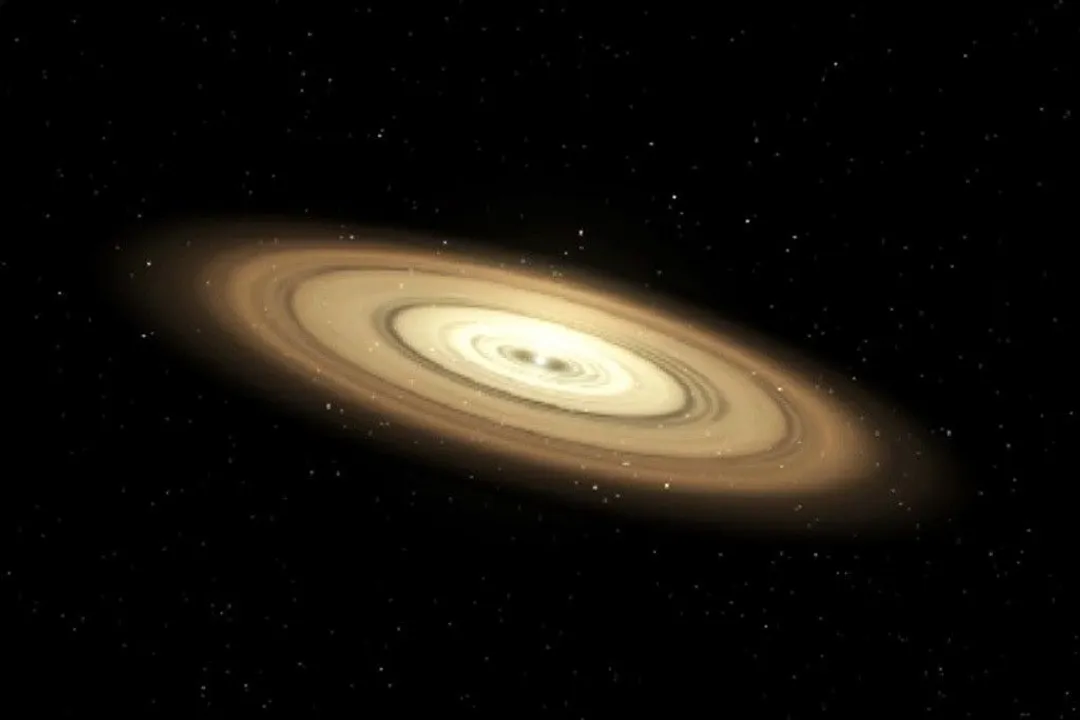
The growth of solid material in the primordial solar nebula proceeds sequentially. Initially, micron-sized dust grains stick together via gentle forces like coagulation, forming centimeter-sized aggregates, which eventually become macroscopic particles approaching a meter in size. Upon reaching approximately one meter in diameter, these objects encounter the meter barrier problem. This critical phase is defined by the powerful aerodynamic drag exerted by the dense gas in the protoplanetary disk, which forces the objects to rapidly lose orbital velocity and spiral inward toward the central proto-Sun, threatening their survival before they can grow large enough for self-gravity to take over.
Related Questions
What is the typical size range defining a planetesimal?What step follows the coagulation of macroscopic particles before gravity dominates growth?What governed the initial growth from micron-sized dust grains to centimeter-sized objects?What results from strong aerodynamic drag on objects reaching about one meter in the dense protoplanetary disk?What condition triggers the streaming instability pathway for rapid planetesimal formation?After surpassing the meter scale and growing into a few kilometers, what dominates the growth dynamics of a body?What materials primarily comprised planetesimals forming inside the snow line of the protoplanetary disk?Why did outer disk planetesimals grow potentially much larger than inner disk ones?What objects observed today represent the surviving remnants of the planetesimal population?What was the state of the protoplanetary disk surrounding the young Sun approximately 4.6 billion years ago?