Do you believe in the existence of aliens?

The persistent contemplation of life beyond Earth sits at the intersection of profound scientific inquiry and deep-seated human curiosity. Whether the cosmos is teeming with biological activity or if Earth represents a rare, isolated miracle remains one of the most compelling mysteries facing humanity. This question is not confined to science fiction; it drives major astronomical projects and fuels continuous public debate across forums and social media platforms worldwide. Different sources offer vastly different perspectives, ranging from cautious scientific probabilities to passionate personal convictions regarding extraterrestrial existence.
# Scientific Stance

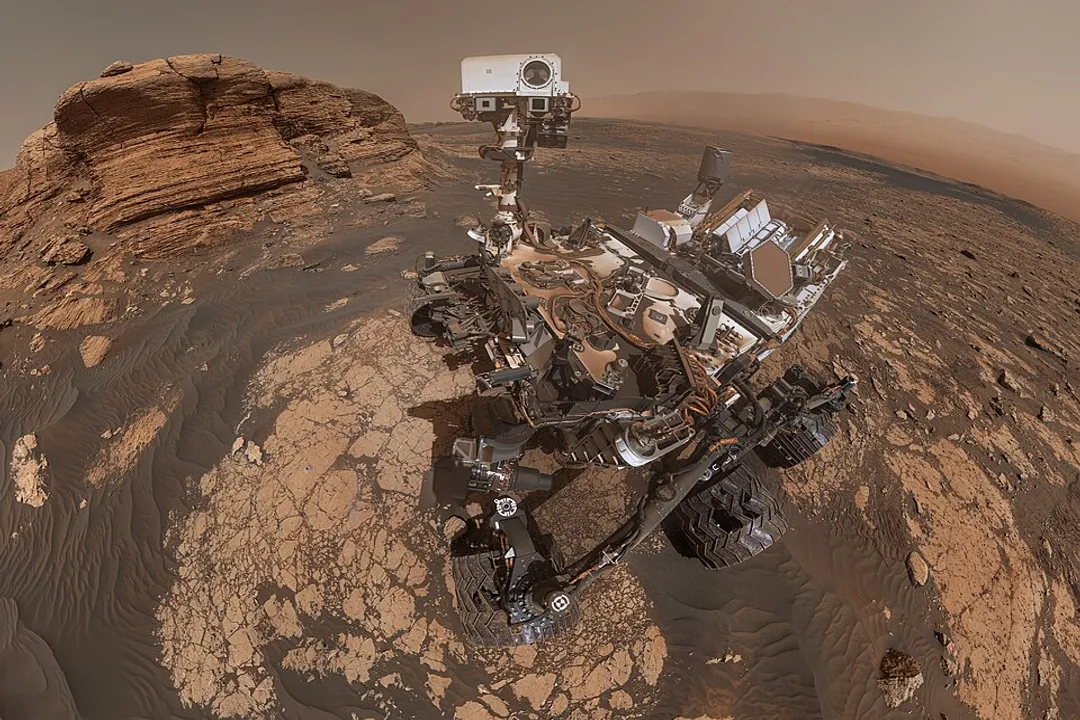
The search for extraterrestrial life is a serious endeavor supported by organizations like NASA, which actively looks for evidence of life, past or present, on other worlds, including Mars. From a scientific viewpoint, the sheer scale of the universe suggests that life should exist elsewhere. The Milky Way galaxy alone is estimated to contain hundreds of billions of stars, and there are billions of galaxies. This immensity feeds the argument that the conditions necessary for life—water, organic molecules, and energy—are likely replicated countless times across the cosmos.
Extraterrestrial life, in its broadest definition, simply means life that did not originate on Earth. This search encompasses everything from the most basic microbial forms to complex civilizations. A NASA scientist noted that the possibility is real, especially when considering environments like Europa or Enceladus, which are thought to harbor subsurface oceans that could potentially support life.
However, the scientific community remains firmly grounded in observable evidence. While the probability arguments are strong, the detection of any life remains elusive. The focus often involves understanding the chemical and physical conditions required for abiogenesis—the process by which life arises from non-living matter—and then searching for those conditions elsewhere. The work involves looking for biosignatures, which are indicators of past or present life, often through the study of planetary atmospheres or direct sample return missions.
# Expert Opinion

Surveys among researchers show a range of beliefs, but a general optimism persists. One study analyzing the views of scientists found that around 60% of respondents believed that extraterrestrial life exists somewhere in the universe. Furthermore, many scientists believe that while simple life might be common, intelligent, technologically advanced life capable of communication is far less certain.
The distinction between life and intelligent life is crucial in scientific discussions. If we consider the vastness of the universe, it seems statistically improbable that Earth is the only place where biology has taken hold. Yet, when we consider intelligence, the necessary evolutionary pathway seems far more contingent and complex. The criteria for life itself can be debated; for instance, some definitions require water as a solvent, while others permit alternatives like methane, though water is the standard for life as we know it.
# Public Beliefs
The general public's belief often differs from the cautious, evidence-based approach of professional scientists. Discussions across social platforms reveal a wide spectrum of opinions, often colored by personal philosophy, exposure to media, or specific reported incidents.
On platforms like Reddit, discussions about alien existence often blend personal anecdotes with skepticism. For example, some users express a firm belief based on the numbers—the sheer scale of the universe—while others demand tangible, verifiable proof before they will be convinced. The concept often feels less about statistical probability and more about a yes or no certainty for many lay observers.
Quora users often articulate their positions based on logic or intuition. Many who believe point to the sheer number of stars and planets as an overwhelming factor arguing for widespread life. Conversely, those who doubt or remain unconvinced often cite the lack of unambiguous evidence despite decades of searching. One common counterpoint is that if life is so abundant, the absence of observable evidence—the "Great Silence"—is itself highly significant.
The public perception is also heavily shaped by phenomena like Unidentified Aerial Phenomena (UAP), previously known as UFOs. While these sightings prompt intense debate, mainstream scientific bodies typically treat them as phenomena requiring further investigation rather than proof of alien visitation.
# The Great Silence

The contradiction between the high probability of life existing and the current lack of contact forms the core of the Fermi Paradox. If the universe is ancient and vast, and life arises easily, where is everybody? This paradox frames the search efforts, pushing researchers to examine why potential extraterrestrial civilizations have not made their presence known.
There are many proposed solutions to this paradox, suggesting that perhaps intelligent life is common but short-lived, destroying itself before it can become interstellar. Another possibility is that the distances are simply too great for meaningful contact, even if civilizations are present. The BBC lists ten reasons why aliens might exist but not visit, emphasizing factors like distance, lack of interest, or simply being too different for us to recognize.
If we look at our own search efforts, they are heavily biased toward detecting radio signals, a technology-based assumption. We are listening for a very specific type of signal originating from a technology level we recognize, which might be like listening for smoke signals when others are communicating via quantum entanglement. It suggests our search methods are constrained by our own current level of technological understanding.
It is fascinating to consider the two extremes of the probability spectrum. On one end, given the estimated stars in the observable universe, the probability of any life existing elsewhere approaches certainty, even if the conditions for its formation are incredibly rare. On the other end, the probability of that life evolving intelligence, mastering interstellar travel, and then choosing to interact with Earth in a detectable way introduces a series of high-probability filters that rapidly collapse that near-certainty back toward rarity.

# Methods of Discovery
Scientific investigations into extraterrestrial life are methodical, focusing on environments that meet known requirements for biology. Missions target places like Mars to search for fossilized evidence of past microbial life. The Planetary Society emphasizes that the search for extraterrestrial intelligence (SETI) continues to monitor the skies for deliberate signals, though such detection remains an ongoing project.
The search is evolving beyond radio waves. Modern research, such as that conducted by NASA, includes looking for atmospheric biosignatures on exoplanets orbiting distant stars—gases produced by living processes that change the light passing through an atmosphere. This represents a shift from trying to hear an alien civilization to trying to see its biological footprint.
The concept of "life as we know it" often anchors the search, usually implying carbon-based chemistry dependent on liquid water. However, acknowledging the potential for truly different biologies—life based on silicon, for example—requires broadening our search parameters, a step that is methodologically challenging but necessary for a complete assessment.
# Philosophical Implications
The answer to the existence question has significant philosophical weight, regardless of the outcome. If we find life, even microbial life on Mars, it fundamentally changes our perception of Earth's place in the universe, suggesting biology is a universal process. If, after exhaustive searching, we find nothing, it elevates the status of Earth and life here to something profoundly unique and perhaps fragile.
The anticipation surrounding evidence often fuels cultural interpretations. In some communities, belief in aliens is tied to faith or a sense of wonder that transcends empirical proof. Conversely, the scientific community seeks concrete, repeatable data, often demanding evidence that withstands intense scrutiny before confirming a discovery. For instance, a definitive scientific announcement would require verification by multiple independent teams, a standard often missed in viral online claims.
A useful way to frame the public expectation versus scientific reality involves understanding the concept of a confidence threshold. When an average person on a forum says they "believe," they might be operating at a 60-70% confidence level based on general principles. A scientific body, however, operates under a standard approaching the statistical rigor of (five sigma), meaning a one-in-3.5-million chance of being wrong—a much higher bar than mere conviction. Bridging this gap requires not just finding a signal, but developing observational technology so advanced that even the most rigorous skeptic must concede the data's improbability under natural law.

# The Next Steps in Inquiry
The debate is unlikely to cease until definitive proof—or disproof—emerges. For now, the effort continues across multiple fronts. Space agencies plan missions to icy moons and distant planets, while ground-based and orbital telescopes refine their ability to analyze exoplanet atmospheres.
The search also needs to evolve to account for civilizations far older or more advanced than ours. If an advanced civilization exists but communicates using means we have not conceived of, their presence may be entirely invisible to our current detection technology. This means that the "belief" in aliens must, for the time being, coexist with the acknowledgment of our current observational limitations.
Ultimately, whether one believes in extraterrestrial life often comes down to a personal calculation balancing the seemingly infinite possibilities of space against the finite, currently observed data of Earth. The scientific consensus leans toward the high probability of life existing somewhere, while the certainty of contact remains firmly in the realm of speculation until evidence shifts the balance.
#Videos
Do Aliens Exist? Professor Brian Cox Answers Your Questions
Related Questions
#Citations
Do we believe that Aliens exist? : r/Animorphs - Reddit
Do Aliens Exist? We Asked a NASA Scientist: Episode 5
Extraterrestrial life - Wikipedia
Do aliens exist? We studied what scientists really think - Durham ...
Do you believe in 'aliens?' Why or why not? - Quora
Do you believe in aliens as a normal person? - Facebook
Do You Believe Aliens Exist? - The New York Times
Do Aliens Exist? Professor Brian Cox Answers Your Questions
Are aliens real? | The Planetary Society
10 reasons why aliens probably exist (but won't be visiting us ... - BBC