Can stars be unstable?
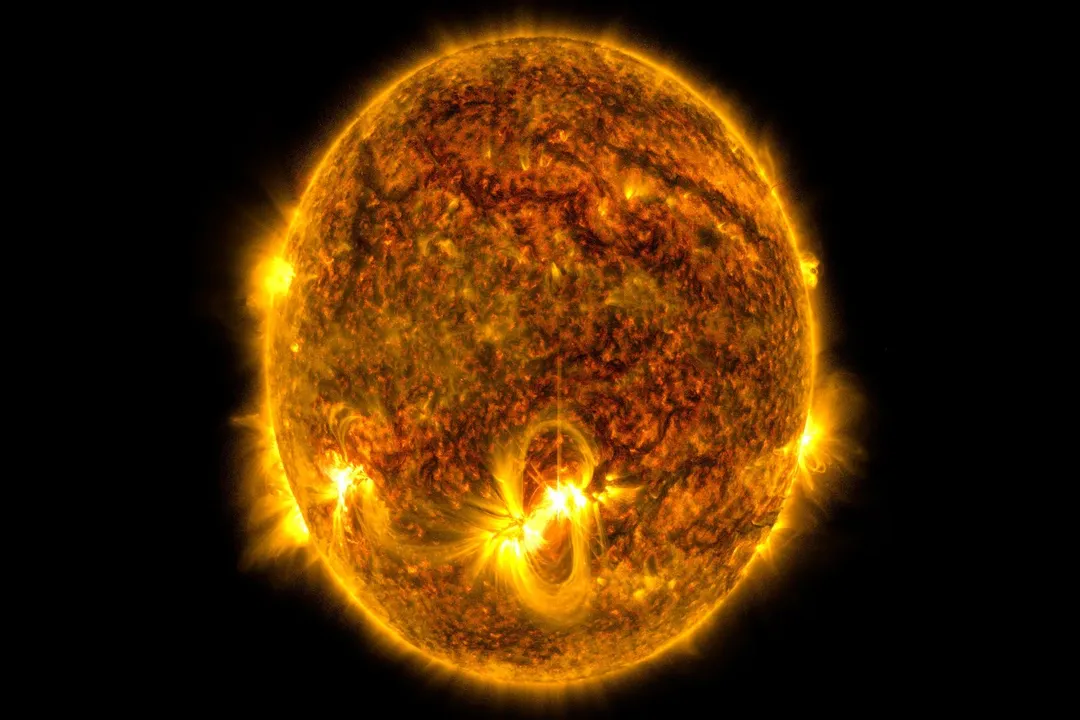
The life of a star appears, from a distant perspective, to be one of eternal, unwavering brilliance, a steady beacon in the night sky. However, this perception of stability is merely a snapshot of a prolonged, dynamic equilibrium. Stars are, in fact, inherently prone to instability, a characteristic that dictates their entire life cycle, from their fiery birth to their dramatic or quiet demise. [1][4] The central drama in any star's existence is a constant, titanic struggle between two colossal forces: the relentless inward crush of its own gravity and the immense outward push generated by the thermonuclear fusion occurring deep within its core. [1][5]
# Gravitational Balance

A star spends the vast majority of its existence in a state known as hydrostatic equilibrium. [1] This is the very definition of a stable star—a perfect balance where the pressure generated by the scorching-hot gas pushing outwards perfectly counteracts the mass pulling everything inwards. [3][5] Because stars are so incredibly massive, their gravitational forces are immense. [3] For a star like our Sun, this balance is maintained for billions of years by fusing hydrogen into helium in its core. [1] As long as the star has fuel for this fusion process, it remains anchored in this stable configuration.
The sheer mass of a star determines the magnitude of this gravitational pressure. The more massive the star, the greater the inward pull it must contend with, which in turn means it must sustain a higher core temperature and pressure to resist collapse. [3] This explains why massive stars burn through their fuel much faster than smaller ones; they are fighting a proportionally more intense gravitational battle every second of their lives. [1]
# Fuel Exhaustion
Instability begins when this fundamental power source—the core fuel—starts to run low or change composition. [4] When a star exhausts the hydrogen fuel in its core, the outward thermal pressure drops suddenly. [5] Gravity, which never rests, immediately gains the upper hand, causing the core to contract rapidly. [1][5]
This collapse is a defining moment of instability. As the core shrinks, it heats up, potentially igniting a new fusion process involving heavier elements, or causing the outer layers of the star to expand dramatically, turning it into a red giant. [4] This expansion is a massive structural instability, shifting the star’s size and surface temperature far from its previous state. Whether the star then collapses completely, or stabilizes temporarily by fusing heavier elements, depends entirely on its initial mass and the subsequent nuclear processes that can be kick-started in the denser, hotter core. [1][4]
If a star is not massive enough to trigger the fusion of carbon or oxygen after the helium burning phase, it will shed its outer layers and end its life as a comparatively gentle white dwarf. [8] For these lower-mass stars, the death process is not marked by a catastrophic explosion but rather a quiet fading away of light as the remnant cools over eons. [8] This quiet death stands in stark contrast to the violent instability seen in more massive brethren.

# Stellar Pulsations
Instability isn't just a terminal condition; it can manifest as regular, cyclical behavior throughout a star's life, even when it is fusing hydrogen or helium steadily. [9] Certain stars become variable stars, undergoing rhythmic changes in size and luminosity, driven by an internal instability related to the opacity of their outer layers. [9]
Imagine a layer of gas in the star's interior that can absorb radiation when it's slightly compressed, but becomes more transparent when it expands and cools. When a part of the star compresses due to gravity, it heats up and becomes opaque, trapping heat and increasing the outward pressure, which forces the layer to expand. As it expands, it cools, becomes transparent, allows the trapped heat to escape, and gravity can then compress it again, restarting the cycle. [9] This feedback loop results in the star physically swelling and shrinking, causing its brightness to vary over periods ranging from hours to months. [9] Observing these pulsations is an invaluable tool for astronomers. For instance, certain pulsating stars act as standard candles, allowing us to measure cosmic distances with high precision because their pulsation period is directly linked to their true intrinsic brightness. Thus, the very instability in these stars provides concrete, measurable data about the universe. [9]
# Cataclysmic Collapse
For stars significantly more massive than the Sun—perhaps eight times the Sun’s mass or greater—the end game is far more dramatic, involving the ultimate failure of the hydrostatic balance and leading to a catastrophic core collapse. [5] Once fusion progresses past iron in the core, no further energy can be released by fusion, as iron fusion consumes energy rather than producing it. [1] With the energy source gone, gravity wins instantly, causing the core to collapse in a fraction of a second. [5]
This event triggers a supernova explosion, one of the most energetic phenomena in the cosmos. [1] The core collapses until it reaches incredible densities, forming either a neutron star or, if the star was massive enough, a black hole. [1]
# Neutron Star States
Even after the explosion, instability can persist in the remnant. A neutron star, the incredibly dense cinder left behind by a large star, is an object defined by extreme physics. [2] These remnants pack more mass than the Sun into a sphere only about 10 to 20 kilometers across. [2] Their instability often manifests through rapid rotation and extreme magnetic fields. [2]
A pulsar is a rapidly spinning neutron star whose magnetic poles emit beams of radiation. If these beams sweep past Earth, we detect them as regular pulses, much like a lighthouse beam. [2] Sometimes, these pulses show sudden, unexplained jumps in timing, known as glitches, which are thought to be caused by sudden adjustments in the star's crust or internal superfluid components reacting to the immense internal stresses. [2] Even more extreme are magnetars, neutron stars with magnetic fields trillions of times stronger than Earth’s, which can suddenly release tremendous bursts of energy in what are called magnetar flares, representing a state of extreme magnetic instability. [2]
Consider the theoretical concept of a quark star, a hypothesized state of matter even denser than a neutron star, where the neutrons themselves break down into their constituent quarks. [7] The very possibility of such an object emerging from a supernova event underscores that instability, whether structural or material, is woven into the endpoint of massive stellar evolution. [7]
# System Dynamics
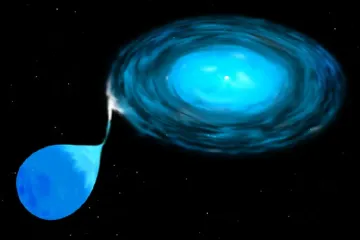
Instability isn't confined to the interior of a single star; it can also describe the behavior of groups of stars orbiting one another. In a ternary star system—a system with three stars—the gravitational interactions are far more complex than in a simple binary pair. [6] While two stars can maintain a stable, predictable orbit for eons, the introduction of a third body creates a chaotic gravitational environment. [6]
These unstable three-body systems often result in one star being ejected from the system entirely after a close gravitational encounter with the other two, or the system might settle into a temporary, wide, hierarchical orbit. [6] For example, an unstable configuration might last for several hundred years before a close pass forces one member out on a hyperbolic trajectory. [6] This orbital instability changes the entire configuration of the local stellar population, demonstrating that "instability" can operate on the scale of entire stellar families, not just individual stellar cores. If we map this concept, a G-type main-sequence star like our Sun represents the height of long-term dynamic stability, whereas a star caught in a close, three-body dance represents a state of short-term orbital volatility. [1]
# Stability Across Scales
The term "unstable" thus covers a vast spectrum of astrophysical phenomena, driven by internal nuclear processes, external gravitational perturbations, or the fundamental nature of matter under extreme conditions. [4][9]
| Phenomenon | Type of Instability | Timescale Example | Primary Driver |
|---|---|---|---|
| Main Sequence | Hydrostatic Equilibrium (Stable) | Billions of Years | Core Fusion Pressure |
| Variable Star | Pulsation/Opacity Feedback | Hours to Months | Internal Thermal Waves [9] |
| Red Giant Formation | Structural Expansion | Thousands of Years | Core Hydrogen Depletion [4] |
| Supernova | Gravitational Collapse | Seconds | Iron Core Formation [5] |
| Magnetar Glitch | Magnetic/Crustal Stress | Moments | Field Line Reconfiguration [2] |
| Ternary System | Orbital Perturbation | Hundreds of Years | Three-Body Dynamics [6] |
If we consider what an observer can learn from these fluctuations, the instability itself becomes informative. A star that maintains a perfect, steady luminosity—a true main sequence star—tells us about its mass and age based on its position on the Hertzsprung-Russell diagram. [1] However, a star exhibiting instability, such as a Cepheid variable with its regular pulsations, provides a direct reading of its internal physics based on its period-luminosity relationship. [9] Therefore, the most precisely measured stars in the galaxy are often those that are, by definition, temporarily or cyclically unstable. It is this observable 'flicker' that allows us to calibrate the cosmic distance ladder, transforming a physical symptom of distress into a precise astronomical measurement.
Ultimately, while the stable state of hydrostatic equilibrium defines a star's long life, the deviations from that state—the wobbles, the expansions, the collapses, and the final violent deaths—are what truly shape the stellar population and seed the galaxy with the heavy elements necessary for everything else to form. [1][5] Stars are not just points of light; they are engines of controlled, and sometimes uncontrolled, transformation.
Related Questions
#Citations
Star Basics - NASA Science
When a Stable Star Explodes | Chandra Blog
Why do stars have such great gravitational forces acting upon them ...
When does a star become unstable? - Quora
The Gravitational Collapse of Stars - The Astrophysics Spectator
Can an Unstable Ternary Star System Last Several Hundred Years?
Quark stars signal unstable universe - Harvard Gazette
Weird system shows stars can die quietly - Futurity.org
UCSB Science Line