Are all stars balls of plasma?
The light we see from the night sky originates from celestial bodies that, despite appearing as distant, steady points of light, are dynamic, superheated environments governed by the laws of physics under extreme conditions. It is a common intuition, perhaps influenced by older models or simple analogy, to picture these distant suns as colossal balls of fire. However, the reality of stellar composition points to a far more exotic state of matter. Almost universally, stars are not burning in the chemical sense, but rather exist almost entirely as plasma, the fourth state of matter. [1][3]
# States Matter
To appreciate why a star is plasma, it helps to establish what plasma is in relation to more familiar states. On Earth, we generally experience matter as a solid, a liquid, or a gas. [7] A solid maintains a fixed shape and volume; a liquid takes the shape of its container while maintaining a fixed volume; and a gas fills the entire volume of its container. [7]
Plasma takes this one step further. It is often described as an electrically charged gas, but that definition only captures part of the picture. [2][7] When a gas is heated to sufficiently high temperatures—or subjected to intense electromagnetic fields—the kinetic energy of its constituent atoms becomes so high that the electrons are stripped away from their atomic nuclei. [2][7] This process is known as ionization. [6] The resulting medium is a superheated, electrically conductive soup consisting of free-floating negative electrons and positive ions. [2] This ionized gas is the plasma state. [2][7]
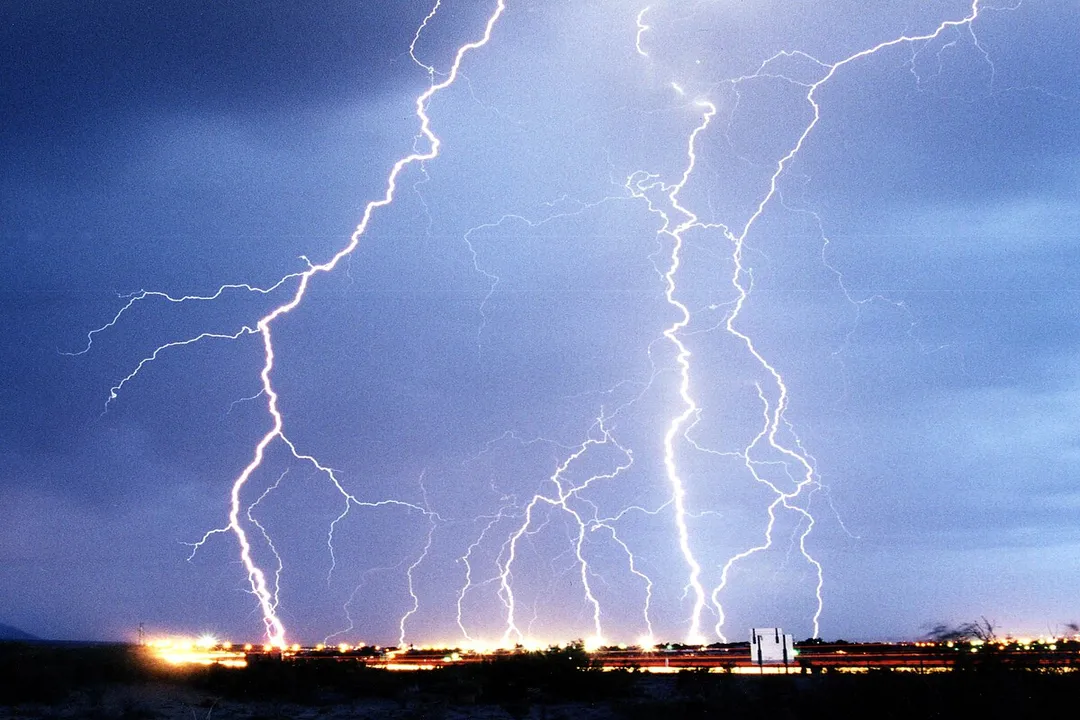
One might consider lightning or the bright glow of a neon sign as examples of plasma we can observe on our planet, but these are vastly different in scale and energy compared to a star. [7] The key distinguishing factor is the degree of ionization driven by incredible thermal energy. [6]
# Stellar Heat
The transformation from a normal gas to plasma requires extreme conditions, which are naturally abundant in the heart of any star. [6] Stars, including our own Sun, are not small bonfires; they are titanic masses where gravity exerts an almost unimaginable crushing force inward. [1][6] This immense gravitational pressure generates staggering internal temperatures.
For example, the core of the Sun reaches temperatures of about 15 million degrees Celsius. [1] At these temperatures, the hydrogen atoms—the primary building blocks of most stars—cannot remain intact. The thermal motion is so violent that when electrons collide with the nuclei, they are completely knocked free. [1] The atoms are essentially broken down into their constituent parts: protons, neutrons (though the composition varies), and electrons, all moving chaotically within an electromagnetic field created by their own charges. [6] This highly energetic, ionized environment is stellar plasma. [3][6]
It is helpful to realize the sheer difference in energy required. While laboratory plasma experiments strive to reach temperatures high enough to strip electrons, perhaps in the millions of Kelvin, a star’s sustained core temperature guarantees this state across the majority of its mass. [7] If you were somehow able to place a small, cool chunk of rock (a solid) inside a typical star, the instantaneous heat and pressure would cause it to vaporize into a gas, and then immediately ionize that gas into plasma within milliseconds. [1]

# Fusion Power
A common misunderstanding stems from the word "burning" often associated with stars. [1] Chemically, burning—or combustion—is a rapid chemical reaction between a substance and an oxidant, usually oxygen, which releases heat and light. [1] Stars, however, are overwhelmingly composed of hydrogen and helium, with very little available oxygen in the required context for chemical burning. [6]
The energy source driving the light and heat we observe is nuclear, not chemical. [1][10] Within the star's incredibly hot and dense plasma core, the extreme pressure forces hydrogen nuclei (protons) close enough together to overcome their natural electromagnetic repulsion. [1] This initiates nuclear fusion, where four hydrogen nuclei are fused together over several steps to create a single helium nucleus. [1][10]
This process is dictated by mass-energy equivalence. The resulting helium nucleus has slightly less mass than the four original hydrogen nuclei combined. [1] This "missing" mass is converted directly into a massive amount of energy according to Einstein’s famous equation, . [1] This energy is released primarily in the form of high-energy photons (gamma rays), which then begin a long, slow diffusion outward from the core. [8]
The light we ultimately see is the culmination of this energy cascade. It takes hundreds of thousands of years for these core photons to travel through the dense plasma layers of the star, scattering and losing energy until they finally emerge from the stellar surface as visible light, ultraviolet rays, and other forms of electromagnetic radiation. [8] Thus, the star is a self-sustaining nuclear reactor generating light from its plasma fuel, not a chemical fire. [1]
# Universal State
The composition of stars is a major factor in determining the makeup of the universe as a whole. Stars are primarily hydrogen and helium gas that has been turned into plasma by stellar processes. [6] Considering that stars are the dominant luminous objects in galaxies, and that the vast majority of observable matter exists within stars, it follows that plasma is the most common state of matter in the cosmos. [5][10]
Estimates suggest that a staggering amount of the universe's visible material is in this ionized state. One assertion places this figure at over $99.99%$ of all the matter in the universe existing as plasma. [5] This dominance is not limited to the interior of massive stars; it extends to interstellar gas clouds, nebulae, and the material between galaxies, which are also often in a low-density, but still ionized, plasma state. [2]
This ubiquity underscores why studying plasma physics is essential to understanding astronomy. When we look at a star, we are observing a stable, self-gravitating sphere of plasma held in hydrostatic equilibrium by the balance between the inward pull of gravity and the outward push of thermal pressure generated by fusion. [10]
| State of Matter | Example Condition | Primary Mechanism |
|---|---|---|
| Solid | Ice | Tightly bound particles |
| Liquid | Water | Close particles, free to move |
| Gas | Steam | Widely separated, random motion |
| Plasma | Stellar Core | Ionized, electrically conductive soup |
The primary elements, hydrogen and helium, form the bulk of this cosmic plasma, but heavier elements are also present, created through earlier fusion cycles in previous generations of stars. [6] The surface layers of a star, though cooler than the core, are still hot enough to maintain the plasma state, though the degree of ionization may be less complete than in the center. [10]
# Stellar Bodies
While the vast majority of stars are indeed balls of plasma, it is important to maintain precision regarding objects that are almost stars or stellar remnants. The question implicitly applies to true stars undergoing core fusion, but the endpoints of stellar evolution present interesting variations on this theme.
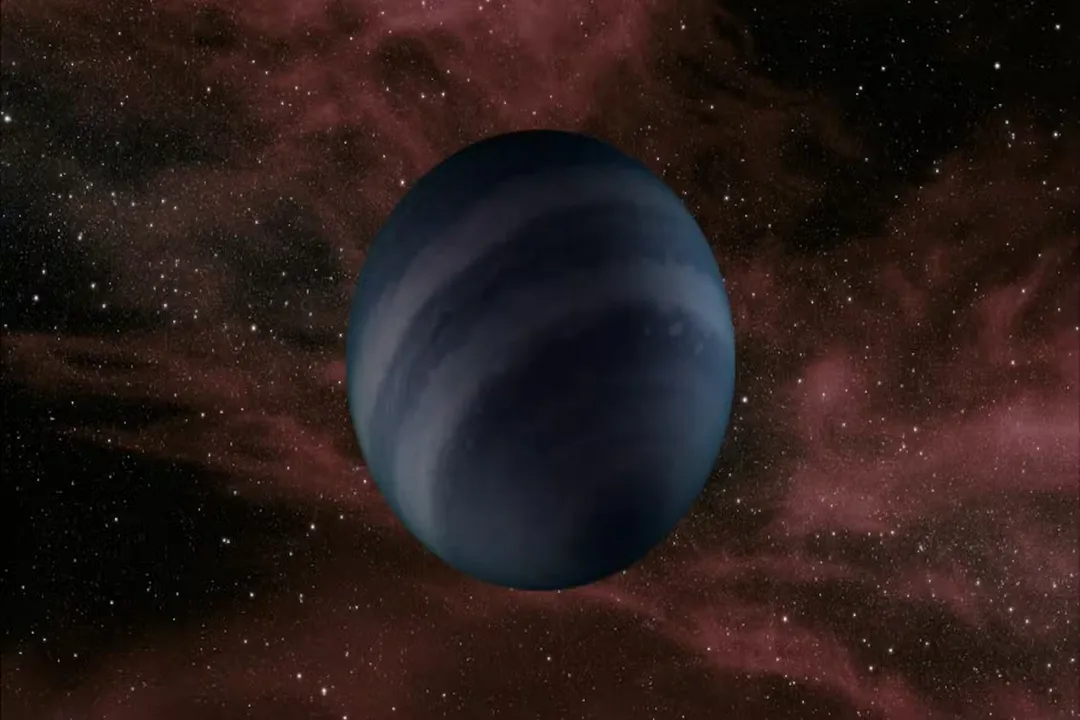
Objects like brown dwarfs, often called "failed stars," straddle the line. They are not massive enough to sustain the core temperature required to ignite the sustained hydrogen fusion that defines a true star. [10] While they may achieve brief deuterium fusion, their interiors are significantly cooler and less compressed than a main-sequence star. While their interiors contain plasma, the object as a whole may not be considered in the same steady-state fusion equilibrium as a star like the Sun. [10]
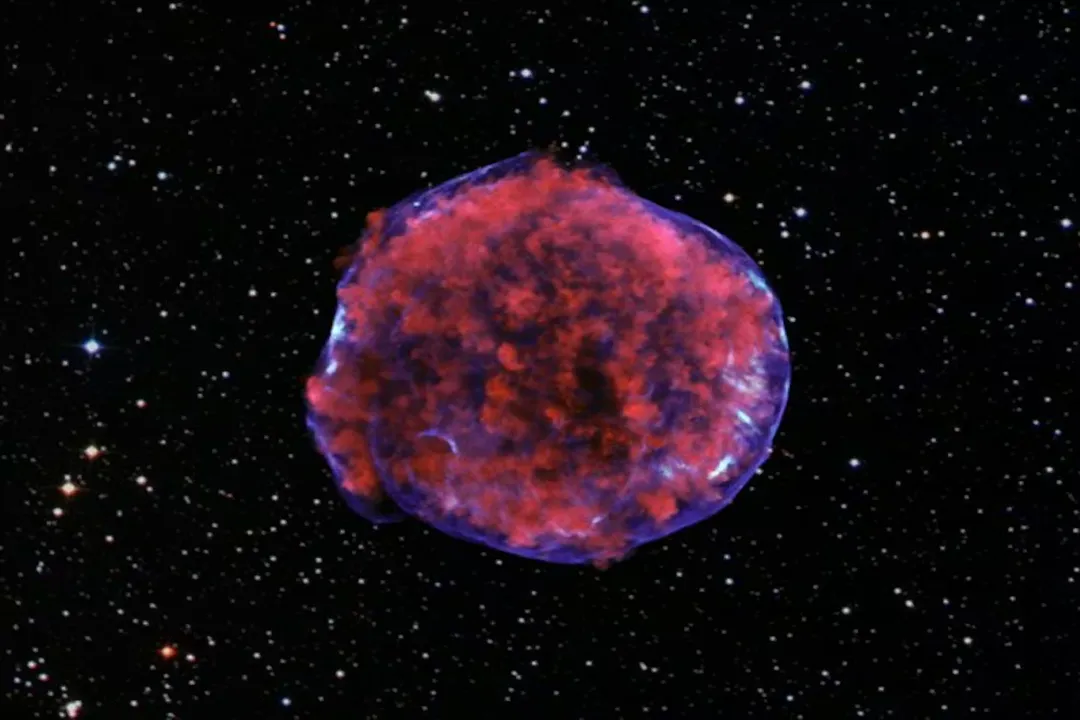
Conversely, stellar remnants like white dwarfs represent a stage after fusion has ceased. A white dwarf is the super-dense core left behind after a star like the Sun sheds its outer layers. [10] These objects are primarily composed of degenerate matter—a state where quantum mechanical effects dominate the pressure, not thermal pressure from the plasma state. While extremely hot initially, a white dwarf slowly cools over billions of years, transitioning away from being purely defined by its hot, ionized plasma to becoming a cooling, dense ember. [10]
However, for any object currently designated as a star on the main sequence—the longest phase of a star's life—the answer remains definitive. They are massive, self-gravitating spheres of plasma, deriving their energy from the thermonuclear furnace within their core. [1][3] This fundamental composition is what allows them to generate the light that illuminates the cosmos.
Related Questions
#Citations
Are stars really "burning balls of gas"?
Plasma (physics)
Are stars really balls of gas, balls of plasma, or balls of fire?
About Plasmas and Fusion
"99.99% of the entire universe is in the state of plasma". ...
What are stars made of?
DOE Explains...Plasma
What is the Light From Stars?
The SUN is a great ball of burning gases. What is a STAR ...
Explainer: what are stars?