Why did NASA crash Galileo?
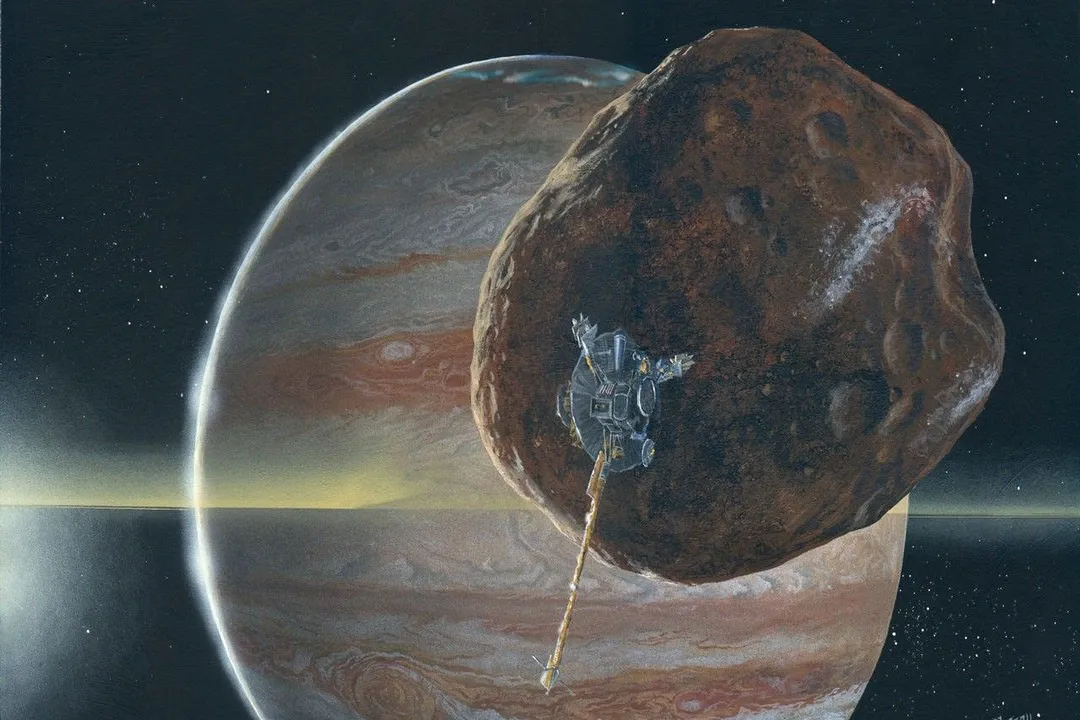
The decision to intentionally destroy the Galileo spacecraft by sending it plunging into Jupiter’s massive atmosphere might seem like a tragic end for such a historic explorer, but it was, in fact, one of the most crucial safety measures NASA ever enacted for a Jovian mission. [4][5] The primary driver behind this so-called "kamikaze" mission was not mission failure, but rather an overwhelming commitment to Planetary Protection. [9] After successfully orbiting Jupiter for nearly eight years, the probe was nearing the end of its operational life, and scientists needed to ensure that its remaining components posed absolutely no risk to one of the solar system’s most intriguing potential cradles of life: Europa. [1][4]
# Planetary Protection
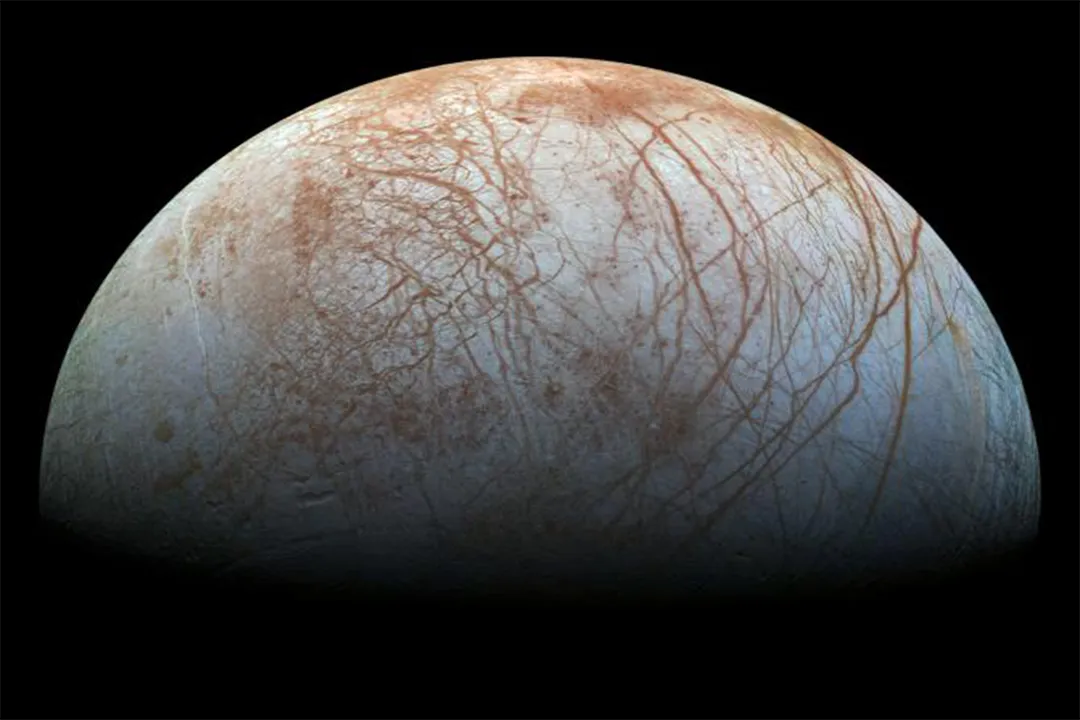
The overriding concern that necessitated the controlled descent was the possibility of Galileo eventually crashing into Europa. [5] This icy moon orbits Jupiter and has long been a prime target for astrobiologists because evidence strongly suggests the presence of a massive, salty, liquid water ocean hidden beneath its frozen crust. [1] Even if the probe was sterilized to the best of 1980s and 1990s technology, there was always a non-zero chance that terrestrial microbes clinging to the spacecraft could survive the transit and contaminate Europa’s pristine environment. [1][4]
NASA’s Planetary Protection policy dictates that spacecraft destined to interact with environments that could potentially harbor life—even subsurface life—must be disposed of in a way that guarantees no accidental future contact. [5] If Galileo had simply been allowed to coast in an orbit around Jupiter, gravitational resonances and long-term orbital decay would have made an eventual, uncontrolled impact with one of the Galilean moons—especially Europa—inevitable over geological timescales. [2][4] By intentionally sending the probe directly into Jupiter’s crushing atmosphere, engineers guaranteed its total destruction well before it could ever threaten Europa. [5] The destructive force of Jupiter’s gravity and the atmospheric heating were the only certain ways to sterilize the probe completely. [4]
While the mission had already performed spectacular science by returning data from Jupiter’s atmosphere itself during the final plunge, the decision to sacrifice the craft at the end of its service life was seen as the only responsible ethical path forward for future exploration of Europa. [5][7] Considering the potential value of discovering life on Europa, the risk of contaminating that environment was simply unacceptable, outweighing any residual scientific return from keeping the inert craft in orbit. [1][4]
# Mission Conclusion
Galileo had an extraordinarily long and successful run, far exceeding its initial planned mission timeline. [3] Launched in 1989 aboard the Space Shuttle Atlantis, it finally reached the Jovian system in 1995. [3] It spent approximately eight years orbiting the gas giant, studying its atmosphere, rings, magnetic environment, and moons. [3] The craft performed a critical Jupiter Orbit Insertion (JOI) maneuver, using a gravity assist from Io to slow down enough to be captured by Jupiter’s immense gravity. [3]
By the early 2000s, the mission was drawing to a close for two main reasons: operational lifespan and propellant depletion. [8] The radioisotope thermoelectric generators (RTGs) powering the probe were aging, and the highly complex series of maneuvers required to maintain a safe orbit around Jupiter—including numerous gravity assists off the moons Io and Europa—had consumed the bulk of its onboard propellant. [8] Once the fuel was gone, mission controllers lost the ability to precisely guide the spacecraft's trajectory. [4] The mission was officially extended beyond its original scope, but by September 2003, the command was given for the final sequence. [8] The end date was set for September 21, 2003. [8]
A fascinating aspect of managing such a long-duration, complex mission is the need to constantly re-evaluate risk versus reward as resources dwindle. Had NASA chosen to let Galileo naturally decay, the calculated probability of hitting Europa was low initially, perhaps one in 30,000. [4] However, over centuries, that probability increases to the point where it is no longer negligible when considering the immense scientific payoff of preserving Europa’s environment. Choosing the controlled impact ensures that the statistical likelihood of contamination drops to effectively zero, which is a powerful demonstration of scientific responsibility in practice. [4] This calculation—balancing immediate scientific return against long-term environmental protection—is a less glamorous but deeply important part of deep-space mission planning that the Galileo end-of-life procedure perfectly illustrates. [1]

# Atmospheric Plunge
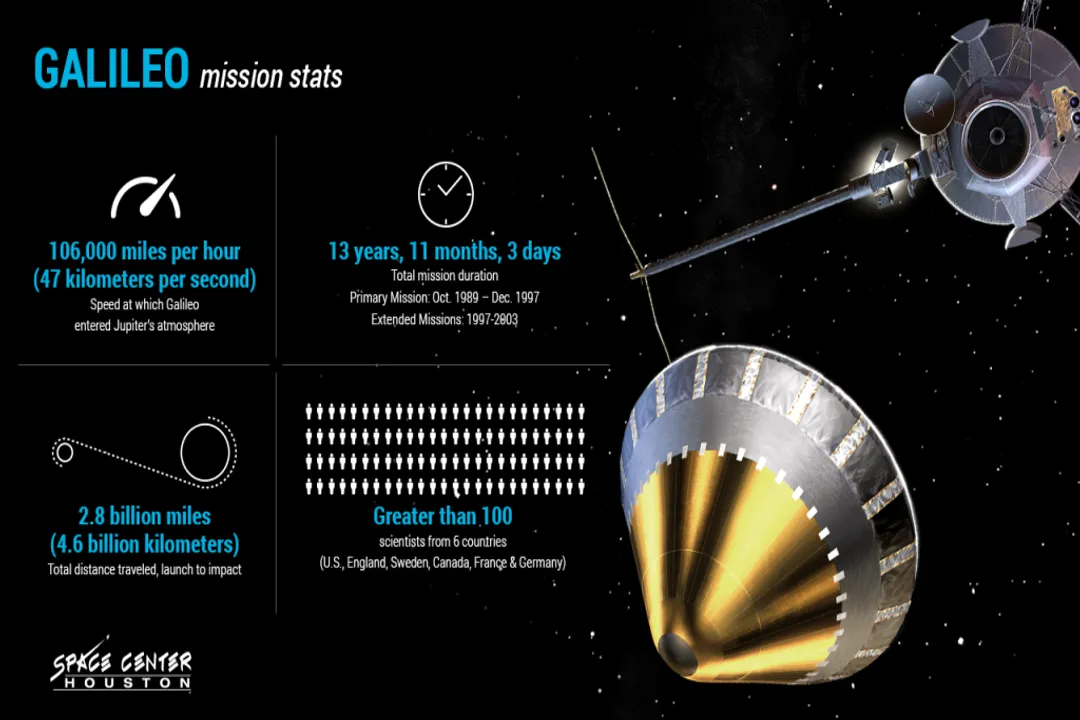
The final act of the Galileo mission was not just orbital disposal; it was a bonus science opportunity that provided data that could not be gathered any other way. [5] Once de-orbited, the main spacecraft entered Jupiter’s upper atmosphere traveling at immense speeds—around 48 kilometers per second (about 107,000 miles per hour). [5][7] The probe was oriented specifically to face the heat shield forward, protecting its sensitive instruments for as long as possible as it plunged into the cloud tops. [5]
As the probe descended, it used its still-functioning instruments to sample the environment, sending back a flood of crucial scientific measurements before being torn apart by increasing heat and atmospheric pressure. [5][7] It was transmitting real-time data on things like:
- Composition of the atmosphere
- Temperature profiles
- Wind speeds
- Pressure changes [4]
This descent provided an unprecedented direct profile of Jupiter’s atmosphere that no other probe had achieved since the Pioneer 10 flyby in the early 1970s. [3] The data transmitted included information on the atmospheric structure down to depths where the pressure was about 22 times that of Earth’s sea level and temperatures reached nearly 150 degrees Celsius. [5] The probe was designed to withstand these conditions for a period, transmitting its final viable data packet before the heat and pressure exceeded the limits of its shielding and electronics. [5]
# Absence of Imagery
One common misconception about the final dive is that Galileo sent back dramatic videos of its fiery demise, much like an atmospheric entry capsule returning to Earth. [6] However, the instruments designed for the atmospheric entry sequence were primarily aimed at in situ measurements—sampling the gas—rather than optical observation. [6] The probe was oriented with its main dish antenna and its main camera pointing away from the direction of travel, or at least not optimally positioned for continuous, high-resolution descent imaging. [6] Furthermore, the instruments capable of taking photographs, like the Near-Infrared Mapping Spectrometer and the Solid-State Imager, were not designed to operate under the extreme conditions of atmospheric entry; they were deactivated or would have been instantly blinded by plasma and heat long before the probe disintegrated. [6] Therefore, while the probe successfully gathered invaluable compositional data, it did not capture a visual record of its final moments crashing into the giant planet. [6]
# Controlled End
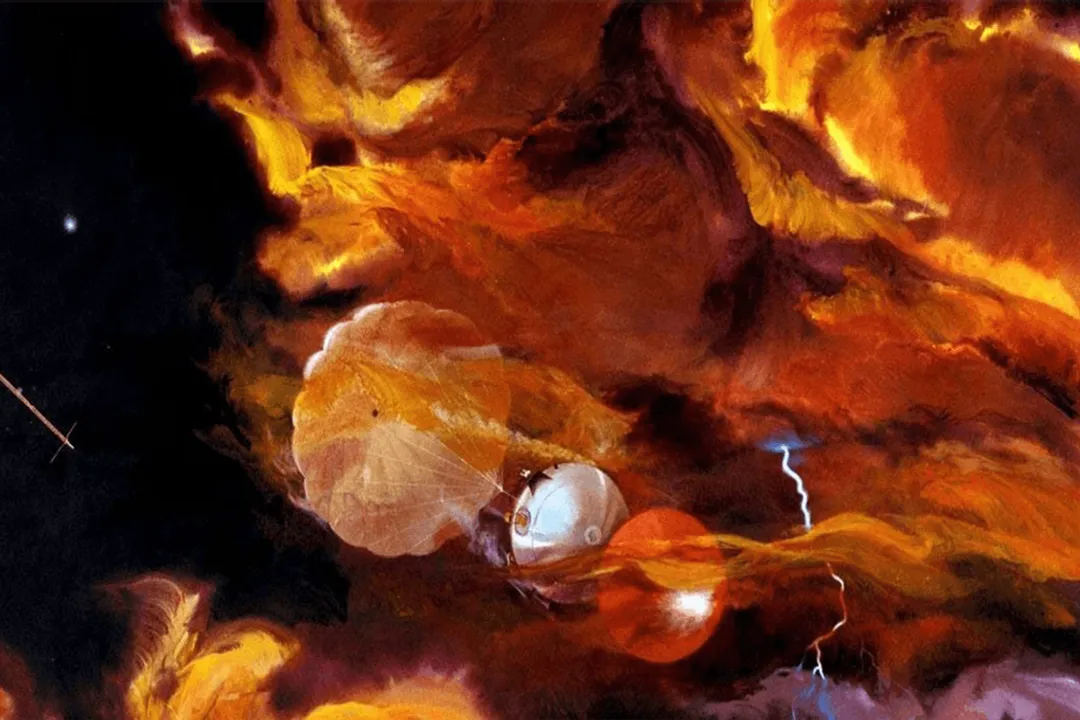
The event itself was a deliberate act of engineering, carefully calculated over many months by mission control. [9] The final commands sent to Galileo ensured its trajectory would intersect Jupiter's atmosphere at a specific location and time, making it a precise operation rather than a random failure. [8] This method of controlled impact contrasts sharply with previous deep-space missions where probes were allowed to drift or were simply shut down. [9]
Mission scientists viewed this controlled destruction not as a failure, but as the successful completion of a long-term commitment. [5] It cemented a precedent for responsible exploration in the outer solar system. A modern parallel to Galileo's fate is the Cassini mission, which, after a phenomenal run orbiting Saturn, was similarly plunged into Saturn's atmosphere in 2017 for the exact same Planetary Protection reasons—to safeguard the icy moon Enceladus. [5] This planned demise is now considered the gold standard for any spacecraft visiting an environment where liquid water, and thus potential habitability, is suspected. [4]
The process involves calculating the final disposal trajectory years in advance, ensuring the spacecraft has enough remaining power and attitude control to make minor course corrections right up to the end. [8] This level of precision allows ground teams to confirm, via tracking data, that the probe has indeed entered the atmosphere and subsequently verify that it has been destroyed, thus closing the book on the mission with a clean slate regarding planetary contamination risk. [8][9] Galileo’s final plunge, therefore, stands as a testament to NASA’s maturity in planetary science—a necessary sacrifice to protect the tantalizing possibility of life lurking on an ocean moon millions of miles away. [1][5]
Related Questions
#Citations
Why are they crashing the Galileo satellite? - StarChild - NASA
TIL that the "Galileo" space probe was intentionally crashed into ...
Galileo - NASA Science
Why did NASA purposely crash the space probe Galileo into Jupiter?
Space history: Galileo takes the plunge into Jupiter's atmosphere
Why didn't the Galileo spacecraft take an image in Jupiter's upper ...
What NASA's Galileo Spacecraft Saw As It Plunged Into Jupiter
Galileo spacecraft crashes into Jupiter - Spaceflight Now
Kamikaze Mission for Galileo | Science | AAAS